Tabelog 100
Our verdict
Miyazawa belongs to Ginza’s older kissaten register, where coffee-shop culture, yoshoku, sandwiches, and after-work drinking overlap rather than separate into neat categories. Its Tabelog Kissaten 100 selections in 2021 and 2022 give it a reputation signal beyond nostalgia, especially in a neighbourhood better known internationally for sushi counters, tempura rooms, and high-budget beef restaurants.

Pearl is the En Primeur Club membership app — saves, bookings, and concierge access live there. Same editors, same standards.
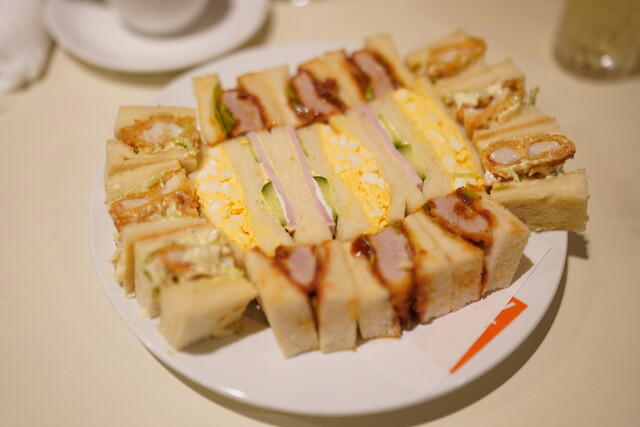
Tokyo has a particular compression: office workers moving through the city, narrow entrances lit from above, and modest coffee-shop rooms beside polished retail that hold another Tokyo memory. Miyazawa sits in that older current. The format is kissaten first, but not as a museum piece. The listing places it across kissa, yoshoku, and sandwich categories. That combination matters: Tokyo’s kissaten tradition was never only about coffee, but a practical urban room for lunch, conversation, and simple plates within the city’s everyday dining rhythm.
Critical recognition separates a small group of kissaten from Tokyo’s broader field of nostalgic cafés. Miyazawa was selected for Tabelog Kissaten 100 in 2022, and its Tabelog score is listed at 3.68. Those figures do not make it comparable with Tokyo’s luxury omakase economy, nor should they. They place it in another hierarchy, where category-specific affection and local usefulness outweigh tasting-menu choreography. In a city where dinner can mean counter sushi, tempura, beef, or private-room entertaining, a recognised kissaten gives a lower-key reading of Tokyo: less ceremonial, more workaday, and often more revealing.
Tokyo kissaten culture, seen through sandwiches and yoshoku
The kissaten category has a distinctive place in Japanese dining. It borrows from Western café culture but became its own urban institution, especially in commercial areas. Yoshoku, Japanese-style Western cooking, sits naturally beside it: familiar forms adapted to local habits, often served in rooms built for lingering rather than turnover alone. Sandwiches complete the triangle. They are portable, office-friendly, and tied to Tokyo’s everyday eating patterns, making them suited to the city’s casual dining patterns.
Miyazawa’s reputation is strongest through that category lens. Tabelog Kissaten 100 recognition is not a broad restaurant award; it signals standing within a specific field. That helps travellers. A high-spend Tokyo dinner at Tempura Ginza Onodera Namikidori, Kosasa Sushi, Tokyo Nikushabuya Subin, subin, or PENTHOUSE GINZA hanare belongs to another register. A kissaten brings different expectations: shorter ordering, less performance, and a closer relationship with the city’s daily rhythm.
The room’s character reinforces that reading. Miyazawa is best understood not as a counter-only specialist or a sprawling café, but as an urban dining room in the kissaten tradition. The experience is rooted in the shared-room grammar of Japanese coffee shops, where coffee, yoshoku, and sandwiches can sit comfortably in the same visit. For some visitors, that texture is the appeal; for others, it is a planning filter.
Reputation without the luxury theatre
Tokyo dining coverage often rewards scarcity, ceremony, and chef-led narratives. Kissaten culture resists that logic. It is judged by different evidence: category-list recognition, accessible budgets, and usefulness across the day. Miyazawa’s listed lunch budget is JPY 1,000 to JPY 1,999, while dinner is JPY 2,000 to JPY 2,999. In Tokyo, that contrast matters. The meal is not competing with prestige counters; it offers a separate value proposition where the premium market can dominate attention.
That contrast is clear in Tokyo’s broader dining map, where polished retail streets, commuter routines, company drinking, and after-hours food often overlap. A recognised kissaten gives the city a more layered dining map. It can work as a lunch stop, a sandwich address, or a room for a modest meal, depending on the day’s rhythm. The categories are broad enough for coffee-shop habits and casual dining, but narrow enough to avoid the everything-for-everyone feel of generic cafés.
The award history explains why this address belongs in a curated Tokyo file rather than a generic café list. Tabelog’s Hyakumeiten selections are category-based, and the kissaten list tends to reward places with strong identity inside Japan’s everyday dining culture. For international travellers, that can be more useful than chasing another luxury reservation. It points to a Tokyo mode locals understand instinctively: a room can be modest in price, casual in structure, and still carry serious category credibility.
How to place it within a Tokyo dining day
The strongest use case is not a grand destination dinner. It is a well-placed pause in Tokyo, especially for travellers wanting one meal or drink outside the sushi-tempura-beef circuit. The decision is about timing and flexibility rather than treating it like a formal destination reservation. Its listed budget keeps it in a practical range for Tokyo, with lunch at JPY 1,000 to JPY 1,999 and dinner at JPY 2,000 to JPY 2,999.
For a wider city plan, Miyazawa pairs well with Tokyo’s split dining personality: specialist counters, casual city rooms, and category institutions that rarely look dramatic from the street. The restaurant map can stretch from Miyazawa into other Tokyo formats and other dining rooms across the city. Citywide planning sits in Our full Tokyo restaurants guide, with adjacent context in Our full Tokyo hotels guide, Our full Tokyo bars guide, Our full Tokyo wineries guide, and Our full Tokyo experiences guide.
Travellers building a Japan-wide casual-dining thread can compare smaller specialist venues beyond Tokyo through unnamed local cafés, sandwich counters, curry rooms, and everyday dining formats in other cities. For Japanese dining culture abroad, focused formats show how narrow ideas can travel outside Japan without needing luxury framing. Miyazawa’s value is more local: it keeps Tokyo grounded in the everyday culture luxury dining often obscures.
Frequently asked questions
Is Miyazawa open every day?
Current opening-day details are not provided here, so guests should confirm directly with Miyazawa before planning a visit.
Is Miyazawa more mid-range or high-end?
Pricing at Miyazawa is listed as JPY 2,000 - JPY 2,999 JPY 1,000 - JPY 1,999 View spending breakdown.
What's Miyazawa's location?
Tokyo.
What's the signature at Miyazawa?
Miyazawa is defined by the kissaten format itself: kissa, yoshoku, and sandwiches in Tokyo. Its 2022 Tabelog 100 Kissaten selection is the clearest credential.
Is Miyazawa allergy-friendly?
Specific allergy accommodations are not provided here, so guests with allergies should confirm details directly before arrival rather than assume a fully controlled environment.
Is Miyazawa child-friendly?
Specific child-friendly facilities or policies are not provided here. Families should confirm current details directly with Miyazawa before visiting.
Cuisine-First Comparison
Comparable venues at a glance for context.
| Venue | Cuisine | Price | Awards | Notes |
|---|---|---|---|---|
| MiyazawaThis venue (the venue you are viewing) | Cafe & Sandwiches | Not listed | Tabelog 100 | Not listed |
| ando suriranka toukyou | Modern Sri Lankan Curry & Soup Curry | $20–30 | Tabelog 100 #75 | Chiyoda |
| BAR Opa Monzennakachou ten | Classic cocktail bar | $30–50 | Tabelog 100 #80 | Kōtō |
| BAR Too | Cocktail Bar | $30–50 | Tabelog 100 #49 | Toshima |
| Schomaker | German Bakery | Not listed | Tabelog 100 #62 | Ōta |
| Hainan Jeefan Shokudo 2 (海南鶏飯食堂2) | Authentic Singaporean Hainanese Chicken Rice | $10–20 | Not listed | Ebisu |
Recognition history
Dated appearances from independent guides and award organizations, with the underlying list record or original source where available.
Tabelog 100
Tabelog · Tabelog 100 - Kissaten - 2026
Full recognition history (2 entries)
Tabelog 100 #55 · No. 55
Tabelog · Tabelog 100 - Kissaten - 2022