Mishima Seimenjo

Tabelog 100 #96
Our verdict
Mishima Seimenjo belongs to Kagawa’s plain-spoken udon culture: small scale, low price, and a focus on noodles rather than ceremony. Its Tabelog 100 Udon Kagawa 2024 selection and long Hyakumeiten history place it among the prefecture’s serious sanuki udon addresses, with the appeal tied to ingredient discipline and rural setting rather than restaurant theatre.

Pearl is the En Primeur Club membership app, where members save venues, book tables and use the concierge.
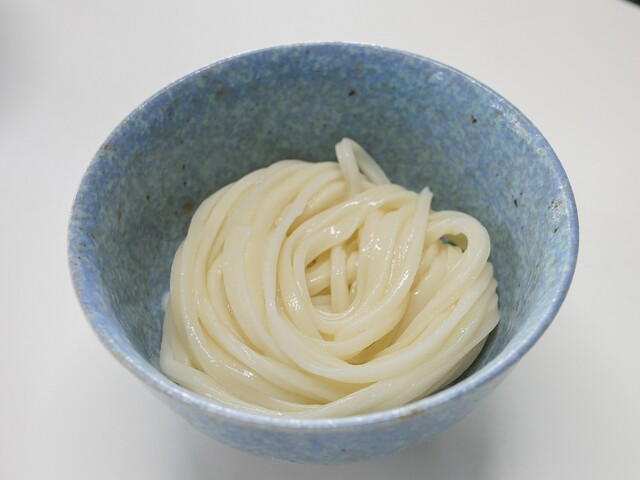
The approach to rural udon is rarely theatrical. The signal is usually a modest setting, a short menu vocabulary, and a meal built around directness rather than lingering. In Nakatado-gun, that simplicity matters because udon is not a luxury format dressed down; it is a wheat-and-water culture where the noodle carries the argument. Mishima Seimenjo fits that grammar: an udon stop with a reputation built inside an intensely competitive noodle circuit.
Udon identity rests on production as much as serving. The point is not abundance but control: dough strength, boiling rhythm, portion speed, and the way condiments support rather than bury the wheat. That is why small shops can compete with more polished dining rooms. The category rewards repetition and restraint, and the price band remains unusually democratic for a food culture with national pull.
Udon judged by noodle discipline, not dining-room polish
The useful frame here is ingredient sourcing in its practical sense. Udon begins with flour, water, salt, and technique, then depends on how quickly those elements move from preparation to bowl. The style prizes firmness and elasticity, making the noodle itself the primary marker of quality. Broth, dipping sauce, seasoning, and garnish can vary by shop, but they do not replace the central test: whether the wheat has structure and whether the kitchen keeps pace with demand.
That explains why recognition in this category carries a different meaning from fine dining awards. A Tabelog Hyakumeiten udon selection for 2024 signals standing within a field where voters and diners often compare shops on highly specific differences: chew, temperature, serving style, and value. For Mishima Seimenjo, the listed 2024 score of 3.76 and budget of lunch up to JPY 999 help define the appeal: serious udon recognition in a format that remains everyday rather than ceremonial.
The comparison set reinforces the point. Names such as Ganso Shoyu Udon Ogataya, Yamagoe Udon, Inamoku, Oka Seimensho, and Tanigawa Beikokuten operate in the same low-price udon economy, where reputations are made on execution rather than elaborate service. Other Nakatado-gun dining rooms show how the area can support multiple serious readings of the same staple. The distinction is not luxury versus casual; it is how each shop interprets a narrow tradition.
A small rural format that rewards a focused stop
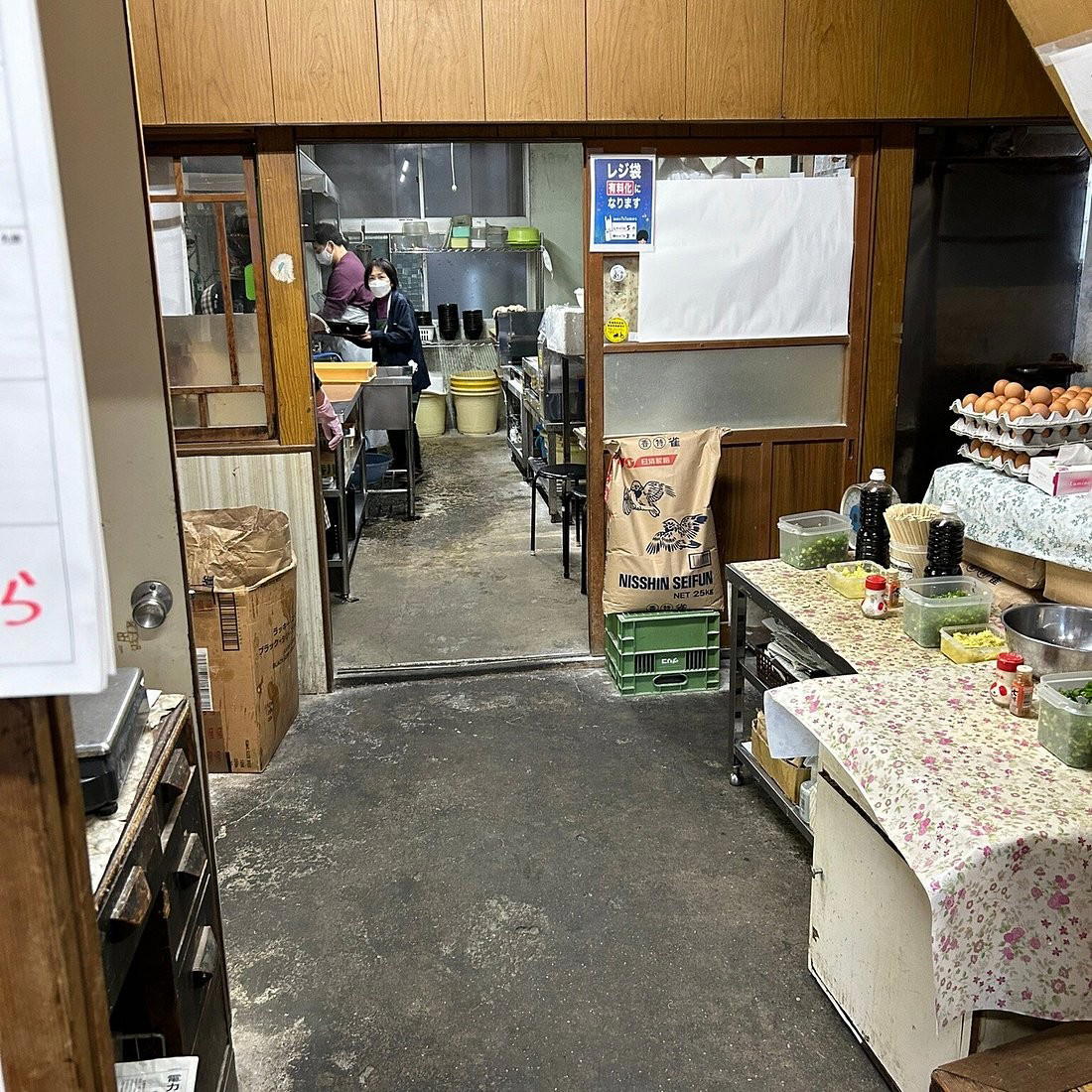
The room format is part of the experience because it keeps attention on the product. Rather than presenting itself as a destination dining room built around ceremony, Mishima Seimenjo is best understood through the straightforward logic of udon: quick, direct, and centered on the bowl. That scale affects the rhythm. It is better understood as a precise food stop in udon country than as a long lunch built around courses.
Practical constraints shape the decision in rural Nakatado-gun. Travellers should treat timing and transport as part of the meal, since udon itineraries often work best when planned around daytime movement rather than late, leisurely dining. The key is to keep expectations aligned with the format: this is a noodle-focused stop, not a service-heavy restaurant designed around extended reservations or elaborate pacing.
Price is part of the argument. With an average spend listed under JPY 999, the value proposition sits far from Japan’s export-facing luxury dining image. The more useful comparison is with other udon addresses in the same bracket, where small differences in dough handling can carry more weight than room design. That is why a low-cost meal can merit a serious detour: not because it mimics fine dining, but because it preserves a regional food language at its working scale.
Where it sits in a Nakatado-gun food itinerary
Nakatado-gun is not a restaurant district in the urban sense. It is a rural food map, and udon is the anchor that gives the area culinary legibility. For travellers building a route, Mishima Seimenjo pairs better with other noodle stops than with a single destination meal. The useful method is comparative tasting: one shop for one expression of udon, another for a different handling of texture or temperature, another for the way the noodle responds to minimal seasoning. That is how the udon culture becomes readable.
For a broader local map, other Nakatado-gun dining belongs in the same conversation, while Our full Nakatado-gun restaurants guide gives the wider dining context. Travellers staying in the area can cross-reference Our full Nakatado-gun hotels guide, while drink-led planning sits better in Our full Nakatado-gun bars guide. The area is not wine-country Japan, but Our full Nakatado-gun wineries guide and Our full Nakatado-gun experiences guide help place the meal inside a slower rural itinerary.
The wider Japan file shows the contrast. A low-cost udon room has little in common with more urban, service-led, or internationally framed dining rooms elsewhere in Japan and beyond. Nor should it be measured against city-specific formats in major restaurant markets. The editorial value lies in the opposite direction: a narrow regional staple, served at everyday prices, with enough recognition to justify placing it on a serious udon route.
Frequently asked questions
Would Mishima Seimenjo be comfortable with kids?
Mishima Seimenjo is listed in a low price range of - JPY 999, which keeps it practical for a simple udon stop in Nakatado-gun.
What's the overall feel of Mishima Seimenjo?
It reads as a modest udon-focused stop rather than a polished destination dining room. That straightforward scale suits its Tabelog Hyakumeiten udon recognition in 2024.
Is Mishima Seimenjo more mid-range or high-end?
Pricing at Mishima Seimenjo is listed as - JPY 999.
What's the address for Mishima Seimenjo?
Nakatado-gun.
Can I walk in to Mishima Seimenjo?
Plan it as a straightforward udon stop in Nakatado-gun, and check current operating details before going.
What do critics highlight about Mishima Seimenjo?
The main signal is its Tabelog Hyakumeiten udon recognition in 2024, with a listed score of 3.76. That places it in the conversation for serious udon, alongside its low-cost range.
A Quick Peer Check
Comparable venues by cuisine and price in the same metro.
| Venue | Cuisine | Price | Awards | Notes |
|---|---|---|---|---|
| Mishima SeimenjoThis venue (the venue you are viewing) | Traditional Sanuki udon noodle shop | $1–10 | Tabelog 100 #96 | Not listed |
| Nagata Udon | Traditional Sanuki udon (kamaage specialty) | $1–10 | Tabelog 100 #67 | Manno-cho Yoshino |
| IKEKO UDON | Sanuki udon noodle shop | $1–10 | Tabelog 100 #90 | Tadotsu-cho |
| Ganso Shoyu Udon Ogataya | Traditional Kagawa shoyu udon shop | $1–10 | Tabelog 100 #9 | Hazama, Nakatado-gun |
| Teuchi Udon Musashi | Sanuki udon & curry udon shop | $1–10 | Tabelog 100 #13 | Kotohira-cho |
| Gyoza Hohei (ぎょうざ 歩兵) | Gyoza specialty shop | $10–20 | Tabelog 100 #38 | Gion |
Recognition history
Dated appearances from independent guides and award organizations, with the underlying list record or original source where available.
Tabelog 100 #96 · No. 96
Tabelog · Tabelog 100 - Udon - KAGAWA - 2024
Continue exploring
More in Nakatado-gun
Restaurants in Nakatado-gun
All restaurants in Nakatado-gun →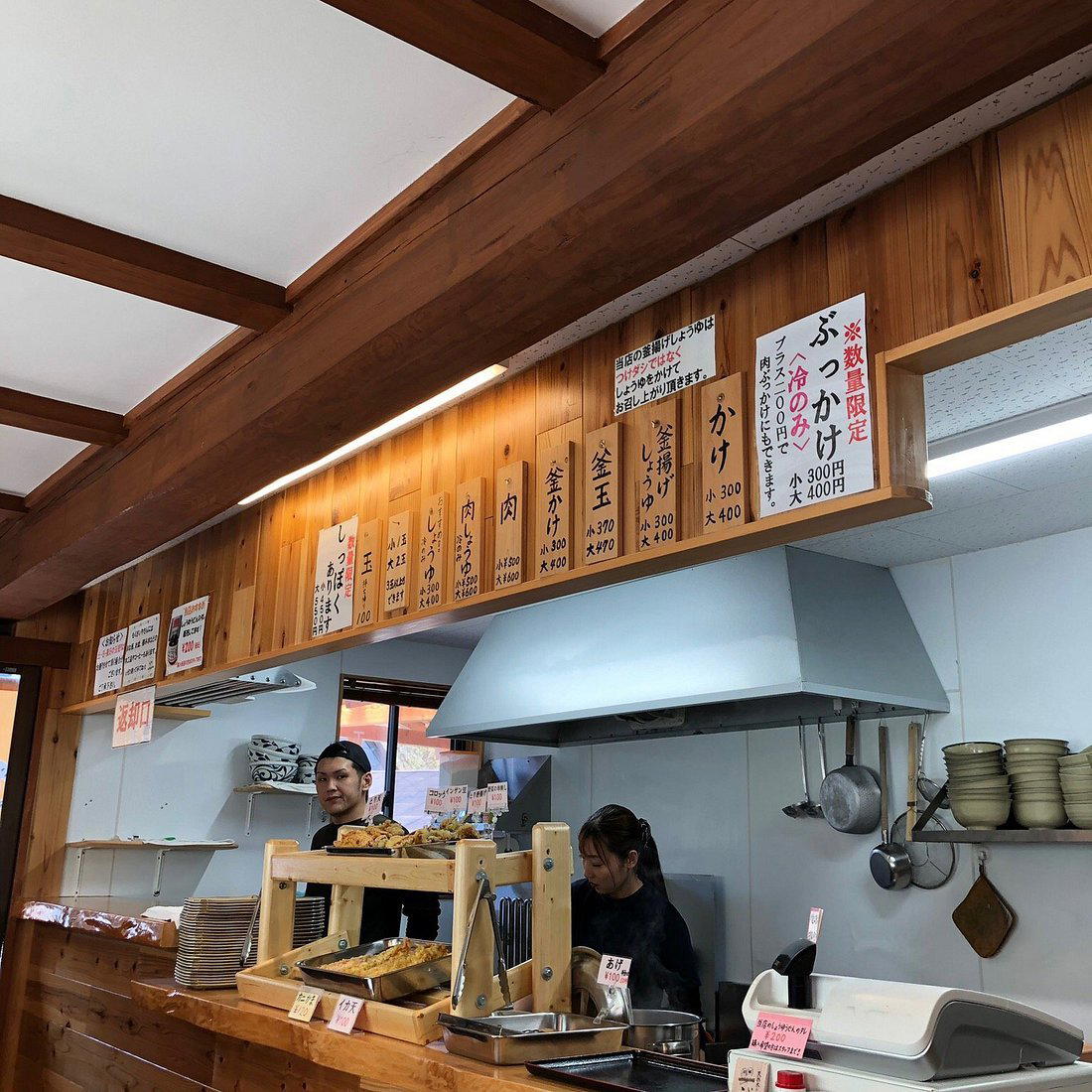

Bars in Nakatado-gun
Browse all →

Details
- Rustic
- Classic
- Cozy
- Solo
- Family
- Casual Hangout
- Group Dining
- Standalone
- A La Carte
- Counter Dining
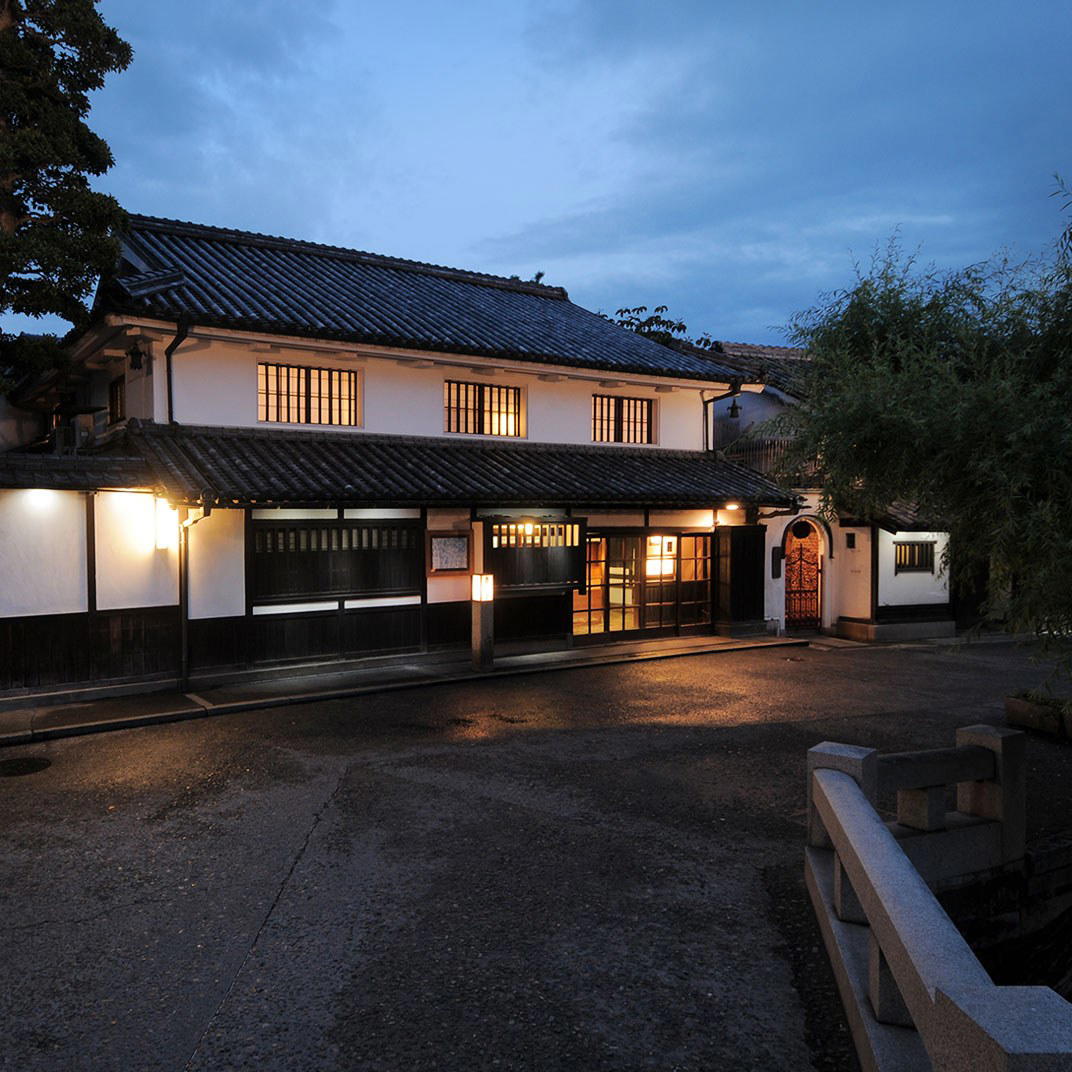
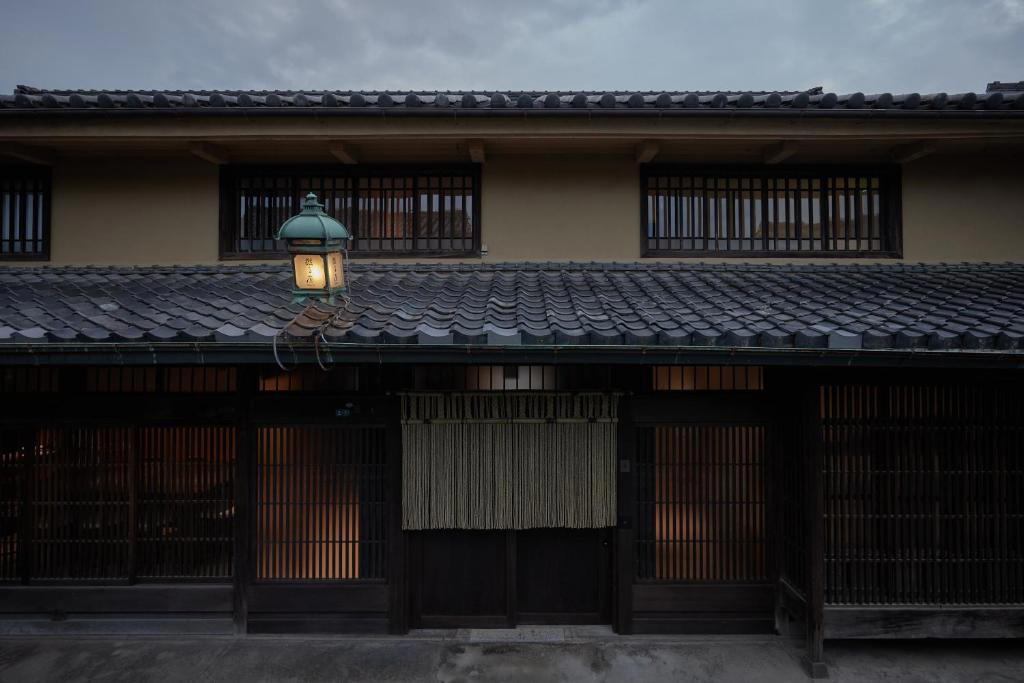
A small, rural house-restaurant with just 10 seats and an open terrace, creating a relaxed, down‑to‑earth atmosphere that feels like eating in a local home rather than a formal restaurant; reviews emphasize its long‑established, slow-paced charm amid fields and mountains.