Teuchi Udon Musashi

Tabelog 100 #13
Our verdict
Sanuki udon culture rewards speed, craft, and low ceremony, and Teuchi Udon Musashi belongs to that plain-speaking Kagawa tradition. The draw is hand-made wheat noodles and curry udon in Kotohira, with Tabelog 100 Udon Kagawa 2024 selection giving the shop a clear credential among the prefecture’s serious noodle rooms.

Pearl is the En Primeur Club membership app, where members save venues, book tables and use the concierge.
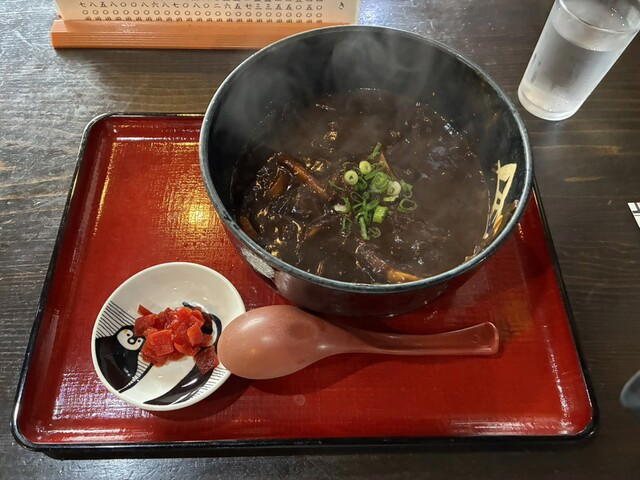
The menu
What to order
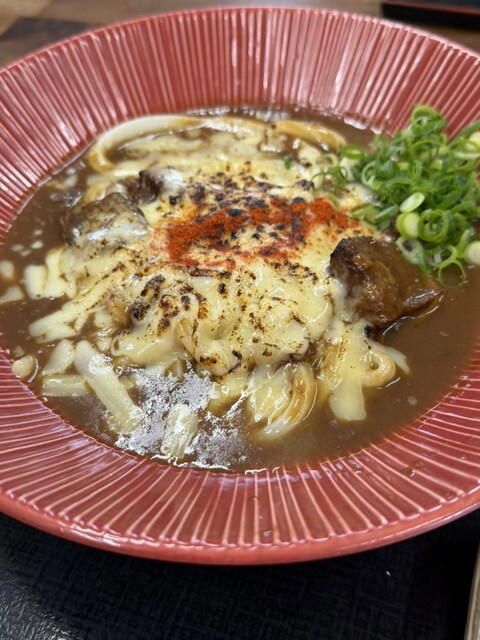
- Curry udon
- Zaru bukkake udon
- Tempura zaru udon
The first read of a Kagawa udon room is rarely about theatrical dining. The cues are functional: a menu built for everyday eating, a focus on texture and timing, and a style of service that puts the bowl ahead of decoration. In Nakatado-gun, that grammar matters. Udon is not a side category here; it is a regional food language, measured by noodle character, broth or seasoning balance, and how confidently a shop fits into a densely scrutinized local field.
Teuchi Udon Musashi enters that conversation with a format that keeps the focus narrow: udon and curry udon. Its selection for Tabelog 100 Udon Kagawa 2024 gives the shop an external marker in a prefecture where udon reputations are earned across a dense field, not by scarcity alone.
Udon culture, read through curry and noodles
Kagawa’s udon identity is unusually specific. The region prizes noodles with structure: elastic enough to resist the bite, clean enough to carry broth or seasoning, and plain enough that small differences in handling become the point. In udon country, the craft is less a romantic label than a performance standard. A shop has to make a familiar category feel precise.
Curry udon adds a useful lens because it tests the noodle in a heavier setting. Simpler udon styles foreground broth, seasoning, and wheat with little interference; curry udon asks whether the noodle can hold its shape under a thicker sauce and a stronger seasoning profile. That makes Musashi’s two-category identity more telling than a longer menu would be. The point is not range for its own sake, but a compact expression of the local canon: wheat noodles as daily food, with curry udon as the richer counterweight.
This is where Nakatado-gun’s udon map becomes interesting for travelers who care about comparison. Ganso Shoyu Udon Ogataya points toward the shoyu tradition, where seasoning is direct and the noodle carries much of the argument. Nagata Udon sits in the same accessible price tier and reinforces how much of Kagawa’s serious eating happens without luxury signaling. Other Nakatado-gun dining rooms broaden the local picture: this is a noodle culture where technique, queue discipline, and personal preference matter more than the usual restaurant hierarchy.
How Musashi fits Nakatado-gun's everyday food rhythm
Nakatado-gun brings its own pressure to the udon scene. The area can work for both local diners and travelers, but its strongest food addresses tend to make sense as everyday stops rather than formal destination dining alone. That dual audience keeps the format grounded. An udon shop in this setting is not trying to imitate the hushed counter language of high-end Japanese dining. It belongs to a different tradition: direct, repeatable, everyday, and precise.
The recognition matters because Kagawa has a crowded udon field. Tabelog’s Hyakumeiten selections are not Michelin stars, but they function as a useful filter in categories where regional depth can overwhelm a visitor. A 2024 Udon Kagawa selection and a Tabelog score of 3.67 place Musashi inside a vetted local conversation. That is enough signal to separate it from a random lunch stop, while the listed sub-999-yen price band keeps it aligned with udon’s democratic character.
The broader lesson is that serious Japanese regional food is often priced and staged modestly. In larger urban dining centers, craft can arrive wrapped in reservation systems, counter rituals, and menu explanations. In Kagawa, udon craft often appears in everyday rooms and in bowls that depend on repetition rather than spectacle. For travelers building a wider Japan itinerary, that contrast is useful. More formal or urban meals belong to a different register; Kagawa udon asks for a sharper eye toward everyday technique.
Planning a Nakatado-gun food day around udon
A strong Nakatado-gun food day works better as a sequence than as a single destination. Udon portions, pricing, and service style make comparison practical, and the region rewards moving between shops rather than treating one bowl as the whole story. Use Our full Nakatado-gun restaurants guide to place Musashi beside other noodle rooms, casual counters, and local staples before deciding how much of the day should be devoted to udon.
Travelers staying locally should also think beyond the meal. Our full Nakatado-gun hotels guide helps anchor an overnight plan, while Our full Nakatado-gun bars guide, Our full Nakatado-gun wineries guide, and Our full Nakatado-gun experiences guide map the rest of the area’s hospitality and cultural options. That matters in a prefecture where lunch can be the main food event and the rest of the day is shaped by rail timing, local visits, and short transfers.
For a national comparison set, Japan’s casual dining range is broader than udon alone. Other regions frame comfort-food traditions through many everyday formats, while Japanese casual food culture also appears in export form abroad. Kagawa’s udon rooms retain a particular advantage: they operate at the source, where the benchmark is set by diners who know the category well.
The editorial case for Teuchi Udon Musashi is therefore not luxury, rarity, or chef mythology. It is a clear example of a regional food system working at everyday level: udon, curry udon, accessible pricing, and third-party recognition in a prefecture where udon scrutiny is unusually high. For travelers who treat Kagawa as a noodle province rather than a detour, that is the right frame.
Frequently asked questions
What's Teuchi Udon Musashi's location?
Teuchi Udon Musashi is located in Nakatado-gun.
What's the price range at Teuchi Udon Musashi?
Pricing at Teuchi Udon Musashi is listed as - JPY 999 - JPY 999.
Do they take walk-ins at Teuchi Udon Musashi?
The public recognition places it in an accessible udon context: it is a Tabelog 100 Udon Kagawa 2024 selection in Nakatado-gun. Check the venue directly for current access and service details.
What's the defining dish or idea at Teuchi Udon Musashi?
The listed categories are udon and curry udon. That places it squarely in Kagawa’s udon conversation, and the shop was selected for Tabelog 100 Udon Kagawa 2024.
Is Teuchi Udon Musashi good for vegetarians?
The menu categories listed are udon and curry udon, but broth and curry ingredients are not specified in the provided public record.
Price and Positioning
Nearby venues at a similar price tier for orientation.
| Venue | Cuisine | Price | Awards | Notes |
|---|---|---|---|---|
| Teuchi Udon MusashiThis venue (the venue you are viewing) | Sanuki udon & curry udon shop | $1–10 | Tabelog 100 #13 | Not listed |
| Ganso Shoyu Udon Ogataya | Traditional Kagawa shoyu udon shop | $1–10 | Tabelog 100 #9 | Hazama, Nakatado-gun, Traditional Kagawa shoyu udon shop |
| Mishima Seimenjo | Traditional Sanuki udon noodle shop | $1–10 | Tabelog 100 #96 | Manno Town, Nakatado District, Traditional Sanuki udon noodle shop |
| Nagata Udon | Traditional Sanuki udon (kamaage specialty) | $1–10 | Tabelog 100 #67 | Manno-cho Yoshino, Traditional Sanuki udon (kamaage specialty) |
| IKEKO UDON | Sanuki udon noodle shop | $1–10 | Tabelog 100 #90 | Tadotsu-cho, Sanuki udon noodle shop |
| Wakasa Nomise | Japanese Izakaya | Not listed | Not listed | Rishiri Island, Japanese Izakaya |
Recognition history
Dated appearances from independent guides and award organizations, with the underlying list record or original source where available.
Tabelog 100 #13 · No. 13
Tabelog · Tabelog 100 - Udon - KAGAWA - 2024
Continue exploring
More in Nakatado-gun
Restaurants in Nakatado-gun
All restaurants in Nakatado-gun →

Bars in Nakatado-gun
Browse all →

Details
- Cozy
- Classic
- Lively
- Family
- Casual Hangout
- Solo
- Group Dining
- After Work
- Standalone
- A La Carte