Mary's Motel sits in Bairiki, the administrative heart of South Tarawa, placing it at the logistical center of one of the Pacific's most remote inhabited atolls. Accommodation options across Kiribati are sparse by any measure, and properties that serve both travelers and the island's resident community occupy a distinct and functional tier in that limited field.
 Discover on Pearl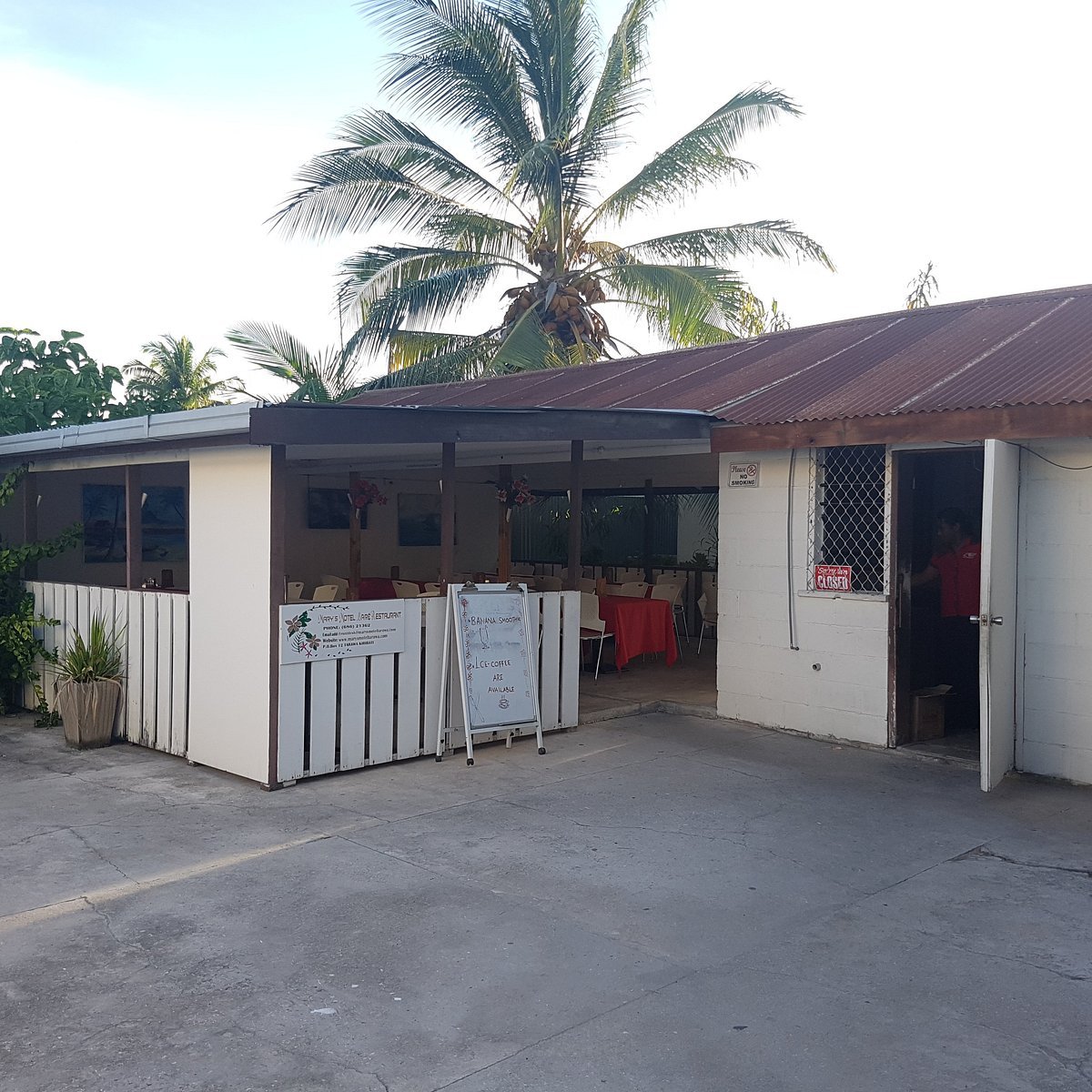
At the Edge of the Pacific Grid
South Tarawa is not a destination that announces itself gradually. The atoll is thin — in places barely a few hundred meters wide — and the sense of the ocean pressing in from both sides is constant. Bairiki, the administrative district that anchors the western end of the main causeway chain, is where government buildings, markets, and the few properties that serve international travelers cluster together in close proximity. Arriving here after the long transpacific routing through Fiji or the Marshall Islands, the compression of that approach , hours of open ocean, then a narrow strip of coral and palm , stays with you. Mary's Motel occupies this geography without apology. It does not pretend to be somewhere else.
For context on how thin the accommodation tier is across Kiribati, consider that Tarawa receives a fraction of the visitor numbers that reach Fiji, Samoa, or even the Cook Islands. Infrastructure investment has tracked that reality. Properties in Bairiki serve a working mix of NGO staff, government contractors, regional development workers, and the occasional independent traveler who has specifically sought out one of the Pacific's least-visited nations. That is the competitive set here, and understanding it matters for anyone calibrating expectations before arrival.
Ingredient Reality at the Edge of a Supply Chain
The question of where food comes from is never abstract in Kiribati. South Tarawa's geography , a narrow atoll with limited agricultural land, sitting thousands of kilometers from the nearest major supply hub , shapes every plate that appears on any table across the island. Soil salinity and land scarcity mean that domestic agriculture is minimal: breadfruit, pandanus, some coconut products, and limited taro cultivation exist, but the islands are heavily dependent on imported staples. Rice, canned goods, and frozen protein arrive by sea freight on irregular schedules. The supply chain is neither reliable nor fast, and any kitchen operating on Tarawa works within those constraints rather than around them.
What this means practically is that the freshest, most dependable local protein is marine. The waters around Kiribati , part of the Phoenix Islands Protected Area, one of the largest marine protected areas on the planet , support significant fish populations, and reef fish, tuna, and other pelagic species are caught locally. For dining across South Tarawa, a plate built around what came in from the lagoon or the open ocean that day will always outperform one built around an imported ingredient that has crossed multiple freight legs to reach the kitchen. This is not a principle unique to Mary's Motel; it is the operating reality for every kitchen on the island. The traveler who understands this adjusts accordingly.
The contrast with the world's most supply-chain-intensive restaurants is worth naming. Properties like Le Bernardin in New York City or Amber in Hong Kong operate within hours of global logistics hubs, with access to overnight freight from multiple continents. At the other end of that spectrum, a kitchen in Bairiki is making do with what the lagoon and the last freighter provided. That constraint is not a failure of ambition; it is a different kind of cooking, shaped by place in ways that controlled-supply kitchens cannot replicate.
The Broader Tarawa Accommodation Pattern
Across the Pacific, accommodation has broadly split between large international-branded resorts concentrated in high-traffic destinations and small locally operated properties that serve functional rather than aspirational markets. Tarawa sits firmly in the second category. There is no resort infrastructure here, no international hotel group presence of the kind you find in Port Vila or Apia. What exists are small, locally run properties that serve the island's working population of expats and regional visitors. Mary's Motel in Bairiki fits that pattern, positioned in the district where most official business on the island takes place.
For the traveler planning a visit to Kiribati, the practical realities deserve direct acknowledgment. Flights into Bonriki International Airport connect through Fiji with Air Kiribati and Fiji Airways, and schedules are limited , typically a few services per week rather than daily. Visitors should book accommodation well in advance relative to their flight schedule, as the pool of options is small and rooms fill against incoming flight days. Bairiki's central location within South Tarawa makes properties there a logical base, with most of the atoll's key points accessible by minibus or taxi along the causeway road. For a wider picture of where to eat and stay across the island, our full Tarawa restaurants guide covers the functional options in detail.
Travelers who have come specifically to reach one of the Pacific's most remote nations , drawn by the Phoenix Islands, by the WWII history of Betio, or simply by the challenge of reaching a country that sees fewer than five thousand international visitors in a typical year , will find Bairiki functional and, in its way, honest. The island does not perform for tourism. The market at Betio, the causeway traffic, the afternoon light across the lagoon: these are things happening regardless of whether visitors are present to observe them.
Planning a Stay
Visitors arriving in Tarawa should organize accommodation before departure, not on arrival. The number of properties operating in Bairiki and across South Tarawa is small enough that last-minute availability cannot be assumed. Communication with properties can be inconsistent given Kiribati's connectivity limitations, so allow extra lead time for confirmation. Currency is the Australian dollar, and ATM access is limited; arriving with sufficient cash for your stay is the standard practice among experienced Pacific travelers. The remoteness of the destination is part of its character , Kiribati sits among the most geographically isolated places served by any scheduled commercial aviation in the Pacific basin.
Continue exploring
More in Tarawa
Hotels in Tarawa
Browse all →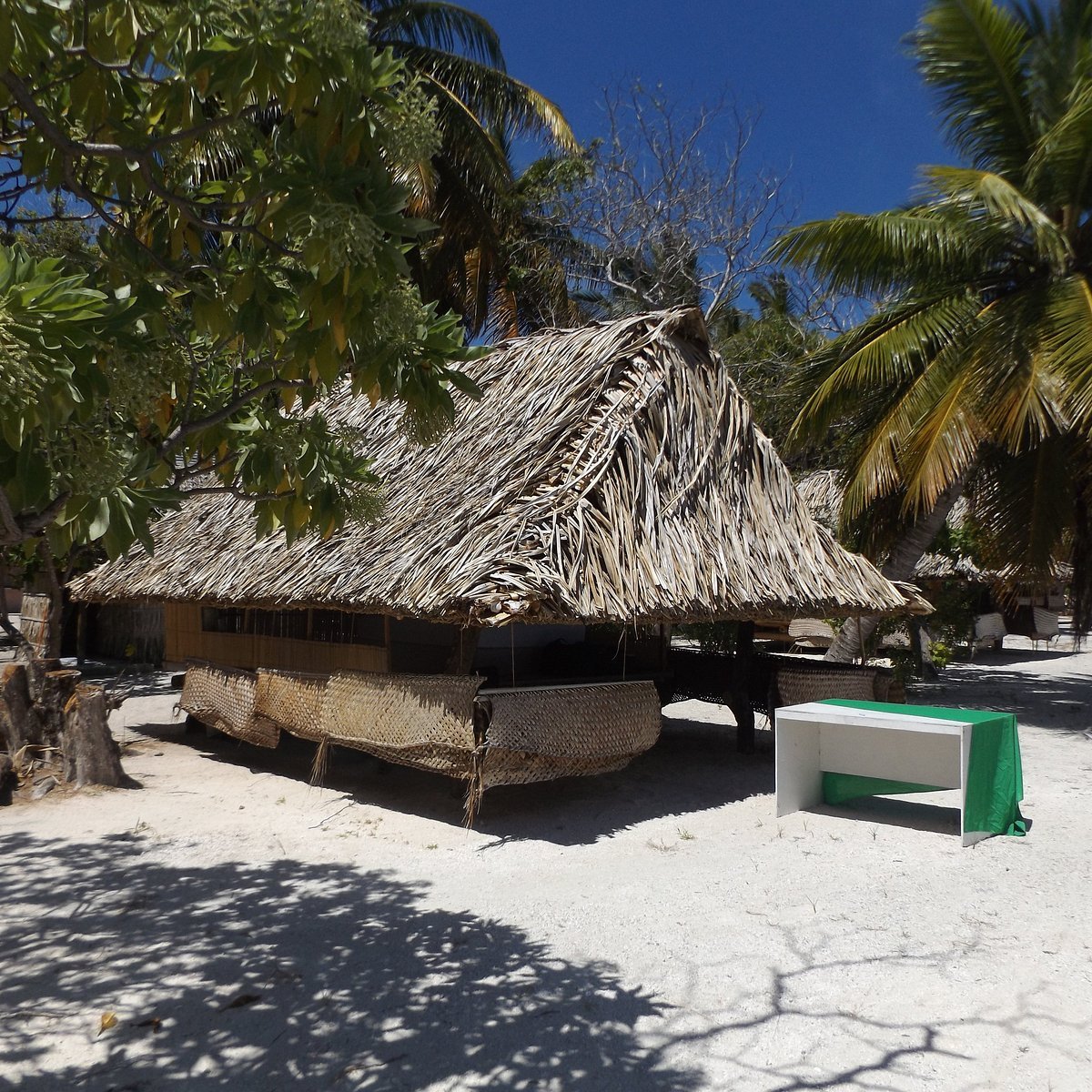
At a Glance
- Rustic
- Cozy
- Casual Hangout
- Standalone
- Local Sourcing
- Street Scene
Open-sided rustic dining area with cool island breezes, fans, TV, and a casual welcoming atmosphere.