
Michelin Plate
Our verdict
In a Côte Chalonnaise wine village, Maison Minori pairs Burgundian market produce with seven years of Japanese culinary experience. The set menu moves between Morteau sausage, slow-cooked egg, and shiso ice cream with a logic that feels earned rather than forced. The yellow-façade building on rue de Varanges is one of the more considered addresses in the region.

Pearl is the En Primeur Club membership app — saves, bookings, and concierge access live there. Same editors, same standards.
- Address
- 5-7 rue de Varanges
- Phone
- +33 3 85 45 06 92
- Website
- maison-minori.fr
- Directions
- Get directions
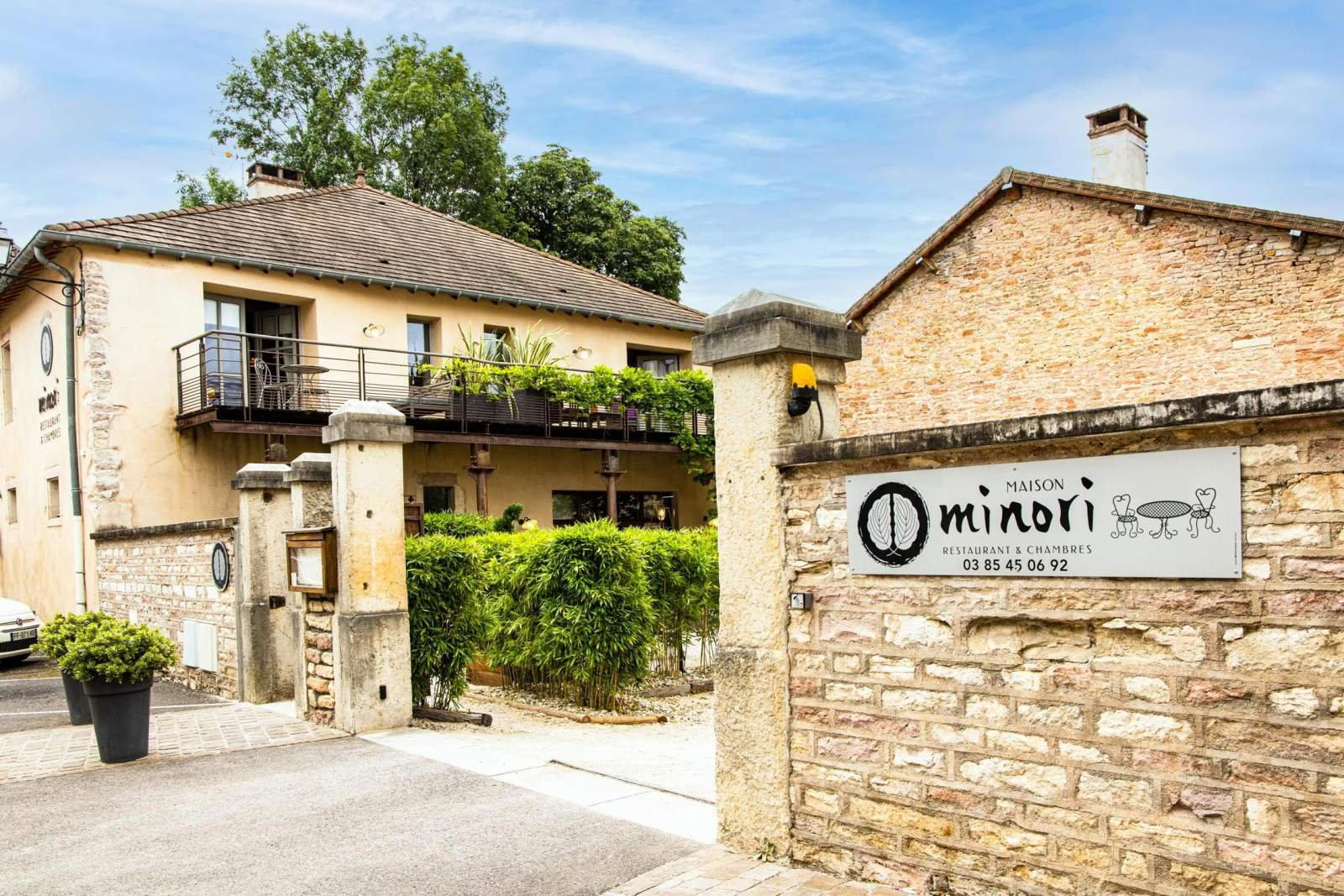
A Yellow Façade on the Côte Chalonnaise
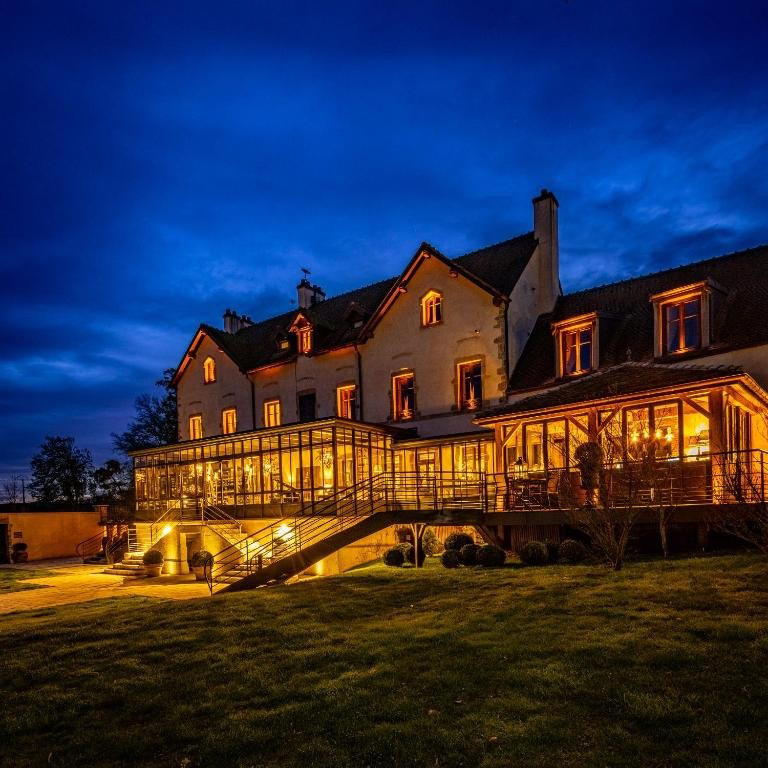
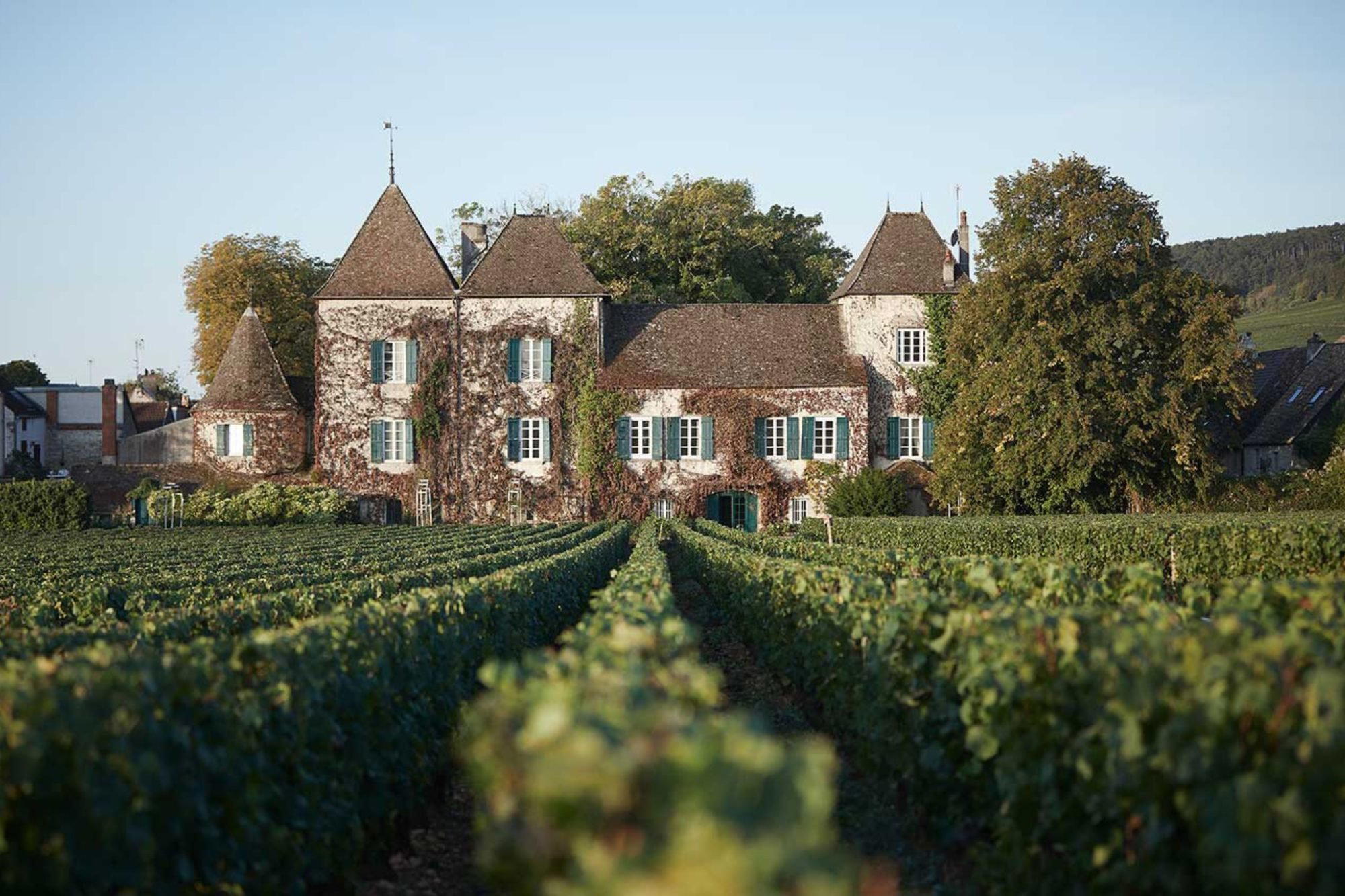
Givry sits in the southern stretch of Burgundy where the grand cru vineyards give way to the Côte Chalonnaise, a wine corridor that produces Pinot Noir and Chardonnay with less ceremony and considerably more accessibility than the Côte de Nuits or Côte de Beaune to the north. It is a range of working wine villages, market towns, and agricultural rhythms that still govern what appears on tables. Against that backdrop, the yellow façade at 5-7 rue de Varanges reads as an immediate signal that something deliberate is happening inside. For broader context on eating and drinking in the village, see our full Givry restaurants guide.
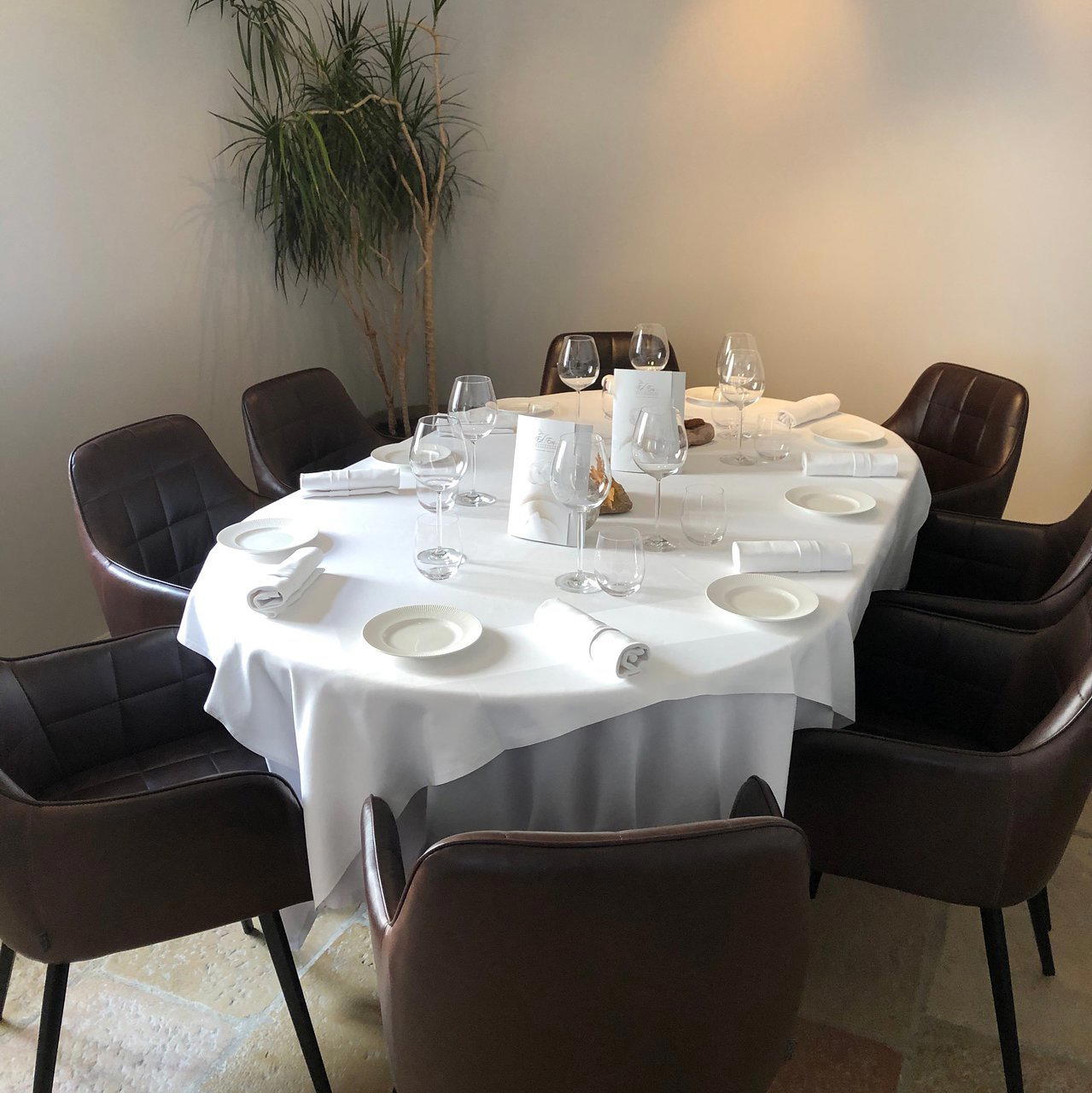
Step inside and the interior makes a studied contrast with the modest village streetscape. Exposed stonework and heavy timber beams occupy the upper register of the room, while a red hollow-brick ceiling, polished concrete floors, and Corten steel introduce a vocabulary that belongs to contemporary design rather than rustic restoration. A monumental fireplace anchors one wall. Designer lighting calibrates the atmosphere without overwhelming it. The effect is a space that acknowledges the building's age without being enslaved to it, which is a harder design balance to achieve than it appears, particularly in a region where "historic charm" can easily curdle into stage-set provincialism.
Where the Ingredients Come From — and Why That Framing Matters
The menu at Maison Minori is described as inspired by local markets, which is a phrase that has been diluted by overuse in French regional cooking. Here the claim carries weight because the chef-owner brings an external critical eye: a Jura native who spent seven years cooking in Tokyo and Kyoto before returning to eastern France. That sequence — deep rootedness in a French terroir tradition, then extended immersion in a Japanese culinary culture that treats sourcing and seasonality as structural principles rather than marketing language, produces a particular kind of editorial sensibility about ingredients.
The Côte Chalonnaise and the wider Saône-et-Loire department offer a supply chain that rewards this kind of attention. Morteau sausage travels from the Jura highlands, where cold smoking over pine and juniper is a protected tradition under French label regulations. Chestnuts in this part of Burgundy carry a different weight than the chestnuts arriving in a Paris kitchen from a distant wholesaler; they are a seasonal marker with a short window. The slow-cooked egg has become a fixture of the contemporary French menu, but placing it alongside Morteau and potato broth reframes it within a specifically regional register rather than as generic modernist technique.
Japanese inflection arrives most clearly in a dish like the deconstructed lemon tart with shiso ice cream, a preparation where a French pastry format is disaggregated and reassembled with a herb that has no native place in Burgundian cooking. This is not fusion in the casual sense. It is closer to what happens at a handful of serious regional addresses across France where extended Japanese training has produced chefs who deploy Japanese technique and ingredients as precision tools rather than aesthetic gestures. For comparison, Mirazur in Menton operates in a similar space between European terroir and global culinary influence, albeit at a significantly different scale and price point. The broader tradition of French kitchens absorbing Japanese discipline also appears at addresses like Alléno Paris au Pavillon Ledoyen, where technique and sourcing philosophy intersect at the highest tier of the Paris restaurant scene.
The Set Menu as a Coherent Argument
Maison Minori operates on a set menu format, which in this context is an editorial choice as much as a practical one. A market-led kitchen that changes its offer according to what is available requires a format that allows the chef to construct a sequence rather than offer a list of independent choices. The set menu disciplines the sourcing logic: every ingredient on the table has been selected to appear in a specific position within a specific progression.
That sequence is not accidental. Regional French kitchens that have produced serious destination cooking, from Bras in Laguiole to Flocons de Sel in Megève, have consistently used the set menu to argue a point of view rather than accommodate a range of preferences. Maison Minori operates at a different scale from those addresses, but the structural logic is the same.
The name reinforces the approach. Minori is a Japanese word carrying the meaning of harvest or ripening, a reference to agricultural readiness that maps directly onto a menu governed by seasonal availability. The name choice also signals to a specific audience: those familiar with Japanese culinary culture will recognise the reference immediately, which is itself a form of positioning.
France's regional restaurant scene contains a recurring type: the serious address that operates outside the major city circuits, attracts a clientele willing to travel for considered cooking, and sits at a price and ambition level below the starred tier while offering a quality of thought that rivals addresses with greater recognition. Maison Minori reads as belonging to that category. The Côte Chalonnaise is already a travel destination for wine tourists visiting Givry, Rully, and Mercurey appellations, those visitors constitute a natural audience for a restaurant that treats local sourcing with seriousness. For wine context alongside the dining decision, our full Givry wineries guide maps the appellation in detail.
The comparison set for Maison Minori is not the three-star tier, not Troisgros in Ouches, not Auberge de l'Ill in Illhaeusern, not Paul Bocuse in Collonges-au-Mont-d'Or. Those are category references that illustrate what serious French regional cooking can reach; they are not direct peers. Maison Minori operates at a more accessible register, in a village rather than a destination complex, serving a set menu that reflects market supply rather than a decades-long culinary legacy. That is not a limitation. It is a different and arguably more contemporary model of serious provincial cooking.
Planning Your Visit
Givry is accessible from Chalon-sur-Saône, roughly ten kilometres to the east, which connects to the Lyon-Paris TGV axis. Visitors combining the restaurant with wine touring in the Côte Chalonnaise will find the village well-positioned for day visits to Mercurey and Rully. For accommodation options in the area, our full Givry hotels guide covers the available range. Bars and additional dining context appears in our full Givry bars guide and our full Givry experiences guide. Given the set menu format and the size of the room, booking ahead is the sensible approach; walk-in availability at a format-led restaurant in a small village is not something to rely on.
Frequently asked questions
Is Maison Minori a family-friendly restaurant?
The spacious dining room with exposed stonework, beams, and a monumental fireplace creates a relaxed setting, but the format is a set menu with composed dishes like slow-cooked egg with Morteau sausage and deconstructed lemon tart with shiso ice cream. That structure suits older children comfortable with tasting-format meals more naturally than it suits young children expecting à la carte flexibility.
What's the overall feel of Maison Minori?
The room is an architectural contrast: a yellow façade on a wine-village street in Givry opens into a dining space that combines exposed stone and timber with Corten steel, polished concrete, and designer lighting. It reads as a considered renovation rather than a heritage preservation, which mirrors the kitchen's logic of pairing Burgundian market produce with Japanese technique.
What awards or recognition does Maison Minori have?
Maison Minori has received recognition including: In a wine-growing village on the Côte Chalonnaise, this pretty building with a yellow façade houses a spacious restaurant featuring exposed stonework and beams, a red hollow-brick ceiling, a monumental fireplace, polished concrete, Corten s….
What do people recommend at Maison Minori?
The set menu is the only format offered, so the choice is already made for you. Dishes cited in published descriptions include slow-cooked egg with Morteau sausage, chestnuts in veal jus, a potato broth, and a deconstructed lemon tart finished with shiso ice cream — the last being the clearest single expression of the chef-owner's seven years working in Tokyo and Kyoto.
Where is Maison Minori located?
Maison Minori is located at 5-7 rue de Varanges, Givry.
Comparison Snapshot
Comparable venues nearby, for context on price, style, and recognition.
| Venue | Cuisine | Price | Awards | Notes |
|---|---|---|---|---|
| Maison MinoriThis venue — the venue you are viewing | Modern French-Japanese Fusion | $50–100 | Michelin Plate | Not listed |
| Jérôme Brochot | Modern French Fine Dining | Not listed | Michelin Plate | Place Beaubernard |
| Loiseau des Vignes | Traditional Burgundian Bistronomic | $100–150 | Michelin Plate | Historic Centre of Beaune |
| Le Restaurant du Château | Modern French Traditional | $50–100 | Michelin Plate | Saint-Sernin-du-Bois |
| L'Aube des Sens | Modern French Fine Dining | $50–100 | Michelin Plate | Creney-près-Troyes |
| La Ferme Saint-Sébastien | French Terroir Bistro | $50–100 | Michelin Plate | Charroux |
Recognition history
Dated appearances from independent guides and award organizations, with the underlying list record or original source where available.
Michelin Plate
Michelin
Continue exploring
More in Givry
Restaurants in Givry
Browse all →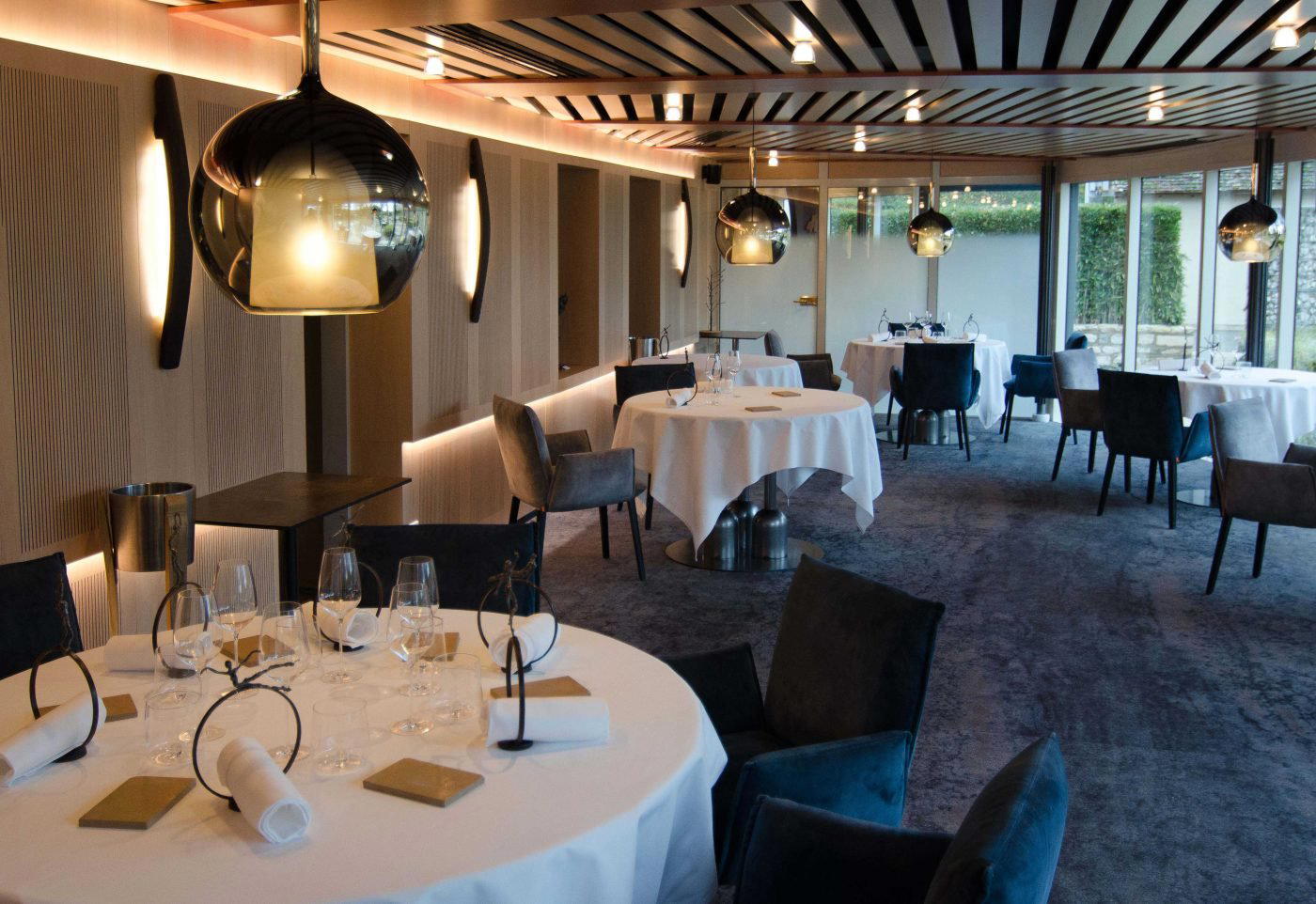
Bars in Givry
Browse all →
Hotels in Givry
Browse all →

Maison Minori
The wine
- Wine program
- Curated wine list
- Extensive wine list
Details
- Elegant
- Cozy
- Sophisticated
- Rustic
- Date Night
- Special Occasion
- Open Kitchen
- Extensive Wine List
- Local Sourcing
- Set Menu
- Wine
- Vegetarian Friendly
Zen and relaxing atmosphere in a spacious former wine storehouse with exposed stonework, beams, monumental fireplace, polished concrete, Corten steel, and designer lighting.