Maison Hache


1 Michelin Star · Gault & Millau Remarkable Restaurant
Our verdict
Michelin-starred Maison Hache transforms Eygalières fine dining through Chef Christopher Hache's terroir-driven cuisine, where palace-trained technique meets authentic Provençal simplicity in an intimate twenty-four-seat restaurant and boutique guesthouse celebrating the finest local producers.

Pearl is the En Primeur Club membership app, where members save venues, book tables and use the concierge.
The menu
What to order
- Camargue oysters with artichokes barigoule
- Alpilles lamb
- Shoulder of lamb with Provençal herbs
A Village at the Edge of the Alpilles, and What It Demands of a Kitchen
Eygalières sits at the southeastern rim of the Alpilles, a limestone ridge that divides the Crau plain from the Luberon approaches. The village draws visitors who have already been to Les Baux and Saint-Rémy-de-Provence and want something quieter, less staged. Its main street, Rue de la République, moves slowly: morning markets, afternoon shade, a pace that resists the pressure of high-season Provence. For a kitchen to hold a Michelin star here, and to hold it across consecutive years, it has to be doing something that the setting itself cannot carry. The cooking has to be the reason to come.
Maison Hache, at number 30 on that same street, earned its first Michelin star in 2024 and retained it in 2025. Chef David Charrier runs the kitchen. The back-to-back recognition by Michelin places it in a small cohort of Provençal addresses operating at one-star level outside the region's urban centres, a group that includes Alain Llorca in La Colle-sur-Loup and La Bastide Bourrelly in Cabriès. These are kitchens where the cuisine de terroir argument carries genuine weight, not decorative weight. The proximity to producers, the seasonal logic of the Alpilles and the Crau, the shorter supply chains: all of it shows up in what reaches the table or it does not.
The Bistro Tradition and Where Maison Hache Sits Within It
The French bistro arrived in its current cultural form sometime in the nineteenth century, initially as a working-class counter and gradually as something more layered: the neighbourhood room where bourgeois and artisan ate similar things at different tables. The defining discipline was economy of means applied with skill. A bistro did not need a brigade of twenty. It needed a cook who understood stocks, who could braise until connective tissue dissolved, who respected the calendar enough to pull a dish when the produce was gone. That discipline produced some of the most durable cooking France has ever made.
By the late twentieth century, the bistro had fractured into categories. There was the neo-bistro, typically a young chef downshifting from haute cuisine, offering abbreviated tasting menus at lower price points. There was the brasserie, which traded depth for volume. And there was the auberge tradition, particularly strong in rural France, where the proximity to a specific terroir defined the menu more than any chef's personal ambition. Eygalières, with its position in the Alpilles, sits naturally in that auberge-adjacent territory. Maison Hache operates at the intersection of that rural auberge tradition and the technical ambition that earns Michelin recognition, a position that is harder to hold than either pole on its own.
Across Eygalières, the dining scene reflects this tension directly. Le Bistrot du Brau represents the village's more casual register, a traditional address where the cooking follows regional convention without the pressure of starred expectation. Maison Hache occupies the other end of that local spectrum. Between the two, the village offers a clearer picture of how Provençal cooking stratifies: technique and terroir at one tier, tradition and comfort at another.
Provençal Cuisine at This Level: What the Kitchen Is Working With
Provence is not a simple culinary region to cook at the highest level. Its ingredients are frequently discussed and frequently misrepresented. The olive oils of the Alpilles, the lamb of the Crau, the tomatoes of the Var, the fish from Marseille's early-morning arrivals: these are real assets, but they are also available to every kitchen in the region. What separates the starred addresses from the competent ones is how deeply the kitchen connects to those materials and whether the cooking amplifies or obscures them.
The Michelin inspectors who return to a kitchen year after year, as they have to Maison Hache, are measuring consistency and culinary point of view as much as any single dish. A one-star awarded in 2024 and confirmed in 2025 signals that the kitchen has developed a coherent identity, not merely a seasonal moment. In the broader context of southern French fine dining, where addresses like Mirazur in Menton and AM par Alexandre Mazzia in Marseille define the ceiling of Mediterranean-inflected ambition, a one-star village address in the Alpilles occupies a distinct and quieter register. It is not competing on the same axis. It is arguing that a smaller room, a tighter geography, and a deeper connection to one specific terroir can produce something that a larger, more metropolitan kitchen cannot replicate.
That argument is not unique to Maison Hache. It runs through the DNA of French rural gastronomy, from the multi-generational logic of Auberge de l'Ill in Illhaeusern to the landscape-driven approach of Bras in Laguiole. At Maison Hache, the argument is being made in one of Provence's most photogenic villages, which brings both an advantage and a pressure: the setting raises expectations the food alone must justify.
The Price Point and Its Implications
At €€€€, Maison Hache sits at the top of the local price register. In the context of one-star Provençal cooking, that pricing aligns with regional peers rather than with the metropolitan starred tier represented by addresses like Alléno Paris au Pavillon Ledoyen or Assiette Champenoise in Reims. The top-tier spend at a village address in the Alpilles is partly a function of ingredient sourcing: quality Crau lamb, seasonal truffles, Provençal seafood at prime condition, all carry costs that a menu at this level must absorb. Visitors arriving from Saint-Rémy or Les Baux-de-Provence will find the pricing consistent with the region's premium dining tier. Those arriving from Paris's starred circuit will find it at or slightly below comparable urban benchmarks. For the quality of setting and the Michelin-backed cooking, the €€€€ designation reflects the category rather than an outlier position.
Planning the Visit
Eygalières is leading reached by car. The village sits roughly 25 kilometres from Arles and a similar distance from Salon-de-Provence. Nîmes and Marseille are each within an hour. The Alpilles Natural Regional Park immediately surrounds the village, which means arrival involves driving through agricultural land before the village itself appears: dry stone walls, olive groves, the limestone ridge rising to the north. The address on Rue de la République is central and walkable from any parking on the village perimeter.
Booking at this level of Michelin recognition in a village with limited capacity warrants advance planning, particularly across the summer months when Provence draws visitors from across Europe. Arriving without a reservation during peak season carries real risk. The shoulder seasons, April through May and September through October, offer the combination of Provençal autumn and spring produce with somewhat shorter booking windows. Pairs well with a stay at one of the addresses in our full Eygalières hotels guide.
For those building a wider Eygalières itinerary, the village has a manageable but coherent food and drink scene. Our Eygalières bars guide and wineries guide cover the territory beyond the table. For the full dining picture across the village, our Eygalières restaurants guide maps the range. Those extending into broader Provence experiences can find context in our Eygalières experiences guide.
In the wider context of French fine dining, Maison Hache represents a specific kind of ambition: the village kitchen that earns national recognition without leaving its postcode. That is rarer than it sounds, and the Michelin record confirms it is being done with discipline. Alongside regional contemporaries such as Flocons de Sel in Megève and storied addresses like Paul Bocuse's Auberge du Pont de Collonges and Troisgros in Ouches, it sits within a long tradition of French cooking that treats geography as an argument rather than a backdrop. In Eygalières, that argument is being made on a quiet village street, at thirty covers or fewer, with a Michelin star as the current verdict.
Frequently asked questions
Can I bring kids to Maison Hache?
No family policy is published by the venue. At the €€€€ price point with consecutive Michelin recognition in 2024 and 2025, the format almost certainly centres on a structured tasting menu where pacing and quieter rooms are assumed. Parents travelling with young children should check the venue's official channels before booking.
What's the vibe at Maison Hache?
Eygalières is a small limestone village on the edge of the Alpilles, not a city dining destination, and that context shapes what to expect: a room that is grounded rather than grand. Two consecutive Michelin stars under David Charrier confirm serious kitchen ambition, but the address at 30 Rue de la République puts you firmly inside a village scale, not a purpose-built gastronomy complex.
What kind of recognition has Maison Hache received?
Maison Hache has received recognition including: Category: Remarkable; Michelin 1 Star (2025); Michelin 1 Star (2024).
What dish is Maison Hache famous for?
No single signature dish is documented in the public record. What the consecutive Michelin star awards for 2024 and 2025 confirm is that David Charrier's interpretation of Provençal cuisine has passed sustained scrutiny, with the kitchen drawing on the produce traditions of the Alpilles region.
What price level is Maison Hache?
Pricing at Maison Hache is listed as €€€€.
Where is Maison Hache located?
Maison Hache is located at 30 Rue de la République, 13810 Eygalières, France, Eygalières.
Booking and Cost Snapshot
| Venue | Cuisine | Price | Awards | Notes |
|---|---|---|---|---|
| Maison HacheThis venue (the venue you are viewing) | Modern Provençal Fine Dining | $100–150 | 1 Michelin Star · Gault & Millau Remarkable Restaurant | Not listed |
| Alléno Paris au Pavillon Ledoyen | Modern French Fine Dining | $150–200 | 3 Michelin Stars · World's 50 Best #79 | Creative |
| Kei | Contemporary French, Modern Cuisine | Not listed | Michelin 3 Star | Not listed |
| L'Ambroisie | Classic French Haute Cuisine | $300–500 | 2 Michelin Stars · World's 50 Best #23 | French, Classic Cuisine |
| Le Cinq - Four Seasons Hôtel George V | Modern French Fine Dining | $300–500 | 3 Michelin Stars · World's 50 Best #24 | French, Modern Cuisine |
| Plénitude | Modern French Sauce-Led Fine Dining | $300–500 | 3 Michelin Stars · World's 50 Best #14 | Contemporary French |
Recognition history
Dated appearances from independent guides and award organizations, with the underlying list record or original source where available.
Michelin 1 Star
Michelin
Gault & Millau Remarkable Restaurant
Gault & Millau
Full recognition history (3 entries)
Michelin 1 Star
Michelin
Continue exploring
More in Eygalières
Restaurants in Eygalières
All restaurants in Eygalières →
Bars in Eygalières
Browse all →
Hotels in Eygalières
All hotels in Eygalières →
Details
- Elegant
- Sophisticated
- Rustic
- Date Night
- Special Occasion
- Terrace
- Garden
- Extensive Wine List
- Local Sourcing
- Garden
- Street Scene
- A La Carte
- Prix Fixe
- Wine
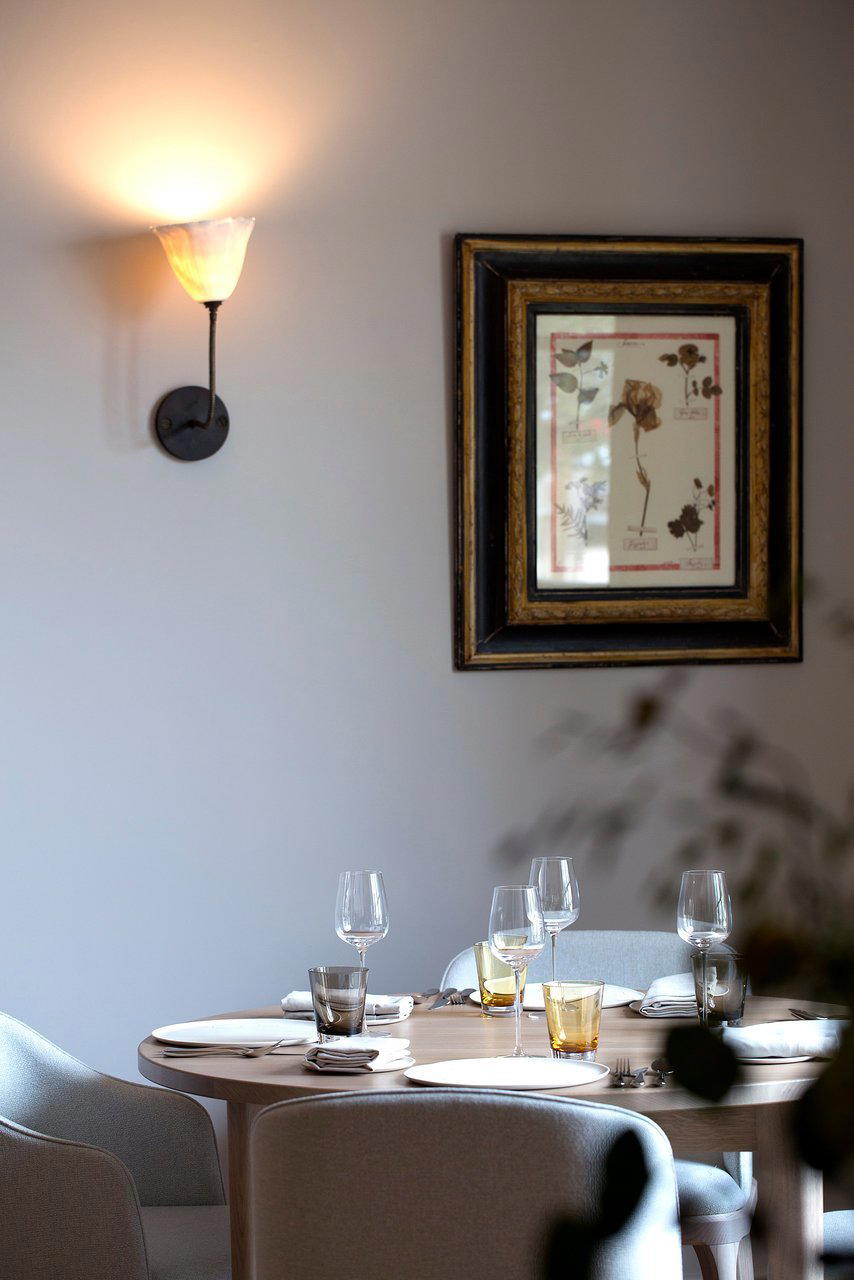
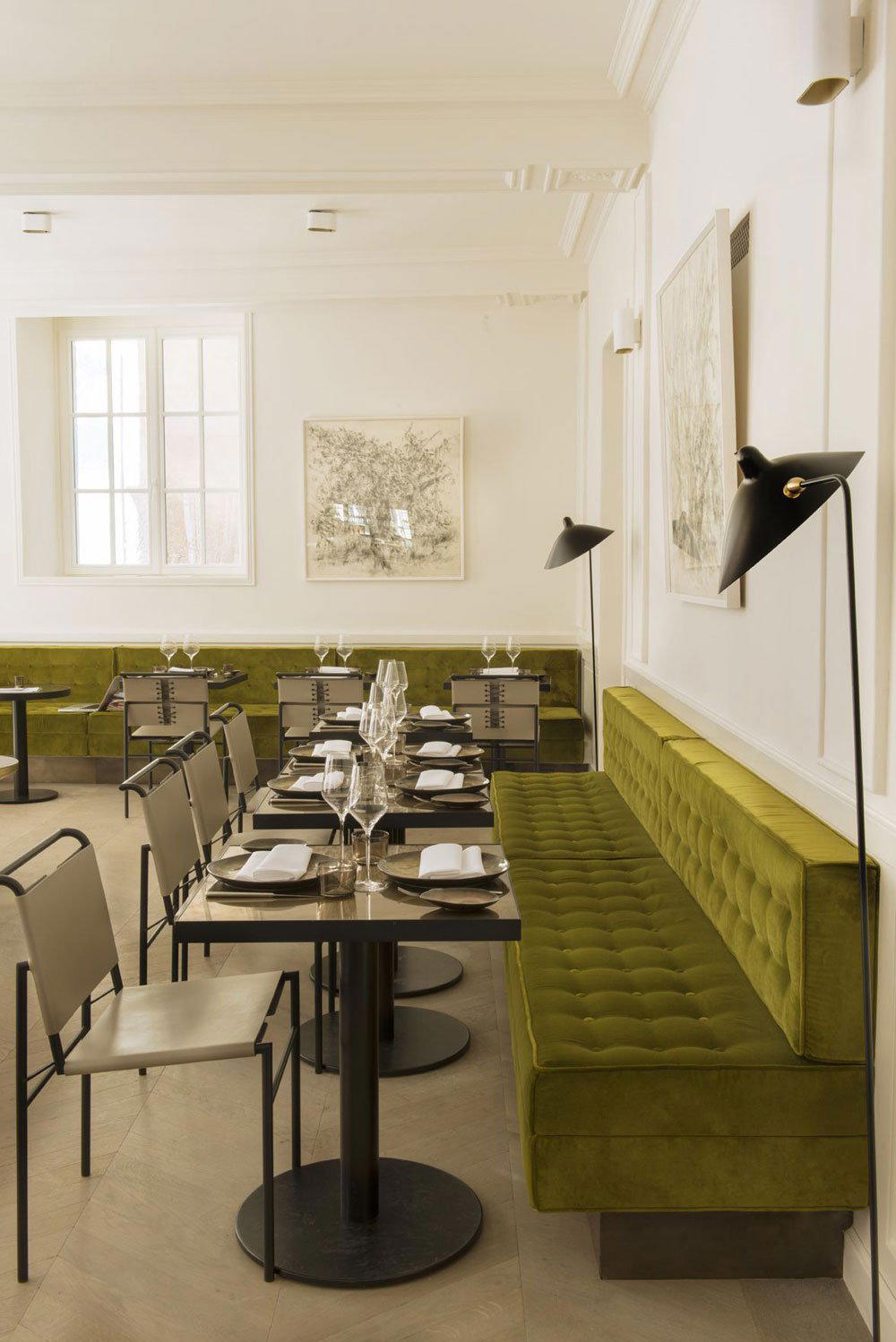
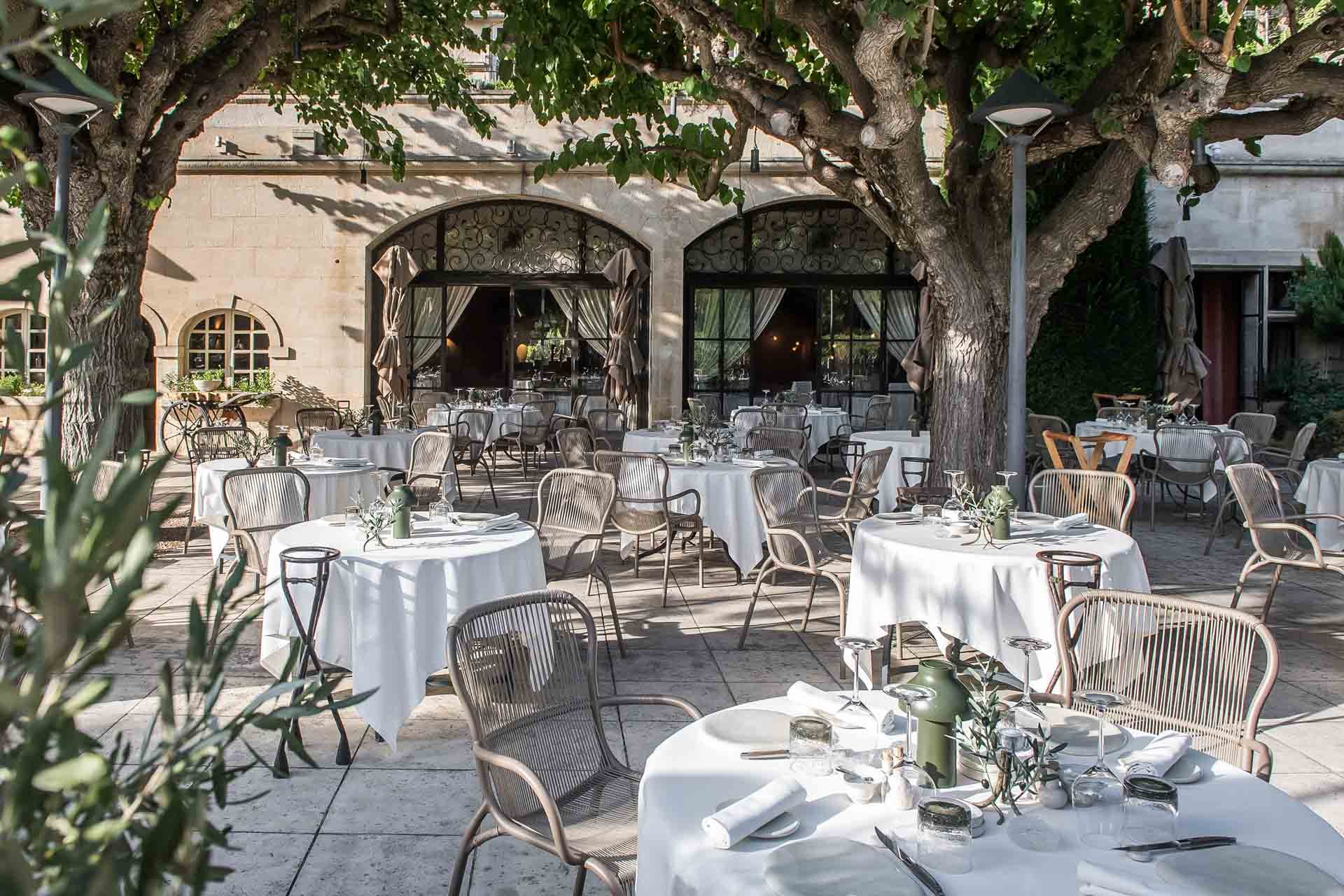
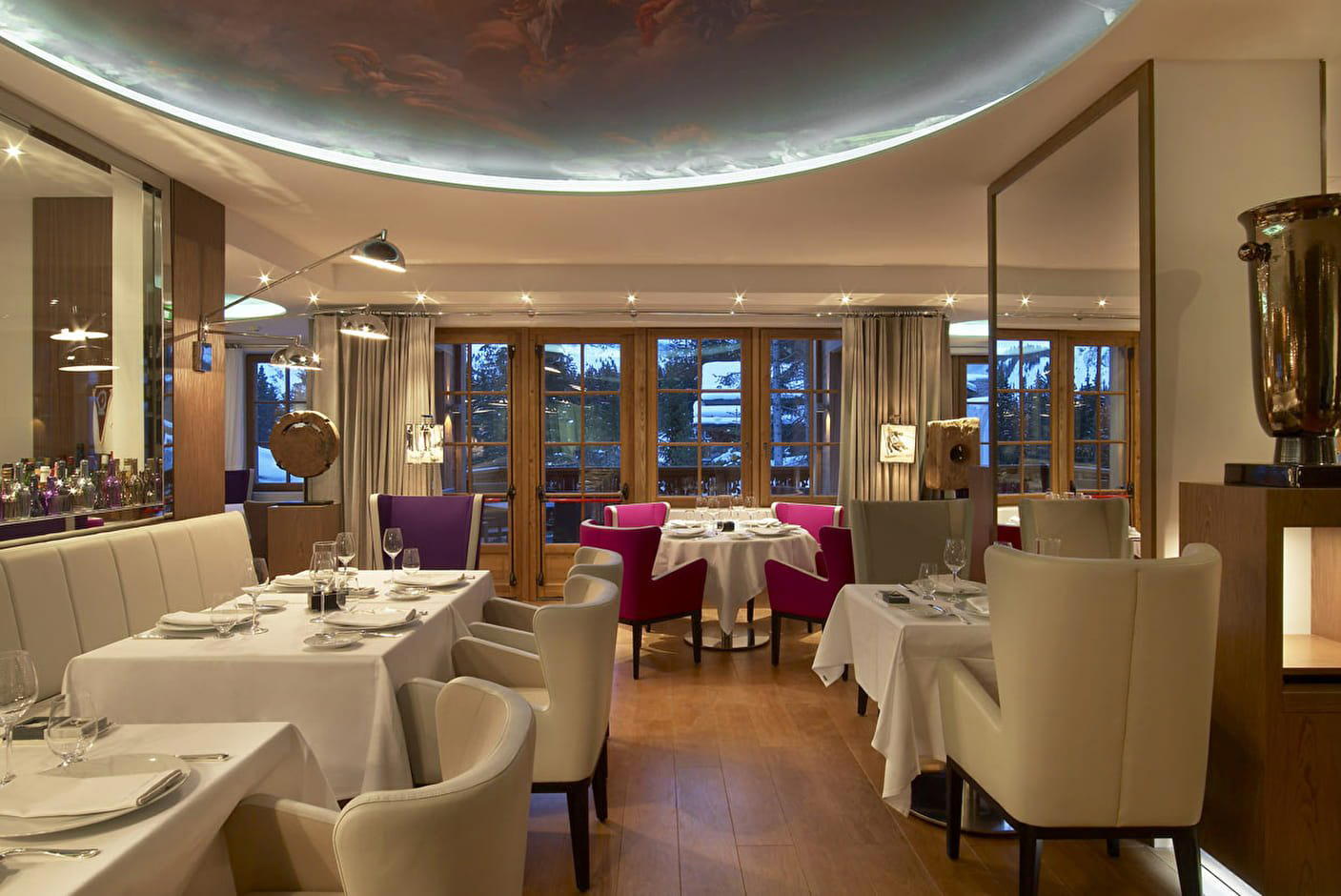
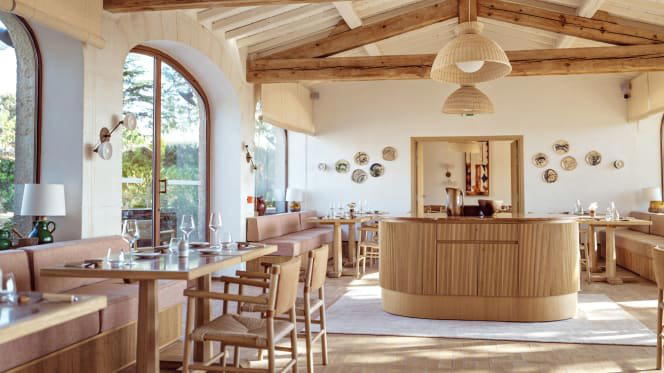
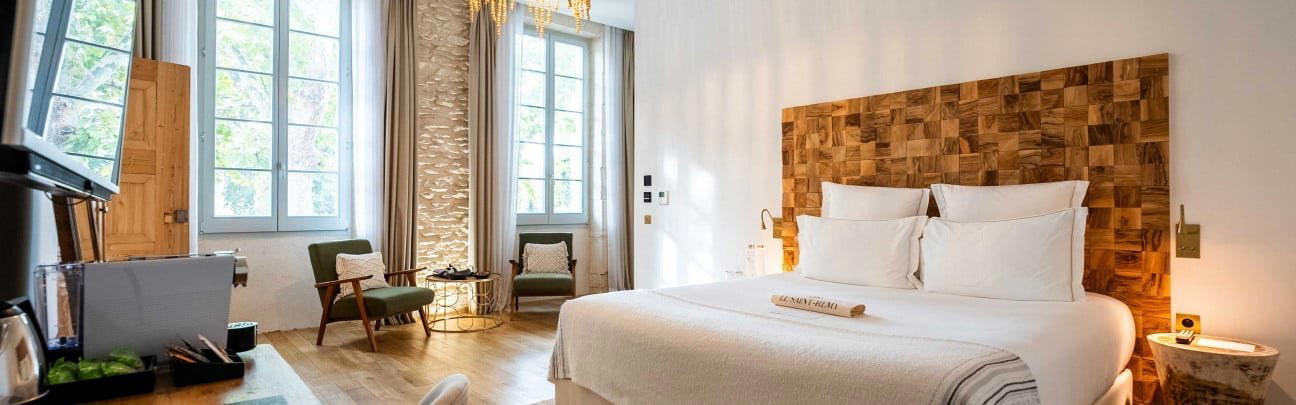
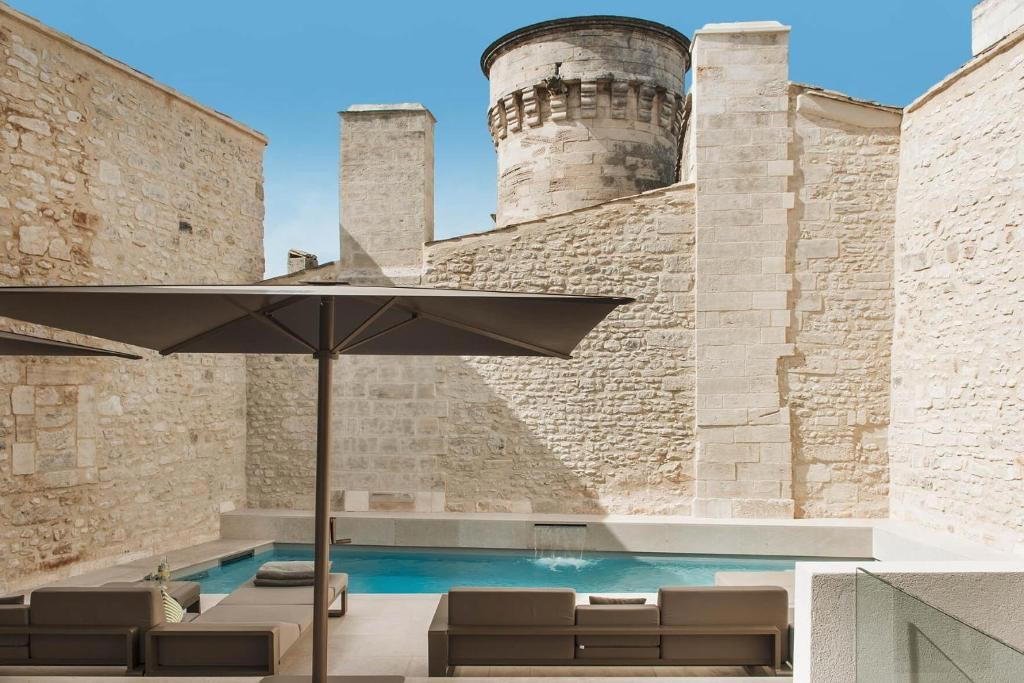
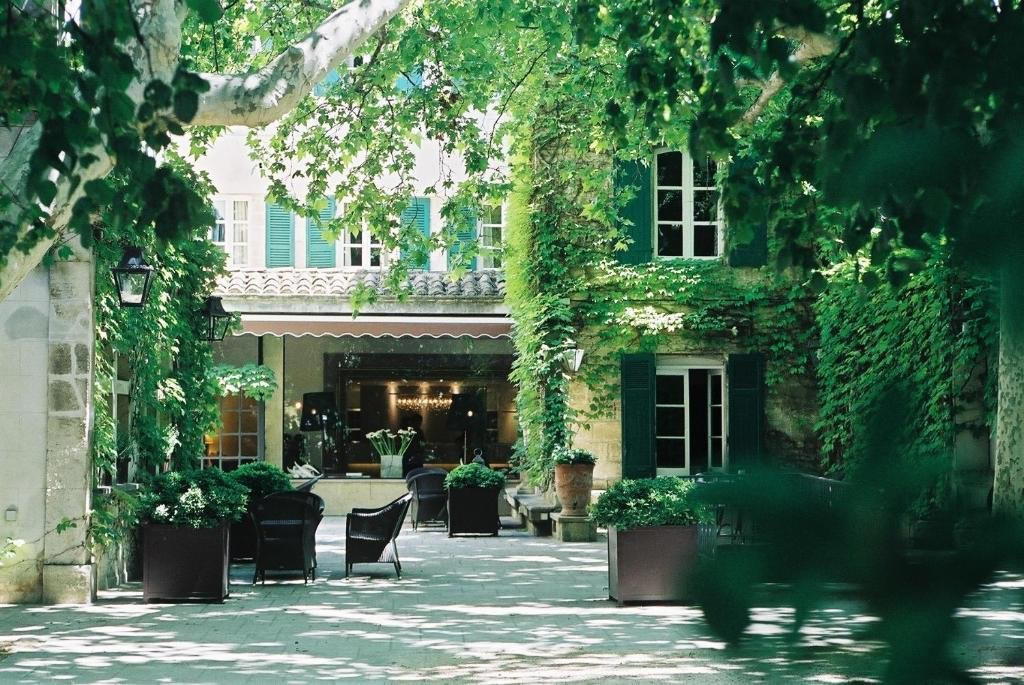
Refined and sober interior complemented by a serene garden and special outdoor terrace, creating an elegant yet welcoming atmosphere.