Tangerine Restaurant & Bar
Our verdict
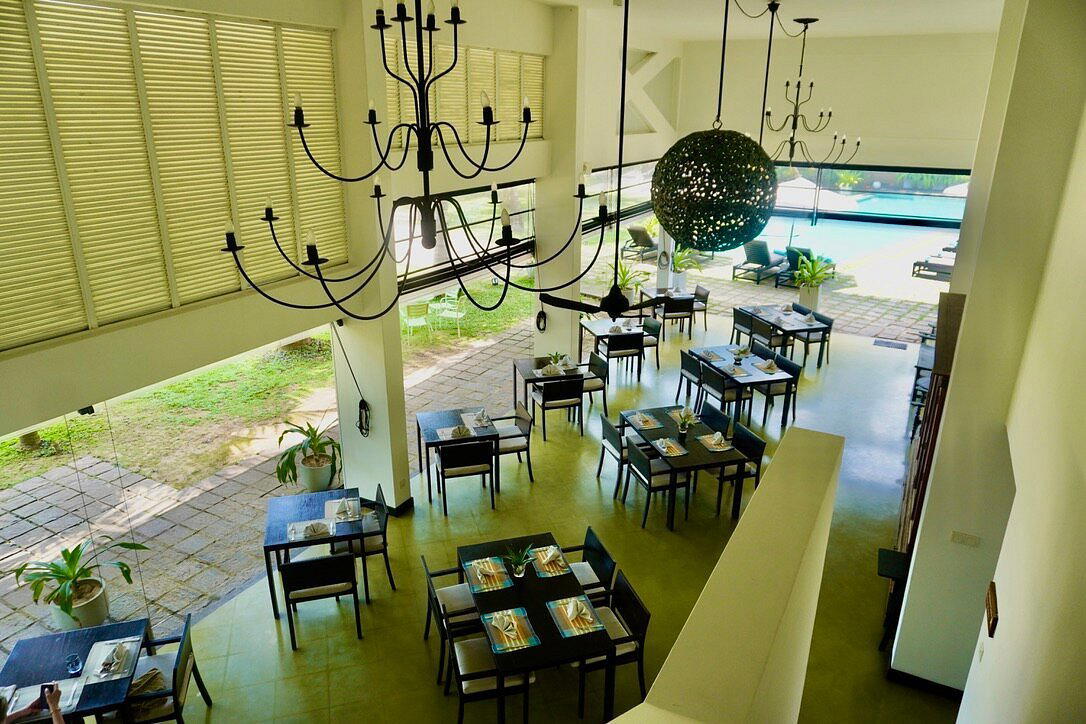
Set along the quiet southern coastline at Balapitiya, the Main Restaurant at Aavya Cove Villas serves seasonal, seafood-forward southern Sri Lankan cooking where the spice architecture does the heavy lifting. The kitchen draws on the coastal pantry directly, fish landed nearby, coconut milk pressed close to source, and the layered tempering traditions that define this stretch of the island's cuisine.

Pearl is the En Primeur Club membership app, where members save venues, book tables and use the concierge.
Spice, Coast, and the Southern Sri Lankan Table
The southern coastal belt between Colombo and Galle has a distinct culinary register that separates it from the hill country and from the north. Here, the cooking is built on coconut-fat tempering, surf-to-table fish, and a spice grammar that works in layers: whole mustard seed crackling in hot oil before ground coriander and turmeric enter the pan, then fresh curry leaf and dried chilli at different temperatures, each addition changing the base without erasing the one before it. The Main Restaurant at Aavya Cove Villas sits inside this tradition, presenting seasonal, seafood-forward southern Sri Lankan food to guests staying along one of the quieter stretches of the country's coastline.
Balapitiya sits roughly midway between Colombo and Galle on the southwestern coast, a position that places it within reach of serious dining at both ends of the road. Ministry of Crab in Colombo and AQUA Forte in Galle represent what happens when Sri Lankan coastal produce meets formal restaurant ambition. The Main Restaurant at Aavya Cove Villas operates differently: it is a property dining room working in the register of the place itself, not reaching toward urban fine dining. That is not a concession, it is a choice, and one that makes sense given the geography.
How the Spice Architecture Works Here
Southern Sri Lankan cooking is not casually spiced. The tradition along this coast distinguishes carefully between whole spice cooked in fat at the start of a dish, ground spice added with liquid in the middle stages, and finishing aromatics introduced at the end. Each phase changes the structural character of the seasoning: a whole cardamom pod split into hot coconut oil delivers a different compound than the same cardamom ground and added to a simmering curry. The distinction matters to the palate even when it is invisible on the plate.
A kitchen working the seasonal, seafood-forward brief in this part of Sri Lanka has specific raw material advantages. The coastal waters around Balapitiya and the Madu River estuary to the south produce a range of fish and shellfish that varies genuinely by month. Seasonal cooking here is not a marketing position, it is a function of what the boats bring in and what the nearby market carries on a given day. The most direct expression of southern Sri Lankan spice architecture tends to appear in preparations built around these daily catches: fish tempered in mustard and curry leaf, crab curries where the fat from the shell carries the bloomed spice, and prawn dishes where dried chilli and pandan work against the sweetness of the shellfish.
KAIYŌ in Weligama works with similar coastal produce but with a different cultural inflection. Coconut Sambol in Galle applies the southern pantry to a more casual format. The Main Restaurant at Aavya Cove Villas occupies the property-dining tier of this spectrum, where the setting frames the food and the kitchen's job is to represent the place honestly.
The Setting and What It Shapes
The physical environment at a property restaurant on this stretch of coast shapes the experience in ways that standalone restaurants cannot replicate. The southwestern coastline at Balapitiya brings the Indian Ocean close, and meals taken with that proximity, the sound of water, the softening light that comes off open sea in the late afternoon, the salt in the air, add a layer of context that the food itself does not have to supply. The kitchen's role, in a room like this, is to deliver something that earns its setting rather than hiding behind it.
For guests staying at Aavya Cove Villas, the practical logic of the restaurant is direct: the cooking is grounded in the traditions of the stretch of coast they have traveled to see, which makes the meal itself part of the destination proposition rather than a convenience. For anyone driving the coastal road between Colombo and Galle, the broader dining map is worth knowing.
Sri Lanka's Dining Spectrum in Context
Sri Lankan restaurant culture covers an unusually wide range, from deeply local spots such as Priyamali Gedara in Kaduruwela and U.S. Restaurant in Jaffna, which serve regional cooking without concession to outside audiences, to international formats like Crystal Jade in Colombo and Grand Thai Restaurant in Nuwara Eliya. There are also property restaurants embedded in landscape, such as Laya Safari in Palatupana and COAST in Yala, where the natural setting is inseparable from the table. The Main Restaurant at Aavya Cove Villas belongs to this last category: a kitchen defined by where it is as much as by what it cooks.
Further along the southern road, places such as Petti Petti in Thalaramba and Maara Cafe in Galewela show how Sri Lanka's middle-tier dining has broadened its range in recent years. The island's restaurant culture is no longer concentrated in Colombo in the way it once was, coastal towns and inland spots are developing their own dining identities, and the southern coast is among the most active of these zones. For a contrasting international reference point, the seafood-forward discipline that distinguishes the southern Sri Lankan table from its neighbors has conceptual analogues at a very different price tier in places like Le Bernardin in New York City, where fish cookery is treated as the primary expression of culinary intelligence rather than a supporting act.
Planning a Visit
Aavya Cove Villas is a small property, and its restaurant operates on the scale of the villa count, meaning the dining room is not large and availability for non-staying guests, if offered at all, should be confirmed in advance. Guests who are staying at the property will find the kitchen works to a seasonal brief, so what appears on the table shifts with the catch and the month. The southwestern monsoon typically runs from May through September, which affects both the sea conditions and the availability of certain fish species; the dry-season months of November through April tend to bring calmer water and broader access to fresh catch along this stretch of coast. The cooking tradition itself, however, requires no external validation: the spice architecture of the southern Sri Lankan coast is one of the more technically specific and regionally coherent food cultures in South Asia.
Frequently asked questions
Is Main Restaurant (Aavya Cove Villas) good for families?
Balapitiya sits well north of the concentrated tourist density in Galle and Mirissa, which makes it a quieter setting than most coastal alternatives. A villa-scale property restaurant serving seasonal southern Sri Lankan cuisine operates on a slower rhythm than a resort buffet or a town-centre spot, which suits families looking for a low-pressure coastal meal. Younger children who are unfamiliar with assertively spiced southern Sri Lankan food should be aware that the kitchen's orientation is toward the spice traditions of this coast rather than adapted international menus.
What should I expect atmosphere-wise at Main Restaurant (Aavya Cove Villas)?
The defining atmospheric quality at a property restaurant on this stretch of the southwestern Sri Lankan coast is proximity to water and the absence of ambient noise from a busy town. Aavya Cove Villas is a small property, so the dining room operates at villa scale, meaning the room is intimate by design rather than by accident. The experience is shaped more by the coastal Balapitiya setting and the rhythm of a quiet property than by any interior styling statement.
How does the southern Sri Lankan coastal cuisine at Aavya Cove Villas differ from Sri Lankan food served in Colombo?
Colombo's more recognised dining venues, such as Ministry of Crab, apply Sri Lankan ingredients within formats calibrated for an international audience, often moderating heat and spice intensity. The southern coastal tradition practised in Balapitiya works from the opposite direction: the spice logic and the catch dictate the dish, not the reverse. A property restaurant at this scale in Balapitiya is cooking within a regional vernacular that Colombo restaurants generally interpret rather than practice directly.
What do regulars order at Main Restaurant (Aavya Cove Villas)?
The kitchen's stated focus is seasonal, seafood-forward southern Sri Lankan cuisine, which points toward preparations built around whatever the local waters and Balapitiya markets are supplying at that time. On this coast, that typically means fish curries constructed around the layered spice logic of the south, whole spices bloomed in fat at the start, ground spices added mid-cook, rather than the milder or more generic coastal preparations found elsewhere in Sri Lanka. Guests staying at the villa are best positioned to ask about that day's catch directly.
Is Main Restaurant (Aavya Cove Villas) reservation-only?
Small villa properties in Sri Lanka at this scale almost always prioritise in-house guests over walk-in traffic, and the dining room at Aavya Cove Villas is sized to match the villa count rather than to seat a broader public. External guests considering a visit should check the venue's official channels to confirm availability, as there is no public booking platform listed. Arriving without prior arrangement is unlikely to be practical.
What's the defining dish or idea at Main Restaurant (Aavya Cove Villas)?
The defining idea is the spice architecture of the southern Sri Lankan coast applied to whatever seafood the local waters and Balapitiya markets are producing at the time of a visit. Southern Sri Lankan cooking distinguishes between whole spices tempered in fat at the opening of a dish and ground spices introduced at different stages, a structural logic that separates it from the cooking of Colombo, the hill country, or the north. The menu changes with the season and the catch rather than holding to a fixed repertoire.
Side-by-Side Snapshot
Comparable venues nearby, for context on price, style, and recognition.
| Venue | Cuisine | Price | Awards | Notes |
|---|---|---|---|---|
| Main RestaurantThis venue (the venue you are viewing) | Seafood Fusion | $30–50 | Not listed | Not listed |
| The Gallery Café | Sri Lankan Fusion | $10–20 | Not listed | Colombo 03 |
| Ten Tuskers Bar | Bar | Not listed | Relais Chateaux Award | Yala National Park |
| restaurant@jetwingyala | Asian Fusion and Sri Lankan | Not listed | Not listed | Palatupana |
| U.S. Restaurant | Sri Lankan and American Fast Food | $1–10 | Not listed | Hospital St |

Continue exploring
More in Balapitiya
Bars in Balapitiya
All bars in Balapitiya →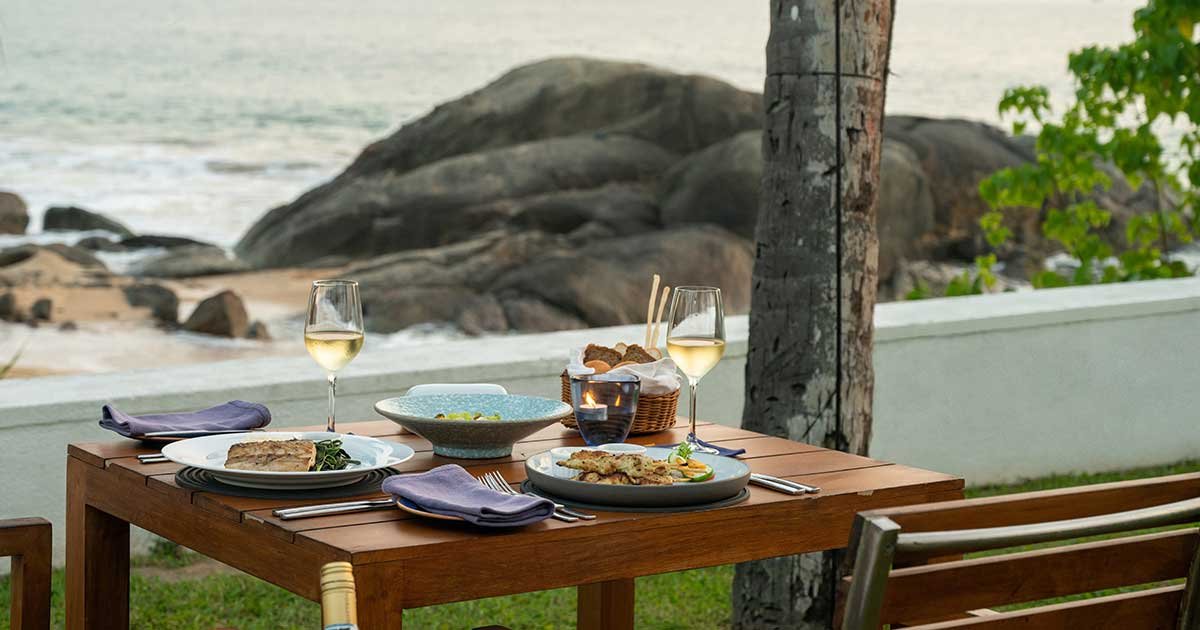
Hotels in Balapitiya
All hotels in Balapitiya →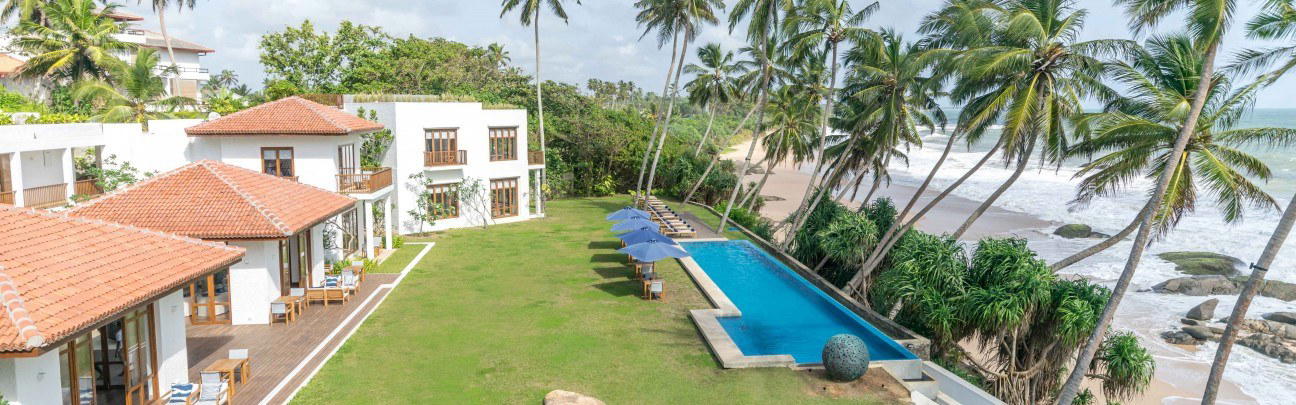
Details
- Romantic
- Scenic
- Elegant
- Special Occasion
- Date Night
- Waterfront
- Hotel Restaurant
- Beachfront
- Waterfront
- A La Carte
- Set Menu
- Vegetarian Friendly
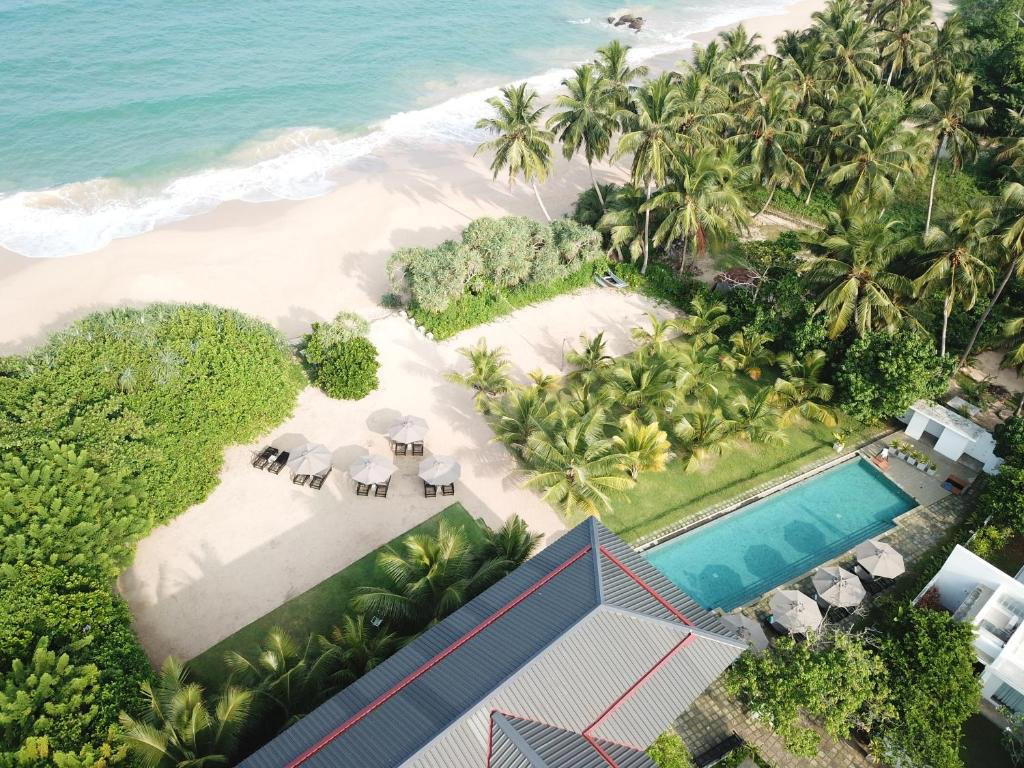
Serene and picturesque beachfront setting with ocean views, praised for its relaxing tropical atmosphere.