Luling City Market
Luling City Market at 4726 Richmond Ave. is one of Houston's most enduring barbecue institutions, where the Central Texas smoke tradition meets an unpretentious dining room that has fed the city for decades. The space itself tells the story: communal tables, butcher paper, and a pit room that perfumes the whole block. It sits in a different register entirely from Houston's fine-dining circuit, and that distance is the point.
Pearl is the En Primeur Club membership app — saves, bookings, and concierge access live there. Same editors, same standards.
- Address
- 4726 Richmond Ave., Houston, TX 77027
- Phone
- +17138711903
- Website
- lulingcitymarket.com
- Directions
- Get directions
 Saves & bookings on Pearl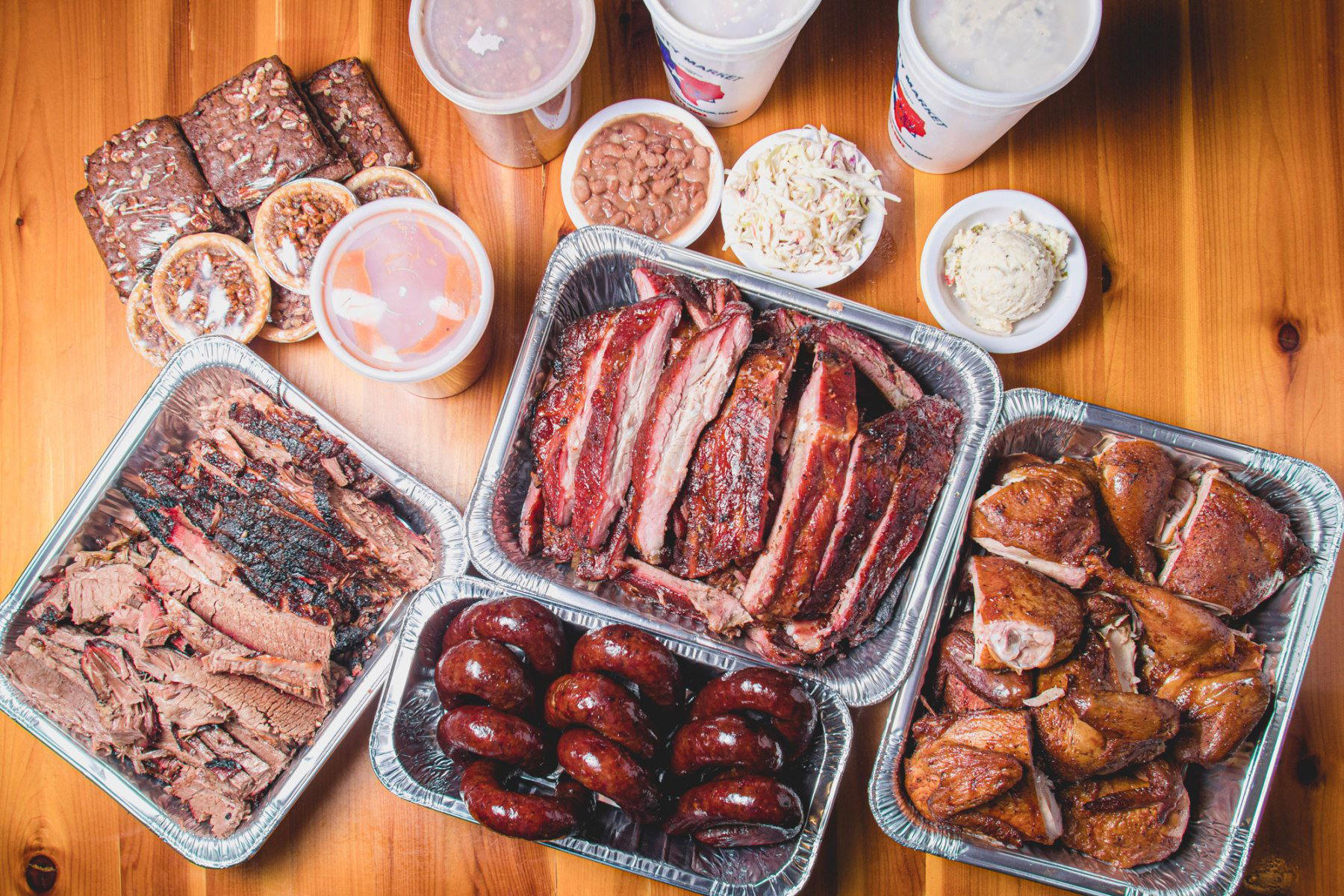
Smoke, Space, and the Architecture of a Houston Institution
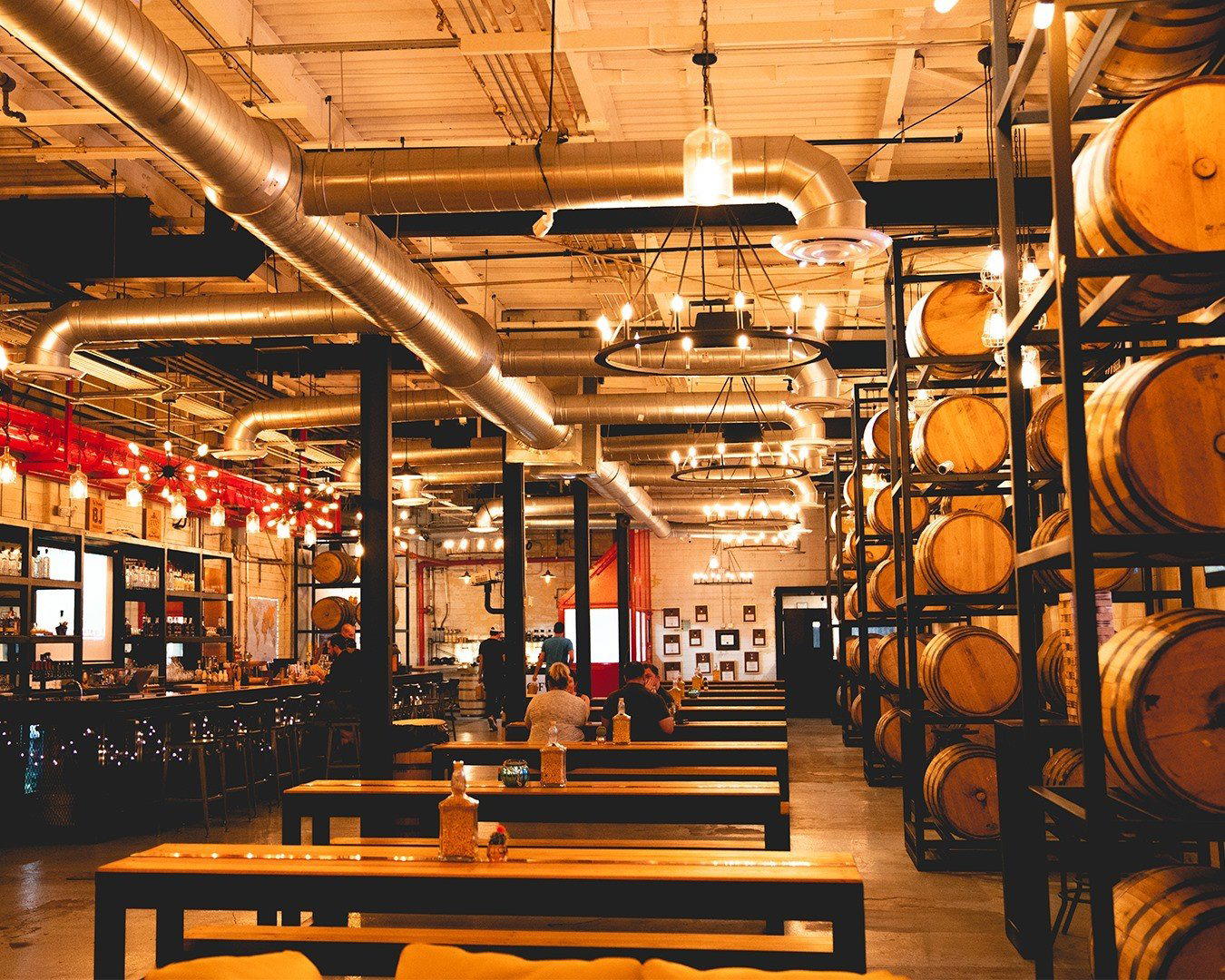
There is a particular kind of dining room in Texas that communicates its intentions before you reach the counter. The floor plan is open, the tables are long, the lighting is functional rather than atmospheric, and the smell of wood smoke has had years to work its way into every surface. Luling City Market at 4726 Richmond Ave. in Houston's Galleria-adjacent corridor belongs to this tradition. The physical container is not incidental — it is the message. Where restaurants like March signal their register through candlelit Venetian restraint, and Musaafer through immersive subcontinental design, Luling City Market signals through deliberate absence of pretension. That absence is a position, not an oversight.
Central Texas barbecue has its own spatial grammar. The serving line, the communal seating, the butcher-paper presentation — these are inherited from the meat markets of Lockhart and Luling, towns where barbecue emerged not from restaurant culture but from the side rooms of German and Czech butcher shops. Luling City Market draws its name and lineage from that South Texas tradition, transplanted to Houston's mid-city geography. The address on Richmond Ave. places it in a commercial stretch that has housed the restaurant for decades, long enough that it predates the current wave of Houston barbecue enthusiasm and the city's refined food media coverage.
The Physical Room as Editorial Statement
In a city where interior design has become a competitive differentiator, where new openings announce themselves through custom tile work, imported fixtures, and curated playlists, the layout of a place like Luling City Market operates as counter-programming. Long communal tables encourage the kind of shoulder-to-shoulder seating that forces interaction with strangers, the way cafeteria-style service always does. There is no architectural hierarchy between tables. No banquette reserved for preferred guests, no window table that confers status. The room distributes everyone equally under the same ceiling, with the same tray, and the same butcher paper.
This is not accidental. Central Texas barbecue rooms were built around throughput and community, not occasion. The pit room is the functional heart of the building, and the dining room exists to serve it, not the other way around. For diners whose reference points are tasting-menu environments like Le Jardinier Houston or Spanish fine dining at BCN Taste & Tradition, the shift in spatial logic is significant. The room at Luling City Market asks nothing of you aesthetically. It simply asks that you be hungry.
Where Luling Sits in Houston's Dining Geography
Houston's restaurant scene has broadened considerably over the past decade, with serious fine-dining investment arriving at multiple points across the price spectrum. Operations like Tatemó, which brings masa-focused Mexican craft to a city already rich in Tex-Mex, represent one direction of that expansion. But the barbecue category has always occupied a separate track in Houston, less subject to trend cycles, more dependent on the accumulated reputation of pitmasters and the specific qualities of a given pit.
Luling City Market's Richmond Ave. location has maintained its position in that category across multiple decades, which is itself a form of evidence. Houston's restaurant turnover is high, as it is in most American cities. Institutions that survive twenty or more years in the same location without reinventing their format have generally done so by being genuinely good at the thing they do, not by chasing what the food media cycle rewards. In that sense, Luling City Market belongs to the same durability class as long-running institutions elsewhere in American dining, venues that measure their credibility in years rather than award cycles.
Comparisons to the broader American fine-dining constellation, from Le Bernardin in New York City to The French Laundry in Napa or Alinea in Chicago, are instructive not because Luling City Market competes in that space but because they clarify what it is doing instead. Where those rooms are built around controlled experience and ceremony, this one is built around access. The food is the ceremony. For more context on where this fits within Houston's full dining range, see our full Houston restaurants guide.
The Barbecue Tradition Behind the Counter
Central Texas barbecue is a discipline with its own canon of technique. Post oak smoke, low-and-slow cooking over indirect heat, brisket as the primary measure of a pit's quality, these are the standards against which every operation in the tradition is assessed. The original Luling, Texas, the town for which this Houston outpost is named, sits in Caldwell County alongside Lockhart as one of the historic centers of Texas barbecue culture. That lineage matters because it anchors the Houston location in a specific regional tradition rather than a generic idea of American barbecue.
The serving format at meat-market-style barbecue operations has always been part of their identity: you order by the pound, you carry your tray to a communal table, and the experience is structured around informality and volume. This is a dining format that has influenced American casual eating far beyond Texas, and its contemporary counterparts can be tracked from the Lazy Bear in San Francisco to farm-to-table communal formats at places like Blue Hill at Stone Barns in Tarrytown, though the ideological distance between those operations and a Texas meat market is considerable.
Planning a Visit
Luling City Market operates as a counter-service barbecue institution, which means the planning logic differs from reservation-driven dining. The practical considerations are timing and volume rather than booking windows. Barbecue sells out when it sells out, arriving early in the lunch window is standard practice at serious Texas barbecue operations, where the leading cuts move fastest. Richmond Ave. in the Galleria area is accessible by car with parking, and the format is suited to groups as much as solo diners.
Quick Comparison: Luling City Market vs. Houston Peers
| Venue | Format | Price Tier | Reservation Required | Dining Style |
|---|---|---|---|---|
| Luling City Market | Counter service, communal | $ | No | Casual, barbecue |
| March | Tasting menu | $$$$ | Yes, in advance | Fine dining |
| Musaafer | A la carte / tasting | $$$$ | Yes | Fine dining |
| Nancy's Hustle | A la carte | $$ | Recommended | Contemporary casual |
| Theodore Rex | A la carte | $$$ | Recommended | Contemporary |
Continue exploring
More in Houston
Restaurants in Houston
Browse all →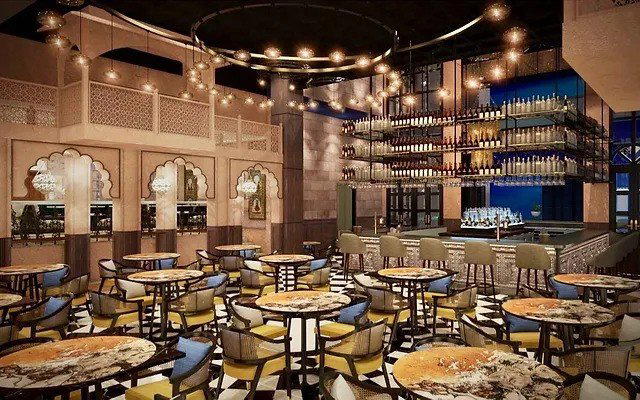
Bars in Houston
Browse all →
Hotels in Houston
Browse all →
At a Glance
- Rustic
- Classic
- Casual Hangout
- Group Dining
- Standalone
Current opening hours
- Monday
- 11 AM–8 PM
- Tuesday
- 11 AM–8 PM
- Wednesday
- 11 AM–8 PM
- Thursday
- 11 AM–8 PM
- Friday
- 11 AM–8 PM
- Saturday
- 11 AM–8 PM
- Sunday
- 12–7 PM
Hours can change for holidays and private events. Last verified .
Rustic saloon-style atmosphere with walk-up counter service, simple wood-fired barbecue focus, and casual no-frills dining.
Know Before You Go
- Getting there
- 4726 Richmond Ave., Houston, TX 77027