
Michelin Plate
Our verdict
Limpide occupies a quietly considered dining room in Lambersart, just outside Lille, where antique stained-glass windows filter light across a pared-back interior inherited from its predecessor Empreinte. Chef Karl Widmer, trained under Yannick Alléno and Damien Laforce, cooks ingredient-led modern French cuisine with a restraint that reads as conviction rather than limitation. The monkfish in barigoule has become a reference point for the kitchen's approach.

Pearl is the En Primeur Club membership app — saves, bookings, and concierge access live there. Same editors, same standards.
- Address
- 170 avenue de l'Hippodrome, à Lambersart
- Phone
- +33 9 60 17 58 76
- Hours
- Mon 12–1:30 PM, 7:30–9:15 PMTue–Wed ClosedThu–Sat 12–1:30 PM, 7:30–9:15 PMSun 12–3 PM
- Website
- restaurantlimpide.fr
- Directions
- Get directions
- Booking
- Book on Zenchef
The menu
What to order
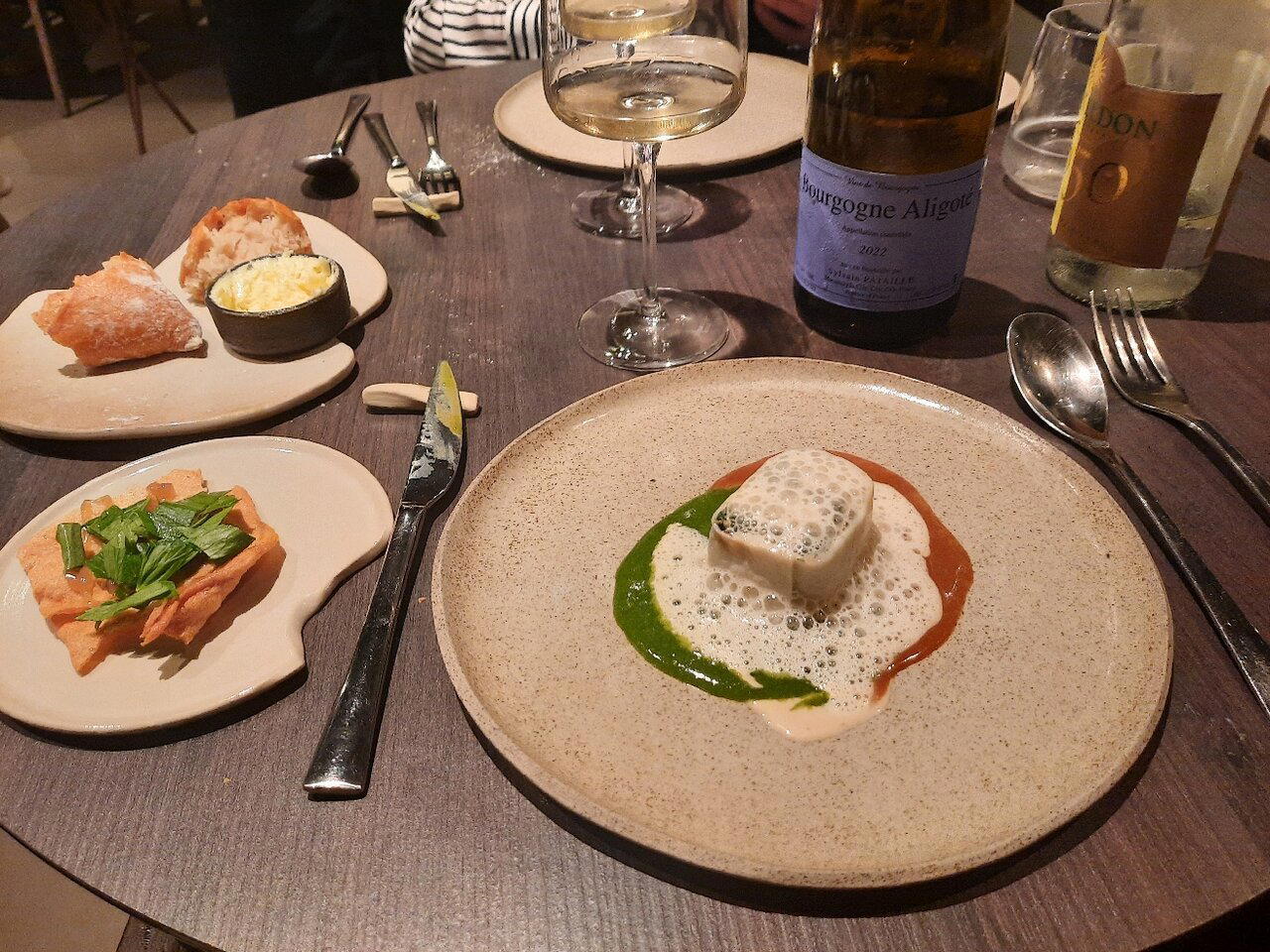
- Monkfish in barigoule
- Scallop Noémie
Light, Restraint, and the Ingredient as Argument
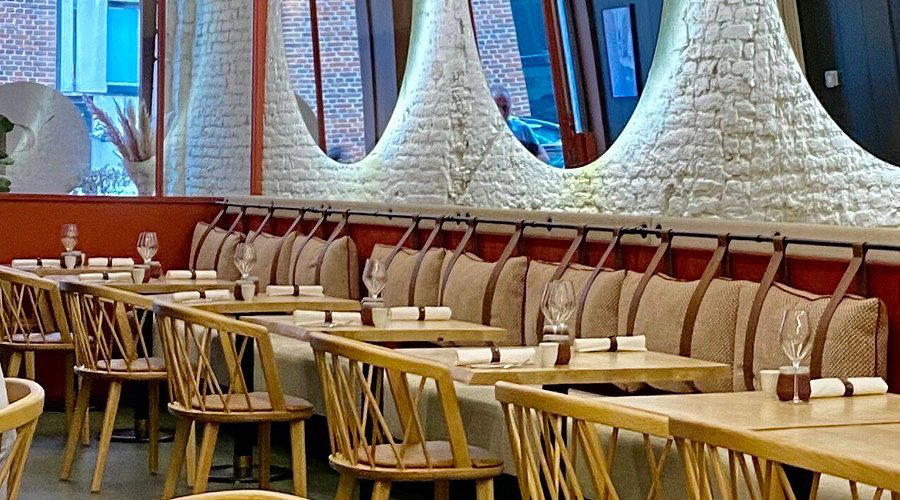
The avenue de l'Hippodrome in Lambersart sits at a quiet remove from central Lille, a residential stretch where the pace of the quartier works in the restaurant's favour. Arriving at Limpide, the first thing that registers is the light: large windows set with antique stained glass depicting the art of brewing cast a diffuse, colour-inflected glow across the small dining room. The aesthetic is inherited from Empreinte, the restaurant that previously occupied this address, and the continuity is deliberate. There is nothing here designed to impress through volume or spectacle. The room communicates its intentions before a plate arrives.
That restraint is the operating logic of the whole address. In a regional dining scene that includes destination-level modern cooking at places like La Table at Hôtel Clarance and the market-anchored register of Bloempot, Limpide positions itself differently: not through scale or conceptual ambition, but through precision at the level of the individual ingredient. The room is small, the menu focused, and the cooking driven by a clear point of view about what a plate should contain and why.
Where Ingredients Lead the Argument
The editorial angle at Limpide is sourcing-led in the purest sense. This is not a kitchen that reaches for complexity to signal effort; it is one that trusts the quality and provenance of its materials to carry meaning. The barigoule tradition offers a useful illustration. A Provençal technique classically applied to artichokes braised with aromatics, white wine, and olive oil, it demands produce that can hold its character through the cooking process. At Limpide, the dish arrives built around monkfish, with artichoke hearts cooked to a yielding tenderness and a white butter sauce that functions as a frame rather than a statement on its own. The restraint on the plate reflects a conviction that the ingredient has something to say if the cook gets out of the way.
This approach connects Limpide to a broader current in French contemporary cooking, one that runs from Michel Bras's insistence on the gargouillou's raw materials at Bras in Laguiole to the seafood sourcing rigour that defines Le Bernardin in New York. The common thread is a kitchen that earns authority by knowing its suppliers and respecting the limits of intervention. Limpide operates in that tradition at a more accessible register, which makes it a useful entry point into the argument rather than its most expensive expression.
The Training Behind the Restraint
Chef Karl Widmer's formation explains the precision without reducing the cooking to biography. The kitchens of Le Val d'Auge, Yannick Alléno, and Damien Laforce represent a particular lineage: technique-heavy, product-focused, and attentive to the logic of a sauce or a preparation at a granular level. Alléno's influence in particular runs through a school of thinking about extraction, transformation, and the identification of what a single ingredient can yield when pushed with intelligence rather than force.
The broader Lille scene provides useful comparisons for calibrating where Limpide sits. Ginko and Pureté represent modern French cooking at different price points and ambition levels. Coup de Main works a creative register that leans toward experimentation. Limpide's position is quieter than any of these: a young chef making principled choices in a modest room in Lambersart, without the reinforcement of a hotel address or an established brand. That independence from institutional scaffolding is part of what the cooking has to prove on its own terms.
The Room and the Experience
The stained-glass windows deserve more attention than a casual mention. Their subject matter, the art of brewing, connects the space to the industrial and artisanal history of the Lille region, where textile production and the culture of the estaminet have long shaped the relationship between work, craft, and table. The choice to retain them from the Empreinte era rather than replace them with something more neutral reads as a deliberate positioning: this is a room that acknowledges where it sits, geographically and culturally, rather than aspiring to a generic modernity. The light they produce changes through service, and in a small dining room that dynamic matters.
Scale of the space reinforces the intimacy of the cooking. A small dining area concentrates attention on the plate and the interaction between kitchen and table in ways that larger rooms cannot replicate. This format has become more common across French regional dining as younger chefs prioritise control over volume, a pattern visible at addresses like Flocons de Sel in Megève and Mirazur in Menton, where the ratio of covers to kitchen effort is kept deliberately tight.
Planning Your Visit
Limpide is located at 170 avenue de l'Hippodrome in Lambersart, immediately adjacent to Lille and straightforwardly reachable from the city centre. Given the small dining room and the local following that this kind of principled, neighbourhood-anchored cooking typically builds, booking in advance is advisable rather than optional. The restaurant does not appear to operate a walk-in policy for dinner, and weekend slots at addresses of this type in the Lille area tend to fill two to three weeks out. Arriving without a reservation is a risk not worth taking. For the broader context of where Limpide sits in the city's dining picture, the full Lille restaurants guide maps the competitive set across price tiers and cuisine styles. Those building a longer itinerary around the region will find useful anchors in the Lille hotels guide, the bars guide, and the experiences guide. The wineries guide covers regional wine options for those extending their time in Nord-Pas-de-Calais.
Frequently asked questions
What kind of recognition has Limpide received?
Limpide has received recognition including: Previously home to Empreinte, Limpide has retained its predecessor's pared-back aesthetic. The small dining area is bathed in light thanks to large windows with antique stained glass depicting the art of brewing. At the helm, young chef Kar….
Where is Limpide in Lille?
Limpide is located at 170 avenue de l'Hippodrome, à Lambersart, Lille.
What dish is Limpide famous for?
The monkfish in barigoule has drawn consistent attention: a white butter sauce, tender artichoke heart, and parsley, composed with the kind of restraint that makes every element count. It encapsulates Karl Widmer's cooking philosophy — sourcing-led, quietly precise, never overstated.
Do I need a reservation for Limpide?
Given the small dining area at 170 avenue de l'Hippodrome in Lambersart, tables fill quickly and walk-ins carry real risk. Booking ahead is advisable, particularly for weekend service.
Quick Comparison
Comparable venues nearby, for context on price, style, and recognition.
| Venue | Cuisine | Price | Awards | Notes |
|---|---|---|---|---|
| LimpideThis venue — the venue you are viewing | Modern French Fine Dining | $50–100 | Michelin Plate | Not listed |
| Rouge Barre | Modern French Gastronomy | $50–100 | Michelin Plate | Vieux Lille 5 |
| La Cantine Urbaine - Artchives | Modern French Bistronomique | Not listed | Michelin Plate | Lille Centre 4 |
| Octopus | Contemporary French with Mediterranean Octopus Specialization | $30–50 | Not listed | Lille Centre 19 |
| Brasserie André | Traditional French Brasserie | $30–50 | Not listed | Lille Centre 12 |
| Saisons - Cave à Manger | Modern French Seasonal Bistro | $30–50 | Michelin Plate | La Madeleine |
Recognition history
Dated appearances from independent guides and award organizations, with the underlying list record or original source where available.
Michelin Plate
Michelin
Continue exploring
More in Lille
Restaurants in Lille
Browse all →
Hotels in Lille
Browse all →
Wineries in Lille
Browse all →
Details
- Modern
- Elegant
- Intimate
- Minimalist
- Date Night
- Special Occasion
- Open Kitchen
- Extensive Wine List
- Tasting Menu
Current opening hours
- Monday
- 12–1:30 PM, 7:30–9:15 PM
- Tuesday
- Closed
- Wednesday
- Closed
- Thursday
- 12–1:30 PM, 7:30–9:15 PM
- Friday
- 12–1:30 PM, 7:30–9:15 PM
- Saturday
- 12–1:30 PM, 7:30–9:15 PM
- Sunday
- 12–3 PM
Hours can change for holidays and private events. Last verified .
Pared-back aesthetic with natural light from large windows featuring antique stained glass, creating a light-filled yet simple and somewhat severe atmosphere.