
A market-anchored neo-bistro on Rue de Bretagne, Les Enfants du Marché operates in daily rhythm with the Marché des Enfants Rouges next door, with chef Shunta Suzuki shaping a menu around whatever arrives that morning. Ranked #16, #17, and #30 in Opinionated About Dining's Casual Europe list between 2023 and 2025, it holds one of the more consistent OAD records among Paris informal dining addresses. Open Tuesday through Sunday, closed Monday.
Pearl is the En Primeur Club membership app — saves, bookings, and concierge access live there. Same editors, same standards.
- Address
- 39 Rue de Bretagne, 75003 Paris, France
- Phone
- +33 1 40 24 01 43
- Website
- lesenfantsdumarche.fr
- Directions
- Get directions
 Saves & bookings on Pearl
Where the Market Sets the Menu
Paris neo-bistros divide into two broad camps: those that reference market sourcing as an idea, and those structurally dependent on it as a daily operating fact. Les Enfants du Marché, at 39 Rue de Bretagne in the 3rd arrondissement, belongs firmly to the second. The address sits directly adjacent to the Marché des Enfants Rouges, the oldest covered market in Paris, and that proximity is not incidental. It shapes what the kitchen can offer each day, how the menu moves through the week, and what a diner can reasonably expect to find on any given Tuesday versus a Saturday morning. The relationship between the stall and the pass is as close as it gets in the city without running an actual market stand.
That kind of tight market dependency is increasingly rare even in the Marais, a neighbourhood that has accumulated some of Paris's most closely watched informal dining rooms over the past decade. Clown Bar and Le Saint Sébastien both operate in this same quartier with small, rotating menus, but neither is physically embedded in a market the way Les Enfants du Marché is. The geography here is more than atmosphere. It is a supply constraint that functions as a creative discipline.
Shunta Suzuki and the Japanese Influence on French Informal Dining
Chef Shunta Suzuki represents a thread that has run through Paris neo-bistro cooking for the better part of two decades: the Japanese chef, trained either partly or wholly in France, who brings a different set of knife disciplines and a different sensitivity to product to the French bistro format. At the higher end of the Paris spectrum, this cross-pollination is evident at Kei, where the formal tasting menu format absorbs the influence. At the informal level, it tends to produce something sharper and less calculated, where the daily product rather than the chef's conceptual framework drives the plate.
The broader French fine-dining tradition, from the Bocuse generation through to houses like Arpège and Alléno Paris au Pavillon Ledoyen, has always placed sourcing at the center of the argument. What neo-bistro cooking does is remove the formality that surrounds that argument, leaving the produce and technique visible without the ceremony. In Suzuki's case, the Japanese precision applied to French market ingredients produces a specific kind of cooking that has been recognised consistently by those who track this tier closely. For comparison, neo-bistro cooking has found parallel expressions in other European cities: Barred in Rome and André in Valence both work a similarly disciplined informal register.
The OAD Record: Three Consecutive Years in the Top 30
Opinionated About Dining's Casual Europe list is a useful calibration tool for this tier because it is compiled by a community of frequent diners rather than a single editorial voice. The OAD trajectory over that three-year period shows slight downward movement in the ranking but consistent presence in a competitive field. The 2025 list position needs to be read in context: the field of venues being assessed by OAD contributors has expanded, and dropping from #17 to #30 in that environment does not indicate a decline in quality so much as a broader field.
What the OAD record signals, more usefully, is that Les Enfants du Marché has maintained standing with an audience that eats across the European informal dining spectrum and compares across cities. That is a different kind of validation than a local review or a tourist-facing award.
For context on where this sits in the Paris dining spectrum: the €€€€ bracket formal houses such as Alléno Paris or Arpège operate on reservation windows of months and prix-fixe structures that lock in the experience before you arrive. The neo-bistro model that Les Enfants du Marché represents is more contingent, more immediate, and the value proposition is different. You are paying for today's sourcing and today's decision-making, not a stable tasting sequence.
The Setting and the Rhythm of Service
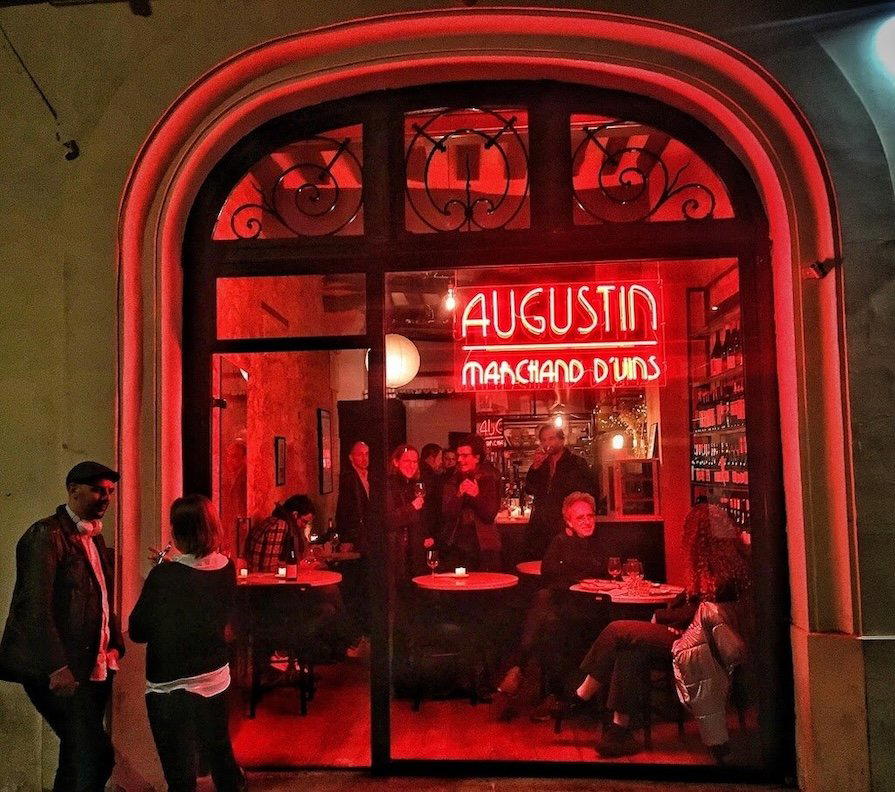
Rue de Bretagne is one of the Marais's more functional streets, in the sense that it contains the kind of everyday commerce, the butcher, the baker, the covered market, that makes a neighbourhood rather than just a restaurant corridor. The setting for Les Enfants du Marché is therefore less curated than many of its peers in the 3rd and 4th arrondissements, and that is part of the point. The aesthetic is market adjacency rather than designed informality. What you get is a room shaped by its location rather than assembled to suggest one.
Service runs Tuesday through Saturday from 12pm to 8:30pm, and Sunday from 12pm to 5pm, with Monday closed. The hours reflect the market context: this is a venue that functions as a lunch and dinner address before it closes in the early evening on Sundays. That double rhythm distinguishes it from the dinner-only neo-bistros that have become the dominant format in Paris's informal premium tier. The Sunday close at 5pm aligns with market rhythms too, and by early evening the Rue de Bretagne shifts register entirely.
Where to Place This in Your Paris Itinerary
The Marais's dining density means that pre-dinner drinks, a meal, and a late glass can be executed across a short radius without crossing arrondissements. Les Enfants du Marché slots into a morning market visit and lunch, or into an early dinner, with equal logic. Its opening hours accommodate both patterns.
Beyond Paris, the French regional dining map covers different registers: Mirazur in Menton, Flocons de Sel in Megève, Troisgros in Ouches, Bras in Laguiole, Auberge de l'Ill in Illhaeusern, and Paul Bocuse's L'Auberge du Pont de Collonges each represent the formal and regional poles of what French cooking can reach when removed from the capital's neo-bistro energy.
Planning Your Visit
Les Enfants du Marché is at 39 Rue de Bretagne, 75003 Paris. Open Tuesday to Saturday 9am to 10:30pm, Sunday 9am to 5pm, closed Monday. Given the market-driven menu format, dishes vary by day and season; visiting on a Tuesday or Wednesday morning, when the week's deliveries are fresh, gives the widest spread of what the kitchen is working with. Advance planning is advisable.
City Peers
Comparable venues nearby, for context on price, style, and recognition.
| Venue | Cuisine | Price | Notes |
|---|---|---|---|
| Les Enfants du MarcheThis venue — the venue you are viewing | Modern French Bistro | $$$ | Not listed |
| Calice | Modern French-Japanese Bistro | $$$ | 5th arrondissement |
| Néva Cuisine | Modern French Bistro | $$$ | Quartier de l'Europe |
| Thoumieux | Classic French Brasserie | $$$ | 7ème (7th arrondissement) |
| Le Procope | Classic French Brasserie | $$$ | Saint-Germain-des-Prés |
| La Passerelle | Modern French Gastronomic | $$$ | Issy-les-Moulineaux |
Recognition history
Dated appearances from independent guides and award organizations, with the underlying list record or original source where available.
Opinionated About Dining Casual in Europe Ranked #42
Opinionated About Dining
Opinionated About Dining Casual in Europe Ranked #30
Opinionated About Dining
Opinionated About Dining Casual in Europe Ranked #17
Opinionated About Dining
Opinionated About Dining Casual in Europe Ranked #16
Opinionated About Dining
Continue exploring
More in Paris
Restaurants in Paris
Browse all →
Bars in Paris
Browse all →
Hotels in Paris
Browse all →

At a Glance
- Lively
- Cozy
- Trendy
- Casual Hangout
- Date Night
- Group Dining
- Open Kitchen
- Historic Building
- Natural Wine
- Local Sourcing
Current opening hours
- Monday
- Closed
- Tuesday
- 12–8:30 PM
- Wednesday
- 12–8:30 PM
- Thursday
- 12–8:30 PM
- Friday
- 12–8:30 PM
- Saturday
- 12–8:30 PM
- Sunday
- 12–5 PM
Hours can change for holidays and private events. Last verified .
Lively and convivial market atmosphere with wooden counter seating and dynamic energy.