Google: 4.6 · 110 reviews

Méribel's sole Michelin-starred address, L'Ekrin by Laurent Azoulay earns its 2024 star through a precise dialogue between Provençal Mediterranean ingredients and the alpine pantry of Savoie. A fireside dining room on the Rue des Jeux Olympiques sets the scene for creative, colourful cooking that runs from Mediterranean fish to fir tree bud honey and Savoie snails, with a fully vegetarian menu available alongside the main carte.
 Discover on Pearl
Pearl is the En Primeur Club membership app — saves, bookings, and concierge access live there. Same editors, same standards.
Where the Alps Meet the Mediterranean Pantry
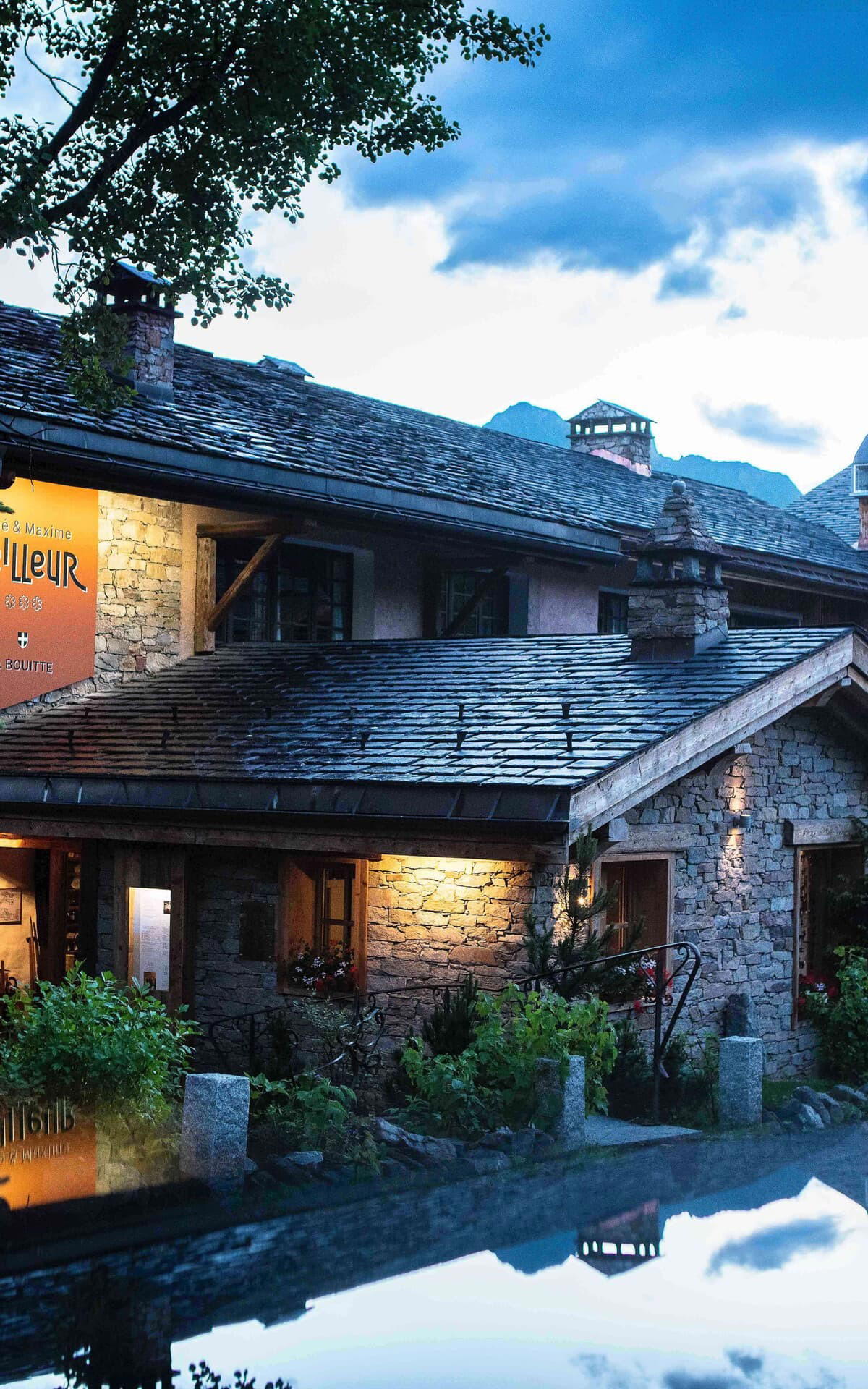
Alpine fine dining in the French ski resorts occupies a peculiar position in the French restaurant hierarchy. The season is short, the clientele transient, and the altitude makes consistent sourcing a logistical exercise rather than a given. Yet the Trois Vallées has quietly built a credible fine-dining tier, and Méribel's contribution to that tier sits at 124 Rue des Jeux Olympiques, where L'Ekrin by Laurent Azoulay holds the valley's only Michelin star as of the 2024 edition of the guide. That credential places it in a small cohort of altitude restaurants across the French Alps where serious kitchen ambition survives the constraints of seasonal operation. For a comparable benchmark in the broader mountain-resort category, Flocons de Sel in Megève represents the upper limit of what alpine kitchens can achieve, but L'Ekrin argues its case on its own terms.
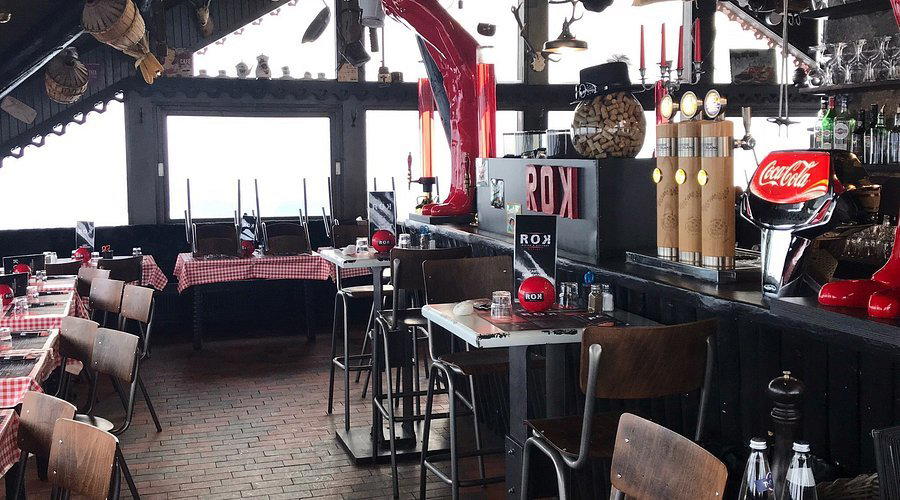
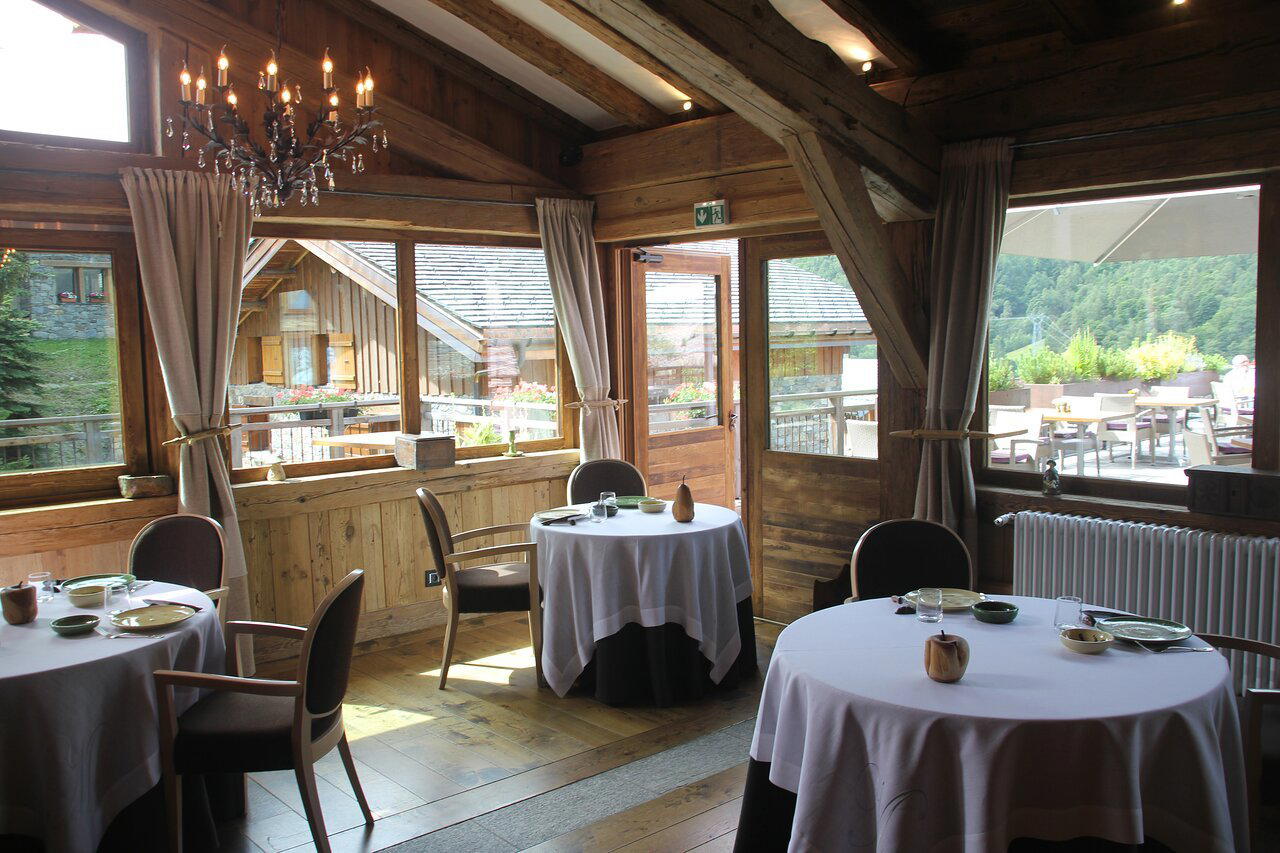
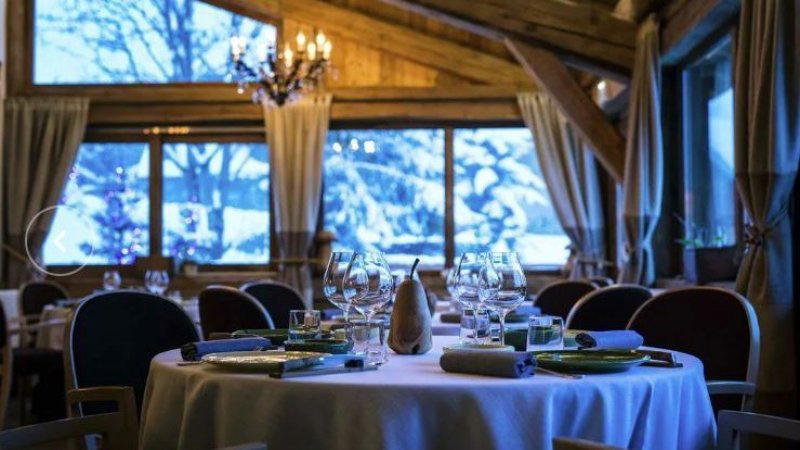
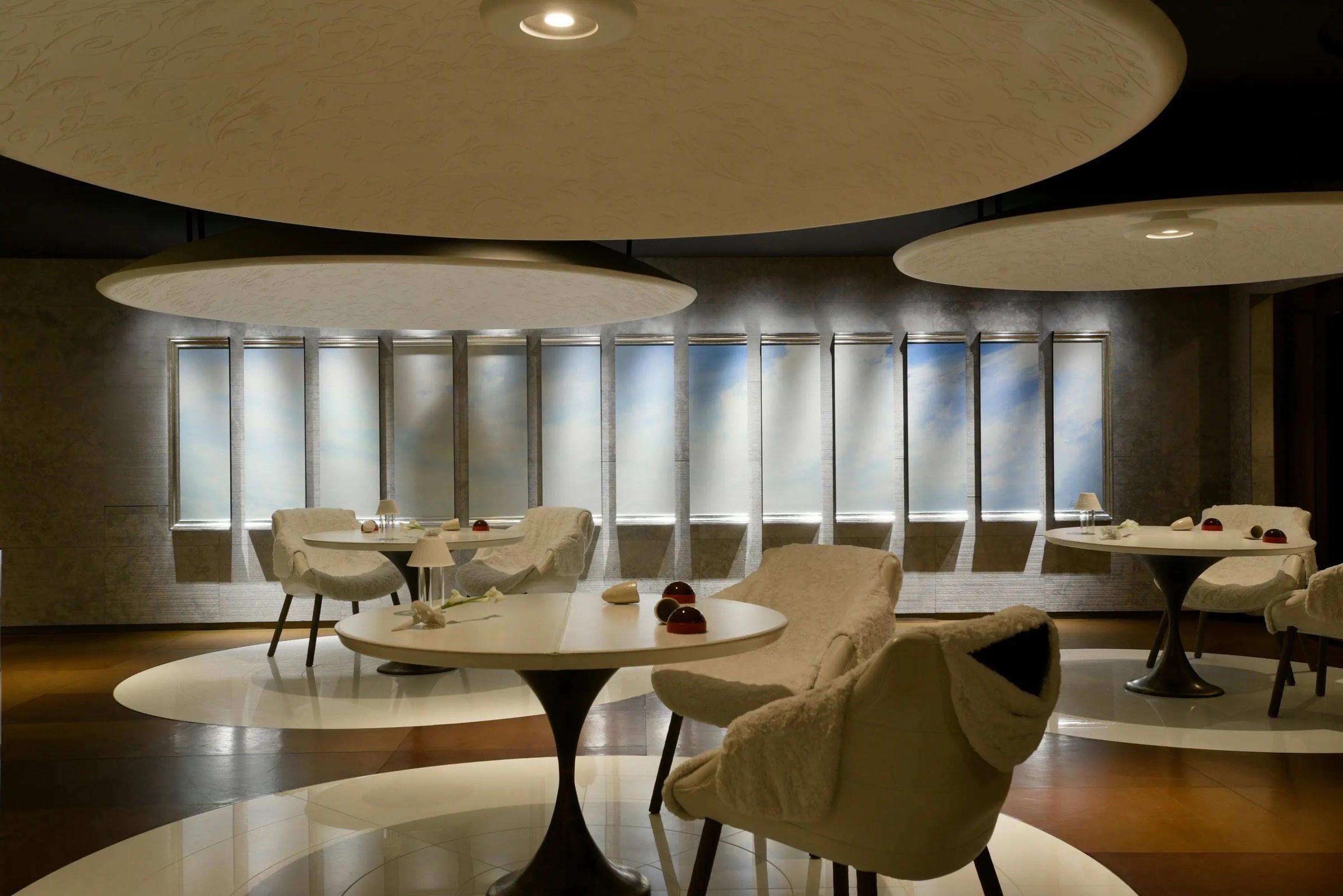
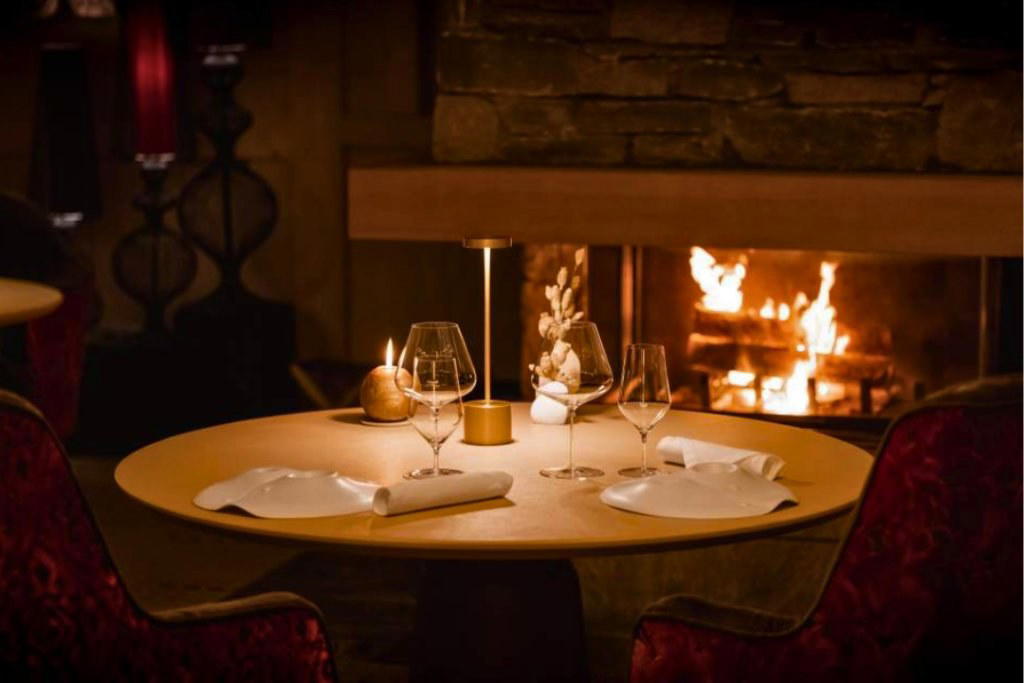
The room itself signals intent before a dish arrives. The fireside setting is deliberate — a cosy, warm interior that frames dinner as an event distinct from the resort's larger, louder dining options. That physical contrast matters in a ski station where most eating happens in casual formats or hotel dining rooms without strong culinary identity. L'Ekrin reads differently from the moment you enter: the pace slows, the fire anchors the space, and the format — evening service only, Tuesday through Sunday from 7:30 PM , communicates that this is a destination, not a pitstop.
The Sourcing Argument on the Plate
The kitchen's editorial position is specific and consistent: Azoulay pulls from two distinct ingredient traditions and places them in conversation rather than forcing a hierarchy. Provence brings the Mediterranean fish and the warm-climate aromatics; Savoie contributes its hyper-local specialities including fir tree bud honey, saffron, and snails raised in the local terroir. That pairing is not scenographic , it reflects a genuine sourcing duality that shapes the menu's architecture.
Fir tree bud honey is worth pausing on as an ingredient. Harvested from the buds of silver fir trees in the alpine forests, it carries a resinous, slightly menthol character distinct from conventional honey and essentially unavailable outside mountain-foraging networks. Its presence on the menu is a signal about supply chain specificity: this is not a kitchen reaching for luxury ingredients recognisable to international audiences, but one building from what the immediate environment actually produces. The same logic applies to Savoie snails, a regional product with a production geography entirely different from the Burgundy-sourced escargot common across French fine dining.
The Mediterranean fish component pulls in the opposite direction geographically, and the skill is in making that tension coherent rather than arbitrary. Provence-trained cooks have long worked with rouget, Saint-Pierre, and Mediterranean sea bass at a level that their northern French counterparts rarely match, and a chef with that formation brings a different set of handling instincts to the alpine dining room. Where kitchens at restaurants like AM par Alexandre Mazzia in Marseille deal with those fish in their native context, L'Ekrin deploys them in a mountain setting , which itself becomes a point of distinction rather than a compromise.
The Vegetarian Menu as Creative Evidence
The fully vegetarian set menu deserves specific attention because of what it implies about kitchen capability. In French fine dining, vegetarian menus have historically been afterthoughts, developed under pressure rather than with conviction. The approach varies considerably across the contemporary French scene: some three-star kitchens now treat vegetable-led cooking as a primary creative track rather than an accommodation, and that shift is visible in how the Michelin guide has responded to it over the past decade. Bras in Laguiole is one of the more historically significant examples of a kitchen that made plant-forward cooking central to its identity before the trend had a name.
At L'Ekrin, the 100% vegetarian set menu is described in the Michelin record as evidence of the chef's creative range rather than as a concession to dietary requirements. That framing is notable because it suggests the menu is architecturally complete , not a modified version of the meat menu but a separate construct drawing on the same Savoyard alpine pantry. Given the density of forageable, fermentable, and preserved ingredients available in the alpine environment (honeys, mushrooms, mountain herbs, aged dairy), a vegetarian menu here has access to genuinely interesting raw material. Whether the execution matches that potential is a question the room answers each service.
Kitchen Formation and the French Fine-Dining Lineage
The Michelin award text identifies two formative stages in the chef's background: Oustau de Baumanière in Les Baux-de-Provence, and Pierre Gagnaire. These are not interchangeable references. Baumanière represents a specific Provençal classicism with deep roots in the mid-century French luxury restaurant tradition; Pierre Gagnaire represents something structurally different , a kitchen associated with intellectual risk-taking and compositional complexity at a level that has shaped how a generation of French chefs think about dish architecture. That combination partly explains the dual-register approach visible at L'Ekrin: the Provençal sourcing instincts, the technical ambition, and the commitment to creative menus alongside a more ingredient-led approach.
The broader lineage of French kitchens that carry Gagnaire's influence runs across a range of formats and locations. Alléno Paris au Pavillon Ledoyen represents one strand of that ambition at the three-star level, while Méribel's version operates in a very different commercial context , seasonal, resort-dependent, and serving an audience that may be encountering this level of French cooking for the first time between ski days. That context does not diminish what the kitchen is doing; it complicates it in ways that make the Michelin recognition more meaningful, not less.
Méribel's Fine-Dining Position
Within Méribel's restaurant scene, L'Ekrin occupies the upper price and ambition tier alone at the €€€€ level. The comparison set in the valley's modern cuisine category , including La Coursive des Alpes at €€€ , and traditional options such as Le 80 and Le Cèpe at similar price points indicate that L'Ekrin is not competing against a crowded fine-dining peer set locally. It is, in practical terms, the answer to a specific question: where does someone eating at this level go in the Trois Vallées?
That positioning also has implications for the reader's decision-making. Michelin-starred alpine restaurants tend to book out well in advance during peak ski season weeks, particularly over Christmas, New Year, and the February school holiday period. L'Ekrin's evening-only format across six nights per week (closed Monday) means cover count per season is limited by design. Booking ahead is not a precaution; it is a prerequisite for the high-season windows that define most visitors' access to Méribel. For those building a broader itinerary around the resort, our full Méribel restaurants guide maps the full range, while our full Méribel hotels guide, our full Méribel bars guide, our full Méribel wineries guide, and our full Méribel experiences guide complete the picture.
For context on the wider French fine-dining scene that L'Ekrin participates in at a distance, the reference points extend well beyond the Alps: Mirazur in Menton, Troisgros - Le Bois sans Feuilles in Ouches, Auberge de l'Ill in Illhaeusern, and Paul Bocuse - L'Auberge du Pont de Collonges in Collonges-au-Mont-d'Or each represent distinct chapters in the tradition L'Ekrin is operating within. Internationally, Frantzén in Stockholm and FZN by Björn Frantzén in Dubai show how the contemporary fine-dining format travels across geographies , useful comparisons for readers who move between these tables.
Planning a Table
L'Ekrin operates at 124 Rue des Jeux Olympiques, Les Allues, Méribel, with evening service from 7:30 PM to 9:30 PM Tuesday through Sunday. The restaurant is closed on Mondays. At the €€€€ price point, budget for a full tasting menu experience including wine pairing. The ski season window and limited nightly covers mean that reservations for January through March should be secured as early as possible; the Google rating of 4.3 from 126 reviews reflects consistent satisfaction across a demanding audience of well-travelled diners who arrive with high baselines.
At-a-Glance Comparison
These are the closest comparables we have in our database for quick context.
| Venue | Cuisine | Price | Awards | Notes |
|---|---|---|---|---|
| L'Ekrin by Laurent Azoulay | Modern Cuisine | €€€€ | Michelin 1 Star | This venue |
| La Coursive des Alpes | Modern Cuisine | €€€ | Modern Cuisine, €€€ | |
| Le 80 | Traditional Cuisine | €€€ | Traditional Cuisine, €€€ | |
| Le Cèpe | Traditional Cuisine | €€€ | Traditional Cuisine, €€€ |
At a Glance
- Elegant
- Romantic
- Cozy
- Sophisticated
- Date Night
- Special Occasion
- Celebration
- Hotel Restaurant
- Private Dining
- Live Music
- Extensive Wine List
- Sommelier Led
- Local Sourcing
- Sustainable Seafood
- Farm To Table
- Mountain
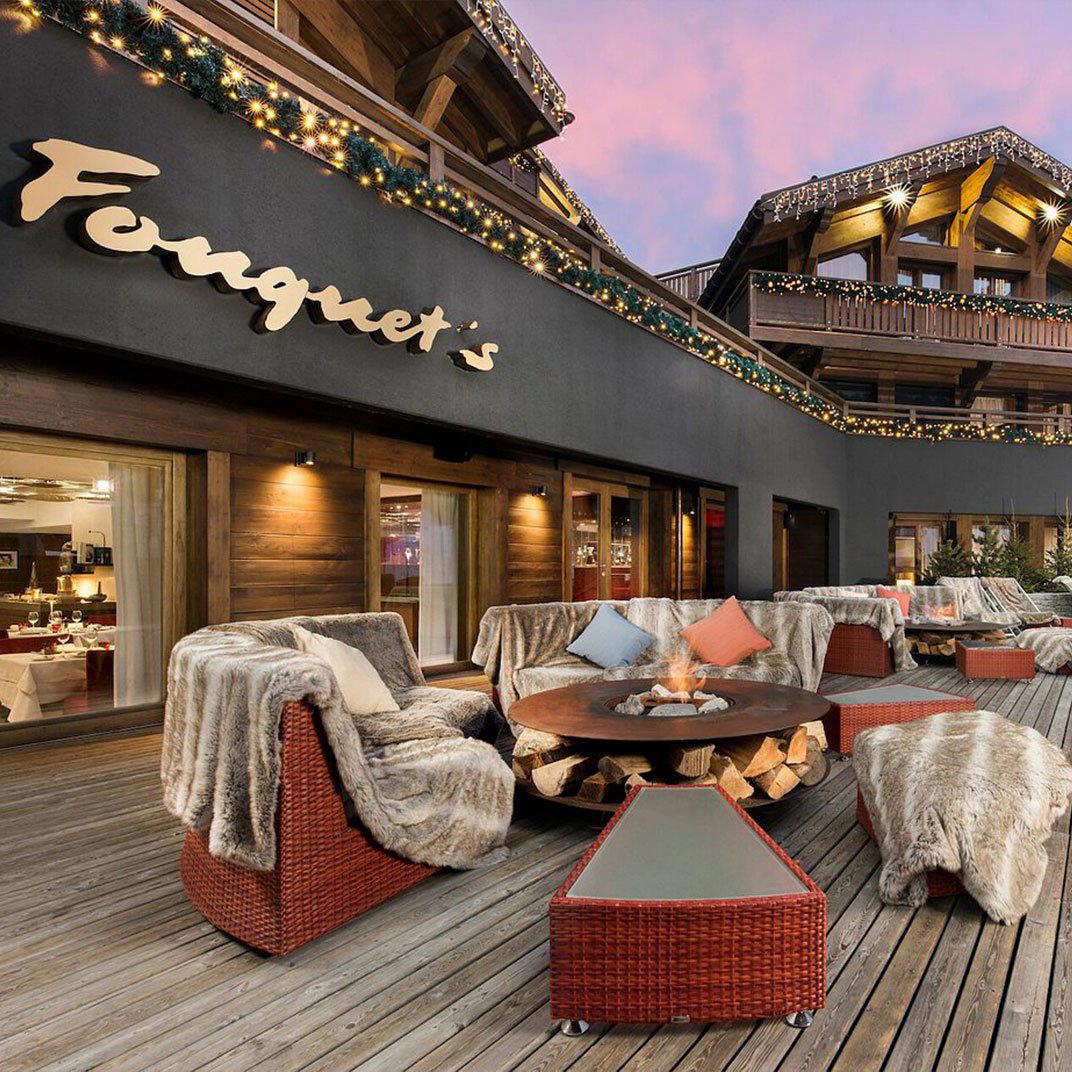
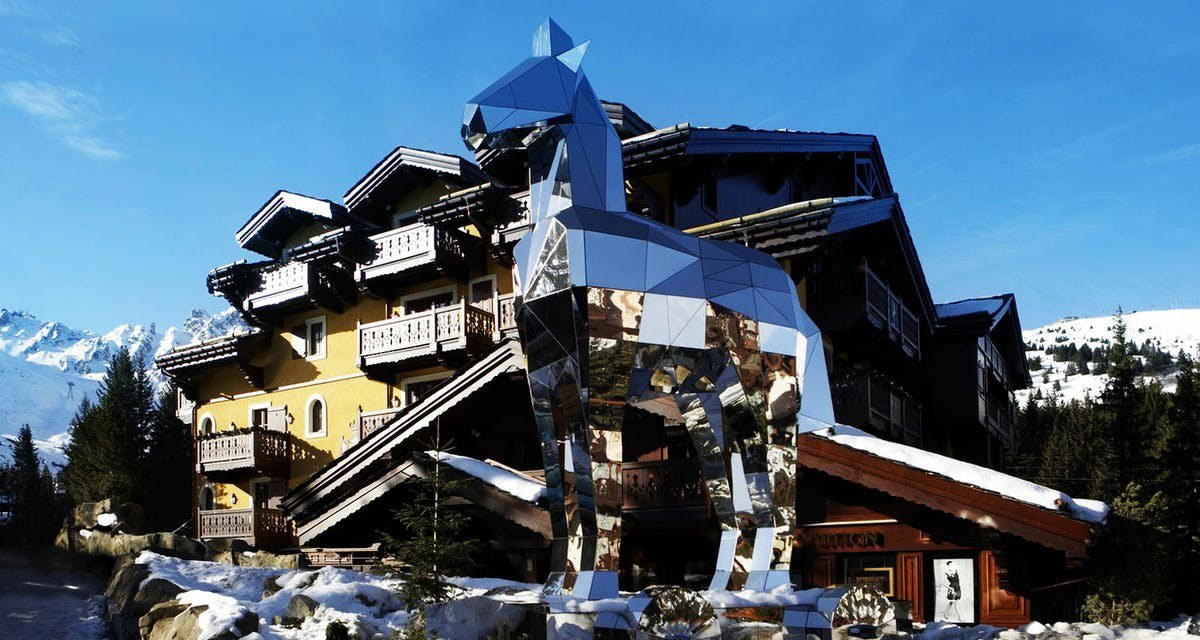
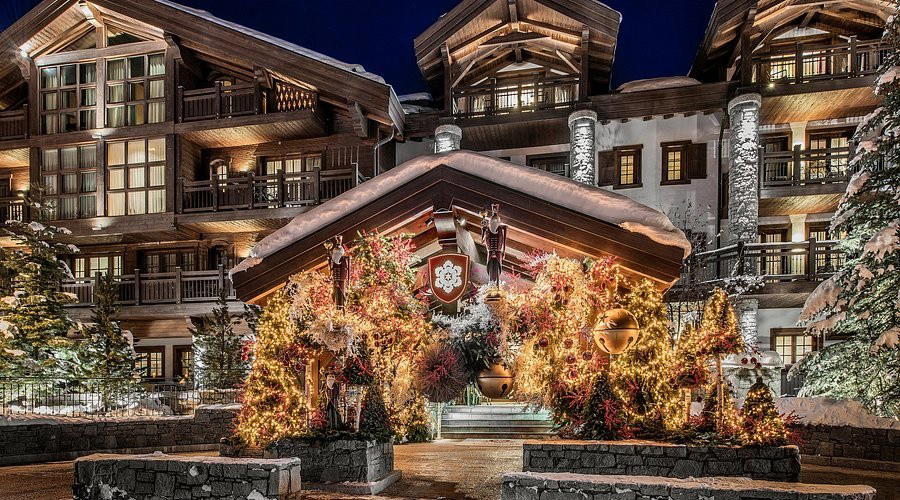
Warm and refined with rich black velvet, gold tones, and wood accents; intimate fireside setting with soft piano music in the background.