

On a corner of Rue Saint-Maur in the 11th arrondissement, Le Servan has become one of Paris's most consistently booked neo-bistros, ranked #306 in Opinionated About Dining's Casual Europe list for 2024 and holding a Michelin Plate. Chef Tatiana Levha, trained under Alain Passard and Pascal Barbot, runs a menu that is grounded in French technique but shaped by Filipino and broader Asian influences — particularly in its sauces and spicing.
Pearl is the En Primeur Club membership app — saves, bookings, and concierge access live there. Same editors, same standards.
- Address
- 32 Rue Saint-Maur, 75011 Paris, France
- Phone
- +33 1 55 28 51 82
- Website
- leservan.fr
- Directions
- Get directions
 Saves & bookings on Pearl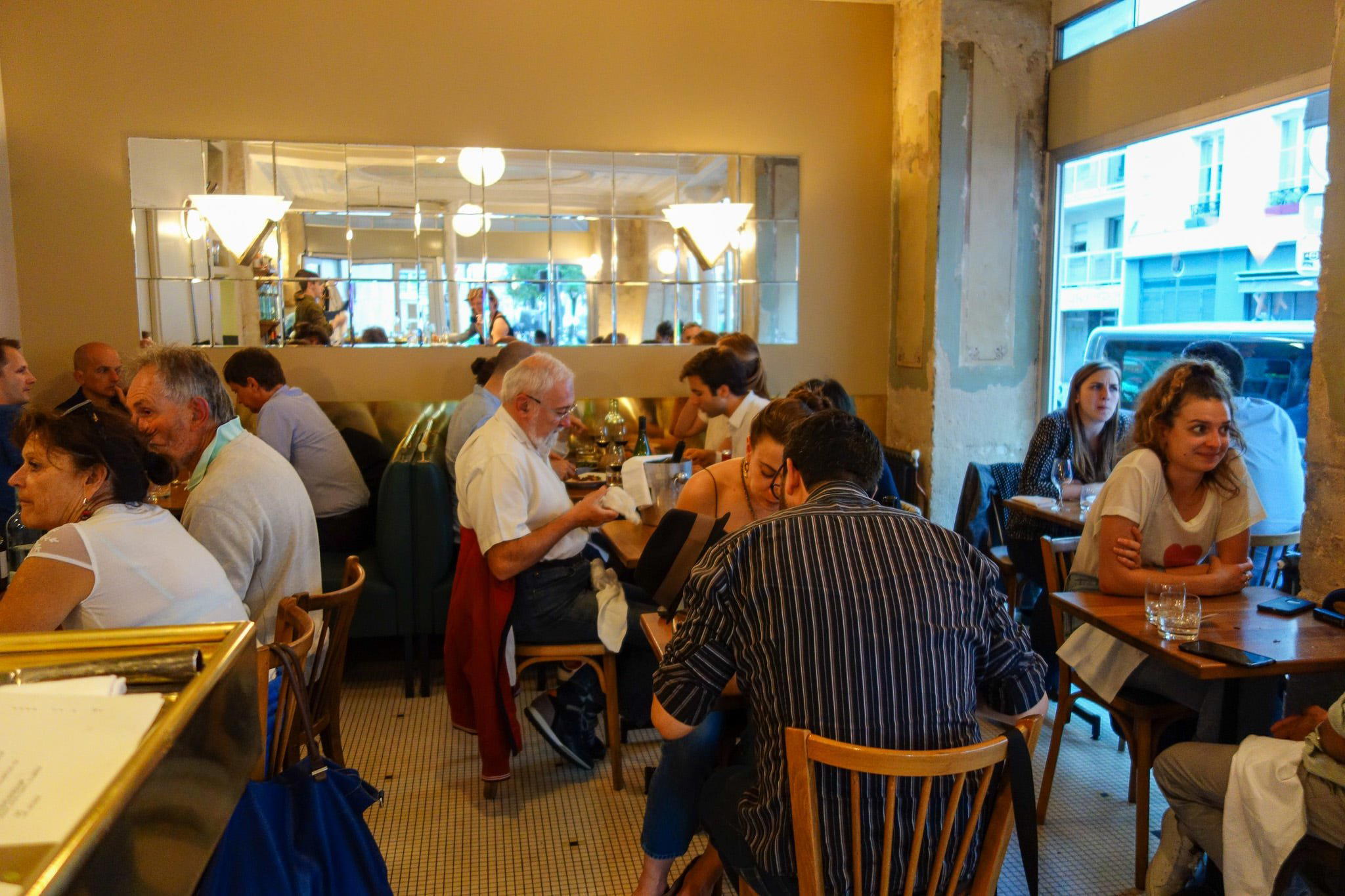
The Neo-Bistro Moment, Anchored in the 11th
The bistro has always been Paris's most durable dining format — more than the grand brasserie, more than the gastronomic temple, it is the form the city returns to when everything else feels overstated. What changed in the 2010s was the prefix: neo-bistro, a category that absorbed serious kitchen training and redirected it toward tighter menus, sharper wine programs, and rooms that made no apologies for their lack of ceremony. The 11th arrondissement became the natural geography for this shift, partly by accident and partly because rents allowed chefs to take risks that the 6th or the 8th would not.
Le Servan, at 32 Rue Saint-Maur, sits inside that moment without being defined by nostalgia for it. That positioning matters: the OAD Casual Europe list draws on votes from professional diners across the continent, making a sustained ranking across three consecutive years, Recommended in 2023, #306 in 2024, #346 in 2025, a more reliable signal than any single award cycle.
The Room Before the Food
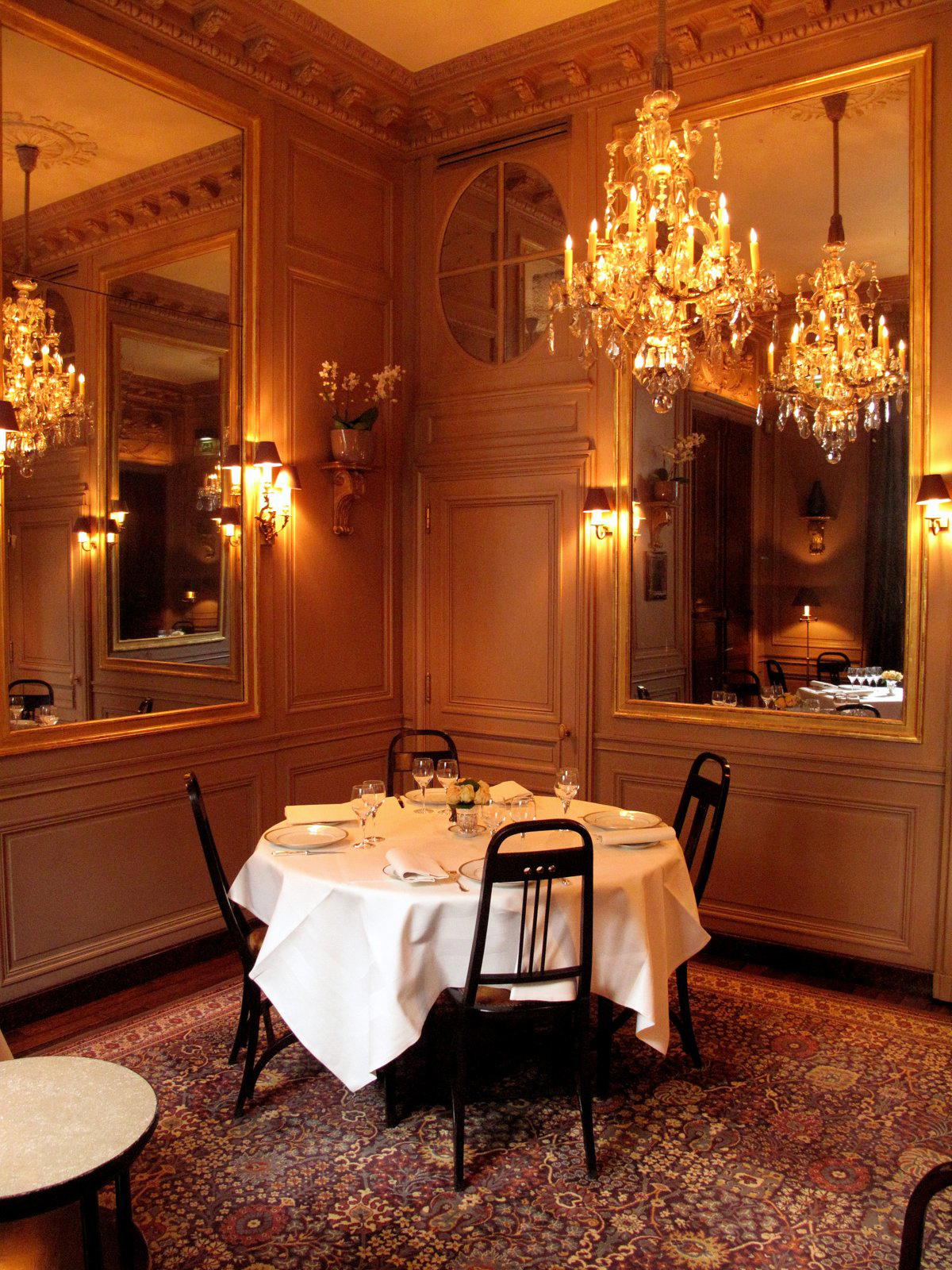
The physical space does most of the editorial work before a plate arrives. Period frescoes run along the interior walls, the kind of detail that in a lesser room would feel like a design decision and here feels like inheritance. The 11th's stock of former workshop and commercial spaces tends toward exposed utility; Le Servan's frescoes push against that grain, lending the room a particular warmth that is architectural rather than decorative. It is the quality that distinguishes a bistro with a history from one that has been assembled to look like one.
The room operates at a pitch that is consistent with the neo-bistro format: tables close enough together that neighbouring conversations are not entirely private, service that is attentive without the choreography of haute cuisine, and a booking pressure that most Paris diners will recognise. Reservations are described as essential in OAD's entry, which, translated from guidebook softening, means the room fills days or weeks ahead on most services.
The Kitchen's Reference Points
French cooking has always absorbed foreign technique more readily than its reputation for insularity suggests. The classical brigade trained in Lyon or Paris, then carried those skills across the empire and absorbed what they found. What the neo-bistro generation did differently was invert the hierarchy: the foreign influence moved from background texture to structural element, changing the logic of a dish rather than merely garnishing it.
Chef Tatiana Levha's training runs through two of the more demanding kitchens in French gastronomy: Alain Passard's Arpège, which rebuilt its identity around vegetable cookery and ingredient precision, and Pascal Barbot's Astrance, a restaurant that spent two decades operating at three-Michelin-star level with a format closer to a Japanese kappo counter than a French institution. Both kitchens reward patience with technique and penalise shortcuts in sourcing. That grounding shows in Le Servan's approach to sauces and jus, the elements that, in French cooking, most clearly separate competence from mastery.
The menu works at a price point marked €€, which in Paris's current context means accessible relative to the training and recognition behind it. For comparison, the highest tier of Parisian gastronomy, houses like Paul Bocuse - L'Auberge du Pont de Collonges, Mirazur, or Troisgros - Le Bois sans Feuilles, operates at €€€€, several multiples above Le Servan's bracket. Closer in geography but different in ambition, Le Pantruche and Gare au Gorille occupy adjacent space on the 11th's bistro spectrum. The Michelin Plate awarded in 2024 signals technical seriousness without the formality obligations that come with starred dining, a recognition designed precisely for this category of kitchen.
The Asian influence at Le Servan is not a fusion gesture. It is structural. Reported preparations include a soy and chilli butter on pork and langoustine ravioli, and a saffron bisque with rouille served alongside sea bass, fennel, and kale. The chilli presence is described as calibrated, used to add lift and contrast rather than heat for its own sake, a distinction that separates a kitchen that understands spicing from one that uses it as a novelty. The sauces function as the connective tissue between French preparation and Southeast Asian flavour logic, which is a more coherent synthesis than most cross-cultural menus achieve.
Levha sisters' Filipino heritage is the biographical context behind these choices, but the more useful frame is what it produces at the table: a menu that sits within the French bistro tradition while reaching further than most in that category. Restaurants in a similar register, Bruut in Bruges, for instance, demonstrate how the neo-bistro format has spread across northern Europe, but Le Servan's particular combination of training lineage and culinary reference points is specific to its Paris context.
Reading Le Servan Against the Wider French Scene
French restaurant hierarchy tends to organise itself around a narrative of accumulation: more stars, more covers, more decades of operation. The neo-bistro generation proposed a different model, fewer covers, shorter menus, lower price points, and kitchens run by chefs who trained inside the accumulation model but chose to work outside it. Le Servan fits that pattern, but its OAD consistency across three years suggests it has moved from being a representative of a trend to being an established address in its own right.
This is the trajectory that the more enduring neo-bistros follow. Flocons de Sel in Megève and Auberge de l'Ill in Illhaeusern represent an older French model of regional institution-building; Le Servan represents a newer one, urban and less anchored to place in the traditional sense, but building its own form of institutional gravity through repetition and consistency. For an international point of comparison, the discipline in sauce work that Le Servan prioritises finds a counterpart at the highest technical level at Le Bernardin in New York City, different in scale and price tier entirely, but sharing a commitment to the sauce as the central measure of a kitchen's seriousness.
For readers building a Paris itinerary that moves across formats, our full Paris restaurants guide covers the full spectrum from neo-bistro to gastronomic. Supplementary planning resources: Paris hotels, Paris bars, Paris wineries, and Paris experiences.
Planning Your Visit
Le Servan opens for lunch and dinner Tuesday through Saturday, with an additional Monday service. The kitchen is closed on Sundays. Given the OAD ranking and consistent booking pressure noted across review cycles, reservations should be made well in advance, particularly for Friday and Saturday dinner. The address is 32 Rue Saint-Maur, 75011 Paris, in the central 11th arrondissement, accessible via multiple Metro lines serving Oberkampf or Saint-Maur stations.
Quick reference: 32 Rue Saint-Maur, 75011 Paris | Mon–Sat lunch and dinner, closed Sunday | Price range: €€ | Booking essential.
What Should I Order at Le Servan?
The sauces and jus are the clearest signal of the kitchen's training and where the most attention is concentrated. Dishes built around that technical emphasis, the pork and langoustine ravioli with soy and chilli butter, or preparations involving bisque and rouille in the French tradition adapted with Asian spicing, represent the strongest argument for what Le Servan does that its peer bistros do not. The menu changes with availability, but the structural logic of the cooking (French technique, Asian flavour reference, precise spicing) holds across seasons. If the kitchen's Filipino-influenced preparations are available, those are the dishes that clarify why this address holds sustained OAD recognition at its price point.
Nearby-ish Comparables
| Venue | Cuisine | Price |
|---|---|---|
| Le ServanThis venue — the venue you are viewing | Neo-bistro, Modern Cuisine | €€ |
| Alléno Paris au Pavillon Ledoyen | Creative | €€€€ |
| Kei | Contemporary French, Modern Cuisine | €€€€ |
| L'Ambroisie | French, Classic Cuisine | €€€€ |
| Le Cinq - Four Seasons Hôtel George V | French, Modern Cuisine | €€€€ |
| Plénitude | Contemporary French | €€€€ |
Recognition history
Dated appearances from independent guides and award organizations, with the underlying list record or original source where available.
Michelin Plate
Michelin
Opinionated About Dining Casual in Europe Recommended
Opinionated About Dining
Michelin Plate
Michelin
Opinionated About Dining Casual in Europe Ranked #346
Opinionated About Dining
Michelin Plate
Michelin
Opinionated About Dining Casual in Europe Ranked #306
Opinionated About Dining
Opinionated About Dining Casual in Europe Recommended
Opinionated About Dining
Continue exploring
More in Paris
Restaurants in Paris
Browse all →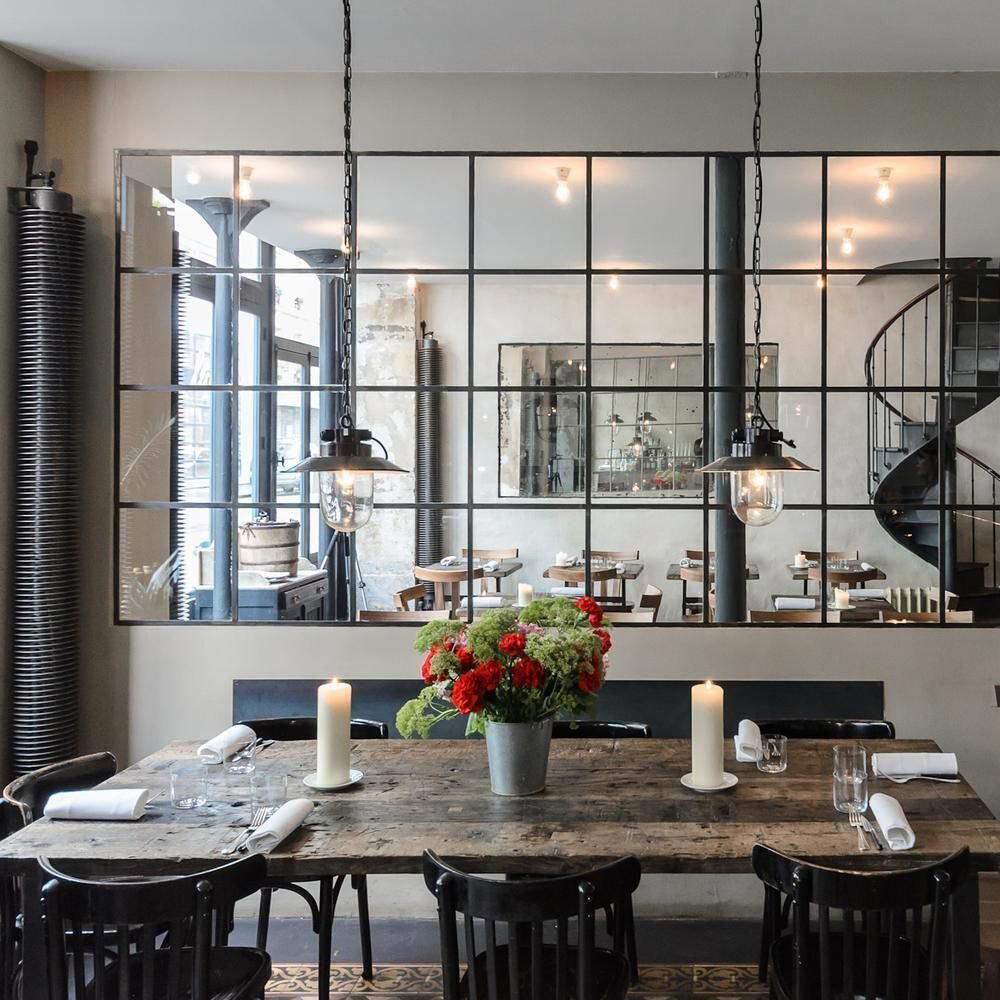
Bars in Paris
Browse all →
Hotels in Paris
Browse all →



At a Glance
- Cozy
- Trendy
- Modern
- Intimate
- Date Night
- Solo
- Business Dinner
- Open Kitchen
- Natural Wine
Current opening hours
- Monday
- 12–2 PM, 7:30–10:30 PM
- Tuesday
- 12–2 PM, 7:30–10:30 PM
- Wednesday
- 12–2 PM, 7:30–10:30 PM
- Thursday
- 12–2 PM, 7:30–10:30 PM
- Friday
- 12–2 PM, 7:30–10:30 PM
- Saturday
- 12–2 PM, 7:30–10:30 PM
- Sunday
- Closed
Hours can change for holidays and private events. Last verified .
Cool vintage vibe with light, airy space, hand-painted ceiling, and lively yet pleasant atmosphere.
Know Before You Go
- Getting there
- 32 Rue Saint-Maur, 75011 Paris, France