Le Marché
.png)
Le Marché occupies a Classical villa on the banks of the Teplá river in Karlovy Vary, offering seasonal cuisine with Mediterranean influences. Lunch brings a streamlined three-course set menu; evenings open up to a three-course à la carte or a six-course tasting format. The riverside terrace, a focal point in warmer months, draws both spa guests and visitors exploring the town's colonnaded promenade.
 Discover on Pearl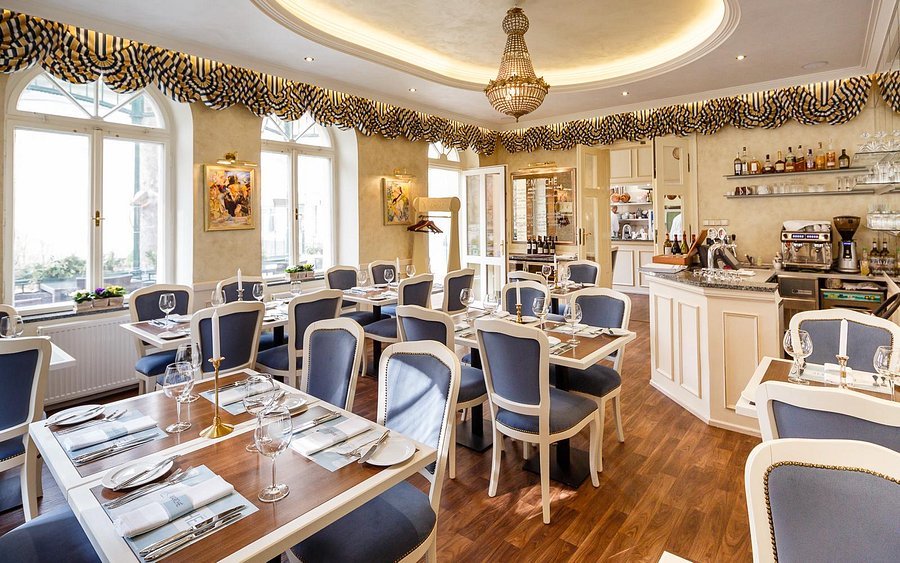
A River Table in a Spa Town
Karlovy Vary's dining scene has always operated in the shadow of its spa identity. The town's visitors have historically come for the thermal springs, the colonnaded promenades, and the leisurely rhythm of a cure rather than for destination cooking. That context matters when placing Le Marché: this is a restaurant where the setting does significant work, and where the cuisine is pitched to complement the slow, restorative pace the town imposes on everyone who arrives.
The building's Classical villa façade on Mariánskolázeňská places it at the edge of the town's architectural grammar, where grand 19th-century European spa architecture meets the Teplá river. Approaching along the riverbank, the terrace reads as a natural extension of the water rather than a conventional restaurant forecourt. In summer, that riverside position becomes the primary reason to book a table here — the terrace is among the more atmospheric dining perches in a city that takes atmosphere seriously.
The shortlist, unlocked.
Hard-to-book tables, cellar releases, and concierge-planned trips.
Get Exclusive Access →Mediterranean Currents in Bohemian Waters
Czech restaurant cooking has undergone a slow but measurable shift over the past two decades. The country's cuisine, long anchored to pork, duck, dumplings, and game, has absorbed Italian, French, and broader Mediterranean influences at varying degrees of conviction. Some restaurants treat those influences as surface decoration; others have built them into the structural logic of what they cook. Le Marché belongs to the latter category, with a seasonal menu that draws on Mediterranean produce rhythms and preparation sensibilities rather than just borrowing an ingredient or two.
The Mediterranean thread in Czech fine dining has a coherent lineage. La Degustation Bohême Bourgeoise in Prague represents one end of that range: deeply researched historical Czech cuisine with French fine-dining structure. Le Marché operates differently, orienting outward toward Southern European flavour profiles rather than excavating local culinary history. Neither approach is more valid — they answer different questions about what Czech restaurants owe their diners. In Karlovy Vary specifically, where international spa guests have been arriving from across Europe for two centuries, a Mediterranean-leaning kitchen has a particular logic.
Seasonality is the mechanism that keeps Mediterranean-influenced menus honest in Central Europe. Without it, those influences become a costume rather than a method. The kitchen here works within a seasonal framework, which means the menu changes as local sourcing conditions change and as the rhythm of what's available from warmer climates shifts through the year. That discipline is more consequential than it sounds: it's what separates a restaurant engaged with its ingredients from one that has simply adopted a culinary identity as branding.
Format and Flow: Lunch, Dinner, and the Tasting Option
The menu structure at Le Marché reflects a practical understanding of how its guests actually eat. Karlovy Vary draws a mix of day visitors, spa guests on multi-day stays, and travellers passing through the western Bohemian circuit. Lunch is calibrated to that pace , a three-course set menu that moves efficiently without demanding the full commitment of an evening meal. It's a format that works well in spa towns, where guests often eat lightly at midday and reserve appetite for dinner.
Evenings open up considerably. Diners can build a three-course meal from several available dishes, choosing their own path through the menu, or commit to the six-course tasting menu. The tasting format is where the kitchen's seasonal and Mediterranean ambitions get the most room to develop. Six courses is enough to establish a progression, introduce contrast, and give at least a few dishes the space to make a considered point rather than just a competent one. It's not an unusually long format , tasting menus in serious Czech restaurants, including those beyond Karlovy Vary such as Cattaleya in Čeladná and Entrée in Olomouc, often run eight to twelve courses , but six is enough to deliver a coherent meal without overwhelming guests who are also managing a spa programme or a long day of travel.
Service has been noted as well-staffed, friendly, and competent, which in a town where the hospitality industry runs on tourist cycles matters more than it might in a year-round urban dining scene. Consistency across the season, from early spring through the busy summer months and into autumn, is what distinguishes a reliable operation from one that performs well only when conditions are ideal.
The Spa Setting as Context
The building's connection to a small hotel, and the presence of a spa centre with its own colonnades, places Le Marché within a tradition that Karlovy Vary has maintained for centuries: the integration of hospitality, wellness, and dining as a single proposition. European spa towns , Bath, Baden-Baden, Vichy, and Karlovy Vary among them , developed their hotel and restaurant cultures specifically to serve guests in extended residence, which shaped their dining rooms toward comfort, consistency, and a certain unhurried generosity of service rather than toward culinary provocation.
That heritage is worth understanding when visiting the restaurant. The riverside terrace, the Classical villa setting, the spa colonnades a short walk away , these are not incidental details but the defining framework of what this kind of dining is. Le Marché sits within that tradition consciously, offering a kitchen that does more than the setting requires while still honouring the restorative logic that underpins the town itself.
For comparison points within Karlovy Vary's dining scene, Grandrestaurant Pupp anchors the grandest end of the city's historic hotel dining, while Malá Dvorana represents another distinct position in the local range. Le Marché occupies its own tier, defined by its riverside location and Mediterranean-seasonal orientation rather than by historic prestige or classical Czech cooking. The full Karlovy Vary restaurants guide maps all of these positions against each other.
Planning Your Visit
The terrace operates in summer and is the reason many diners choose an evening booking over a lunchtime visit , arrive before sunset to make full use of the Teplá river outlook. The hotel setting on Mariánskolázeňská 4 is accessible from the main spa promenades on foot. For those building a broader Karlovy Vary itinerary, the hotels guide, bars guide, and experiences guide cover the surrounding options in detail. The wineries guide is also worth consulting for those extending into the Bohemian wine regions nearby.
Reservations are advisable for dinner, particularly during the summer spa season when the town operates at capacity and the terrace is in demand. The lunch set menu tends to be more accessible without advance booking, but the terrace tables fill quickly on warm afternoons.
The shortlist, unlocked.
Hard-to-book tables, cellar releases, and concierge-planned trips.
Get Exclusive Access →Frequently Asked Questions
Pricing, Compared
A compact peer snapshot based on similar venues we track.
| Venue | Price | Awards | Notes |
|---|---|---|---|
| Le Marché | This restaurant housed in a small hotel with a handsome Classical villa façade i… | This venue | |
| La Degustation Bohême Bourgeoise | €€€€ | Michelin 1 Star | French-Czech, €€€€ |
| Alcron | Modern European | ||
| Benjamin | €€€ | Modern Cuisine, €€€ | |
| Café Imperial | €€ | Traditional Cuisine, €€ | |
| Dejvická 34 by Tomáš Černý | €€ | Italian, €€ |
Need a table?
Our members enjoy priority alerts and concierge-led booking support for the world's most difficult tables.
Get Exclusive AccessThe shortlist, unlocked.
Hard-to-book tables, cellar releases, and concierge-planned trips.
Get Exclusive Access →