Le bistrot des jardins occupies a spot on Avenue Boyer in Menton, a city where the French Riviera's citrus groves and the Italian border both press directly on the kitchen. As a neighbourhood bistrot operating in the shadow of one of France's most decorated restaurants, it represents the other side of Menton's dining equation: the everyday table rather than the special-occasion one. The address puts you close to the old town and the market circuit that feeds the local cooking in the area.
Pearl is the En Primeur Club membership app — saves, bookings, and concierge access live there. Same editors, same standards.
- Address
- 14 Av. Boyer, 06500 Menton, France
- Phone
- +33493282809
- Website
- lebistrotdesjardins.fr
- Directions
- Get directions
 Saves & bookings on Pearl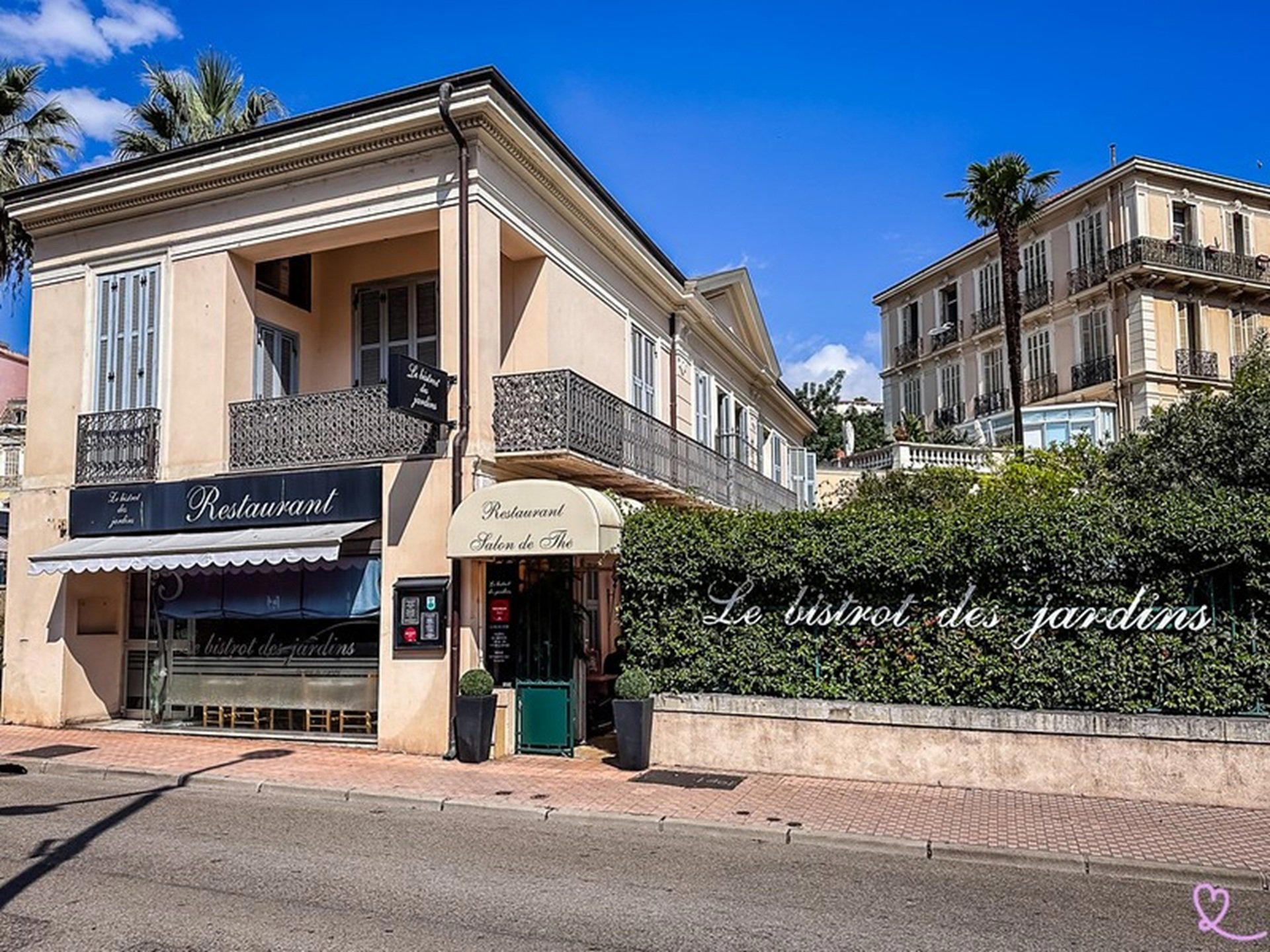
Where Avenue Boyer Meets the Market Garden
Menton sits at the far eastern edge of the French Riviera, close enough to the Italian border that the cooking has always drawn from both sides of the line. The town is known internationally for its lemon festival and for harbouring Mirazur, which has held three Michelin stars and a place at the summit of the World's 50 Best list. But the dining culture that actually sustains the town day to day runs through a different kind of address: the bistrot, the neighbourhood table, the place you go on a Tuesday when you want something rooted in the market's morning produce rather than a twelve-course architectural statement.
Le bistrot des jardins occupies 14 Avenue Boyer, a central artery that connects Menton's seafront gardens to the older residential quarters behind. The jardins of the name are not incidental. The area immediately around Avenue Boyer is characterised by those planted public spaces and the citrus-dense private gardens that have defined Menton's identity for centuries. In a town where lemon cultivation shaped the local economy long before tourism arrived, proximity to that agricultural heritage tends to show up on plates in the simpler restaurants more honestly than anywhere else.
The Sourcing Logic Behind a Riviera Bistrot
The French-Italian border that runs just a few kilometres east of Menton creates a sourcing environment unlike anywhere else on the Côte d'Azur. Ligurian olive oils, Ventimiglia market vegetables, and the citrus particular to Menton's own microclimate all sit within reach of any kitchen operating here. For a bistrot format, this geographic position is an advantage that larger, more formal operations sometimes under-exploit in favour of prestige suppliers from further afield.
Menton's own lemon, the Citron de Menton, carries a protected geographical indication and differs from standard commercial varieties in its lower acidity and thicker pith. It appears in local cooking across a range of applications, from sauces through to preserved condiments, and its presence in a dish functions as a reliable signal that the kitchen is drawing from the immediate territory rather than from a wholesale catalogue. The broader Alpes-Maritimes département combines coastal fishing, inland olive cultivation, and upland livestock, giving cooks at every price point a genuinely varied regional larder.
Menton's Marché des Halles, the covered market near the old town, runs on a morning schedule that supplies much of the better cooking in the area. Bistrot kitchens that operate on tight margins and small teams often have a closer, more direct relationship with that supply chain than larger restaurants with more complex procurement structures. At the price tier that a bistrot on Avenue Boyer represents, the menu's range and daily variation are particularly legible signals of how closely the kitchen tracks seasonal availability.
For context on how seriously ingredient sourcing can shape a restaurant's identity, the approaches at places like Bras in Laguiole and Auberge du Vieux Puits in Fontjoncouse demonstrate what happens when a kitchen commits fully to its immediate territory. At the bistrot level, that commitment expresses itself differently, through simplicity and daily rotation rather than through elaborate technique.
Menton's Bistrot Tier in Context
Menton's restaurant scene has a visible gap between the leading and the everyday middle. Mirazur operates at a price point and booking difficulty that places it outside most visitors' routine dining. Below that, the town offers a range of mid-market addresses that includes JR Bistronomie, L'Orangerie, and Casa Fuego, along with less-profiled addresses like Les Incompris. Le bistrot des jardins operates in that less-scrutinised tier: the kind of place that serves the town's residents and the slower-moving visitors who want to eat well without the apparatus of a formal reservation months in advance.
The bistrot format across France has been under pressure from two directions: the casualisation of dining at the low end, and the rise of the bistronomie model at the upper end, where chefs trained in haute cuisine kitchens apply those skills to shorter, cheaper menus. Menton's version of that bistronomie wave shows up at addresses like JR Bistronomie, which signals ambition through its name. A traditional bistrot like Le bistrot des jardins occupies a different position: less chef-driven in the way it presents itself, more neighbourhood in its orientation.
For those wanting to understand how the French bistrot fits into a wider national dining tradition, the contrast with starred French restaurants elsewhere provides useful calibration. Addresses like Alléno Paris au Pavillon Ledoyen, Flocons de Sel in Megève, and Auberge de l'Ill in Illhaeusern represent one end of the French restaurant spectrum. The traditional bistrot sits at the other end, valuing regularity, accessibility, and the daily menu over the constructed tasting experience. Paul Bocuse's Auberge du Pont de Collonges and Troisgros in Ouches occupy the formal pole; the bistrot des jardins occupies the unpretentious pole that those starred establishments cannot easily inhabit.
Planning Your Visit
The address at 14 Avenue Boyer is accessible on foot from Menton's central seafront and the old town, which makes it a practical option for anyone already spending time in the town centre. Avenue Boyer itself is a wide, garden-lined boulevard, and the surrounding neighbourhood is residential rather than heavily tourist-facing, which tends to mean a clientele with more locals in the mix than you find at restaurant addresses immediately on the seafront. Arriving on the day or checking locally before visiting is the safest approach. As a bistrot format in a French provincial town, the lunch service is generally the more reliable session for traditional cooking; evening covers can vary depending on the season.
At-a-Glance Comparison
Comparable venues nearby, for context on price, style, and recognition.
| Venue | Cuisine | Price | Awards | Notes |
|---|---|---|---|---|
| Le bistrot des jardinsThis venue — the venue you are viewing | French Bistro with Mediterranean Influences | $$ | Not listed | Not listed |
| Casa Fuego | Modern Argentine Grill | $$$ | Michelin Plate | Garavan |
| L'Orangerie | French-Japanese Fusion | $$$ | Michelin Plate | centre of town |
| JR Bistronomie | Modern French Bistronomie | $$$ | Michelin Plate | centre of town |
| Les Incompris | Mediterranean Brasserie | $$$ | Not listed | Les Sablettes |
| Mirazur | Modern French Fine Dining | $$$$ | Michelin 3 Star | Menton |
Continue exploring
More in Menton
Restaurants in Menton
Browse all →
Bars in Menton
Browse all →
Hotels in Menton
Browse all →

Wineries in Menton
Browse all →
At a Glance
- Classic
- Cozy
- Date Night
- Casual Hangout
- Terrace
- Extensive Wine List
- Local Sourcing
- Garden
Current opening hours
- Monday
- Closed
- Tuesday
- 9 AM–9:30 PM
- Wednesday
- 9 AM–9:30 PM
- Thursday
- 9 AM–9:30 PM
- Friday
- 9 AM–9:30 PM
- Saturday
- 9 AM–9:30 PM
- Sunday
- 9 AM–2 PM
Hours can change for holidays and private events. Last verified .
Pleasant terrace dining in a comfortable, traditional setting with a cozy indoor atmosphere.