Le Beaulieu sits in Riorges, a commune that borders Roanne in the Loire département — a region whose restaurant culture has been shaped by proximity to one of France's most storied dining dynasties. The address at 10 Rue de Saint-André places it within a market-town context where produce sourcing and regional identity tend to define serious cooking. For visitors moving through the Loire agricultural corridor, it represents a local reference point worth knowing.
Pearl is the En Primeur Club membership app — saves, bookings, and concierge access live there. Same editors, same standards.
- Address
- 10 Rue de Saint-André, 42153 Riorges, France
- Phone
- +33477231227
- Website
- beaulieu-riorges.com
- Directions
- Get directions
 Saves & bookings on Pearl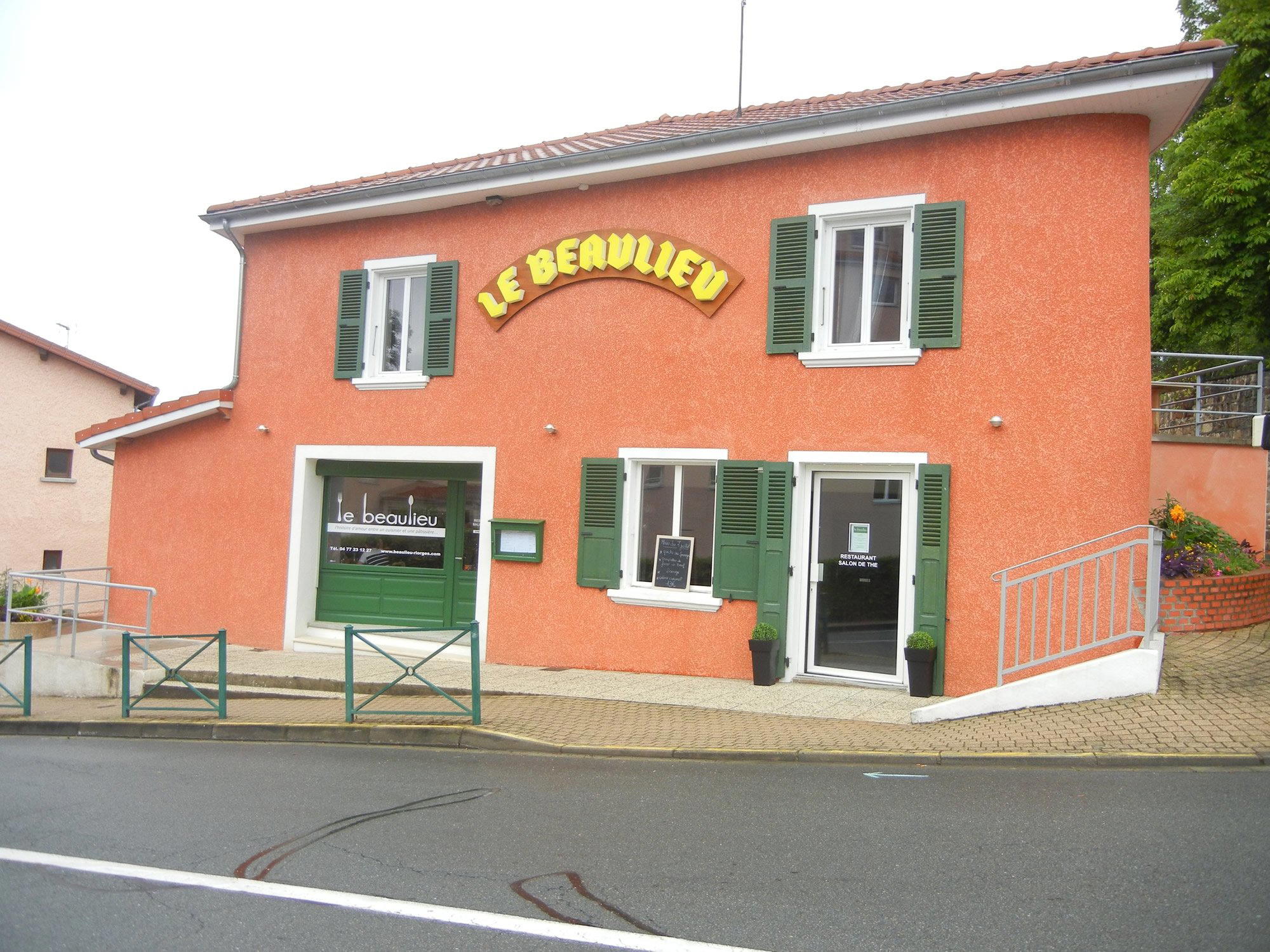
Riorges and the Loire's Produce-Driven Kitchen
The Loire Valley's reputation in French gastronomy has always rested less on a single celebrated technique and more on the density of what grows, grazes, and swims within reach. The region running from the Forez plain westward toward the Allier produces Charolais beef, freshwater fish, lentils from Le Puy, and a range of market vegetables that have supplied serious kitchens for generations. Riorges, a small commune directly adjacent to Roanne, sits inside that agricultural corridor — and its dining scene, modest in scale compared to larger regional cities, draws from the same supply chain that feeds some of the most referenced tables in central France.
This is the context in which Le Beaulieu, at 10 Rue de Saint-André, operates. French provincial cooking at this latitude tends to favour ingredient fidelity over elaborate construction: the kitchen's credibility depends on what arrives through the back door each morning as much as on what happens at the stove. That orientation toward sourcing is not incidental — it is the defining characteristic of serious cooking in this part of the country, and it separates the tables worth seeking from those that approximate the idea of regional cuisine without the underlying supply relationships.
The Setting: A Provincial Room in a Market Town
Riorges reads as a working commune rather than a destination in its own right. The streets around Rue de Saint-André carry the texture of a place where people live rather than one curated for visitors, which tends to produce a particular kind of restaurant: one that exists for a local clientele with exacting standards rather than for passing trade that will forgive shortcomings. French provincial dining rooms of this type are often less dressed than their urban equivalents, the confidence is in the plate, not the décor, and they operate on rhythms tied to market days and seasonal availability rather than year-round tourist demand.
Approaching a room like this, the register is typically set before you sit: the quality of the bread service, the weight of the glassware, whether the day's menu reflects what was available at that morning's market rather than what was ordered in bulk last week. These are the signals that matter in a provincial French room, and they are harder to sustain without the sourcing infrastructure that only comes from genuine relationships with local producers.
Ingredient Sourcing in the Loire Corridor
The broader Roanne area has been associated with produce-led French cooking since the Troisgros family established their table in the town centre decades ago. Troisgros - Le Bois sans Feuilles in Ouches, now relocated to a rural property outside the town, represents the apex of that tradition, a kitchen that has built sourcing networks across the Loire and Auvergne regions over multiple generations. The effect of that kind of sustained presence is to raise the floor for ingredient quality across the area: producers who supply at that level tend to have surplus relationships with neighbouring kitchens, and the standards become shared.
Elsewhere in France, this pattern repeats in regions where a single high-profile table has cultivated deep agricultural ties. Bras in Laguiole on the Aubrac plateau has spent decades building direct relationships with plateau farmers and foragers; Mirazur in Menton operates its own gardens above the Mediterranean. The principle in each case is the same: the kitchen's identity is inseparable from its supply geography. For a restaurant in Riorges, operating within reach of the Loire's agricultural output, that supply geography is a genuine asset.
The Loire corridor produces ingredients that rarely make it to Parisian menus in their freshest state. Charolais beef from the Saône-et-Loire, carp and pike from the river itself, lentilles vertes du Puy with protected designation status, and seasonal fungi from the Forez forests are all within practical sourcing distance. A kitchen that uses these ingredients at their point of origin, rather than after transit, is working with a material advantage that no amount of technique in a metropolitan setting can fully replicate.
Positioning Within the Regional Restaurant Picture
Riorges does not carry the independent dining reputation of Roanne, Lyon, or Mâcon. Tables at this scale in smaller communes tend to occupy a tier that sits between the neighbourhood bistro and the formally recognised destination restaurant, a tier that French dining culture has always valued but that international food media tends to overlook in favour of award-flagged properties in larger cities. Paul Bocuse - L'Auberge du Pont de Collonges in Collonges-au-Mont-d'Or and Georges Blanc in Vonnas represent the fully institutionalised end of that spectrum; the majority of serious provincial cooking in France happens in rooms that receive less systematic attention.
For context on where France's most formally recognised dining sits, properties like Alléno Paris au Pavillon Ledoyen in Paris and Assiette Champenoise in Reims operate at the highest award tier, with the infrastructure and recognition that comes with it. At the other geographic extreme, Auberge du Vieux Puits in Fontjoncouse demonstrates that serious recognition can attach to deeply rural addresses when the cooking earns it. Le Beaulieu's positioning in Riorges places it in a different register, local rather than destination-driven, which shapes both what to expect and how to approach the visit.
Planning Your Visit
Riorges is accessible from Roanne, which has a train connection to Lyon (approximately 80 minutes on intercity services) and sits on the A72 motorway corridor. Visitors combining a meal here with the broader Roanne dining circuit are most likely travelling by car, which gives access to the rural supply landscape that defines the region's cooking. For those building a longer Loire or Auvergne itinerary, Riorges is a practical stopping point rather than a standalone destination, leading treated as part of a route that might also include the Forez, the Puy-de-Dôme, or the Beaujolais wine corridor to the south.
French provincial rooms of this type frequently close one or two days midweek and may require advance reservation even when the dining room is not large. Arriving without a booking in a room that serves a primarily local clientele is a risk worth avoiding.
How Le Beaulieu Riorges compares with similar nearby venues.
| Venue | Cuisine | Price |
|---|---|---|
| Le Central | Modern Cuisine | €€ |
| Maison Bouquet | Modern Cuisine | €€€ |
| Oma | Modern Cuisine | € |
| Château d'Origny | Modern Cuisine | €€€€ |
| Troisgros - Le Bois sans Feuilles | Creative | €€€€ |
Continue exploring
More in Riorges
Restaurants in Riorges
Browse all →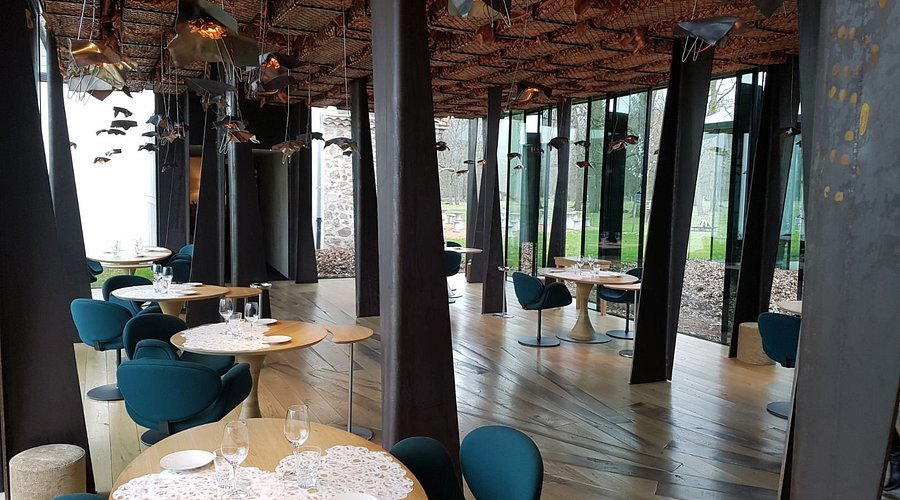
Hotels in Riorges
Browse all →
Wineries in Riorges
Browse all →
At a Glance
- Cozy
- Classic
- Family
- Casual Hangout
- Standalone
- Local Sourcing
Current opening hours
- Monday
- 10 AM–3 PM
- Tuesday
- 10 AM–3 PM, 6–11 PM
- Wednesday
- Closed
- Thursday
- 10 AM–3 PM
- Friday
- 10 AM–3 PM, 6–11 PM
- Saturday
- 10 AM–3 PM, 6–11 PM
- Sunday
- Closed
Hours can change for holidays and private events. Last verified .
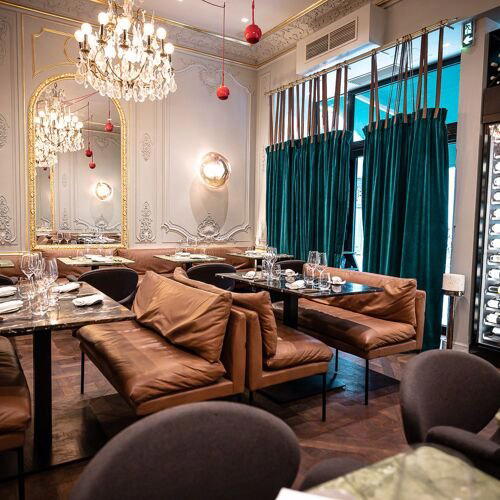
Warm and welcoming renovated bistro atmosphere with focus on convivial dining.
Know Before You Go
- Getting there
- 10 Rue de Saint-André, 42153 Riorges, France