La Trébede


Michelin Bib Gourmand · Macarfi 7.5 Food Rating
Our verdict
In a small village on the Zamora plain, La Trébede channels the agricultural traditions of Castilla y León through a kitchen that treats local staples with precision and care. Young chef Pablo González updates regional classics, crispy shrimp omelettes sharpened with quince, pig's ear slow-cooked to tenderness, without abandoning the rural character that defines the area. Simple in setting, serious in intent.

Pearl is the En Primeur Club membership app, where members save venues, book tables and use the concierge.
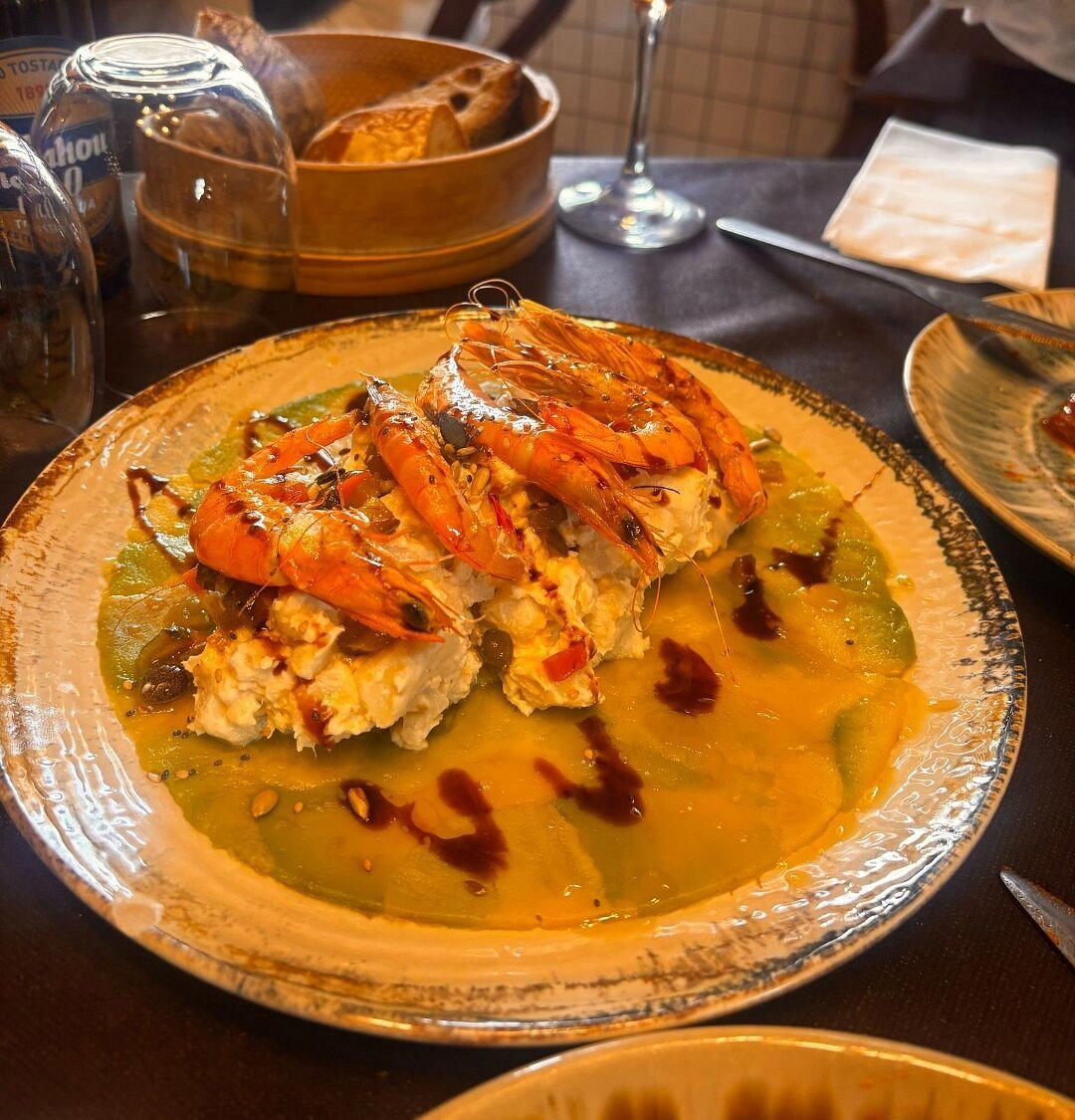
The menu
What to order
- Crispy shrimp omelette with quince
- Confit pig's ear
Where Zamora's Pantry Meets a Gabled Roof
The road into Pobladura del Valle passes through flat cereal land that has fed Castilla y León for centuries. The province of Zamora sits at the western edge of the Castilian meseta, an agricultural zone that has long supplied the rest of Spain with pulses, pork, and river fish without receiving much credit for it. La Trébede, positioned on the outskirts of the village along the Canal de Hornos area, occupies the kind of building that signals exactly where you are: a gabled roof, walls that carry agricultural implements as decoration, and a semi-visible kitchen that puts the cooking process in plain sight rather than hiding it behind closed doors. The setting is not incidental. It frames what matters here, the direct relationship between this specific stretch of Spanish countryside and what ends up on the plate.
For a broader picture of what the area offers beyond this address, our full Pobladura del Valle restaurants guide maps the wider dining options across the village and its surroundings.
The Sourcing Logic Behind Updated Castilian Cooking
Spain's most decorated kitchens, from Azurmendi in Larrabetzu to El Celler de Can Roca in Girona, have spent the past two decades building sourcing narratives around hyper-local produce. In Zamora, that logic applies differently: this is not a region seeking to reframe itself through culinary innovation for a global audience, it is a region where the ingredients have always been the point. Chickpeas from Fuentesaúco, acorn-finished Ibérico pork from the western sierras, river crayfish from the Duero basin. A kitchen that takes this geography seriously does not need to reach far to find material of depth.
At La Trébede, the kitchen under young chef Pablo González works within that tradition without treating it as a constraint. The crispy shrimp omelette with quince is a case study in what updated regional cooking can do: the base format is recognisable Spanish coastal preparation, but the addition of a subtle sweetness through quince repositions the dish inside a Castilian fruit-and-seafood logic that is not particularly common on menus further east. The confit of pig's ear, cooked at low temperature and served with dried tomato and a mussel-laced salsa brava, makes a similar move. Pig's ear has always been on the more demanding end of the Ibérico offal spectrum, the kind of cut that appears at market stalls and old-fashioned tabernas. Cooking it at low temperature until the collagen renders while maintaining textural contrast, then lifting it with acidic tomato and the brine of mussels, is a technique-dependent decision that connects the ingredient to contemporary cooking methods without disguising what it is.
Reading the Room: Atmosphere and What It Signals
Zamora province does not sit in the same visitor orbit as the Basque Country or Catalunya. It does not have the international recognition of San Sebastián, where Arzak and Mugaritz in Errenteria have built global reputations over decades, nor the urban density of Madrid, where DiverXO has pushed Spanish cooking into territory that has little to do with regional tradition. What Zamora has is a slower circuit of visitors, pilgrims on the Vía de la Plata, travellers crossing between Portugal and the Spanish interior, and locals who eat at La Trébede without any particular interest in the question of whether the experience is fashionable. That audience shapes the room. The decor of agricultural implements is not ironic or curated in the way a city restaurant might deploy rustic references. It is matter-of-fact, an honest representation of what surrounds the building outside.
The semi-visible kitchen reinforces this directness. Cooking is happening, you can see it happening, and the gap between the landscape outside and what appears on the table is kept short. For restaurants in this category across rural Spain, that transparency tends to correlate with a menu that does not chase expensive imported ingredients to signal ambition. Ambition is expressed through what you do with what is already here.
Planning a Visit: Practical Notes
Pobladura del Valle sits within Zamora province in the autonomous community of Castilla y León. The village is small, and La Trébede is on its outskirts, meaning a car is the practical way to arrive. Zamora city, the provincial capital with its Romanesque cathedral cluster, lies roughly to the south and is itself worth building into any itinerary that brings you to this part of the meseta. The drive between the city and Pobladura del Valle passes through open agricultural land that contextualises the sourcing approach at the restaurant in a way a city arrival cannot.
While in the area, the Museo Grand Central, which displays models of battleships, naval vessels, and trains, is worth an hour if you are travelling with company that ranges in age or appetite for eating-focused tourism. It is a genuinely original institution in an unexpected location, the kind of detail that makes a rural detour into a fuller day rather than a single-stop trip.
For accommodation options in the area, our Pobladura del Valle hotels guide covers the range of places to stay within reach. Those who want to extend the visit into an evening and explore what else the area offers after dinner can consult our Pobladura del Valle bars guide, along with our wineries guide and our experiences guide for the wider region.
La Trébede in the Broader Spanish Dining Context
Spain's high-end dining conversation is largely conducted in cities and coastal zones. The restaurants that draw international attention, Aponiente in El Puerto de Santa María, Cocina Hermanos Torres in Barcelona, Quique Dacosta in Dénia, Martin Berasategui in Lasarte-Oria, Ricard Camarena in València, and Atrio in Cáceres, each operate within reach of established visitor infrastructure. La Trébede belongs to a different and less visible tier: rural kitchens in the interior that are not targeting the same audience and are not asking to be evaluated on the same terms. The relevant comparison is not a three-Michelin-star tasting counter but the broader pattern of young Spanish cooks choosing to work with regional materials in the places where those materials come from, rather than relocating that produce to an urban kitchen where it becomes an imported ingredient.
That choice carries weight. Kitchens at this level, in villages with no particular culinary reputation, hold up the connective tissue between Spain's agricultural production and its cooking culture. The dishes at La Trébede, the quince-touched omelette, the low-temperature pig's ear, point toward a kitchen that takes that position seriously rather than treating a rural address as a temporary arrangement before a city move.
Frequently asked questions
Is La Trébede good for families?
La Trébede suits families making their way through Zamora province. The setting is unpretentious, with agricultural implements as decor and a relaxed atmosphere that does not demand formality. The nearby Museo Grand Central, which displays models of battleships, naval vessels, and trains, adds a practical non-dining stop for younger visitors making the trip worthwhile beyond the meal.
What should I expect atmosphere-wise at La Trébede?
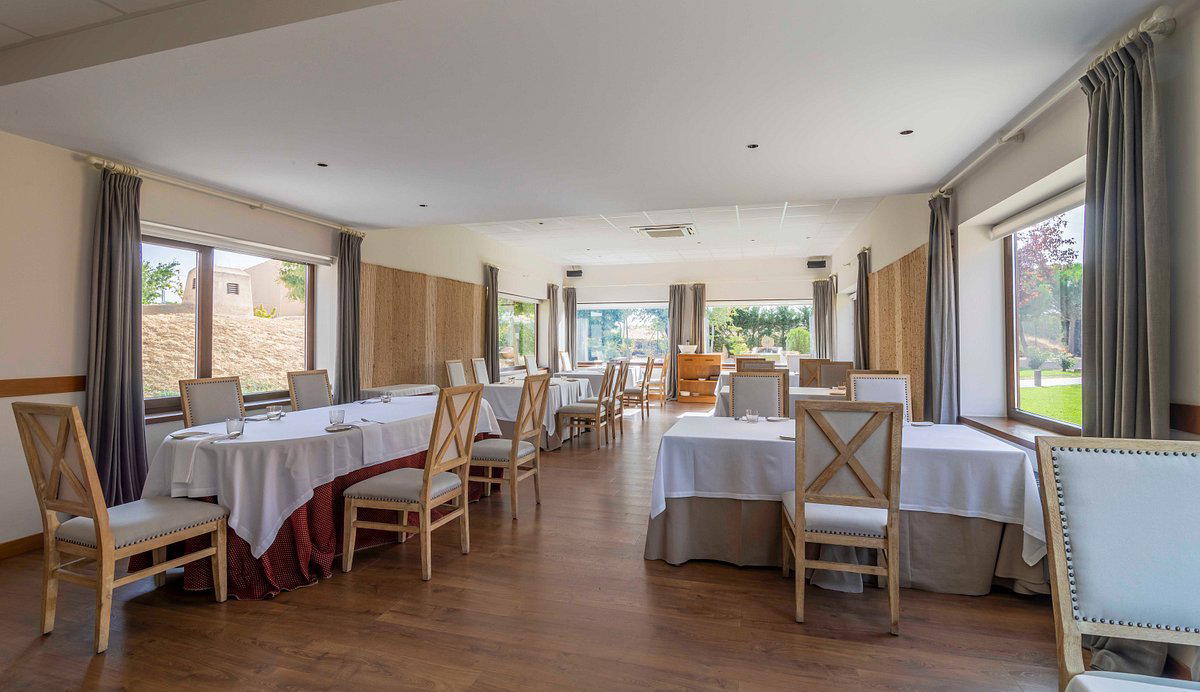
The building is a simple, characterful structure with a gabled roof on the outskirts of a small Zamoran village. The interior carries agricultural implements as decoration, and the kitchen is semi-visible from the dining room. Arrive expecting a regional rural register rather than design-led interiors: the focus is on the cooking, not the room.
What's La Trébede known for in terms of accolades?
La Trébede has received recognition including: Here, on the outskirts of this small village in Zamora province, young chef Pablo González has taken over the reins of this simple yet characterful restaurant with a gabled roof and a decor of agricultural implements. In the semi-visible ki….
What's the must-try dish at La Trébede?
Order the confit pig's ear, cooked at low temperature and served with a dried tomato and mussel salsa brava. It is the dish that most directly captures what chef Pablo González is doing at La Trébede: a technically considered take on Castilian offal tradition rather than a straightforward reproduction of it. The crispy shrimp omelette with quince is the other standout, demonstrating the same approach applied to a lighter, sweeter register.
Where exactly is La Trébede?
La Trébede is located at Tr.ª Canal de Hornos, area, s/n, 49780 Pobladura del Valle, Zamora, Spain, Pobladura del Valle.
At-a-Glance Comparison
Comparable venues nearby, for context on price, style, and recognition.
| Venue | Cuisine | Price | Awards | Notes |
|---|---|---|---|---|
| La TrébedeThis venue (the venue you are viewing) | Modern Traditional Spanish | $30–50 | Michelin Bib Gourmand · Macarfi 7.5 Food Rating | Not listed |
| Taberna de Libreros | Modern Spanish Tapas | $30–50 | Michelin Plate | Salamanca |
| La Cocina de Manuel | Modern Spanish with Fusion | $30–50 | Michelin Bib Gourmand · Macarfi 7.2 Food Rating | near bullring |
| Mesón el Centro | Traditional Asturian Seafood | Not listed | Michelin Plate · Macarfi 7.7 Food Rating | Puerto de Vega |
| Rivas | Traditional Castilian with Modern Twists | $30–50 | Michelin Plate · Guía Repsol 2 Soles | Vega de Tirados |
| Nito | Traditional Galician Seafood | $30–50 | Michelin Plate · Guía Repsol 2 Soles | Area |
Recognition history
Dated appearances from independent guides and award organizations, with the underlying list record or original source where available.
Michelin Bib Gourmand
Michelin
Macarfi 7.5 Food Rating
Macarfi
Continue exploring
More in Pobladura del Valle
Restaurants in Pobladura del Valle
All restaurants in Pobladura del Valle →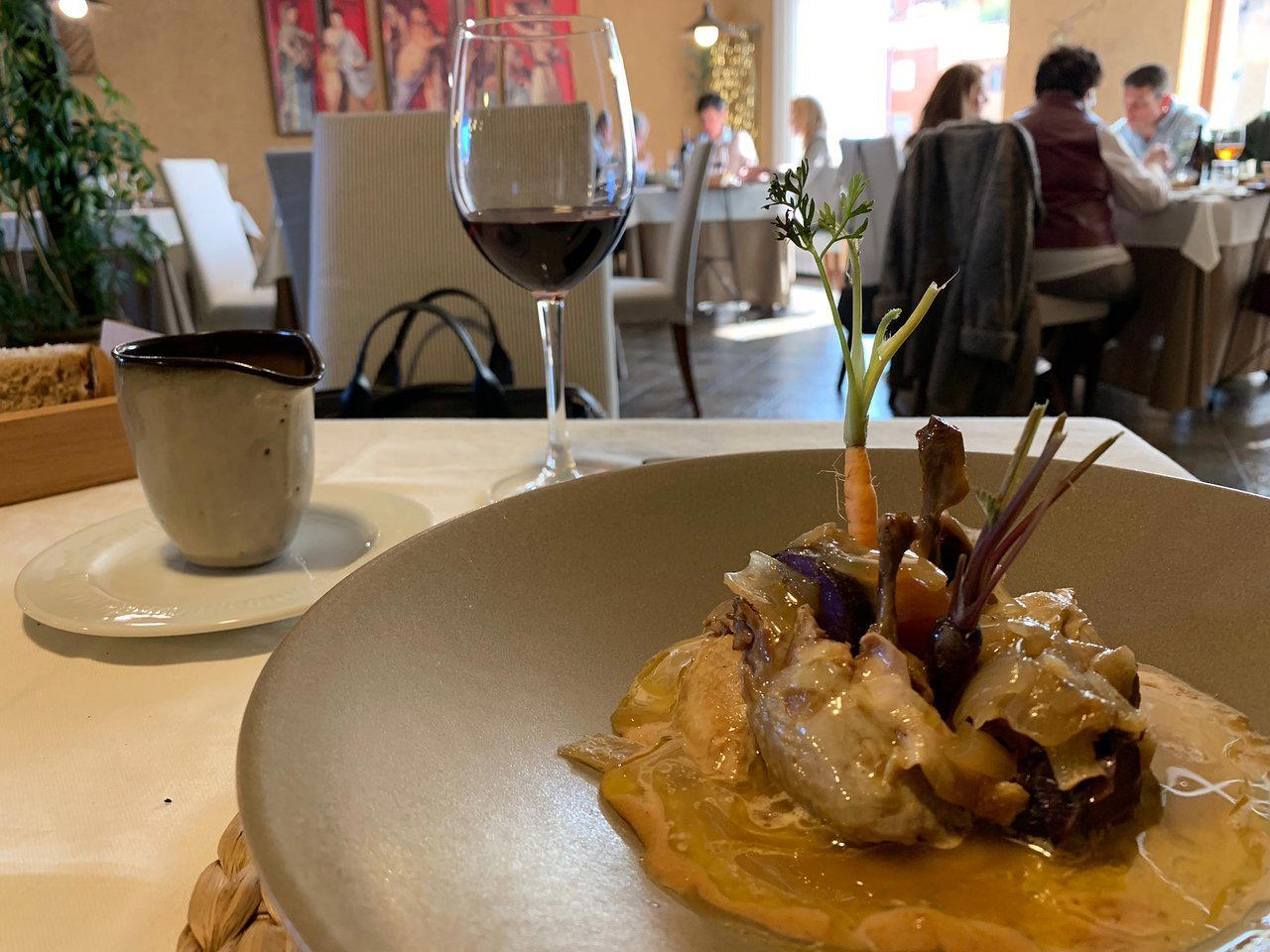
Wineries in Pobladura del Valle
Browse all →
Details
- Rustic
- Cozy
- Classic
- Family
- Group Dining
- Casual Hangout
- Open Kitchen
- Local Sourcing
- A La Carte
- Vegetarian Friendly
Current opening hours
- Monday
- 1:30–5 PM
- Tuesday
- 1:30–3:30 PM
- Wednesday
- Closed
- Thursday
- 1:30–3:30 PM
- Friday
- 1:30–3:30 PM, 9 PM–12:30 AM
- Saturday
- 2–5:30 PM, 9 PM–12:30 AM
- Sunday
- 2–5:30 PM
Hours can change for holidays and private events. Hours as of .
Warm, inviting rural atmosphere with natural materials, agricultural decor, practical lighting for conversation, and semi-visible kitchen fostering intimacy.