La Taverne Romaine
Our verdict
On Boulevard de Gaulle in Abidjan, La Taverne Romaine occupies a position that says something about the city's appetite for European dining traditions alongside its own. The name signals a Roman-Italian register, placing it within Abidjan's established francophone fine dining circuit. For visitors orienting themselves in the city, it represents a particular strand of the restaurant scene worth understanding before you book.

Pearl is the En Primeur Club membership app, where members save venues, book tables and use the concierge.
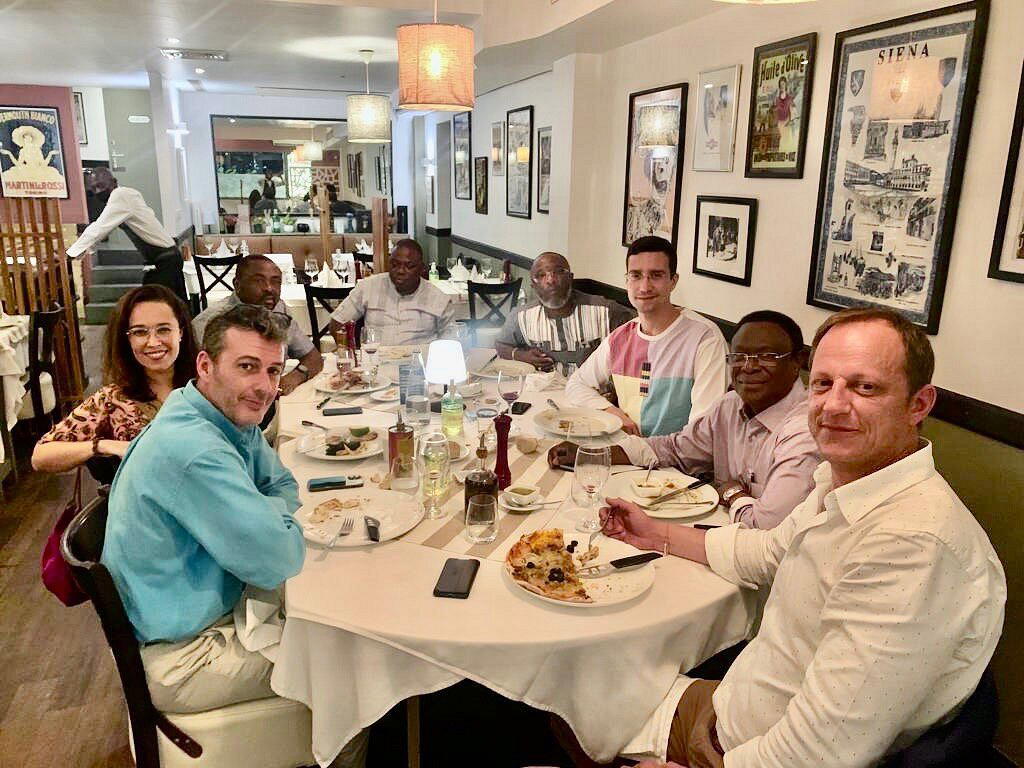
The menu
What to order
- Pizza à la truffe
- Paella
- Gnocchi à la napolitaine
- Focaccia
Where Boulevard de Gaulle Meets the European Table
Abidjan's dining scene operates on a few distinct tracks. There is the neighbourhood street food economy, built around attiéké, grilled fish, and aloco, which functions largely outside the formal restaurant circuit. And then there is the city's European-inflected dining tier, concentrated along major arteries and in the Plateau and Cocody districts, where restaurants serving the expatriate and business-traveller communities have operated for decades. La Taverne Romaine, addressed on Boulevard de Gaulle, sits on this second track. The boulevard itself is one of Abidjan's more recognisable commercial corridors, and a restaurant carrying a Roman tavern identity on that stretch is making a legible statement about its register: formal enough for a business dinner, European enough in framing to attract the city's francophone professional class.
That European positioning is worth contextualising against what Italian and Roman-register dining actually means in West Africa's most commercially active city. Abidjan has long absorbed French culinary influence through its colonial and post-independence history, and French-trained techniques have filtered into many kitchens here, sometimes layered over local ingredients, sometimes imported wholesale as a style. Italian registers are a smaller niche within that broader European-dining tier.
The Sourcing Question in a West African Context
Understanding what a European-register kitchen in Abidjan is actually working with matters more here than it would in, say, Milan or Lyon. Ivory Coast's agricultural output is substantial: the country is among the world's significant producers of cocoa, cashews, and palm oil, and its coastal and river fisheries provide protein that is genuinely local in a way that European kitchens importing Chilean sea bass or Norwegian salmon cannot claim. A kitchen operating under a Roman or Italian identity in this city faces a sourcing decision at every service: how much of the plate is built from what Côte d'Ivoire actually produces, and how much is imported to sustain the European style premise?
This tension is not unique to La Taverne Romaine. It runs through every European-concept restaurant in sub-Saharan Africa's major cities. The kitchens that resolve it most interestingly tend to be those that treat local produce not as a constraint but as a material to work with seriously, sourcing the Gulf of Guinea's fish and shellfish, using Ivorian vegetables and herbs in preparations that hold the European structural logic, and treating imported ingredients as accents rather than foundations. Whether any given kitchen is working in this direction, or simply importing its way to a simulacrum of European dining, is the real question a critical diner brings to the table. For a restaurant on a major Abidjan thoroughfare serving what appears to be a European-Italian concept, that question has direct relevance to how the cooking should be read.
Abidjan's position as a regional economic hub means it has the import infrastructure to support kitchens that want to bring in European dairy, cured meats, and pasta. The city's port and its status as a logistics centre for Francophone West Africa make ingredient sourcing a different proposition here than in landlocked cities in the region. This is part of why a restaurant concept like La Taverne Romaine can exist plausibly in Abidjan in a way it might struggle to in a smaller or less connected city.
Reading the Room on Boulevard de Gaulle
The address itself carries meaning for how the restaurant functions in the city. Boulevard de Gaulle is a formal, high-traffic corridor, not a neighbourhood dining street in the way that parts of Cocody or Marcory operate, but a location associated with commerce, institutions, and the kind of foot traffic that supports lunch trade from nearby offices. A tavern concept on this stretch is likely drawing a clientele of business lunchers, expatriates, and Abidjanais who want a reliable European option in a central location. This is a different dining proposition from destination restaurants in more residential or leisure-oriented parts of the city.
For visitors using La Taverne Romaine as a reference point, it is worth placing it within the context of our full Abidjan restaurants guide, which maps the city's dining options across price tiers and cuisines. Compared to European-concept restaurants in other major cities, 8 1/2 Otto e Mezzo Bombana (Hong Kong) or Alain Ducasse Louis XV in Monte Carlo, for instance, a venue like La Taverne Romaine occupies a different kind of position: less about global fine-dining credentials, more about serving as a reliable anchor for European tastes in a city where that anchor has genuine demand. The comparison is not competitive; it is contextual. The dining traditions that inform a Roman tavern in Abidjan have roots that stretch from Trastevere through decades of francophone culinary history, and the result is something specific to the city rather than a replica of either origin.
Abidjan's wider restaurant scene also includes strong local comparators, Le Bandama in Yamoussoukro represents the kind of Ivorian-anchored hospitality that sits on a different axis entirely, and understanding both ends of that spectrum helps calibrate expectations for any individual venue.
Planning Your Visit
Logistics for La Taverne Romaine are centred on the Boulevard de Gaulle address in Abidjan, accessible from the Plateau business district. Specific hours, booking methods, and current pricing are best confirmed directly before arrival, as these details are subject to change and no current figures are available through EP Club's database. For a city like Abidjan, where restaurant hours and reservation practices can differ significantly from European norms, arriving with confirmed details rather than assumptions is the practical approach. Given its boulevard address and likely business-lunch function, midday service on weekdays is a reasonable starting point for enquiries.
Frequently asked questions
Does La Taverne Romaine work for a family meal?
A European-concept restaurant on Boulevard de Gaulle in Abidjan typically sits in a higher price tier than the city's neighbourhood street food economy, which sets a certain expectation for the occasion. The tavern format, as the name signals, generally reads as sit-down and structured rather than casual drop-in dining. Families with older children comfortable in a formal European setting will find it a reasonable fit; those with very young children may want to confirm atmosphere and pacing directly with the venue before booking.
What's the overall feel of La Taverne Romaine?
La Taverne Romaine occupies the European-dining tier of Abidjan's restaurant scene, a segment that has served the city's expatriate and business communities along formal corridors like Boulevard de Gaulle for decades. The Roman tavern framing suggests a convivial, table-service format rather than a high-ceremony tasting-menu operation. On a boulevard defined by office towers and commercial traffic, the likely rhythm is structured lunches and dinner sittings rather than an all-day café atmosphere.
Is La Taverne Romaine a good option for a business lunch in Abidjan's Plateau district?
The Boulevard de Gaulle address places La Taverne Romaine squarely within Abidjan's Plateau business corridor, where structured European-format restaurants have long served commercial and diplomatic clientele. A Roman tavern concept, with its emphasis on table service and a defined menu, fits the rhythm of a working lunch better than street-food or open-plan venues on the same boulevard. For confirmed hours and reservation options, check the venue's official channels before scheduling a client meeting around it.
What's the signature dish at La Taverne Romaine?
Restaurants operating in a Roman or Italian register in West Africa commonly anchor their menus around pasta, grilled meats, and dishes that can be sourced or adapted from the local market, but specific menu details for La Taverne Romaine should be confirmed directly with the restaurant before visiting.
Where exactly is La Taverne Romaine?
La Taverne Romaine is located at Bd de Gaulle, Abidjan, Côte d’Ivoire, Abidjan.
Should I book La Taverne Romaine in advance?
Boulevard de Gaulle restaurants in Abidjan draw a concentrated business crowd at midday, and European-concept venues in the Plateau district tend to fill quickly during the working week. Advance reservation is advisable for lunch, particularly if your visit falls Monday through Friday. For weekend dinners, check the venue's official channels to confirm current availability and hours.
Continue exploring
More in Abidjan
Restaurants in Abidjan
All restaurants in Abidjan →
Bars in Abidjan
All bars in Abidjan →
Hotels in Abidjan
All hotels in Abidjan →
Details
- Elegant
- Cozy
- Lively
- Business Dinner
- Date Night
- Group Dining
- Standalone
- A La Carte
- Vegetarian Friendly
Current opening hours
- Monday
- Closed
- Tuesday
- 12–2:30 PM, 7–10:30 PM
- Wednesday
- 12–2:30 PM, 7–10:30 PM
- Thursday
- 12–2:30 PM, 7–10:30 PM
- Friday
- 12–2:30 PM, 7–10:30 PM
- Saturday
- 7–10:30 PM
- Sunday
- 12–2:30 PM, 7–10:30 PM
Hours can change for holidays and private events. Hours as of .
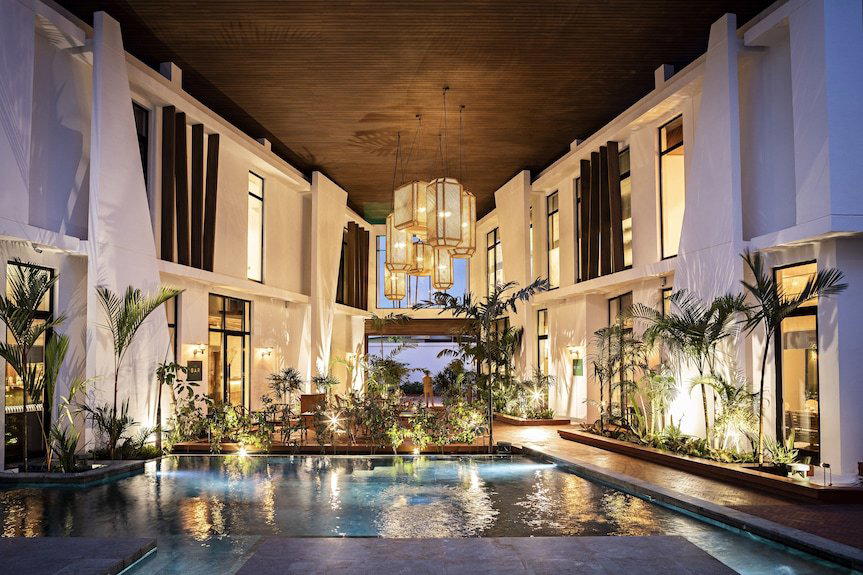
Chic and cozy with an elegant, clean decor featuring black and white photos, offering a warm, convivial family and business atmosphere.