La Maison Palmier


Michelin Selected · Design Hotels Member
Abidjan's first boutique hotel brings contemporary design and vintage character together in Les Deux Plateaux, one of the city's most composed residential enclaves. La Maison Palmier occupies a leafy setting that positions it apart from the city's larger international properties, offering a more considered scale for travellers who prefer proximity to neighbourhood life over convention-hotel infrastructure.

Pearl is the En Primeur Club membership app, where members save venues, book tables and use the concierge.
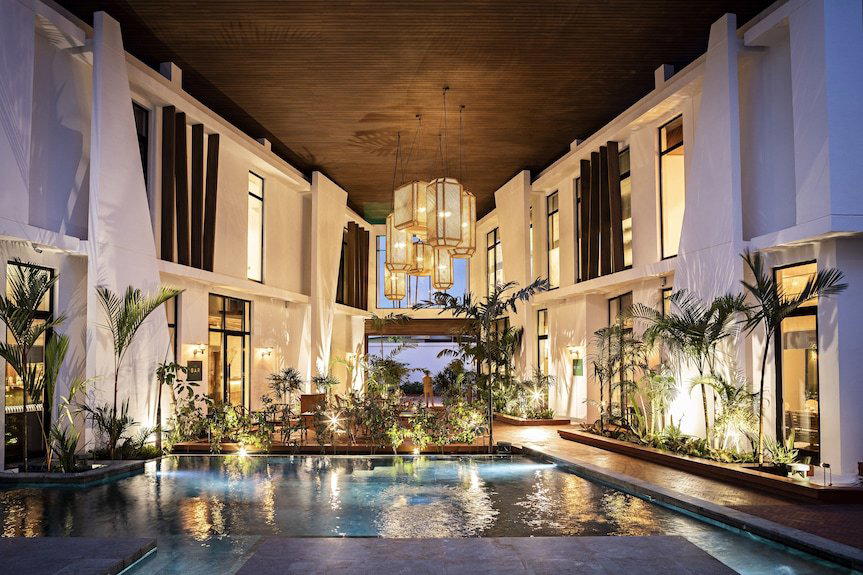
Les Deux Plateaux and the Rise of the Boutique Format in Abidjan
West Africa's luxury hotel market has long been shaped by large international brands anchoring themselves to city-centre business districts. Abidjan follows that pattern in its commercial core, where full-service towers serve the conference and corporate circuit. Les Deux Plateaux, by contrast, is a residential quarter with a different tempo: tree-lined streets, independent restaurants, and a density of embassies and long-stay professionals who prefer the neighbourhood's relative calm to the intensity of Plateau or Marcory. It is in this context that La Maison Palmier holds a specific position. As Abidjan's first boutique hotel, it entered a category that did not previously exist in the city in any formal sense, and it occupies a competitive tier that sits closer to design-led small hotels in Dakar or Nairobi than to the brand-managed mid-scale properties elsewhere in Abidjan.
The boutique format itself carries expectations that larger properties do not: lower key counts, deliberate interior programmes, and a relationship to the immediate neighbourhood that a 200-room business hotel cannot replicate. La Maison Palmier's positioning in Les Deux Plateaux makes that relationship possible. For broader context on Abidjan's hotel and restaurant scene, see our full Abidjan restaurants guide.
Design Identity: Contemporary Frame, Vintage Register
The property's described character combines contemporary design with vintage panache, a pairing that has become a reference point for a certain tier of African boutique hospitality. The approach draws on the visual language of mid-century modernism while incorporating materials and decorative decisions that read as curated rather than assembled from a procurement catalogue. In practice, this means spaces that feel inhabited rather than staged, where furnishings suggest acquisition over time rather than a single fit-out budget.
Leafy setting is not incidental. In Abidjan's equatorial climate, greenery does real work: it moderates temperature, provides acoustic insulation from street noise, and frames interior views in a way that glass and concrete alone cannot. Properties in comparable tropical cities, from Bangkok's older garden hotels to the plantation-style residences that have been converted into small hotels across coastal West Africa, have long understood that landscape is part of the room experience. La Maison Palmier's garden character places it in that tradition, even if the design language is contemporary rather than colonial.
Dining and the Hotel's Culinary Position
In hotels of this scale and format, the dining programme tends to serve a dual function: it anchors the guest experience for those staying in-house, and it can function as a neighbourhood draw, pulling in local residents and the expatriate community that concentrates in Les Deux Plateaux.
That neighbourhood dynamic matters more in Abidjan than it might in a city with a more developed independent restaurant scene at the premium tier. Les Deux Plateaux has a strong café and casual dining culture, but the supply of formal sit-down restaurants with deliberate cooking programmes remains thinner than in comparable African capitals. A boutique hotel with a considered food and beverage offer in this district does not compete with a crowded market; it helps define one. Travellers booking at this level should enquire directly about the current dining format and hours, as boutique properties in this tier frequently update their food programming as the operation matures.
For reference on how other cities handle the boutique hotel dining question at a comparable tier of ambition, properties like Casa Maria Luigia in Modena and Hotel Esencia in Tulum demonstrate how small-key properties can make food and beverage central to their identity without requiring the infrastructure of a full hotel kitchen brigade. At the other end of the scale, the dining programmes at Cheval Blanc Paris, Hotel Plaza Athénée in Paris, and Le Bristol Paris illustrate how hotel restaurants can anchor a property's entire cultural identity when the investment is sustained over time. La Maison Palmier operates at a very different scale, but the underlying logic, that the dining room shapes how a hotel is perceived beyond its room count, applies regardless of size.
Where La Maison Palmier Sits in Abidjan's Hotel Tier
Abidjan's hotel market has historically been divided between large international-branded properties serving business travellers and a long tail of smaller guesthouses without significant design or service investment. La Maison Palmier occupies the gap between those poles, in the same structural position that design-led small hotels hold in cities from Lagos to Marrakech: properties where the room experience is intentional, the service is personal rather than protocol-driven, and the guest profile skews toward senior professionals, creative industry visitors, and travellers who have stayed at the branded alternatives and actively prefer something smaller.
The nearest comparable in Abidjan's branded market is Hotel TIAMA, which operates at a different scale and serves a different guest profile. Internationally, the design-led small hotel category is represented by properties as varied as Castello di Reschio in Lisciano Niccone, Amangiri in Canyon Point, and Hotel Bel-Air in Los Angeles, all of which share a commitment to low key counts and a strong sense of place as the primary selling proposition. La Maison Palmier makes the same argument for Les Deux Plateaux.
Planning Your Stay
La Maison Palmier is located on Rue des Jardins in Les Deux Plateaux, one of Abidjan's most accessible residential districts for visitors who want proximity to the city's northern commercial zones without staying inside them. The area is well served by car, and most guests in this tier arrive by private transfer rather than public transport. Travellers visiting during Abidjan's dry season, broadly November through March, will find the garden setting at its most comfortable for outdoor time, though the city's equatorial position means temperatures remain warm year-round.
Recognition history
Dated appearances from independent guides and award organizations, with the underlying list record or original source where available.
Michelin Selected
Michelin
Design Hotels Member
Design Hotels
Continue exploring
More in Abidjan
Hotels in Abidjan
All hotels in Abidjan →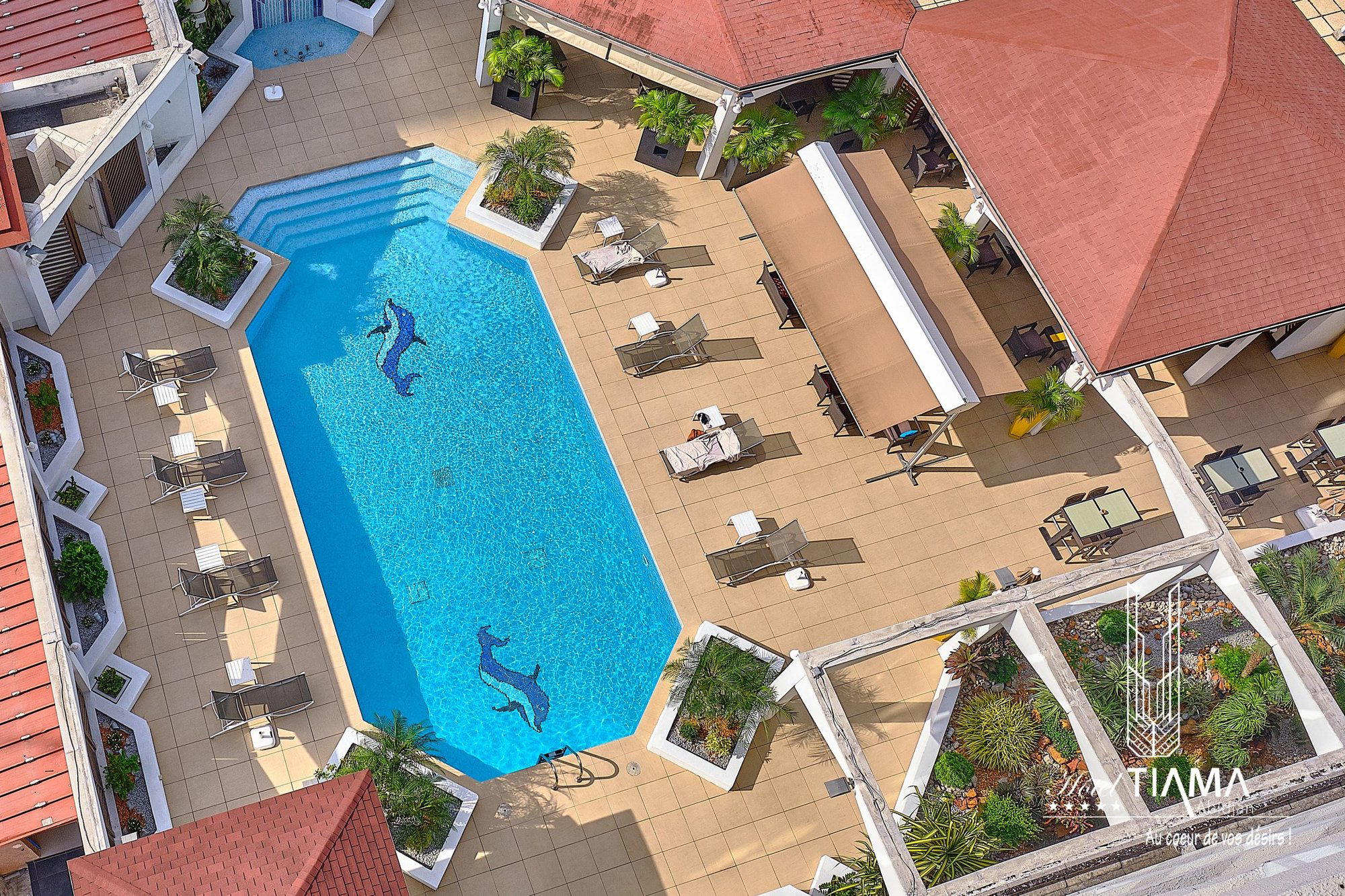
Bars in Abidjan
All bars in Abidjan →
Restaurants in Abidjan
All restaurants in Abidjan →
Details
- Elegant
- Sophisticated
- Modern
- Quiet
- Scenic
- Business Trip
- Romantic Getaway
- Wellness Retreat
- Garden
- Terrace
- Design Destination
- Destination Spa
- Wi Fi
- Pool
- Spa
- Fitness Center
- Room Service
- Restaurant
- Bar
- Concierge
- Business Center
- Airport Transfer
- Garden
- Wheelchair Accessible
- Accessible Restroom
- Accessible Parking
- Step Free Entrance
Tranquil and refined with soft ambient music, natural lighting through high ceilings, and a garden-like atmosphere that creates a sense of peaceful retreat from the bustling city.