Our verdict
La Monnaie occupies a historic address at 5-7 Place Vival in Figeac, a medieval town in the Lot department of southwest France. Set within the culinary tradition of Quercy and the Occitan southwest, it represents one of several dining options anchoring the town's central square. For context on the wider Figeac dining scene, see our full restaurants guide.

Pearl is the En Primeur Club membership app, where members save venues, book tables and use the concierge.
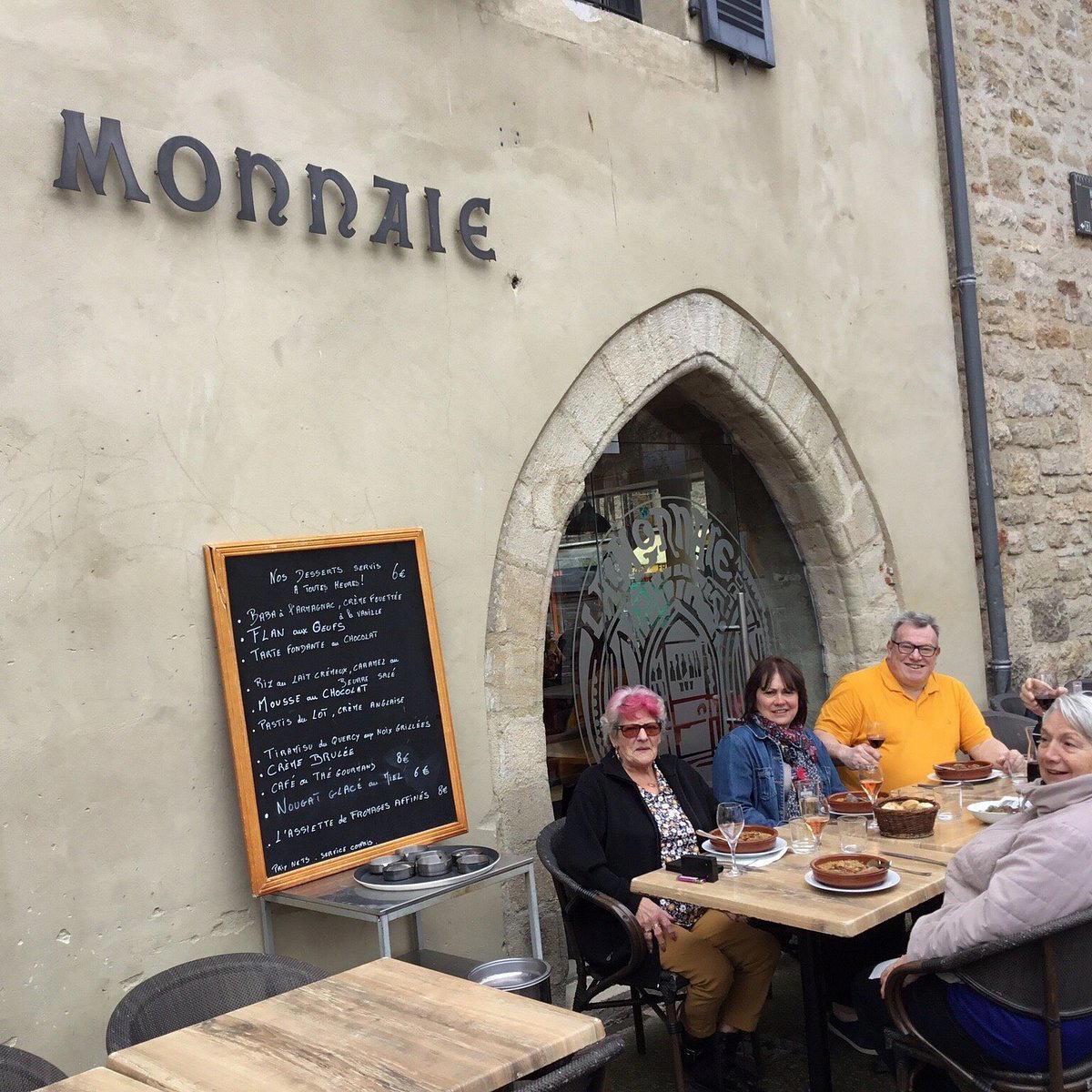
The menu
What to order
- Cassoulet
- Parmentier de bourguignon
Figeac's Place Vival and the Table at Its Centre
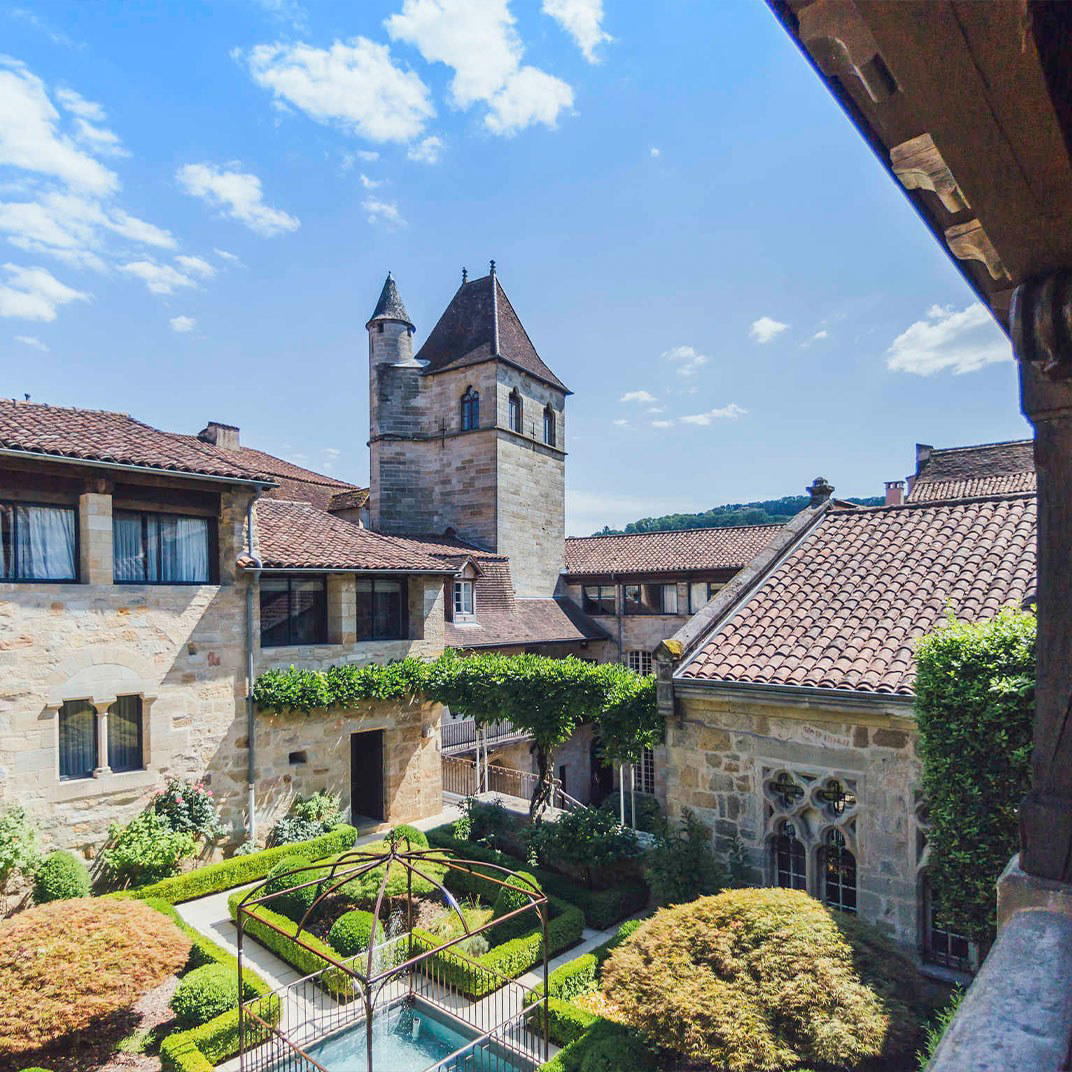
The Place Vival sits at the gravitational centre of Figeac, a town of around ten thousand people in the Lot department of southwest France. The square is framed by the warm ochre limestone that defines medieval Quercy architecture, and the buildings around it have shifted purposes across centuries, from commercial exchange to civic function to hospitality. La Monnaie takes its name from that layered history: the site's association with monetary or administrative use in the old town is embedded in its identity. Restaurants that occupy historically resonant addresses in small French towns carry a particular kind of weight, the setting shapes expectations before the first course arrives.
Figeac is not a destination that accumulates press coverage the way Bordeaux or Lyon does, but that relative quietness is part of what defines the experience of eating here. The town draws visitors connected to the Lot Valley, the pilgrimage routes toward Santiago de Compostela, and the broader Quercy and Périgord regions, where cooking is rooted in duck fat, walnuts, truffles, and preserved meats rather than in the lighter registers favoured further south. That culinary tradition is among the most coherent in France, not because it reaches for complexity, but because it has centuries of regional logic behind it. Dining in this corner of the Lot means engaging with that logic whether you intend to or not.
The Quercy Table: What the Region Puts on the Plate
Southwest French cooking, in the Quercy and Périgord sense, operates from a larder that would be the envy of many larger culinary centres. Duck confit, foie gras, black truffles from Lalbenque, walnuts from the Lot, cèpes gathered from the forests between river valleys, these are not decorative flourishes but foundational ingredients that appear in the simplest as well as the most considered preparations. The region's cooking is not shy about fat, and it is not apologetic about it either. This is cuisine shaped by cold winters, agricultural self-sufficiency, and a long tradition of preservation that predates refrigeration by centuries.
What distinguishes the Quercy table from its neighbours in the Périgord or the Aveyron is partly terroir and partly temperament. The Lot's walnut oil turns up in vinaigrettes and pastries. Rocamadour, the small disc of raw goat's milk cheese made in the gorges not far from Figeac, is one of the few cheeses in France with AOC protection specifically tied to a single canyon. The presence of these ingredients on any serious menu in the area is not a regional marketing decision, it reflects proximity and the cooking instincts that proximity breeds over generations. For comparable expressions of this tradition at a different scale, Bras in Laguiole in the Aveyron and Auberge du Vieux Puits in Fontjoncouse in the Aude both demonstrate how deeply rooted southwestern French cooking remains in its ingredient sources, even at Michelin three-star level.
La Monnaie in Figeac's Dining Tier
Figeac supports a small but coherent dining scene distributed across a range of price points and cooking philosophies. At the traditional end sits La Cuisine du Marché, which operates in the €€ bracket with a focus on market-driven southwestern French cooking. The modern register is represented by La Dînée du Viguier at the €€€ tier, and La Racine et la Moelle at €€ with a contemporary approach. Lotalie rounds out the options for those looking to stay central. La Monnaie, at its Place Vival address, sits within this compact network. The full scope of the town's options is covered in our Figeac restaurants guide.
In a town this size, a restaurant on the main square occupies a specific role. It serves residents, it serves visitors arriving via the pilgrimage corridor, and it functions as a point of orientation for anyone spending a night or two in the Lot. That is a different proposition from operating in a city with forty comparable options within walking distance. The stakes of each cover are different, and so is the implicit contract with the diner. Southwest France's small-town restaurants have historically maintained this contract with quiet consistency rather than ambition, and the strongest among them outlast their noisier urban counterparts by decades.
France's Broader Table: Where Figeac Sits
To understand what Figeac restaurants are and are not, it helps to map them against France's broader dining hierarchy. The country's most recognised tables, Alléno Paris au Pavillon Ledoyen in Paris, Mirazur in Menton, Troisgros - Le Bois sans Feuilles in Ouches, Flocons de Sel in Megève, Auberge de l'Ill in Illhaeusern, Assiette Champenoise in Reims, Au Crocodile in Strasbourg, and Paul Bocuse - L'Auberge du Pont de Collonges in Collonges-au-Mont-d'Or, operate within systems of awards, recognition, and destination dining that Figeac does not participate in at the same level. That is not a criticism. It reflects a different category entirely: regional French cooking in a small medieval town has its own criteria for success, and those criteria are closer to hospitality, consistency, and local ingredient stewardship than to technical ambition or critical prestige.
For context beyond France, the same principle applies internationally. Tables like AM par Alexandre Mazzia in Marseille, Le Bernardin in New York City, or Atomix in New York City represent the upper tier of technical ambition and critical validation. Figeac's dining scene, La Monnaie included, answers different questions entirely.
Planning a Visit
La Monnaie is located at 5-7 Place Vival, 46100 Figeac, in the Lot department of the Midi-Pyrénées region. Figeac is accessible by train from Toulouse (approximately two hours) and by car from Brive-la-Gaillarde or Rodez. The town's proximity to the Célé Valley and the Lot River makes it a natural stopover for those following the GR65 or GR651 walking routes, or for visitors using the Lot as a base for regional exploration.
Frequently asked questions
Is La Monnaie child-friendly?
Figeac is a town-scale destination rather than a high-pressure urban dining scene, and restaurants on Place Vival generally reflect that pace. La Monnaie's position on a central pedestrian square suggests an accessible, unhurried setting. For specific children's menu options or high-chair availability, check the venue's official channels before visiting.
Is La Monnaie better for a quiet night or a lively one?
Place Vival is Figeac's social centre, so the square itself carries ambient life on warm evenings. La Monnaie sits at 5-7 Place Vival, which puts it squarely in that foot-traffic corridor. Expect a convivial rather than hushed atmosphere, particularly in the summer months when the Lot draws visitors to its medieval towns.
What makes La Monnaie a useful base for eating well in the Lot department?
La Monnaie is located at 5-7 Place Vival, the central square of Figeac, which sits in the Lot department roughly midway between Cahors and Aurillac. The Lot is one of southwest France's most coherent food-producing zones, with AOC Cahors wines, Quercy lamb, and duck-based charcuterie all produced within the immediate region. A meal in Figeac therefore connects directly to a supply geography that larger French cities often access at greater remove.
What should I order at La Monnaie?
The Quercy and Périgord larder that southwest French kitchens draw from runs to duck confit, foie gras, walnut-dressed salads, and cassoulet variants. Check the current menu directly with the restaurant.
What part of town is La Monnaie in?
La Monnaie is located at 5-7 Pl. Vival, 46100 Figeac, France, Figeac.
Do they take walk-ins at La Monnaie?
No booking data is confirmed for La Monnaie at 5-7 Place Vival. In a town the size of Figeac, walk-ins are often feasible outside peak summer weekends, but the Lot sees meaningful visitor volume from June through August. Arriving with a reservation during that period is the safer approach.
What do critics highlight about La Monnaie?
Its address on Place Vival places it within Figeac's most visible dining tier, but formal critical recognition, if any exists, has not been publicly indexed in named publications.
Cost and Credentials
Comparable venues nearby, for context on price, style, and recognition.
| Venue | Cuisine | Price | Awards | Notes |
|---|---|---|---|---|
| La MonnaieThis venue (the venue you are viewing) | French Brasserie with Lot Terroir | $20–30 | Not listed | Not listed |
| Lotalie | Neapolitan-Style Pizza with Local Fusion | $10–20 | Not listed | Centre Ancien, Neapolitan-Style Pizza with Local Fusion |
| La Racine et la Moelle | Modern French Neo-Bistro | $30–50 | Michelin Plate | centre historique, Modern French Neo-Bistro |
| La Cuisine du Marché | Traditional French with Mediterranean Spanish Influences | $30–50 | Michelin Plate | old town, Traditional French with Mediterranean Spanish Influences |
| La Dînée du Viguier | Modern French Bistronomique | $50–100 | Michelin Plate | centre-ville, Modern French Bistronomique |
| L’aventure | French Mountain Grill | $30–50 | Not listed | Oz en Oisans, French Mountain Grill |
Continue exploring
More in Figeac
Details
- Rustic
- Cozy
- Casual Hangout
- Terrace
- Local Sourcing
- Street Scene
- A La Carte
Current opening hours
- Monday
- 7:30 AM–8:30 PM
- Tuesday
- 7:30 AM–7:30 PM
- Wednesday
- 7:30 AM–7:30 PM
- Thursday
- 7:30 AM–7:30 PM
- Friday
- 7:30 AM–9 PM
- Saturday
- 7:30 AM–9 PM
- Sunday
- 7:30 AM–3 PM
Hours can change for holidays and private events. Hours as of .
Chaleureuse ambiance in a well-located central brasserie with terrace seating.