
Michelin Plate
Our verdict
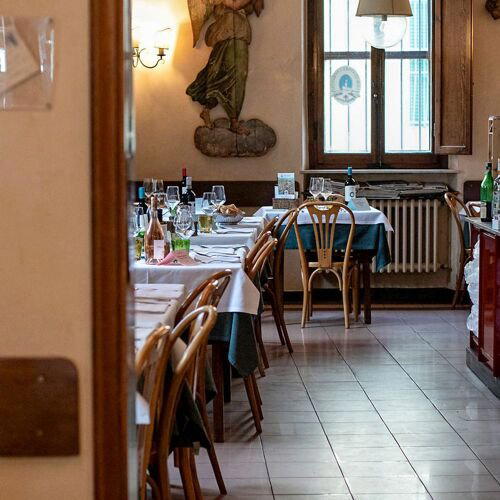
A Michelin Plate holder on the edge of Figeac's medieval old town, La Cuisine du Marché keeps its premise simple: quality market produce, straightforward cooking, and a thread of Spanish character that reflects the chef's origins. At the €€ price point, it represents one of the more grounded options in a town better known for heritage than dining ambition.

Pearl is the En Primeur Club membership app, where members save venues, book tables and use the concierge.
The menu
What to order
- Foie gras poêlé
- Caille rôtie
- Pata negra
Market Logic in Medieval Figeac
Figeac's old town is one of the Lot's more quietly compelling medieval environments: sandstone facades, narrow lanes, and a central market infrastructure that has shaped local commerce for centuries. The weekly market on Place Carnot remains a functional hub rather than a tourist performance, and restaurants that actually use it as a sourcing base rather than a marketing line operate in a meaningfully different way from those that merely invoke the language of local produce. La Cuisine du Marché, at 15 Rue de Clermont, falls into the former category. The name is a statement of method, not branding.
In France's provincial dining scene, the gap between market-led cooking and menu-led cooking is wide. Many restaurants at the €€ price point write fixed menus months in advance and source accordingly. A kitchen genuinely built around what is available this week adjusts constantly, which places more pressure on the brigade but produces food that reads as current rather than rote. The Michelin Plate recognition La Cuisine du Marché received in 2025 reflects exactly this: the guide's language describes quality produce going into simple, tasty cooking. That is not a concession, it is an accurate statement of what this tier of recognition rewards.
Where Spanish Influence Meets the Lot
The cross-border culinary dynamic between southwest France and northern Spain is more active than it appears from a map. The Lot sits in the broader Occitan corridor that historically connected Toulouse to Catalonia and the Basque Country, and the region's cooking has absorbed Iberian inflections across centuries, from the use of piment d'Espelette to the preference for strong bean and lard-based braises. At La Cuisine du Marché, the Spanish dimension is more personal: the Michelin entry notes that the chef's origins lie across the border, and those touches appear in the food as a natural extension of background rather than a theme.
This kind of culinary hybridity is worth taking seriously in a town like Figeac. Unlike Mirazur in Menton, where the Franco-Italian border dynamic underpins an entire tasting format at the €€€€ level, or AM par Alexandre Mazzia in Marseille, where Mediterranean multiculturalism drives a highly composed creative menu, the Spanish notes here are embedded in market-led simplicity. They show up in seasoning and technique, in the choice of a particular cut or cured element, not in conceptual architecture. That is appropriate to the format and to the price point.
Positioning Within Figeac's Dining Range
Figeac is not a city with a deep restaurant infrastructure. It draws visitors primarily for the Champollion Museum and the medieval quarter, and its dining options reflect a town of moderate size in a rural department. Within that context, the range from traditional to modern cooking is covered by a handful of addresses. La Dînée du Viguier and La Racine et la Moelle represent the modern cuisine tier; La Cuisine du Marché occupies the traditional end, with a market-sourcing philosophy that makes it a reliable reference point rather than a destination in the competitive national sense.
At the €€ price point, it sits comfortably below the level of regional Michelin-starred destinations in the southwest, such as Bras in Laguiole, which operates at a different price tier and compositional register entirely. The comparison is not unflattering to La Cuisine du Marché; it simply clarifies what kind of meal is on offer. This is provincial French cooking at its functional leading: produce-driven, honest in ambition, and supported by a pleasant setting in one of the Lot's more characterful town centres.
The Michelin Plate in Context
The Michelin Plate, introduced as a distinct designation to signal kitchens that produce good cooking without reaching starred territory, performs a useful calibration function for travellers. Across France, the Plate category covers an enormous range, from ambitious bistros in Paris to regional maisons in rural departments like the Lot. The common thread is that the guide's inspectors found the cooking worth noting: quality sourced produce, competent technique, satisfying results.
For context, France's starred tier in provincial settings includes restaurants like Auberge de l'Ill in Illhaeusern, Troisgros - Le Bois sans Feuilles in Ouches, and Flocons de Sel in Megève, all operating at substantially higher price points and compositional complexity. La Cuisine du Marché draws its credential from a different part of the same guide, where the question is not innovation but reliability. In a town without a deep bench of alternatives, a Michelin Plate is meaningful information. It signals that this is not merely the least-bad option in a limited field, but a kitchen that has earned independent recognition.
Similarly, Auberge Grand'Maison in Mûr-de-Bretagne and Auga in Gijón demonstrate how traditional cuisine formats with strong regional anchoring can hold Michelin recognition across different national contexts. The pattern at La Cuisine du Marché fits that wider European tradition of market-led provincial cooking that values supply chain integrity over compositional complexity.
Planning Your Visit
La Cuisine du Marché sits at 15 Rue de Clermont in Figeac's old town, placing it within easy reach of the main medieval quarter and the Champollion Museum. The €€ price point makes it accessible for a midday lunch as readily as an evening meal, and the old town setting means arrival on foot from most central accommodation is direct. Booking in advance is advisable, particularly during the summer tourist season when Figeac sees increased visitor traffic from those travelling the Lot valley or the Camino routes passing through the region.
Travellers using Figeac as a base for the broader Lot and Aveyron region will find the restaurant's hours and format suited to a multi-day stay rather than a single-night transit stop. For broader orientation across the town's accommodation and drinking options, see our full Figeac hotels guide, full Figeac bars guide, full Figeac wineries guide, and full Figeac experiences guide. For the full dining picture in the town, the full Figeac restaurants guide covers the range from traditional to modern formats.
Frequently asked questions
What awards or recognition does La Cuisine du Marché have?
La Cuisine du Marché has received recognition including: Michelin Plate (2025); The old town is a lovely setting for this pleasant restaurant, the name of which sets the tone. Indeed, quality market produce goes into cooking simple and tasty food, peppered with a few Spanish touches. After all, t….
What dish is La Cuisine du Marché famous for?
La Cuisine du Marché does not publish a fixed signature dish, which is consistent with its market-led format: the menu shifts with produce availability. The Michelin Plate recognition points to cooking that is simple and direct, with Spanish touches reflecting the chef's origins. Regulars return for the seasonal logic of the menu rather than a single set piece.
What's the pricing like at La Cuisine du Marché?
Pricing at La Cuisine du Marché is listed as €€.
Where do I go for La Cuisine du Marché?
La Cuisine du Marché is located at 15 Rue de Clermont, 46100 Figeac, France, Figeac.
Fast Comparison
| Venue | Cuisine | Price | Awards | Notes |
|---|---|---|---|---|
| La Cuisine du MarchéThis venue (the venue you are viewing) | Traditional French with Mediterranean Spanish Influences | $30–50 | Michelin Plate | Not listed |
| Alléno Paris au Pavillon Ledoyen | Modern French Fine Dining | $150–200 | 3 Michelin Stars · World's 50 Best #79 | Creative |
| Kei | Contemporary French, Modern Cuisine | Not listed | Michelin 3 Star | Not listed |
| L'Ambroisie | Classic French Haute Cuisine | $300–500 | 2 Michelin Stars · World's 50 Best #23 | French, Classic Cuisine |
| Le Cinq - Four Seasons Hôtel George V | Modern French Fine Dining | $300–500 | 3 Michelin Stars · World's 50 Best #24 | French, Modern Cuisine |
| Plénitude | Modern French Sauce-Led Fine Dining | $300–500 | 3 Michelin Stars · World's 50 Best #14 | Contemporary French |
Recognition history
Dated appearances from independent guides and award organizations, with the underlying list record or original source where available.
Michelin Plate
Michelin
Full recognition history (2 entries)
Michelin Plate
Michelin
Continue exploring
More in Figeac
Details
- Classic
- Rustic
- Elegant
- Intimate
- Date Night
- Special Occasion
- Open Kitchen
- Historic Building
- Local Sourcing
- A La Carte
Current opening hours
- Monday
- 7–9 PM
- Tuesday
- 12–1:45 PM, 7–9 PM
- Wednesday
- 12–1:45 PM, 7–9 PM
- Thursday
- 12–1:45 PM, 7–9 PM
- Friday
- 12–1:45 PM, 7–9 PM
- Saturday
- 12–1:45 PM, 7–9 PM
- Sunday
- Closed
Hours can change for holidays and private events. Hours as of .
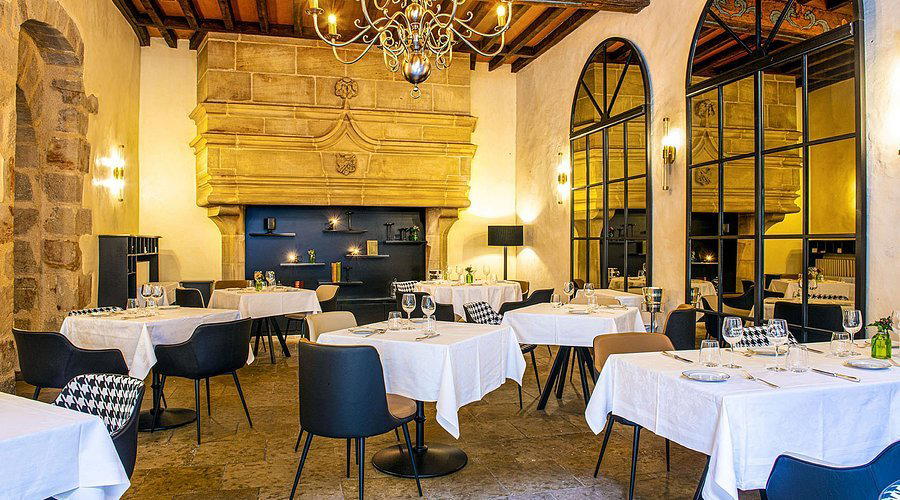
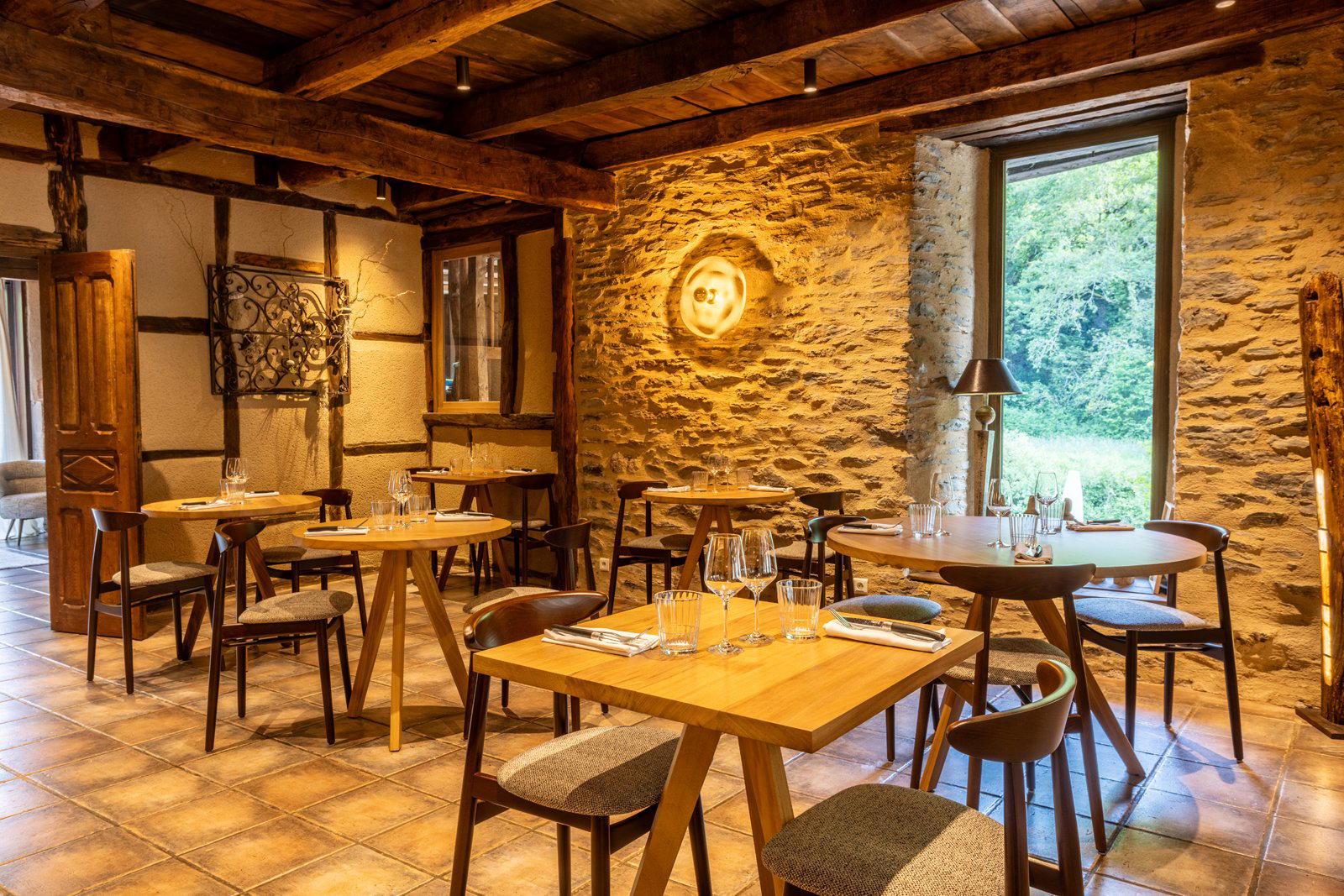
Cozy gothic vaulted room with white tablecloths, spaced tables, warm welcoming service, and view of the chef working.