

1 Michelin Star · Gault & Millau Remarkable Restaurant
Our verdict
A Michelin-starred address in the Bois de Boulogne, La Grande Cascade operates from a Second Empire pavilion that has anchored the western edge of Parisian fine dining for well over a century. Under Chef Gilles Dudognon, the kitchen holds to classic cuisine with the discipline that earned consecutive Michelin stars in 2024 and 2025. Few restaurants in Paris combine this depth of architectural heritage with a sustained record of formal recognition.

Pearl is the En Primeur Club membership app, where members save venues, book tables and use the concierge.
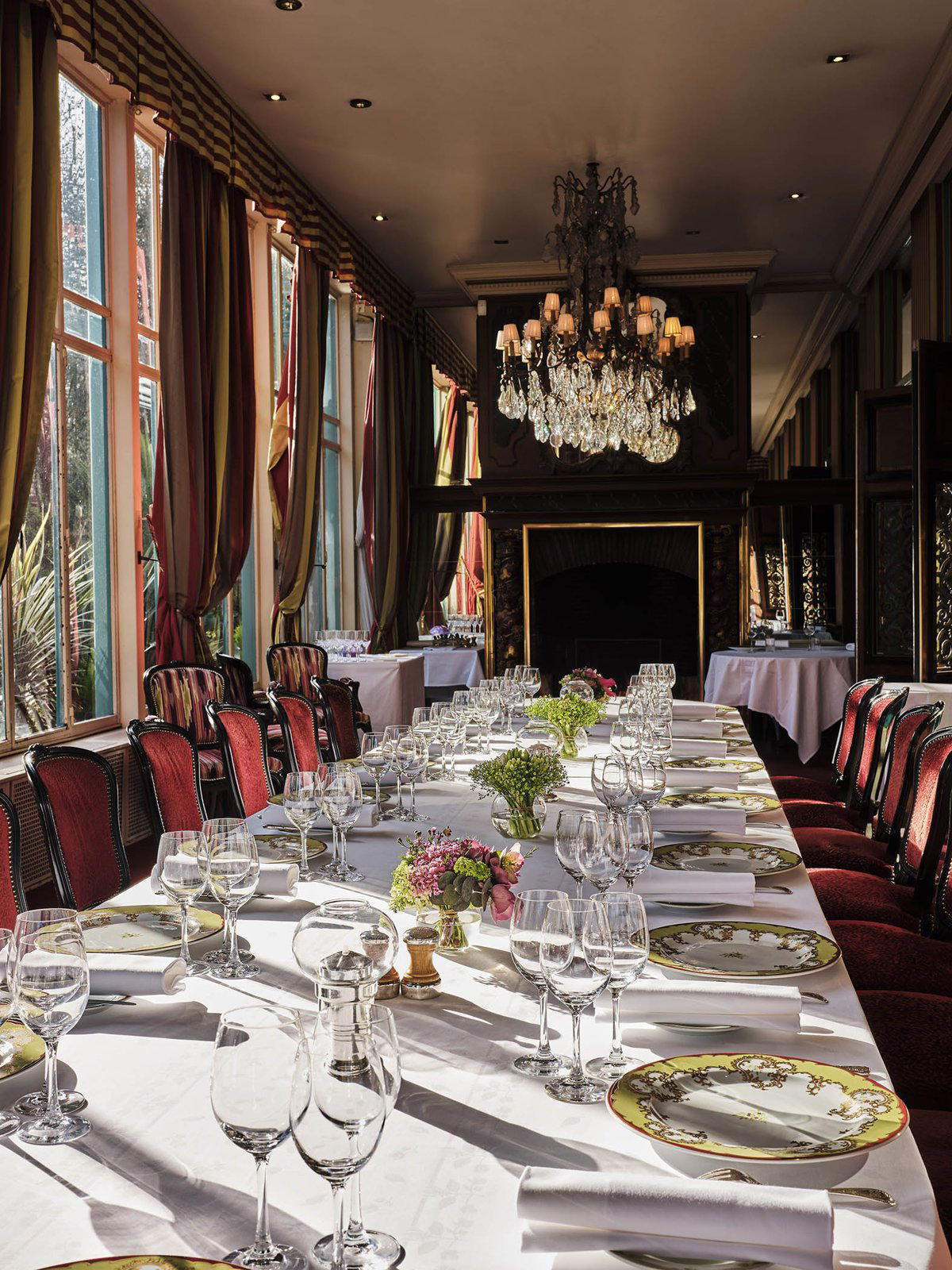
A Pavilion With a Long Memory
The Bois de Boulogne has been Paris's western green belt since Napoleon III commissioned its redesign in the 1850s, and the cascade pavilion that lends La Grande Cascade its name was built for the 1867 Exposition Universelle. That origin places the restaurant in a specific category of Parisian dining institution: buildings that predate the modern restaurant industry and have been adapted, repeatedly, to serve a clientele that expects grandeur as a baseline condition. The Second Empire interior, with its ornate mouldings and formal proportions, is not a period reconstruction, it is the room itself, worn and maintained through successive generations of service.
That historical weight shapes the competitive context. Paris's €€€€ tier at the Michelin one-star level contains a range of propositions: hotel dining rooms attached to palace properties, tight contemporary counters in the first and second arrondissements, and a smaller cohort of standalone addresses with genuine architectural identity. La Grande Cascade belongs to the last group, alongside addresses such as Alléno Paris au Pavillon Ledoyen, which occupies an 1842 Champs-Élysées pavilion at the three-star level. The comparison is instructive: monument-housed restaurants in Paris carry an expectation of scale and ceremony that smaller rooms are not asked to meet.
Gilles Dudognon and the Classic Cuisine Position
Classic cuisine in France has a specific meaning that distinguishes it from the broader category of French fine dining. It signals a kitchen operating within the canon established by Escoffier and extended through the postwar generation of grandes maisons, applying technique developed over decades rather than rewriting vocabulary season by season.
Gilles Dudognon has held the Michelin star through 2024 and again through 2025, a consecutive recognition that signals consistency rather than a single strong year. In the Michelin framework, sustained single-star status at a classic-cuisine address in this price range is a particular kind of achievement: the inspectors are measuring whether the kitchen can hold a standard across a full calendar, not whether one dish lands a moment of surprise. Chef Dudognon's role in that continuity is the central editorial fact about the kitchen, even without a detailed public biography. The training traditions behind classic cuisine in France run through a lineage of houses, among them Maison Rostang in the 17th arrondissement, which has maintained its own long record at the upper tier of Paris dining, and a chef sustaining this standard at La Grande Cascade is operating within that tradition.
For context on what sustained regional excellence at the classic end of French cuisine looks like beyond the capital, houses such as Auberge de l'Ill in Illhaeusern and Paul Bocuse, L'Auberge du Pont de Collonges represent the benchmark for how deeply rooted these traditions run in France. La Grande Cascade sits within that national continuum, anchoring it specifically to Paris's 16th arrondissement.
The 16th Arrondissement Dining Context
The 16th occupies an unusual position in Paris dining. Geographically large, affluent, and residential, it is not a neighbourhood known for the density of ambitious restaurants that defines the central arrondissements or the emerging energy of the 10th, 11th, and 18th. Its serious dining addresses tend to cluster near the Trocadéro and the Bois, drawing a clientele that prizes quietness and occasion over proximity to nightlife or transport hubs. La Grande Cascade, set within the Bois itself on the Route de la Vierge aux Berceaux, sits at the furthest remove from the arrondissement's more accessible pockets. Getting there requires a taxi or rideshare from the nearest metro; the address is not walkable from any station without significant effort. That logistical fact is part of the experience's character, the journey inward through the Bois signals that this is a deliberate excursion rather than a spontaneous dinner.
A 4.6 across that sample indicates consistent execution at the guest experience level, not just in the kitchen. Those planning a visit should book well in advance, particularly for weekend lunch, which is historically the busiest service at pavilion restaurants of this type. Reservations should be made directly or through a concierge; the setting and occasion format make it unsuitable for walk-in attempts.
Setting the Register: Occasion Dining in a Monument
Paris has a defined category of restaurants where the room itself is the organising argument. Le Relais Plaza La Grande Cascade is another, though the building type is entirely different: a freestanding pavilion in parkland rather than an embedded hotel annexe. The dining proposition at both addresses depends on the reader accepting that setting and atmosphere are material components of the value, not decorative additions to the food.
This is a useful distinction for the traveller deciding how to allocate a limited number of high-end Paris dinners. A three-star creative address such as Alléno Paris au Pavillon Ledoyen puts the intellectual ambition of the kitchen first; the room supports that ambition. La Grande Cascade inverts the weighting, somewhat. The Second Empire room and its parkland setting carry a proportion of the occasion's weight, and the kitchen's classic discipline is the appropriate culinary register for that environment. Neither approach is superior in the abstract; they serve different purposes in a well-constructed Paris itinerary.
For those whose priorities run toward contemporary French creativity at high intensity, addresses such as L'Escarbille in the near suburbs or the mountain-focused intensity of Flocons de Sel in Megève represent a different register. The regional comparison also extends internationally: Mirazur in Menton and Troisgros, Le Bois sans Feuilles in Ouches operate at the apex of French fine dining in a creative mode, while Bras in Laguiole has built its identity around terroir-driven originality. La Grande Cascade's value proposition is distinct from all of them.
For travellers constructing a broader Paris trip, the full Paris restaurants guide, alongside guides to Paris hotels, Paris bars, Paris wineries, and Paris experiences, provides the full context for planning across categories.
Planning a Visit
La Grande Cascade is at Route de la Vierge aux Berceaux, 75016 Paris. The address sits inside the Bois de Boulogne and requires a car or taxi from the 16th arrondissement's nearest metro connections; plan for the transfer time when scheduling around a pre-theatre or post-museum slot. The price range sits at the €€€€ level, consistent with Michelin one-star formal dining in Paris in 2025. Dress code norms at addresses of this type in France default to smart-formal; the architectural register of the room sets the expectation. Reservations in advance are advisable, with lead times extending further during spring and autumn when the parkland setting is at its most compelling and demand from visiting diners peaks.
Frequently asked questions
Has La Grande Cascade won any awards?
La Grande Cascade has received recognition including: Category: Remarkable; Michelin 1 Star (2025); Michelin 1 Star (2024).
What do regulars order at La Grande Cascade?
The kitchen operates under a classic cuisine classification, meaning the menu follows the established grammar of French haute cuisine: sauces built to codified methods, proteins treated with technical precision rather than conceptual flourish. Chef Gilles Dudognon has held the Michelin star through both 2024 and 2025, which suggests the kitchen's strengths lie in consistency across the core repertoire rather than a single signature dish. Regulars at this price tier (€€€€) tend to anchor their meal around the main course, where classic sauce work is most legible.
At-a-Glance Comparison
A quick peer list to put this venue’s basics in context.
| Venue | Cuisine | Price | Awards | Notes |
|---|---|---|---|---|
| La Grande CascadeThis venue (the venue you are viewing) | Classic French Fine Dining | $150–200 | 1 Michelin Star · Gault & Millau Remarkable Restaurant | Not listed |
| Alléno Paris au Pavillon Ledoyen | Modern French Fine Dining | $150–200 | 3 Michelin Stars · World's 50 Best #79 | Creative |
| Kei | Modern French with Japanese Influences | $300–500 | 3 Michelin Stars · World's 50 Best #93 | Contemporary French, Modern Cuisine |
| L'Ambroisie | Classic French Haute Cuisine | $300–500 | 2 Michelin Stars · World's 50 Best #23 | French, Classic Cuisine |
| Le Cinq - Four Seasons Hôtel George V | Modern French Fine Dining | $300–500 | 3 Michelin Stars · World's 50 Best #24 | French, Modern Cuisine |
| Plénitude | Modern French Sauce-Led Fine Dining | $300–500 | 3 Michelin Stars · World's 50 Best #14 | Contemporary French |
Recognition history
Dated appearances from independent guides and award organizations, with the underlying list record or original source where available.
Michelin 1 Star
Michelin
Gault & Millau Remarkable Restaurant
Gault & Millau
Full recognition history (4 entries)
Michelin 1 Star
Michelin
Michelin 1 Star
Michelin
Continue exploring
More in Paris
Restaurants in Paris
All restaurants in Paris →
Bars in Paris
All bars in Paris →




La Grande Cascade
The wine
- Wine program
- Deep wine list
- Extensive wine list
- Sommelier-led
Details
- Elegant
- Romantic
- Classic
- Sophisticated
- Well Known
- Special Occasion
- Date Night
- Celebration
- Historic Building
- Garden
- Hotel Restaurant
- Extensive Wine List
- Sommelier Led
- Garden
- Tasting Menu
- Prix Fixe
- Vegetarian Friendly
Current opening hours
- Monday
- 12:30–2 PM, 7:30–9:30 PM
- Tuesday
- 12:30–2 PM, 7:30–9:30 PM
- Wednesday
- 12:30–2 PM, 7:30–9:30 PM
- Thursday
- 12:30–2 PM, 7:30–9:30 PM
- Friday
- 12:30–2 PM, 7:30–9:30 PM
- Saturday
- 12:30–2 PM, 7:30–9:30 PM
- Sunday
- 12:30–2 PM, 7:30–9:30 PM
Hours can change for holidays and private events. Hours as of .
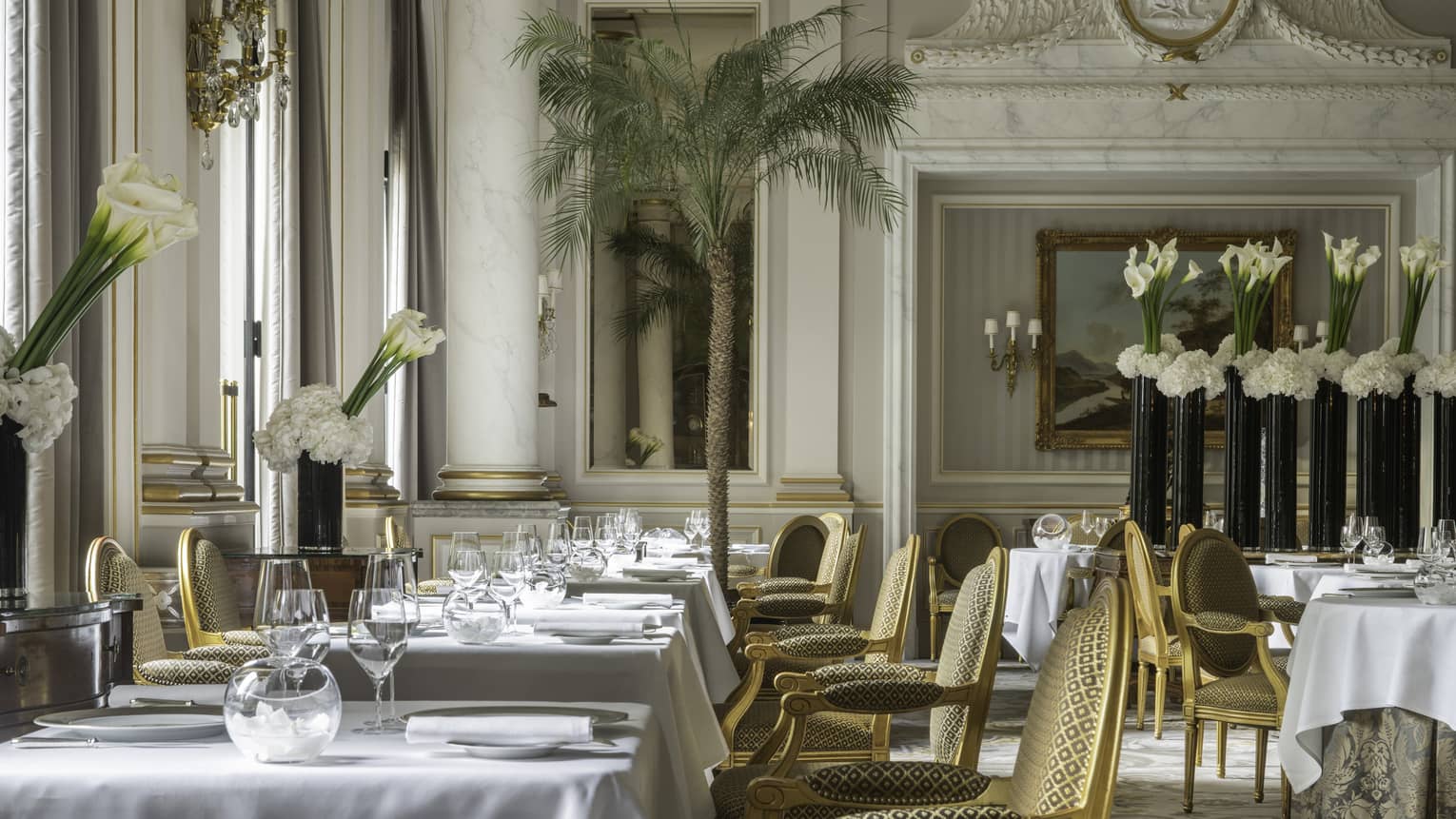
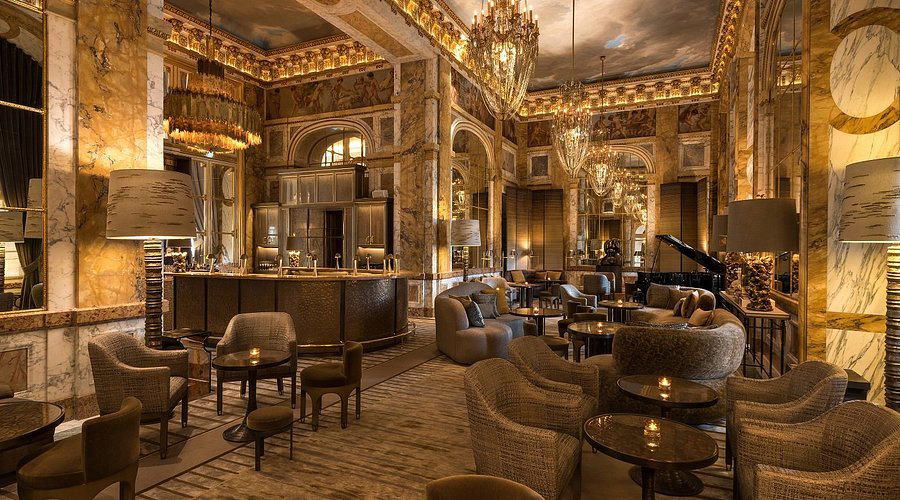
Elegant and historic with beautiful art deco interiors, chandeliers, bay windows, bright glass roof, and a calm, romantic atmosphere surrounded by greenery.