

Michelin Bib Gourmand · Macarfi 8.2 Food Rating
Our verdict
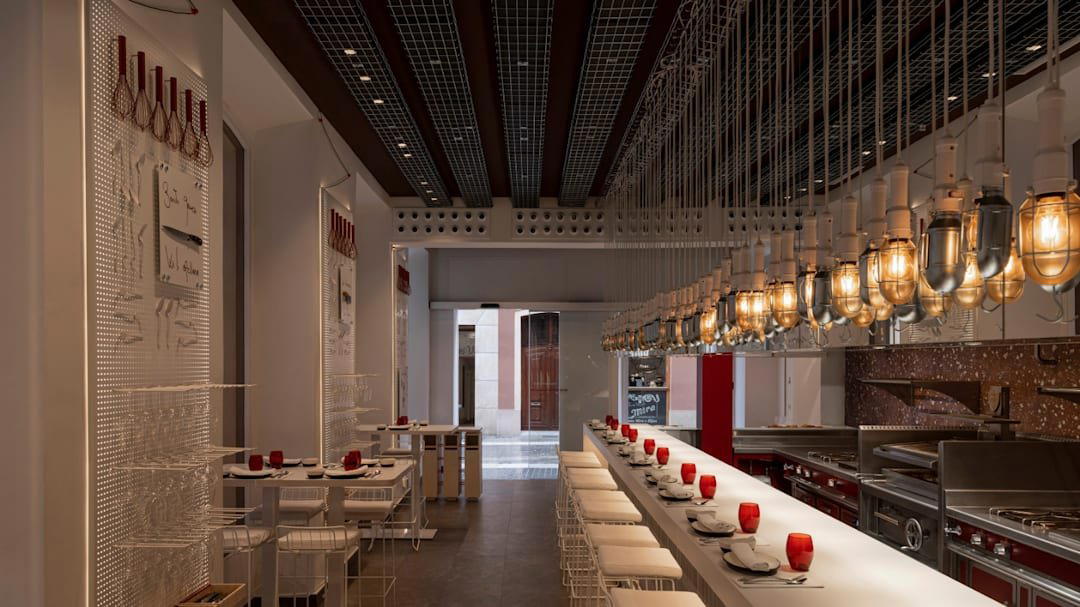
Steps from Málaga's Cathedral, La Cosmo sits in the casual-dining tier that Chef Dani Carnero uses to champion local seafood and Malagueño tradition without the formality of his Michelin-starred Kaleja. An open kitchen and bar seating put the cooking on full display, while dishes like the hake salad rooted in family memory anchor the menu in something more grounded than trend-chasing.

Pearl is the En Primeur Club membership app, where members save venues, book tables and use the concierge.
Cathedral Quarter, Casual Register
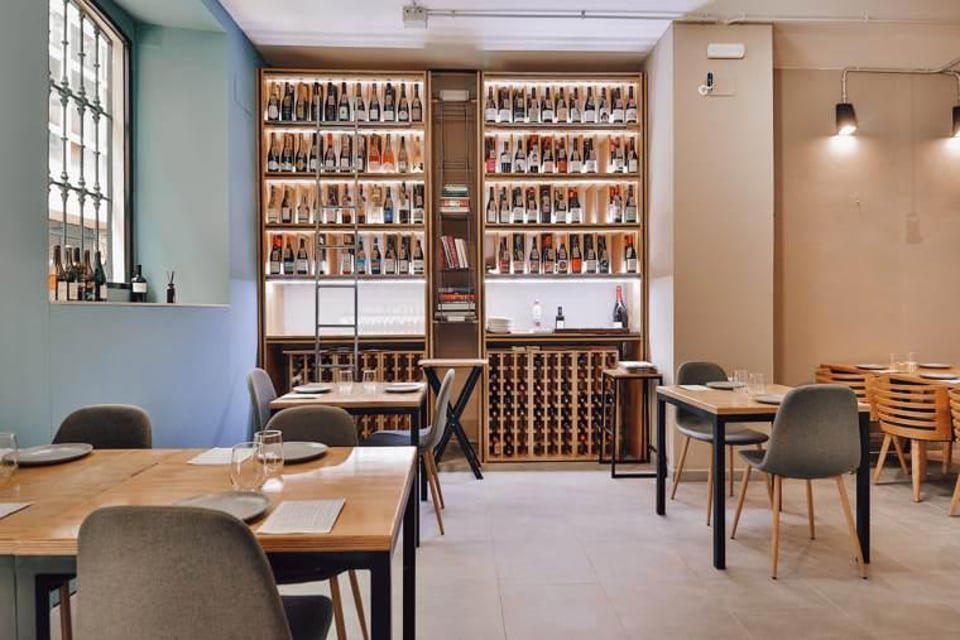
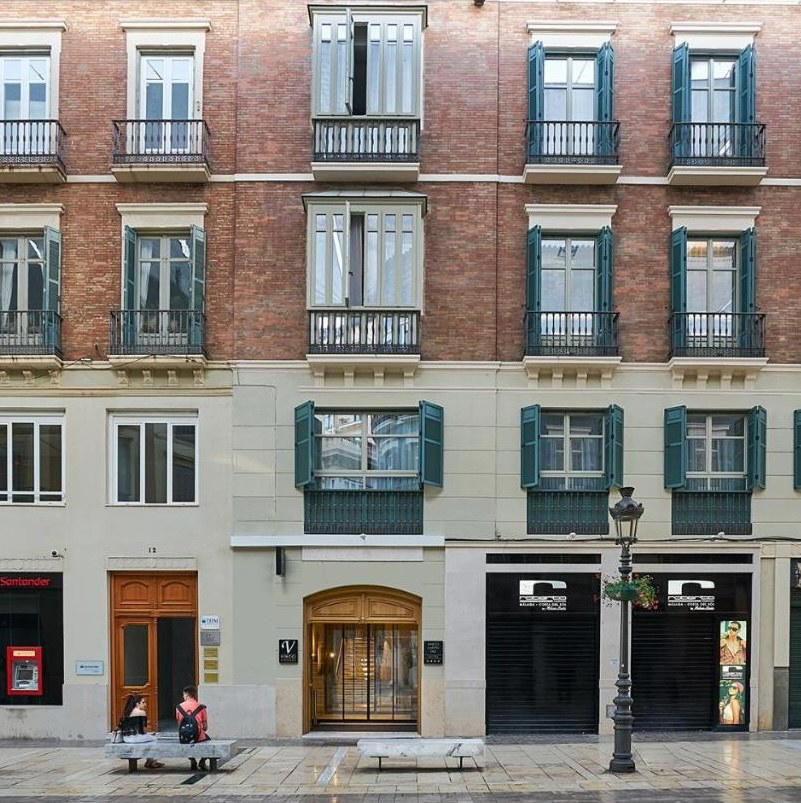
Málaga's centro histórico has a clear dining hierarchy. At the formal end sit places like Kaleja, where Dani Carnero holds a Michelin star and the tasting menu asks for full commitment from the evening. A few streets away, La Cosmo operates on entirely different terms: a white-walled room on Calle Císter, an open kitchen, and a format built around accessibility rather than ceremony. The address, just behind the Cathedral, places it squarely in the most visited corridor of the city, yet the cooking is aimed at locals as much as passing visitors.
That positioning matters in a city where casual dining can slide easily into tourist-facing mediocrity. The white interior and open-kitchen layout communicate intent before a dish arrives: this is a room that takes transparency seriously, both in the literal sense of watching chefs work and in the sourcing philosophy that runs through the menu. Local raw ingredients are the anchor, and the Malagueño seafood tradition is the frame.
The Lunch and Dinner Split
Many of Málaga's mid-range restaurants operate on a direct daily rhythm, but the distinction between lunch and evening service at a place like La Cosmo carries real weight. Spanish dining culture still treats lunch as the main event, and this part of the city fills at midday with office workers and residents who eat at the bar rather than linger over a four-course set. The energy is quicker, the kitchen is in full production mode, and the value proposition is strongest: a counter seat at lunch here puts you inside the working tempo of the space rather than observing it from a table.
Evening service shifts the mood incrementally. The pace slows, the tourist share rises, and the meal tends to stretch. Neither mode is wrong, but if the editorial angle of this type of kitchen is to eat close to the source of cooking, the bar stool at lunch is the more instructive seat. Watching the team handle the volume of a busy midday service tells you more about the kitchen's confidence than a quieter Thursday evening.
Compare this to the lunch-versus-dinner dynamic at somewhere like Arte de Cozina, which leans into Malagueño tradition at a different price point, or Aire, where the contemporary format shifts the experience further from the casual register. La Cosmo occupies the middle distance: more considered than a tapas bar, less loaded with occasion than a tasting-menu room.
What the Open Kitchen Signals
Open kitchens in Spanish casual dining have become common enough to mean little on their own. What matters is whether the format actually changes the experience, or whether it is decorative. At La Cosmo, the layout reinforces the sourcing transparency that runs through the menu. The hake salad, a dish that connects directly to family cooking rather than culinary school technique, is the clearest expression of this: regional seafood, a domestic recipe tradition, a chef choosing to put something maternal and unglamorous on the menu of a modern restaurant.
That kind of dish is a positioning statement. It signals that the kitchen is not trying to out-technique its way up a hierarchy, but rather to ground a modern, casual format in something local and specific. Within the context of Carnero's broader operation in the city, which also includes La Cosmopolita alongside La Cosmo and Kaleja, this restaurant reads as the democratic tier: the place where the philosophy is applied without the tasting-menu architecture.
Where La Cosmo Sits in Málaga's Dining Scene
Málaga has developed a more layered restaurant culture over the past decade than its beach-city reputation might suggest. The city now holds Michelin-starred addresses, including Kaleja and Blossom, and a growing number of mid-tier operations that take local product seriously. La Cosmo belongs to the second group, sitting below the formal tier on price and format while maintaining a clear point of view on sourcing.
This is not the same as the traditional tapas bar circuit, which operates at lower price points and with a different social logic. Nor is it chasing the design-led, Instagram-formatted dining that has standardised parts of the city's tourist belt. The white-toned room and market-driven menu occupy a position that is harder to replicate: casual enough to visit without planning, specific enough to reward attention. For context on how this tier compares to Andalusian fine dining elsewhere in Spain, the work at Aponiente in El Puerto de Santa María shows what maximalist seafood ambition looks like at the other end of the spectrum.
If you are building a longer Málaga itinerary, the city's current dining depth extends well beyond the cathedral quarter. Our full Málaga restaurants guide maps the broader scene, and the Málaga bars guide, hotels guide, wineries guide, and experiences guide cover the surrounding context. Neighbouring restaurant options worth considering alongside La Cosmo include Alaparte, which occupies a different part of the casual-to-serious spectrum in the city.
For those using Málaga as a base within a broader Andalusian or Spanish trip, the country's most discussed fine-dining addresses are documented separately: Arzak in San Sebastián, Azurmendi in Larrabetzu, El Celler de Can Roca in Girona, Cocina Hermanos Torres in Barcelona, and DiverXO in Madrid. Internationally, the seafood-focused precision of Le Bernardin in New York City and the tasting-menu rigour of Atomix in New York City represent the upper end of the global register these Málaga kitchens are aware of, even if they are not competing in it directly.
Planning Your Visit
La Cosmo sits at Calle Císter 11, in the Distrito Centro, a short walk from the Cathedral and within easy reach of most central accommodation. Given its location and the open-kitchen bar format, arriving without a reservation for a solo lunch or a pair is often possible, though booking ahead for evening service is the more reliable approach, particularly during summer when the centro fills with visitors. The kitchen's commitment to local seafood means the menu reflects seasonal availability in the way that market-driven cooking typically does. For dietary requirements or booking questions, contacting the restaurant directly is the appropriate route, as La Cosmo's current website and phone details are not listed here.
Frequently asked questions
Where is La Cosmo in Málaga?
La Cosmo is located at C. Císter, 11, Distrito Centro, 29015 Málaga, Spain, Málaga.
What's La Cosmo known for in terms of accolades?
La Cosmo has received recognition including: Looking for a modern, casual yet centrally located restaurant? Look no further, because La Cosmo meets these criteria and is located just a few steps behind the Cathedral. This restaurant, with an open kitchen and dominated by white tones, ….
What's the signature dish at La Cosmo?
The hake salad is the dish to order. Chef Dani Carnero learned the recipe from his mother, which gives it a clear position in the menu as a personal marker of Málaga domestic tradition rather than a constructed showcase dish. It is one of the items the restaurant itself singles out.
Is La Cosmo reservation-only?
Given its central location on Calle Císter 11 and the bar seating format the restaurant actively promotes, walk-in counter seats are part of the concept, though booking ahead is advisable for table seating during busy lunch service in Málaga's centro histórico.
What's the standout thing about La Cosmo?
The open kitchen and counter format are the structural point of the room: the space is designed so that eating at the bar while watching the chefs is the intended experience, not a fallback. Behind that format sits a deliberate sourcing position, with chef Dani Carnero committing to local Málaga ingredients and seafood flavours over imported or trend-driven produce.
Can La Cosmo adjust for dietary needs?
No specific dietary accommodation policy is documented for La Cosmo. The kitchen's focus on Málaga seafood and local raw ingredients is central to the concept, so guests with significant dietary restrictions should check the venue's official channels before visiting to confirm what adjustments are possible.
How does La Cosmo differ from Dani Carnero's other Málaga restaurants?
Carnero runs three operations in Málaga: La Cosmopolita, the Michelin-starred Kaleja, and La Cosmo. La Cosmo is positioned as the most direct and informal of the three, built around a casual counter format and a fluid approach to Málaga seafood tradition rather than the tasting-menu rigour of Kaleja. The white-toned room on Calle Císter is smaller in register and intention, functioning as a neighbourhood-scale expression of the same sourcing principles Carnero applies across his other venues.
Compact Comparison
Comparable venues nearby, for context on price, style, and recognition.
| Venue | Cuisine | Price | Awards | Notes |
|---|---|---|---|---|
| La CosmoThis venue (the venue you are viewing) | Modern Mediterranean | $30–50 | Michelin Bib Gourmand · Macarfi 8.2 Food Rating | Not listed |
| Beluga | Modern Mediterranean Rice and Seafood | $50–100 | Michelin Plate · La Liste Top Restaurants | Centro Historico, Modern Mediterranean Rice and Seafood |
| Mi Niña Lola | Modern Malagueña Fusion | Not listed | Michelin Plate · Macarfi 7.6 Food Rating | Campos Eliseos, Modern Malagueña Fusion |
| Cávala | Modern Mediterranean Seafood | $50–100 | Michelin Plate · Macarfi 8.1 Food Rating | Ensanche Centro, Modern Mediterranean Seafood |
| Candado Golf | Traditional Mediterranean Rice Specialist | Not listed | Michelin Plate · Macarfi 7.3 Food Rating | El Candado, Traditional Mediterranean Rice Specialist |
| Base9 | Modern Andalusian Tapas | $30–50 | Michelin Bib Gourmand · Macarfi 7.5 Food Rating | Plaza De Toros Vieja, Modern Andalusian Tapas |
Recognition history
Dated appearances from independent guides and award organizations, with the underlying list record or original source where available.
Michelin Bib Gourmand
Michelin
Macarfi 8.2 Food Rating
Macarfi
Continue exploring
More in Málaga
Restaurants in Málaga
All restaurants in Málaga →
Bars in Málaga
All bars in Málaga →

Details
- Modern
- Elegant
- Trendy
- Intimate
- Date Night
- Special Occasion
- Open Kitchen
- Extensive Wine List
- Local Sourcing
- Street Scene
- Small Plates
- A La Carte
- Wine
- Gluten Free Options
- Allergy Accommodating
Current opening hours
- Monday
- 1:30–3:30 PM, 8–11:30 PM
- Tuesday
- 1:30–3:30 PM, 8–11:30 PM
- Wednesday
- 1:30–3:30 PM, 8–11:30 PM
- Thursday
- 1:30–3:30 PM, 8–11:30 PM
- Friday
- 1:30–3:30 PM, 8–11:30 PM
- Saturday
- 1:30–3:30 PM, 8–11:30 PM
- Sunday
- Closed
Hours can change for holidays and private events. Hours as of .
Bright, white-toned space with exciting open kitchen energy and relaxed, unpretentious atmosphere.