

Michelin Bib Gourmand · Macarfi 7.5 Food Rating
Our verdict
The menu runs small, sharing-focused, and modern, with a traditional Andalusian backbone — and the Spanish tortilla made in the Japanese omurice style is reason enough to show up.

Pearl is the En Primeur Club membership app — saves, bookings, and concierge access live there. Same editors, same standards.
- Address
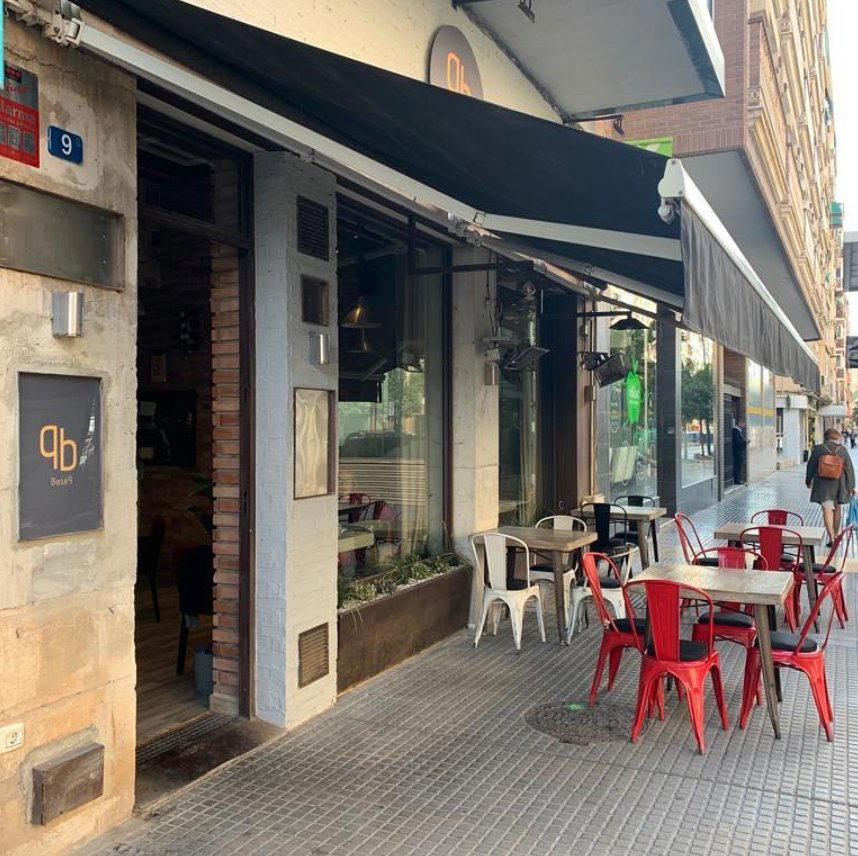
- Calle Salitre, 9, Distrito Centro, 29002 Málaga, Spain
- Phone
- +34 622 54 64 37
- Hours
- Mon–Tue ClosedWed–Sat 1:30–4 PM, 8:30–11 PMSun 1:30–4 PM
- Website
- base9restaurante.com
- Directions
- Get directions
The menu
What to order
- Canelón de gallina vieja
- Spanish tortilla with wasabi mayonnaise
- Croquetas
- Brownie moruno
- Trout with carbonara
Perchel Sur and the Restaurants That Belong There
Málaga's dining attention clusters predictably: the historic centre around the Alcazaba, the Soho gallery district, the port-facing terraces. Perchel Sur, the neighbourhood pressed against the María Zambrano rail terminal on the city's western edge, doesn't attract the same foot traffic. It is a working-class barrio in the traditional sense, built around transit infrastructure rather than tourism, and that positioning has consequences for the restaurants that open there. The economics require a different proposal. You can't run a tasting-menu operation at Michelin pricing in a neighbourhood where most customers arrive off a commuter train. What you can do — and what the area's more interesting openings attempt — is cook with genuine intent for a local clientele that isn't performing its dinner for anyone. That geographical reality shapes what the kitchen offers and how it prices: a short menu of tapas and sharing dishes, modern in technique, Andalusian in instinct. The answer, worked out quietly in dozens of mid-market rooms across Andalusia, is that technique is a tool, not an identity. What matters is whether the traditional base remains legible on the plate.
At Base9, the Canelón de gallina vieja is the clearest illustration of that principle. Old hen, gallina vieja, is a fixture of Spanish household cooking, valued for its depth of flavour over tender youth, the kind of ingredient that requires long, slow attention rather than high-heat drama. Presenting it inside a canelon keeps the format within recognisable European territory while the ingredient itself carries the Andalusian signal. The dish earns its place on a short menu precisely because it anchors the room's identity: this is not a kitchen trying to be somewhere else.
The Spanish tortilla made in the Japanese omurice style does something different. The omurice format, a soft, barely-set egg envelope, folded rather than flipped, produces a texture that traditional Spanish tortilla technique rarely attempts. The egg stays looser, the interior closer to custard than the set potato-and-egg slab that defines the canonical version. Pairing that with wasabi mayonnaise pushes the cross-reference further, and the question any kitchen takes on when it does this is whether the result lands as a coherent dish or as a provocation for its own sake. Here, the combination is specific enough to suggest the kitchen has tested it rather than assembled it conceptually. For context on how Málaga's higher-tier kitchens handle this kind of technique-meets-tradition framing, Kaleja (Michelin-starred, Andalusian contemporary) works the same tension at a longer tasting-menu format, and Blossom approaches the fusion question from a Chinese culinary base.
The menu's brevity is structural, not provisional. A short list of tapas and sharing dishes is a decision about focus, not a sign of a kitchen still finding its range. At the neighbourhood price point that Perchel Sur demands, a tight menu also means better ingredient rotation and less waste, which at the margins determines whether a small operation stays solvent long enough to build a regular clientele.
The Escuela de Hostelería de Morón: A Credible Starting Point
Spanish culinary education has a specific geography. The headline names, Basque Culinary Center in San Sebastián, the programs that fed kitchens like Arzak and Azurmendi, operate at the top of the credentialing hierarchy. Andalusia's hospitality schools occupy a different tier, less visible internationally but producing graduates who cook within a regional tradition rather than against it. The Escuela de Hostelería de Morón de la Frontera, where Cristian Fernández and Pablo Zamudio trained, sits in that regional pipeline. The fact that Base9 began as their joint final degree project is the relevant credential here: the kitchen reflects a considered proposition developed in an educational setting, not a concept assembled around available equipment and a gut feeling. That trajectory shows in the menu's coherence.enprimeurclub.com/restaurants/el-celler-de-can-roca-girona-restaurant">El Celler de Can Roca in Girona, DiverXO in Madrid, and Cocina Hermanos Torres in Barcelona. Base9 operates several registers below those rooms in ambition and price, but the underlying commitment to cooking from a disciplined starting point rather than improvising toward one is consistent with what those kitchens share as a foundation.
How Base9 Fits Málaga's Wider Dining Picture
Málaga's restaurant offer has expanded significantly over the last decade, tracking the city's rise as a year-round destination rather than a gateway to the Costa del Sol. The Michelin-starred end is represented by addresses like Kaleja and Blossom; the traditional Malagueño register is covered by places like Arte de Cozina; and mid-market contemporary rooms like Aire and Alaparte fill the space between neighbourhood dining and destination dining. Base9 operates at the neighbourhood end of that range, with the advantage of a location that keeps it honest: there is no tourist premium to fall back on in Perchel Sur, so the food has to be the reason people arrive.
Our experiences guide covers what Málaga offers beyond the table. That makes it a practical stop for visitors arriving by rail rather than staying on the coast. The menu format, tapas and sharing plates, suits groups of two to four, and the brevity of the list means ordering broadly across the menu is both feasible and advisable. Contact the restaurant directly before arrival, particularly for weekend evenings.
Frequently asked questions
Where is Base9 located?
Base9 is located at Calle Salitre, 9, Distrito Centro, 29002 Málaga, Spain.
What should I eat at Base9?
Two dishes define what Cristian Fernández and Pablo Zamudio are doing at Calle Salitre, 9: the Canelón de gallina vieja, which grounds the menu in old-school Andalusian larder thinking, and the Spanish tortilla prepared in the Japanese omurice style, served with wasabi mayonnaise. The tortilla alone signals the kitchen's method — classical Spanish form reworked through a specific borrowed technique rather than vague fusion instinct.
Is Base9 reservation-only?
Contact Base9 directly for current reservation options.
How Base9 Málaga compares with similar nearby venues.
| Venue | Cuisine | Price | Awards |
|---|---|---|---|
| Base9This venue — the venue you are viewing | Modern Andalusian Tapas | $30–50 | Michelin Bib Gourmand · Macarfi 7.5 Food Rating |
| La Alacena de Francis | Spanish & Russian Fusion | $30–50 | Not listed |
| Cávala | Modern Mediterranean Seafood | $50–100 | Michelin Plate · Macarfi 8.1 Food Rating |
| Mimo Healthy | Vegan Gluten-Free | $20–30 | Not listed |
| El Yerno | Fresh Andalusian Seafood | $20–30 | Not listed |
| Alaparte | Modern Málaga Bistro | Not listed | Michelin Plate · Macarfi 7.5 Food Rating |
Recognition history
Dated appearances from independent guides and award organizations, with the underlying list record or original source where available.
Michelin Bib Gourmand
Michelin
Macarfi 7.5 Food Rating
Macarfi
Continue exploring
More in Málaga
Restaurants in Málaga
Browse all →
Bars in Málaga
Browse all →
Hotels in Málaga
Browse all →

Details
- Cozy
- Modern
- Intimate
- Date Night
- Group Dining
- Casual Hangout
- Celebration
- Open Kitchen
- Terrace
- Standalone
- Beer Program
- Local Sourcing
- Organic
- Small Plates
- Family Style
- Wine
- Beer
- Vegetarian Friendly
- Gluten Free Options
Current opening hours
- Monday
- Closed
- Tuesday
- Closed
- Wednesday
- 1:30–4 PM, 8:30–11 PM
- Thursday
- 1:30–4 PM, 8:30–11 PM
- Friday
- 1:30–4 PM, 8:30–11 PM
- Saturday
- 1:30–4 PM, 8:30–11 PM
- Sunday
- 1:30–4 PM
Hours can change for holidays and private events. Last verified .
Warm, welcoming, and peaceful atmosphere with cozy interior and large outdoor terrace; feels like a bubble away from the city's hustle despite central location near the river and port.