La Bonne Étape


A Michelin-starred coaching inn dating to the 18th century, La Bonne Étape has been in the Gleize family for four generations and sits at the serious end of Provençal dining in the Alpes-de-Haute-Provence. The 2.5-acre organic kitchen garden sets the produce agenda, and the €€€€ price point positions it firmly within France's destination-restaurant tier rather than its village-restaurant circuit.
Pearl is the En Primeur Club membership app — saves, bookings, and concierge access live there. Same editors, same standards.
- Address
- Chem. du Lac, 04160 Château-Arnoux-Saint-Auban, France
- Phone
- +33 4 92 64 00 09
- Website
- bonneetape.com
- Directions
- Get directions
 Saves & bookings on Pearl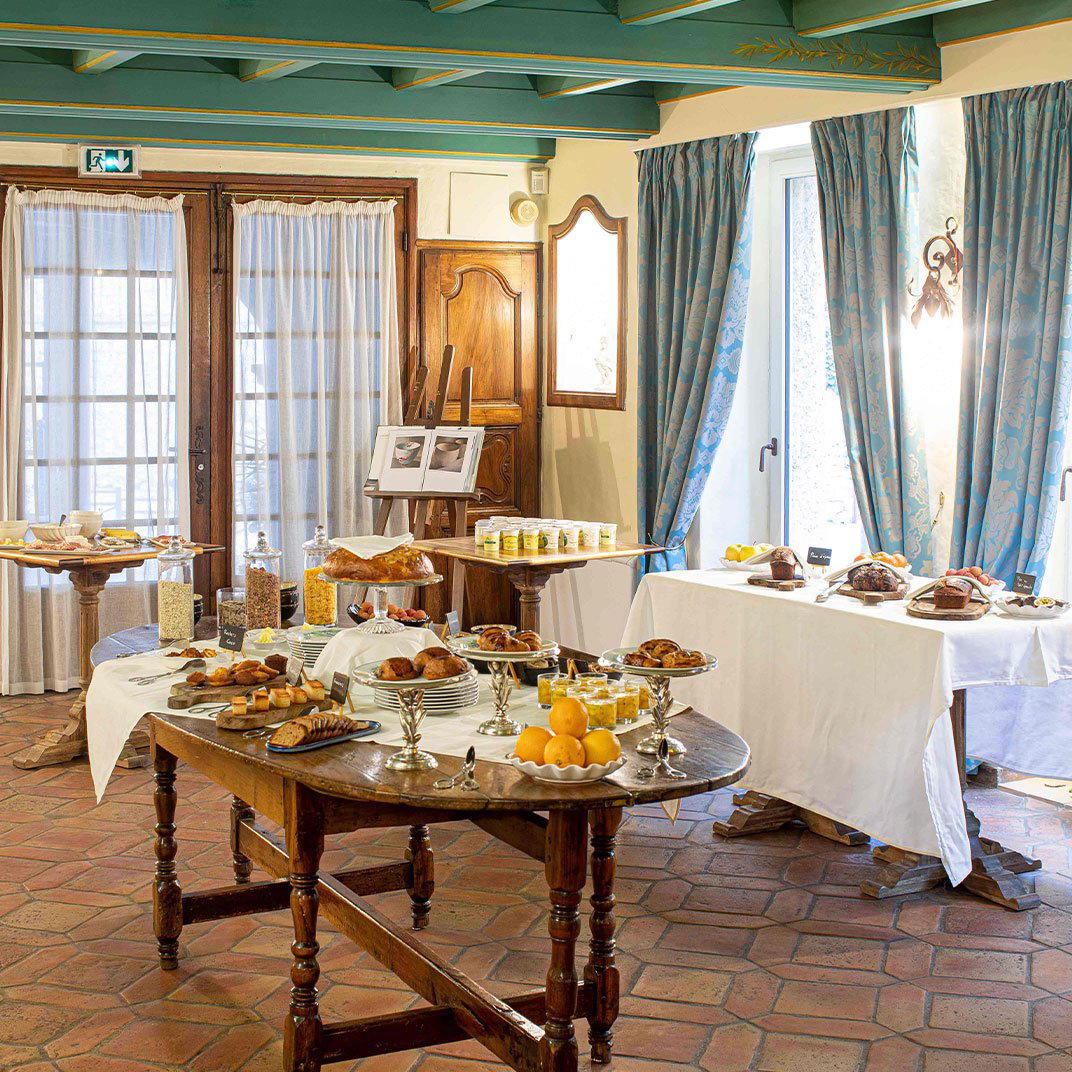
Where Provençal Cooking Meets the Long Tradition of the French Auberge
France's auberge tradition, the inn that feeds travellers as well as locals, that anchors itself to a place and a season rather than to trend, has narrowed considerably over the past half-century. The motorway network that bypassed market towns, the consolidation of French hospitality into branded hotel groups, and the pull of city restaurants on ambitious chefs all eroded the class. What survives tends to survive for a reason. La Bonne Étape, an 18th-century coaching inn on the road through Château-Arnoux-Saint-Auban in the Alpes-de-Haute-Provence, represents one of the more consequential survivals: a four-generation family property that has held a Michelin star continuously and kept its kitchen rooted in the landscape that surrounds it.
That continuity matters as context. The French bistro and auberge tradition has always depended less on individual genius than on accumulated knowledge: how a particular valley's lamb behaves in summer, when the first truffles arrive from nearby Valensole or Riez, which olive pressings work with certain dishes. Kitchens that have operated in the same place across multiple generations carry that knowledge in a way that a chef relocating from Paris or Lyon cannot replicate in a single season. At La Bonne Étape, chef Jany Gleize works within that inheritance, and the Michelin star the property held in both 2024 and 2025 reflects a kitchen operating with confidence rather than ambition that needs proving.
The Provençal Table as a Regional Argument
Provençal cuisine occupies a distinct position within French gastronomy: it is simultaneously one of the country's most legible regional traditions and among the more frequently diluted by tourism. The further north you travel into the Alpes-de-Haute-Provence, away from the coastal restaurant circuits of Nice and Marseille, the less the cooking tends to perform for visitors. In this part of France, lavender, alpine herbs, river fish, and high-pasture lamb define what ends up on the plate more consistently than the olive oil and tomato combinations that headline Provençal menus on the Côte d'Azur.
La Bonne Étape's 2.5-acre organic garden provides a direct supply line from soil to kitchen that most starred restaurants, even those with genuine garden programs, cannot replicate at this scale. Provençal cooking at the serious end is produce-dependent in a way that northern French haute cuisine is not, and a kitchen garden of this size, maintained organically on the property itself, functions as both a production asset and a discipline: the menu follows what grows, not the other way around. For comparison, restaurants like Mirazur in Menton and Bras in Laguiole have built their reputations on similar garden-led philosophies, though both operate at a higher Michelin tier and attract a more international dining clientele.
The Inn Itself: Setting Before Service
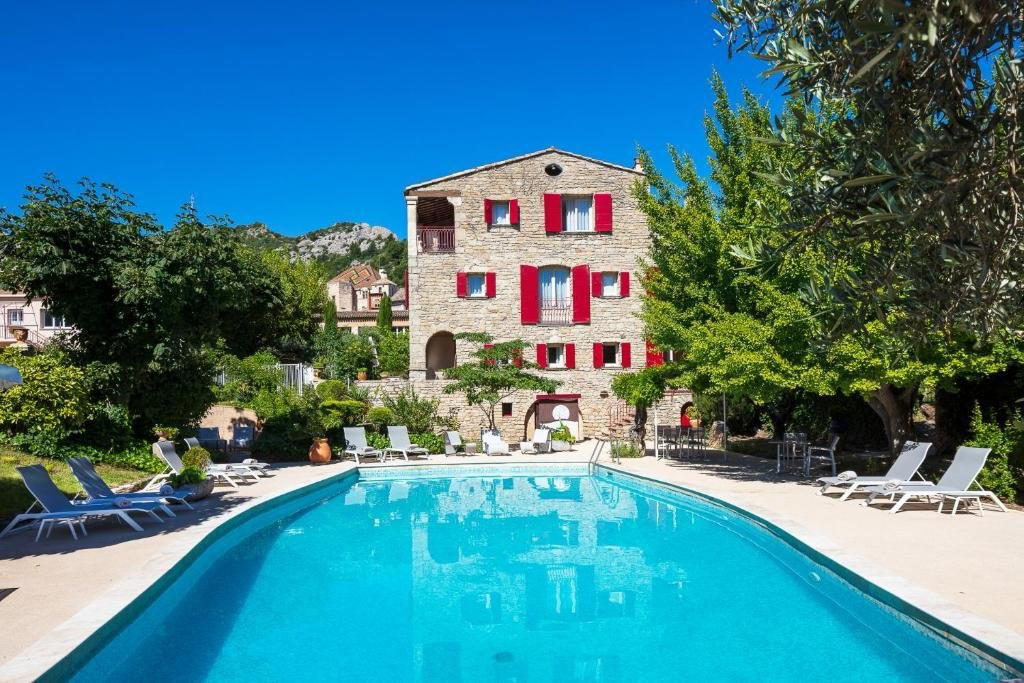
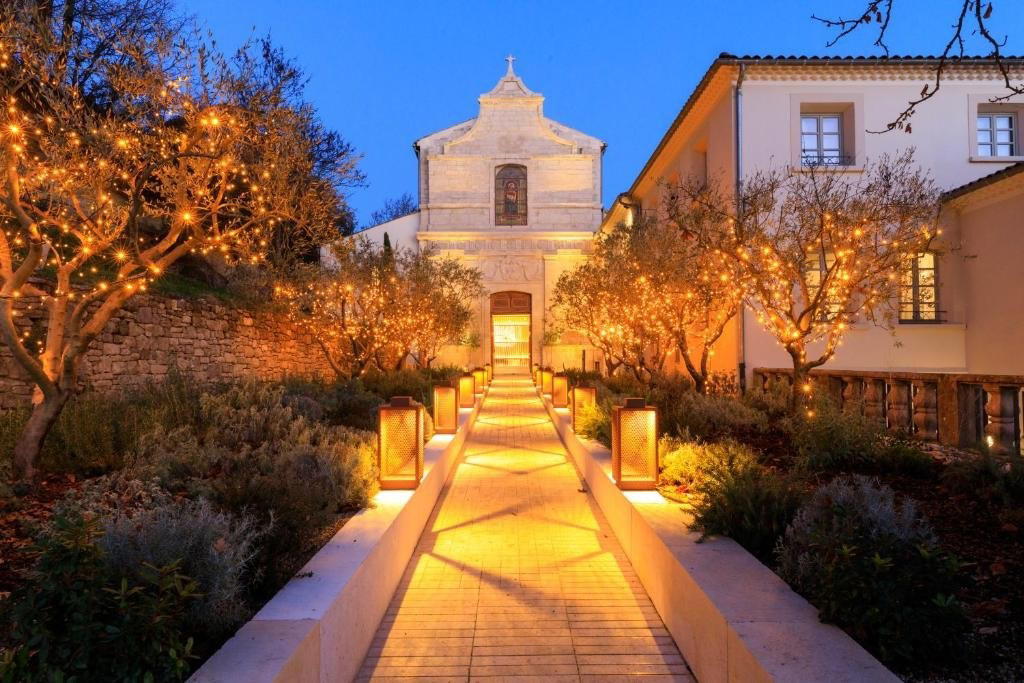
Approaching La Bonne Étape from the road through Château-Arnoux-Saint-Auban, the building reads immediately as pre-industrial France: stone construction, proportions that belong to a working rather than decorative architecture, a courtyard orientation that once served horses and coaches and now frames an arrival that feels unhurried in a way that purpose-built hotel restaurants rarely manage. The Alpes-de-Haute-Provence sits above the tourist density of the Var and the Vaucluse; the light here is stronger and more direct than on the coast, the pace slower, and the sense of distance from metropolitan France genuinely felt rather than performed.
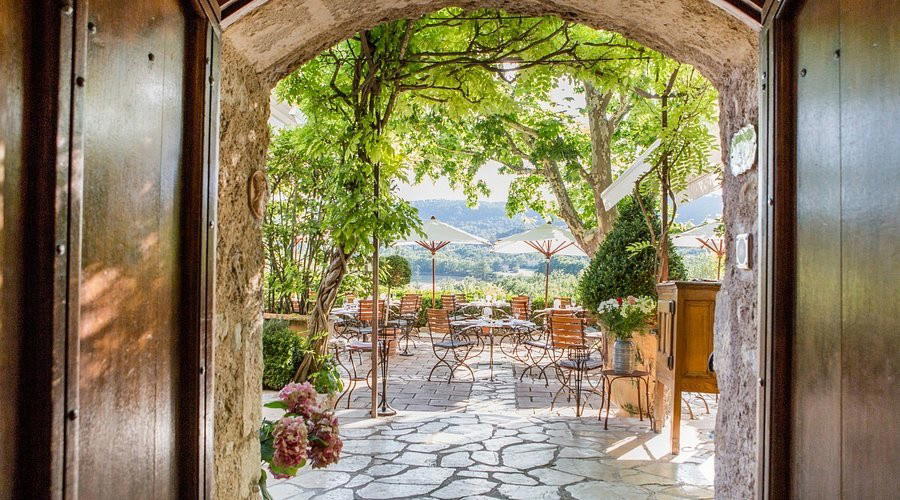
For the auberge format to work at a serious dining level, the physical setting has to carry some of the narrative weight that a city restaurant shifts onto interior design and neighbourhood identity. Here it does. The 18th-century fabric of the building, the organic garden visible from the property, and the Provençal countryside that frames the approach constitute the kind of context that money cannot buy in a new construction. Among the broader tier of one-star French regional restaurants, the property's age and physical character place it in a smaller comparable set that includes institutions like Auberge de l'Ill in Illhaeusern and Troisgros in Ouches, both multi-generational family properties where the building and the kitchen have evolved together over decades.
Price, Tier, and Where La Bonne Étape Sits in the French Restaurant Landscape
The €€€€ price designation puts the restaurant at the ceiling of regional French dining and well above the village-restaurant circuit. At this tier, the comparison set shifts: you are paying for a Michelin-starred kitchen, a historic property, and a level of service that operates closer to destination-restaurant standards than to local institution pricing. For reference, the three-star operations that define the highest tier of French gastronomy, Alléno Paris au Pavillon Ledoyen, Flocons de Sel in Megève, or Paul Bocuse at L'Auberge du Pont de Collonges, sit in the same price band but operate with larger teams, more elaborate service formats, and a global profile that drives their clientele from much further afield.
At one Michelin star, the restaurant occupies a more grounded position: serious enough to draw travellers who plan a meal as a destination in itself, but not so gravity-defying in price that it falls outside reasonable reach for a special-occasion dinner during a regional trip. Within the Provençal starred tier, the closest editorial comparisons are Alain Llorca in La Colle-sur-Loup and La Bastide Bourrelly in Cabriès, both working Provençal traditions at a similar price tier but from newer properties without the generational depth that shapes this kitchen. At the summit of the regional comparison for creative southern French work, AM par Alexandre Mazzia in Marseille operates at three stars with a much more experimental register.
Google's 4.6 from 528 reviews gives a useful read on the experience from a cross-section of guests rather than just the specialist dining press. At a property of this tier, that score reflects consistent delivery across seasons and service styles, not just individual notable evenings.
Planning a Visit
Château-Arnoux-Saint-Auban sits on the Route Napoléon (RN85) between Sisteron and Digne-les-Bains, approximately an hour northeast of Aix-en-Provence by road. The town has a TGV-adjacent connection via Manosque-Gréoux-les-Bains, though most visitors arrive by car, which suits the region's dispersed character. The restaurant can be reached directly by telephone at +33 (0)4 92 64 00 09 or by email at bonneetape@relaischateaux.com, and the property holds Relais and Châteaux membership, which indicates a dual hotel-and-restaurant offering and positions it as a natural base for a multi-night stay rather than a single-meal destination. For those planning a broader visit, our full Château-Arnoux-Saint-Auban restaurants guide covers the wider dining picture, and further local context is available in our hotels guide, bars guide, wineries guide, and experiences guide. For a lower-key meal in the same town, Bistro Gaby offers a different register entirely.
Summer and early autumn bring the Alpes-de-Haute-Provence into its strongest seasonal window for Provençal produce, and the garden will be at full production through those months. Winter visits involve a quieter property and a kitchen oriented toward the heartier end of the Provençal range. Booking ahead, particularly for weekend summer dinners, is essential. Rooms at a Relais and Châteaux property at this tier make overnight stays not only logical but a natural extension of the meal itself, allowing access to the garden and grounds outside service hours.
Pricing, Compared
Comparable venues nearby, for context on price, style, and recognition.
| Venue | Cuisine | Price | Awards | Notes |
|---|---|---|---|---|
| La Bonne Étape | Not listed | $$$$ | Michelin 1 Star | Château-Arnoux-Saint-Auban, Provençal Fine Dining |
| Bistro Gaby | Not listed | $$ | Michelin Plate | Château-Arnoux-Saint-Auban, Provençal French Bistro |
| Louroc - Hôtel du Cap-Eden-Roc | Not listed | $$$$ | Michelin 1 Star | Cap d'Antibes, Provençal-Mediterranean Fine Dining |
| Dan B. | Ventabren, Modern French Fine Dining | $$$$ | Michelin 1 Star | Not listed |
| La Mère Germaine | Not listed | $$$$ | Michelin 1 Star | Châteauneuf-du-Pape, Modern Provençal Fine Dining |
| La Table de l'Ours | Not listed | $$$$ | Michelin 1 Star | Val-d'Isère, Modern French Alpine Fine Dining |
Recognition history
Dated appearances from independent guides and award organizations, with the underlying list record or original source where available.
Michelin 1 Star
Michelin
Relais Chateaux Award
Relais Chateaux
Michelin 1 Star
Michelin
Relais Chateaux Award
Relais Chateaux
Michelin 1 Star
Michelin
Continue exploring
More in Château-Arnoux-Saint-Auban
Restaurants in Château-Arnoux-Saint-Auban
Browse all →
Bars in Château-Arnoux-Saint-Auban
Browse all →
At a Glance
- Romantic
- Elegant
- Classic
- Cozy
- Scenic
- Special Occasion
- Date Night
- Celebration
- Historic Building
- Garden
- Hotel Restaurant
- Terrace
- Extensive Wine List
- Sommelier Led
- Local Sourcing
- Farm To Table
- Garden
Decadent dining room decorated in sunny golden colors with precise table settings, evoking a bourgeois and classic seigneurial atmosphere with beamed ceilings and antique furniture.