KTOWN BBQ & HOTPOT
Our verdict
Korean BBQ and hotpot in Cincinnati's Oakley neighborhood, where tabletop cooking traditions imported from Seoul and Chongqing meet a city that has historically run on chili and barbeque of a very different kind. KTOWN BBQ & HOTPOT at 3836 Paxton Ave brings a format built around communal fire, shared cuts, and broth-based cooking that rewards groups willing to slow down and engage with the process.

Pearl is the En Primeur Club membership app — saves, bookings, and concierge access live there. Same editors, same standards.
- Address
- 3836 Paxton Ave, Cincinnati, OH 45209
- Phone
- (513) 866-3888
- Hours
- Mon–Thu 12–10 PMFri–Sat 12–11 PMSun 12–10 PM
- Website
- ktownbbqcincy.com
- Directions
- Get directions
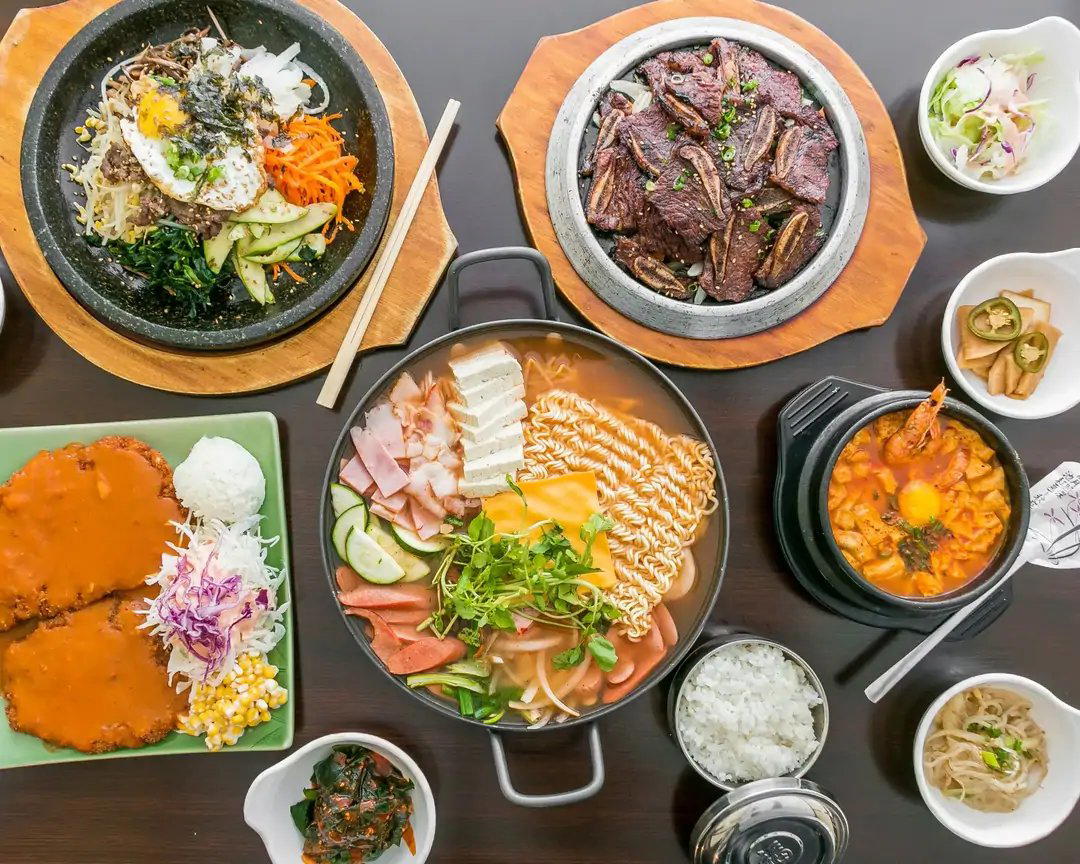
Tabletop Fire on Paxton Avenue
Walk into most Korean BBQ restaurants in a mid-sized American city and the room tells you the format before the menu does: ventilation hoods over every table, a central burner recessed into the surface, the low hiss of gas before the first cut of meat hits the grate. KTOWN BBQ & HOTPOT on Paxton Avenue in Cincinnati's Oakley neighborhood operates in that same register. The proposition is one that has built serious dining cultures in Los Angeles's Koreatown, in Flushing, and in Chicago's Albany Park — and it is a format that asks more of a diner than most restaurants do. You are, in meaningful part, the cook.
That participatory model is worth understanding before you arrive. Korean BBQ and hotpot dining are not passive formats. The meal unfolds through a sequence of decisions — how long a cut grills before it comes off, how many seconds a slice of brisket stays in a rolling Sichuan broth, which banchan combinations work against which proteins. Cincinnati's dining scene runs on strong regional identities: Cincinnati chili at Camp Washington, French-influenced fine dining at places like Boca, farm-to-table Midwestern cooking at Wildweed. KTOWN operates outside those traditions entirely, importing a format whose logic comes from a different culinary geography.
Where the Ingredients Come From, and Why the Format Depends on Them
The ingredient sourcing question sits at the center of any serious Korean BBQ evaluation. The format's reputation in cities with established Korean communities, Los Angeles, New York, Houston, rests on specific cuts that are not standard American butcher fare. Chadolbaegi, the paper-thin sliced beef brisket cooked in seconds on a screaming-hot grate, requires a different approach to the carcass than a steakhouse would take. Samgyeopsal, the thick-cut pork belly that renders its fat directly on the tabletop, needs consistent marbling through the layer. Galbi, whether marinated or unmarinated, works from short rib sections cut across the bone, LA-style, rather than the parallel-to-bone cut standard in American BBQ.
Hotpot sourcing runs on a parallel logic. A Sichuan-style red broth needs dried chilies, doubanjiang, and Sichuan peppercorns whose numbing compound, hydroxy-alpha-sanshool, degrades quickly. A clean Taiwanese or Japanese-style broth needs kombu and dashi foundations that vary considerably in quality. The ingredient supply chain for these formats in smaller American cities has changed considerably since 2015, as Korean and pan-Asian grocery infrastructure has spread well beyond gateway cities. Cincinnati has a Korean and East Asian grocery presence that supports restaurants in this category, a practical condition that makes the format viable in a way it wouldn't have been a decade ago.
For diners more accustomed to the city's other reference points, the spiced lamb at Ambar India Restaurant, the Tex-Mex-inflected plates at Bakersfield OTR, or the ice cream traditions at Aglamesis Brothers, the Korean BBQ format represents a shift in what a meal asks of you, not just in flavor profile but in physical engagement with cooking itself.
The Communal Format in an American Context
Korean BBQ and hotpot dining arrived in American cities primarily through large Korean diaspora communities, and the format carries embedded social logic: meals are designed for groups, ordering is calibrated for the table rather than the individual, and the pace is governed by the cooking rather than the kitchen. In cities like Seoul, the genre fragments into dozens of sub-specializations, beef-only houses, pork specialists, duck galbi restaurants, regional broth styles for hotpot. American iterations tend toward broader menus that let a single table sample across categories.
That breadth is both commercially sensible and a reasonable match for diners who are encountering the format seriously for the first time. A table ordering across protein types and broth styles gets a more complete read on what the format can do. It also explains why the pricing model for Korean BBQ differs from most American restaurant categories: per-person costs fluctuate based on how many proteins a table orders rather than following a fixed tasting structure. Compare that to the fixed-format approach at tasting-menu restaurants like Alinea in Chicago or Atomix in New York City, where price and sequence are predetermined. Korean BBQ runs on a different contract between kitchen and table.
For Cincinnati specifically, this places KTOWN in a niche that the city's other neighborhood anchors don't occupy. Agave & Rye Rookwood handles the bourbon-forward, shareable American format. The farm-to-table sourcing argument gets made by Midwestern-focused kitchens. KTOWN's competitive set exists in a different register, speaking more directly to the expansion of Asian food formats across mid-sized American cities than to Cincinnati's local dining lineage. For the full picture of where this restaurant sits within the city's wider options, the EP Club Cincinnati restaurants guide maps the broader field.
Planning Your Visit
Korean BBQ and hotpot meals run long by design, ninety minutes to two hours is a reasonable expectation for a table that is cooking seriously rather than rushing. The format rewards groups of three or more, since the economics of ordering multiple proteins and a split broth only make sense when the table can distribute across choices. Arriving hungry and with time to spare is the practical minimum. For diners who want context on how the format compares at higher price points nationally, the farm-to-source approach at Blue Hill at Stone Barns in Tarrytown or the hyper-local sourcing model at Single Thread Farm in Healdsburg represent the far end of the ingredient-sourcing argument in American dining, a useful counterpoint to how Korean BBQ handles its own sourcing questions at a more accessible price tier.
KTOWN BBQ & HOTPOT is located at 3836 Paxton Ave, Cincinnati, OH 45209. Specific hours and booking details were not available at time of publication; checking directly before visiting is advisable, particularly for larger groups who will need adequate table space for the tabletop cooking setup.
Frequently asked questions
What's the address for KTOWN BBQ & HOTPOT?
KTOWN BBQ & HOTPOT is located at 3836 Paxton Ave, Cincinnati, OH 45209, Cincinnati.
Does KTOWN BBQ & HOTPOT in Cincinnati offer both Korean BBQ and hotpot at the same table?
KTOWN operates a dual-format concept at its Paxton Avenue location in Cincinnati, making both the grill and the hotpot available under one roof. Whether a single table can run both simultaneously depends on the table setup and staffing on a given night, which is worth confirming when you arrive. This dual-format structure is relatively uncommon in Cincinnati's Korean dining scene, where most venues commit to one format or the other.
What should I order at KTOWN BBQ & HOTPOT?
Because KTOWN on Paxton Avenue runs both a Korean BBQ grill format and a hotpot format, the decision point is whether your table wants to cook over open flame or in broth. Ordering across both formats is possible and common at dual-concept venues like this one, so a group splitting between the two options will cover the range of what the kitchen is built around. If the table is new to either format, starting with the grill side gives a clearer reference point before moving to broth-based cooking.
How far ahead should I plan for KTOWN BBQ & HOTPOT?
Korean BBQ and hotpot meals at a communal tabletop venue in Cincinnati typically run ninety minutes to two hours when a table is cooking seriously. Weekend evenings at mid-sized city Korean BBQ spots tend to fill faster than weeknights, so arriving early or checking availability the day before is a reasonable approach. Current reservation and walk-in policies are best confirmed directly with the venue at 3836 Paxton Ave.
Comparable Venues
Comparable venues nearby, for context on price, style, and recognition.
| Venue | Cuisine | Price | Awards | Notes |
|---|---|---|---|---|
| KTOWN BBQ & HOTPOTThis venue — the venue you are viewing | Korean BBQ & Hotpot | $30–50 | Not listed | Not listed |
| Ambar India Restaurant | Authentic Northern Indian | $20–30 | Not listed | Clifton |
| Sleepy Bee Cafe | Farm-to-Table American Breakfast & Brunch | $20–30 | Not listed | Oakley |
| Nicola's | Contemporary Italian Fine Dining | Not listed | Wine Spectator Award of Excellence | Mt. Auburn |
| Zula Restaurant & Wine Bar | Modern French Bistro | Not listed | Not listed | Over-the-Rhine |
| The Aperture | Modern Mediterranean Mezze | $50–100 | James Beard Award Semi Finalist | Walnut Hills |
Continue exploring
More in Cincinnati
Restaurants in Cincinnati
Browse all →
Bars in Cincinnati
Browse all →




Details
- Modern
- Lively
- Trendy
- Group Dining
- Casual Hangout
- Open Kitchen
- A La Carte
- Buffet
Current opening hours
- Monday
- 12–10 PM
- Tuesday
- 12–10 PM
- Wednesday
- 12–10 PM
- Thursday
- 12–10 PM
- Friday
- 12–11 PM
- Saturday
- 12–11 PM
- Sunday
- 12–10 PM
Hours can change for holidays and private events. Last verified .
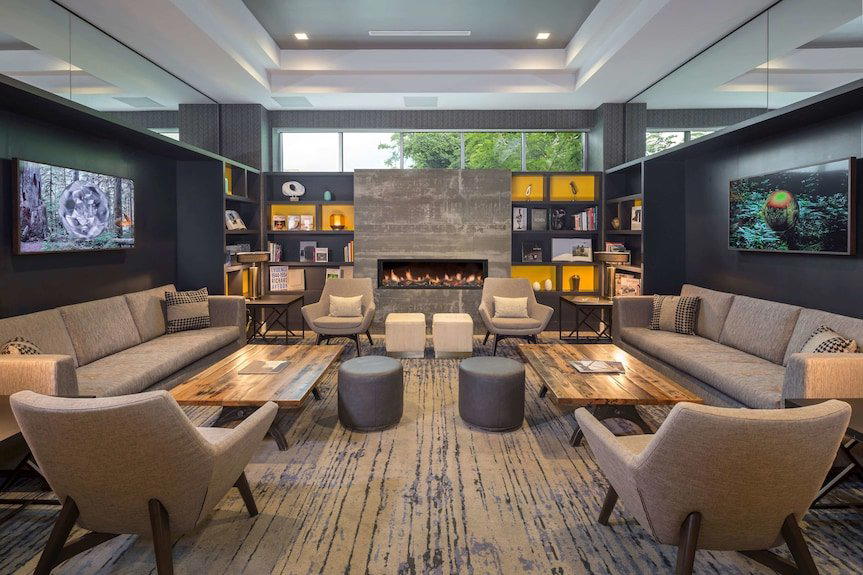
Contemporary decor creating a modern and energetic Korean BBQ atmosphere.