

Krakas Krog occupies a quiet corner of Gotland's eastern coast, open only from June to October, four days a week, under restaurateur Ulrika Karlsson. The kitchen draws directly from the island's agricultural and maritime surroundings, placing it among a small group of Swedish seasonal restaurants where provenance and calendar are inseparable from the menu itself.
Pearl is the En Primeur Club membership app — saves, bookings, and concierge access live there. Same editors, same standards.
- Address
- KRÄKLINGBO KRÄKLINGS 223, 623 70 Katthammarsvik, Sweden
- Phone
- +46 498 530 62
- Website
- krakas.se
- Directions
- Get directions
 Saves & bookings on Pearl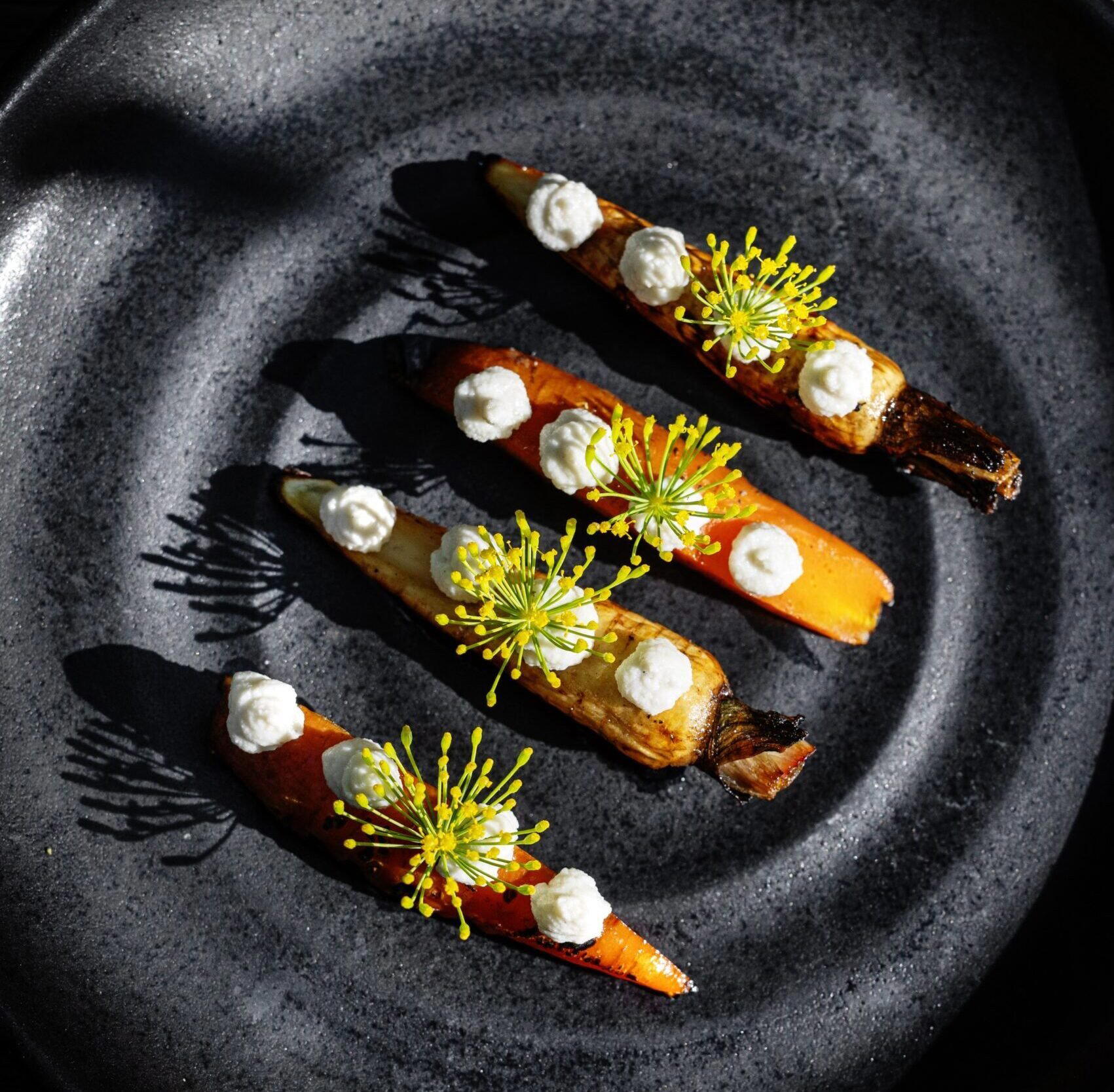
Where the Eastern Shore Sets the Table
Krakas Krog is a restaurant in Katthammarsvik, Sweden, serving Modern Gotland Fine Dining. The drive east from Visby toward Kräklingbo is the kind of route that strips away any expectation of urban dining. The limestone plain flattens, the birch forests thin, and by the time you reach the address at Kräklings 223, the surrounding quiet makes it clear that the meal ahead is organised around this specific place rather than any generalised idea of Swedish cuisine. Krakas Krog sits on the eastern flank of Gotland, an island that has spent the last decade becoming one of Scandinavia's more compelling destinations for food that takes local sourcing as a structural principle rather than a marketing position.
Sweden's seasonal restaurant tradition runs deeper than the trend cycle that made Nordic food internationally visible. Properties like Knystaforsen in Rydöbruk and ÄNG in Tvååker have built reputations on a similar premise: operate within a narrow calendar, source within a narrow radius, and let the discipline of those constraints produce the menu. Krakas Krog belongs to that cohort. Its season runs from Thursday to Sunday, and that compressed window is not a limitation so much as a declaration about what the kitchen intends to serve.
The Ingredient Logic of Gotland's Eastern Shore
Gotland's agricultural character is distinct from the Swedish mainland. The island receives more sunshine hours than almost anywhere else in the country, which extends the growing season and concentrates flavour in produce that might be milder further north. Lamb grazed on limestone heathland carries different fat profiles than animals raised on richer inland pasture. Coastal fish and shellfish arrive from cold, relatively clean Baltic waters. Wild herbs and greens tied to the island's specific geology grow in patterns that a kitchen rooted here can read and anticipate across a season.
That kind of granular local knowledge is the foundation on which restaurants like Krakas Krog operate. The sourcing is not a stylistic choice layered onto an existing approach; it is the approach. When a kitchen is open for four months and draws from a territory it knows intimately, the ingredient decisions become self-selecting. What is ready, what is at peak, what the surrounding land and water can reliably offer in the window between June and October, those are the questions that generate the menu. Restaurants on the Swedish mainland that share this philosophy, places like VYN in Simrishamn or Signum in Mölnlycke, work from similar principles but within different terroirs. On Gotland, the island's isolation amplifies the effect.
Ulrika Karlsson, who runs the restaurant, has built a reputation within Swedish restaurant circles as a restaurateur whose commitment to the island's produce is substantive rather than performative. That reputation is what draws visitors willing to plan a trip around a dinner booking in a village most international travellers would not find on a first pass through Gotland's itinerary options.
Gotland's Broader Restaurant Scene
The island has developed a restaurant offer that punches well above its population. Visby receives most of the visitor attention, but the more interesting food experiences have migrated outward to farmsteads, converted stone buildings, and coastal properties across the island. Restaurang Fårögården operates on a similar seasonal and local premise, while Restaurangen Stora Karlsö sits on the small island off Gotland's western coast, accessible only by boat and open within an even tighter window. Sibbjäns completes a set of smaller, independent operations that treat Gotland's produce as the primary text.
What connects these places is a shared refusal to operate as year-round restaurants that happen to mention local sourcing in their descriptions. They are seasonal operations in the structural sense, which means the quality of the meal is inseparable from the time of year you eat it. Visiting the restaurant in late June is a different experience from arriving in late September; the menu will have shifted with the harvest, the light will be different, and the sense of the season winding down or opening up will be part of what you are actually tasting.
For context on the wider Swedish scene, restaurants like Frantzén in Stockholm, Vollmers in Malmö, and PM & Vänner in Växjö represent different points on the spectrum from metropolitan fine dining to regional produce-led cooking. The restaurant sits at the more remote and seasonally pure end of that range, closer in spirit to a destination that requires the visit to be its own commitment.
Planning a Visit
The logistics matter here. Katthammarsvik is roughly an hour's drive from Visby along roads that carry little traffic outside midsummer weekends. The restaurant's four-day-a-week schedule during its June-to-October season means that coordinating a visit requires aligning travel dates with the kitchen's own calendar rather than the other way around. Accommodation options on the eastern side of the island are limited; the full Gotland hotels guide covers the range from Visby's old-town properties to smaller rural options closer to Kräklingbo.
Given the restaurant's scale and reputation, advance booking is the only sensible approach. Walk-ins at small, well-regarded seasonal operations in remote Scandinavian locations are rarely viable, and the restaurant's limited weekly cover count makes that even less likely during peak summer weeks. Anyone planning a broader Gotland stay should cross-reference the full Gotland restaurants guide alongside the bars, wineries, and experiences guides to build an itinerary that makes the journey worthwhile across multiple days.
The comparison that keeps surfacing when Swedish food travellers discuss the restaurant is to a category of place that exists in small numbers across Northern Europe: seasonal, producer-adjacent, run by someone whose relationship with the local supply chain is measured in years rather than procurement contracts. That category includes places as different in scale as Le Bernardin in New York City or Emeril's in New Orleans in the sense that each represents a specific and legible point of view about what a restaurant is for. At the restaurant, that point of view is rooted in the limestone and water of Gotland's eastern shore, and the season begins again each June.
Quick Comparison
Comparable venues nearby, for context on price, style, and recognition.
| Venue | Cuisine | Price | Notes |
|---|---|---|---|
| Krakas KrogThis venue — the venue you are viewing | Modern Gotland Fine Dining | $$$$ | Not listed |
| Sibbjäns | Hyper-seasonal Farm-to-Table | $$$ | Burgsvik |
| Restaurangen Stora Karlsö | Swedish Island Seafood | $$ | Stora Karlsö |
| Restaurang Fårögården | Local Swedish Farm-to-Table | $$ | Fårö |
| Matsalen | Modern Nordic Fine Dining | $$$$ | Norrmalm |
Recognition history
Dated appearances from independent guides and award organizations, with the underlying list record or original source where available.
Star Wine List
Star Wine List
White Guide Nordic Restaurants - Global Masters Level
White Guide
White Guide Sweden Restaurants - Global Masters Level
White Guide
Continue exploring
More in Gotland
Restaurants in Gotland
Browse all →
Bars in Gotland
Browse all →
Hotels in Gotland
Browse all →
At a Glance
- Cozy
- Rustic
- Intimate
- Elegant
- Special Occasion
- Date Night
- Historic Building
- Extensive Wine List
- Local Sourcing
- Garden
Current opening hours
- Monday
- Closed
- Tuesday
- Closed
- Wednesday
- Closed
- Thursday
- 6–10 PM
- Friday
- 6–10 PM
- Saturday
- 6–10 PM
- Sunday
- 6–10 PM
Hours can change for holidays and private events. Last verified .
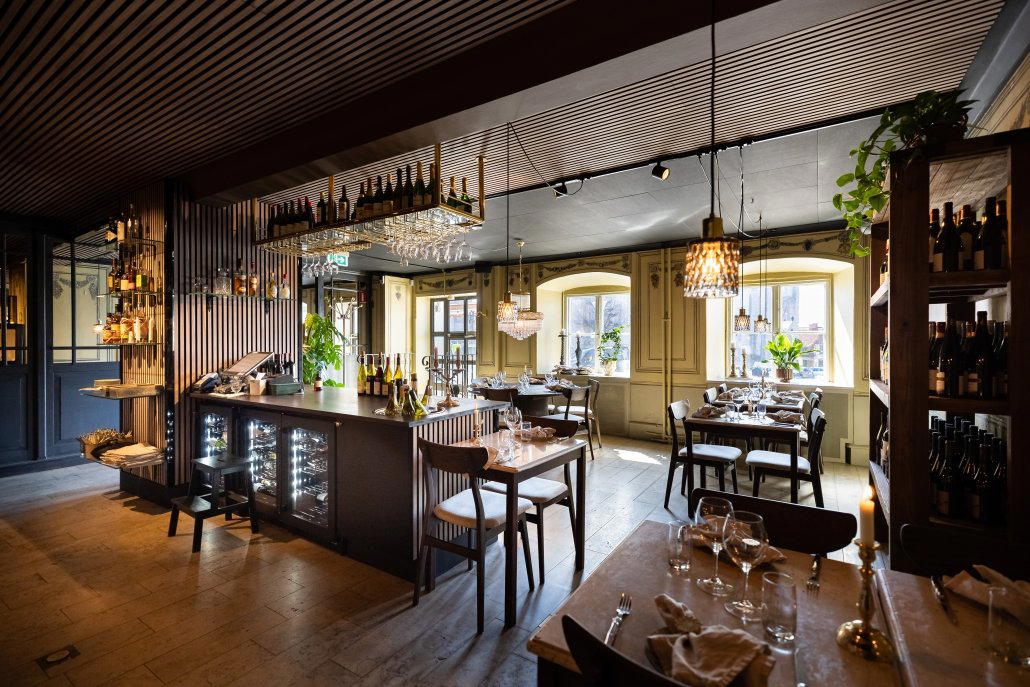
Homely with minimalist Scandinavian design, neutral colors, natural materials, candlelit tables creating a cozy, relaxed atmosphere.