Kintaro Ramen&Sushi operates on Sandomierska Street in Radom, bringing Japanese ramen and sushi formats to a Polish city where this kind of dedicated Japanese kitchen remains genuinely scarce. The address places it within reach of central Radom, and the dual focus on ramen broth craft and sushi preparation gives it a different competitive position from the city's other dining options.
Pearl is the En Primeur Club membership app — saves, bookings, and concierge access live there. Same editors, same standards.
- Address
- Sandomierska 14, 26-611 Radom, Poland
- Phone
- +48690333449
- Website
- kintaro.goorder.pl
- Directions
- Get directions
 Saves & bookings on Pearl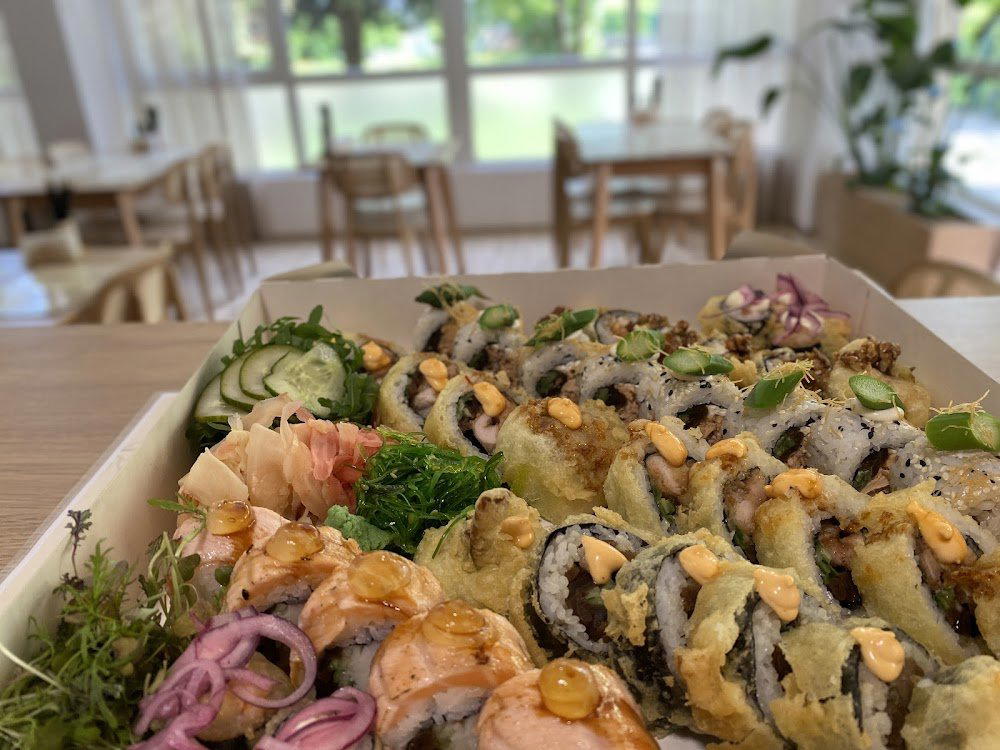
Japanese Kitchen in a City Where It Matters More
Polish mid-sized cities have developed an uneven relationship with Japanese cuisine over the past decade. Warsaw and Kraków absorbed ramen bars and sushi counters early, building the kind of critical mass that lets diners compare broths and rice seasoning across multiple addresses. Cities like Radom followed later and more selectively, which means a dedicated Japanese kitchen here carries different weight than the same concept would in a capital neighbourhood. At Kintaro Ramen&Sushi; on Sandomierska 14, the dual format — ramen alongside sushi — reflects how Japanese restaurants in smaller Polish markets tend to consolidate disciplines that larger-city venues keep separate. For context on how Radom's dining scene sits relative to Poland's broader restaurant geography, our full Radom restaurants guide maps the city's options across cuisine types and price tiers.
The Sourcing Question in Landlocked Central Poland
Ramen and sushi share a dependency on ingredient quality that becomes particularly pointed when you are operating far from a port city. The fish supply chain for sushi-grade product in central Poland runs through Warsaw wholesale markets, which in turn source from established importers handling Norwegian salmon, Dutch-farmed species, and periodic Japanese imports for premium cuts. The practical result is that a sushi kitchen in Radom is working within the same supply network as venues in Lublin or Kielce, with freshness dependent on delivery frequency and cold-chain discipline rather than proximity to a coastline. Ramen broth, by contrast, is a pantry-and-time proposition: pork bones, chicken carcasses, kombu, and dried fish products travel well and allow a kitchen to control quality through technique rather than through sourcing geography. This asymmetry matters when reading any combined ramen-and-sushi menu in a landlocked market. The broth side of the operation has fewer excuses; the sushi side requires honest management of what the supply chain can and cannot deliver.
For comparison, Nabo Sushi Rolls in Radom represents the other end of the city's Japanese-adjacent offer, leaning more heavily into the roll-focused format that has become the dominant vernacular for Japanese cuisine across provincial Polish dining. The two addresses occupy the same city but target slightly different moments in the meal, Kintaro's ramen component adds a warm-broth register that roll-only venues do not cover.
How the Format Reads Against Polish Dining Norms
Ramen as a category sits awkwardly in the Polish dining frame. The country's own noodle-soup tradition is substantial, żurek, barszcz, and rosół are all broth-forward dishes with strong cultural fluency, but the Japanese version demands different temperature management, different textural contrasts, and a different pace of eating. Where a bowl of rosół reads as comfort food eaten without ceremony, a properly constructed ramen bowl is a timed experience: the noodles absorb and soften quickly, the egg timing is deliberate, and the fat layer on the broth surface signals cook temperature. Whether a Radom kitchen is executing that precision is the central question for a diner choosing this address.
The sushi side of the menu connects to a nationwide pattern visible from Gdańsk to Rzeszów. Hashi Sushi in Gdańsk and Hattori Hanzo in Częstochowa both demonstrate how Japanese-format restaurants have become a standard part of the mid-tier dining offer in Polish cities of varying sizes. The category has matured enough that differentiation now hinges on rice quality, nigiri-to-roll ratio, and whether the kitchen treats sashimi as a serious product or as garnish. At venues further up the Polish fine-dining register, places like Bottiglieria 1881 in Kraków or Arco by Paco Pérez in Gdańsk, the ingredient sourcing conversation operates at a different level of specificity. Kintaro functions in a more accessible register, which brings its own responsibilities around transparency and execution consistency.
Placing Kintaro in the Broader Polish Japanese Scene
The growth of Japanese-format dining across Poland's secondary cities tracks a wider European pattern in which ramen bars and sushi venues have moved from capital-city novelty to provincial-market standard over roughly fifteen years. In Poland, that shift accelerated between 2015 and 2022, with dedicated Japanese kitchens appearing in cities that previously had none. The venues that have performed leading in this expansion tend to be those that chose a clear lane, either serious ramen with broth development as the centrepiece, or sushi-focused operations with genuine sourcing discipline, rather than trying to cover both with equal depth. The combined format is commercially sensible but editorially harder to defend, because it asks one kitchen to achieve competence across two disciplines with meaningfully different skill requirements. This is the structural challenge facing any dual-format Japanese restaurant, in Radom or elsewhere. Muga in Poznań and hub.praga in Warsaw represent parts of the Polish dining scene that have moved toward greater format specificity, which sets a useful benchmark for what focused execution can look like at different price points.
For readers tracking Japanese-format dining across the region, venues like Kwestia Czasu in Białystok, Cudne Manowce in Olsztyn, and Górnik in Krakow demonstrate how regional Polish cities are building dining identities that extend well beyond the traditional Polish kitchen. Internationally, the standard these formats are implicitly measured against sits at addresses like Atomix in New York City, where Korean fine dining has shown what rigorous sourcing and format discipline can achieve in a competitive Western market, a useful north star even if the price tier and context differ significantly from Radom.
Planning Your Visit
Kintaro Ramen&Sushi; is located at Sandomierska 14 in Radom, a city accessible by rail from Warsaw in approximately 90 minutes, making it a realistic dining stop for visitors passing through the Masovian region. Current hours, booking options, and pricing are not published in verifiable form at the time of writing, contacting the venue directly is the most reliable approach for planning purposes. The Sandomierska address sits in a residential-commercial mixed zone south of Radom's centre, which means it draws primarily from a local rather than tourist base: a characteristic it shares with most specialist dining in Polish cities of this size. For those exploring the wider Polish dining scene, addresses like Włoska Restauracja Bellanuna in Rzeszów, MaQAron Spaghetteria in Bydgoszcz, Kuchnia Manhattan in Gorzów Wielkopolski, and Art Katowice in Katowice illustrate how secondary Polish cities are constructing genuinely diverse dining options across cuisine types. At the international reference end, Le Bernardin in New York City remains a benchmark for what seafood-focused sourcing discipline looks like at its highest expression, the distance from that standard is not a criticism of venues like Kintaro, but it clarifies what the ingredient sourcing conversation ultimately reaches toward.
Continue exploring
More in Radom
Restaurants in Radom
Browse all →
At a Glance
- Casual Hangout
- Sake Program
Current opening hours
- Monday
- 12–10 PM
- Tuesday
- 12–10 PM
- Wednesday
- 12–10 PM
- Thursday
- 12–10 PM
- Friday
- 12–10 PM
- Saturday
- 12–10 PM
- Sunday
- 12–9 PM
Hours can change for holidays and private events. Last verified .
Know Before You Go
- Getting there
- Sandomierska 14, 26-611 Radom, Poland