JTYH Restaurant
Our verdict
JTYH Restaurant on Valley Boulevard in Rosemead sits inside one of Southern California's most concentrated corridors of northern Chinese cooking, drawing regulars from across the San Gabriel Valley for hand-pulled noodles and region-specific dishes rarely found at this depth outside major immigrant food hubs. The address alone, 9425 Valley Blvd, places it within walking distance of several serious Chinese dining operations, making the block a useful anchor for any focused eating itinerary in the area.

Pearl is the En Primeur Club membership app, where members save venues, book tables and use the concierge.
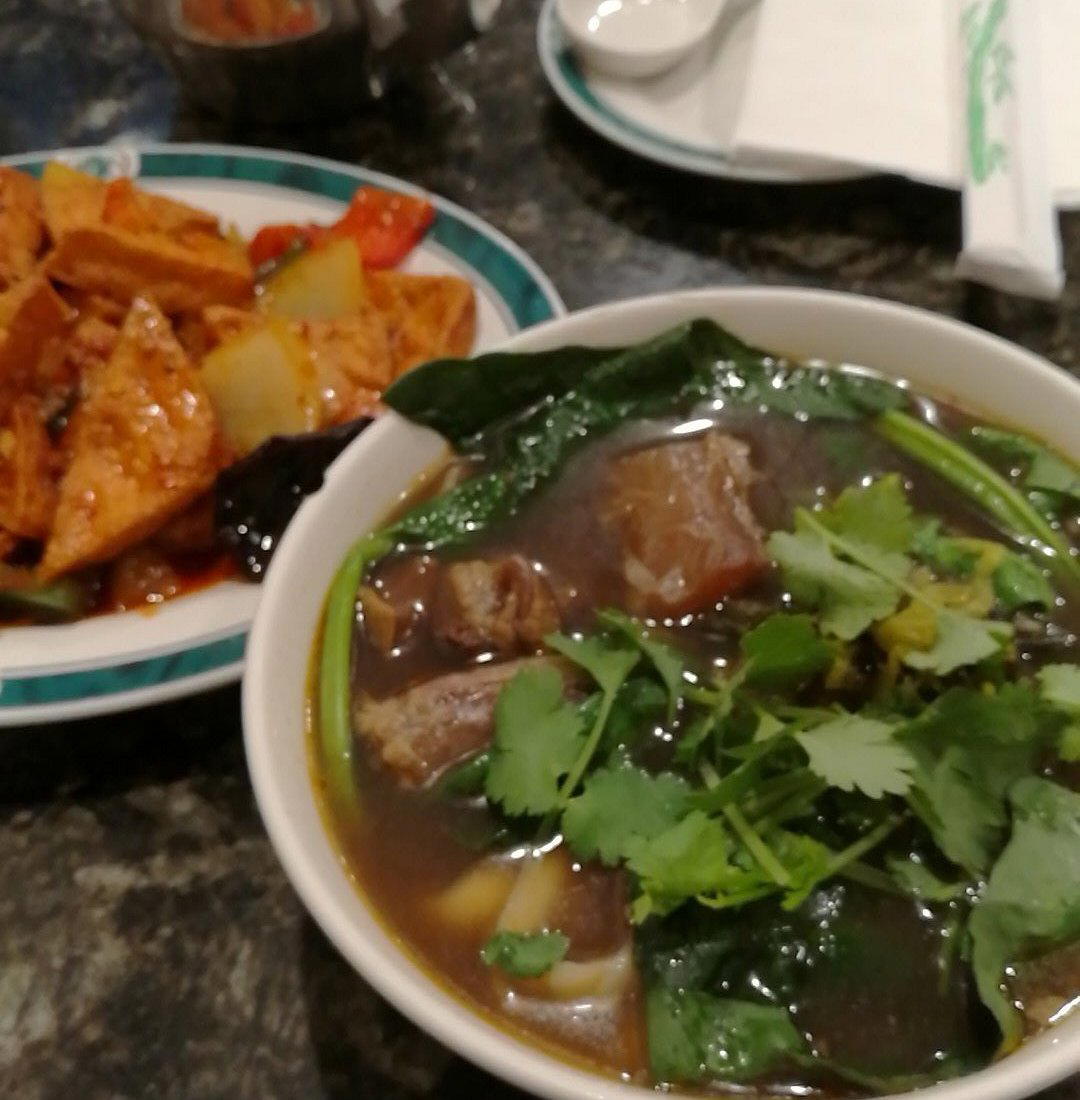
The menu
What to order
- Knife-shaved noodles
- Hand-pulled noodles
- House-made dumplings
Valley Boulevard and the Northern Chinese Tradition
The stretch of Valley Boulevard running through Rosemead and into the broader San Gabriel Valley represents one of the most geographically concentrated expressions of Chinese regional cooking in the United States. Unlike Chinatowns built for visibility and tourist traffic, this corridor evolved to serve a large, permanent immigrant population with specific regional loyalties, Cantonese banquet halls, Shanghainese noodle shops, Sichuan spice specialists, and, critically, practitioners of northern Chinese wheat-based cooking that rarely gets the same attention in American food media as Cantonese dim sum or Sichuan heat. JTYH Restaurant at 9425 Valley Blvd operates inside that last tradition, in a part of Southern California where the expectation is authenticity to source rather than adaptation for a general audience.
Northern Chinese food, built around hand-pulled and hand-cut noodles, lamb preparations, wheat dumplings, and braised dishes from provinces like Shaanxi, Shanxi, and Inner Mongolia, occupies a distinct place in the broader taxonomy of Chinese cuisine. Where Cantonese cooking prizes delicacy and restraint in seasoning, and Sichuan cooking foregrounds the numbing heat of the pepper, northern styles tend toward heartier formats: thick broths, chewy noodles with real tensile structure, vinegar-forward sauces, and dishes designed for cold-climate eating. In the San Gabriel Valley, a cluster of restaurants keeps these traditions alive with reasonable fidelity, and JTYH is among the addresses that locals point toward when the conversation turns to that specific regional register.
What the Room Tells You Before the Food Arrives
Approaching JTYH on Valley Boulevard, the context is functional rather than atmospheric in any designed sense. This is a strip-mall dining culture, and the restaurant fits its setting without apology, the kind of room where the signal is the clientele and the pace of service, not the lighting design. Tables turn, Chinese dialects mix with English at neighboring seats, and the laminated menu does the work that a sommelier's speech or a tasting-menu card would do elsewhere: it tells you the kitchen's range and commitments. In San Gabriel Valley dining at this register, that functional directness is a convention, not a compromise. The most serious cooking on this corridor has consistently happened in rooms that prioritize throughput over theater.
For comparison, the Cantonese banquet format at nearby 888 Seafood and the Peking duck program at Ji Rong Peking Duck represent the more ceremonially formatted end of Chinese dining in Rosemead, where tablecloths, roast duck service, and large-group banquet plates are part of the proposition. JTYH operates in a different register: noodle-forward, order-by-dish, suited to solo eating or small groups rather than round-table banquet dynamics. Longo Seafood occupies the seafood-banquet tier, while China Islamic Restaurant represents the Halal-Chinese tradition that sits adjacent to, but distinct from, the broader northern Chinese noodle canon. Each of these operations answers a different question about what Chinese cooking in Rosemead means. La Vie steps outside the Chinese dining cluster entirely, giving the block a point of contrast for visitors assembling a multi-stop itinerary.
The Cultural Logic of Hand-Pulled Noodles
Hand-pulled noodles, la mian in Mandarin, represent one of the more technically demanding forms of Chinese noodle production. The process involves stretching and folding dough repeatedly until gluten development produces the elasticity required for pulling, then drawing the dough into strands of varying thickness depending on the dish. A skilled puller adjusts width, twist, and texture within a single session, producing round strands for some broths and flat ribbons for others. The result is a noodle with a bite and chew that machine-cut or dried pasta cannot replicate. In the northern Chinese tradition, the noodle itself is considered as much a subject of evaluation as the broth or topping that accompanies it.
This is the culinary tradition JTYH operates within, on a boulevard where that tradition has a real community of practitioners and a dining public literate enough to evaluate it. The San Gabriel Valley is one of a small number of places in the country, alongside Flushing in New York and Chinatown in Chicago, where the density of Chinese regional specialists creates genuine competitive pressure, which in turn tends to sustain quality. Restaurants that cannot hold the attention of customers who grew up eating this food in its source regions do not survive long on Valley Boulevard.
For readers who follow fine dining across California, the contrast with Western tasting-menu culture is instructive. Operations like Providence in Los Angeles or The French Laundry in Napa represent the formal, multi-course, credential-heavy end of California dining. Lazy Bear in San Francisco and Single Thread Farm in Healdsburg add farm-sourcing and collaborative formats to that tier. JTYH participates in a completely different economy of dining value, one measured in regional fidelity, noodle craft, and the trust of a community rather than Michelin stars or prix-fixe architecture. Nationally, places like Atomix in New York show how immigrant culinary traditions can move into the formal fine-dining frame; the San Gabriel Valley corridor largely resists that translation, and JTYH is squarely in the untranslated register.
Planning Your Visit
JTYH Restaurant sits at 9425 Valley Blvd in Rosemead, readily accessible by car from central Los Angeles, roughly 12 miles east via the 10 freeway, with street and lot parking typical of the Valley Boulevard corridor. Visiting on a weekday gives the most direct access to the kitchen's range without the volume of the weekend crowd. Dress is casual without exception; the room asks nothing of you sartorially. Budget expectations on this corridor run well below the price points of comparable-effort cooking in Los Angeles proper, which is part of why the San Gabriel Valley draws informed eaters from across the metro. For a fuller picture of what the area offers across Chinese regional styles, our full Rosemead restaurants guide maps the key addresses by format and cuisine type.
Frequently asked questions
Where exactly is JTYH Restaurant?
JTYH Restaurant is located at 9425 Valley Blvd, Rosemead, CA 91770, Rosemead.
How does JTYH Restaurant compare to other northern Chinese noodle spots along the San Gabriel Valley's Valley Boulevard corridor?
Valley Boulevard between Rosemead and the broader SGV corridor hosts one of North America's most concentrated runs of northern Chinese restaurants, making the competition specific and the standards high. Its draw is the hand-pulled la mian format, a technique that separates it from ramen-adjacent or factory-noodle operations in the area.
What should I order at JTYH Restaurant?
JTYH's focus is hand-pulled noodles, the la mian tradition that defines much of northern Chinese cooking on Valley Boulevard. The noodles are made to order, so dishes built around them are the reason to visit. Given the restaurant's position in the San Gabriel Valley's northern Chinese dining corridor, expect preparations rooted in Shanxi or Henan regional styles rather than Cantonese or dim sum formats.
Do they take walk-ins at JTYH Restaurant?
JTYH operates in a strip-mall setting on Valley Boulevard in Rosemead, typical of the informal, counter-service-adjacent dining culture along this stretch of the San Gabriel Valley. Walk-ins are the norm at venues of this format and neighbourhood, though peak weekend hours on a busy dining corridor can mean a wait. Calling ahead is advisable, though no phone number is currently listed in public directories.
What's the defining dish or idea at JTYH Restaurant?
The defining concept is la mian, hand-pulled noodles produced through a technically demanding process of stretching and folding dough that no machine replicates at the same texture. On Valley Boulevard in Rosemead, where the density of northern Chinese restaurants is among the highest outside China's own cities, JTYH holds a specific place in that tradition. The noodle itself, its chew and pull, is the point.
Price and Positioning
Comparable venues nearby, for context on price, style, and recognition.
| Venue | Cuisine | Price | Notes |
|---|---|---|---|
| JTYH RestaurantThis venue (the venue you are viewing) | Northern Chinese Noodles and Dumplings | $10–20 | Not listed |
| China Islamic Restaurant | Halal Chinese (Xinjiang & Beijing) | $20–30 | Rosemead, Halal Chinese (Xinjiang & Beijing) |
| La Vie | Traditional French Bistro | $20–30 | Rosemead, Traditional French Bistro |
| Ji Rong Peking Duck | Traditional Beijing Peking Duck | $20–30 | Rosemead, Traditional Beijing Peking Duck |
| Mr. Baguette | Vietnamese Banh Mi Sandwiches | $1–10 | Rosemead, Vietnamese Banh Mi Sandwiches |
| 888 Seafood | Hong Kong-style Chinese Dim Sum & Seafood | $20–30 | Rosemead, Hong Kong-style Chinese Dim Sum & Seafood |
Continue exploring
More in Rosemead
Restaurants in Rosemead
All restaurants in Rosemead →
Bars in Rosemead
Browse all →
Hotels in Rosemead
Browse all →

Wineries in Rosemead
Browse all →
Details
- Cozy
- Casual Hangout
- Group Dining
- A La Carte
Current opening hours
- Monday
- 11 AM–8 PM
- Tuesday
- Closed
- Wednesday
- 11 AM–8 PM
- Thursday
- 11 AM–8 PM
- Friday
- 11 AM–8 PM
- Saturday
- 11 AM–8 PM
- Sunday
- 11 AM–8 PM
Hours can change for holidays and private events. Hours as of .
Casual hole-in-the-wall spot with a no-frills, comforting atmosphere focused on noodle preparation.