Joe’s Shanghai


One of Chinatown's longest-standing soup dumpling addresses, Joe's Shanghai at 46 Bowery has drawn consistent critical attention since the 1990s — earning Pearl and Opinionated About Dining recognition as recently as 2024-25. The format is straightforward: communal tables, high volume, and xiao long bao made to a formula that helped define how New York understands the style.
 Discover on Pearl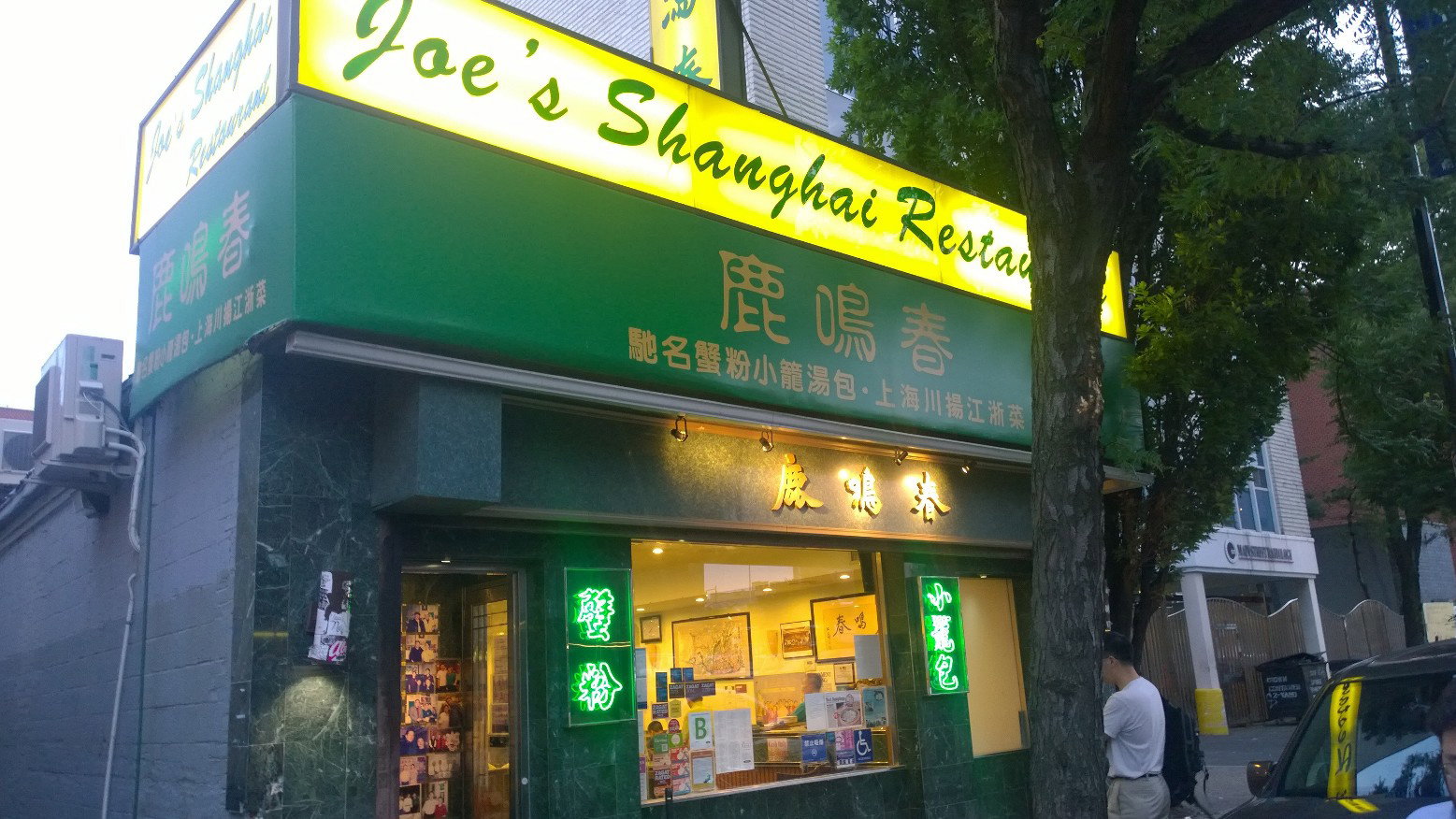
The Soup Dumpling Standard That New York Keeps Returning To
When Joe's Shanghai opened its original Flushing location in 1995, the xiao long bao it served was largely unfamiliar to most New Yorkers outside the Chinese-American community. The Shanghainese soup dumpling — thin pleated dough encasing seasoned pork and a pocket of hot gelatin-set broth that liquefies during steaming — was a street food and tea house staple in China, but had no real foothold in the American dining conversation. Joe's changed that. By the time the Chinatown outpost opened at 46 Bowery, the restaurant had become a reference point: the place food writers cited when they needed to explain the category, and the address that set the benchmark for what a soup dumpling should feel and taste like in New York.
That founding context matters because it explains the restaurant's continued relevance. Joe's didn't ride a trend , it preceded one. The xiao long bao wave that now includes Nan Xiang Xiao Long Bao and Bao, The in New York, plus global chains like Din Tai Fung, owes part of its American foothold to Joe's early popularisation of the format. The restaurant's 2025 Pearl Recommended designation and a 2024 Opinionated About Dining Casual North America ranking of #605 , alongside a 2023 OAD Recommended listing , confirm that the address continues to register with serious food critics, not just nostalgic regulars.
The shortlist, unlocked.
Hard-to-book tables, cellar releases, and concierge-planned trips.
Get Exclusive Access →Why the Filling Is the Point
Soup dumplings live or die by what goes inside them, and the logic of that filling is rooted in sourcing choices that most diners never think about. The gelatin that becomes broth inside the dumpling is typically made from pork skin or feet , collagen-rich cuts that, when simmered and chilled, set into a solid that can be mixed with the meat filling and then placed inside the dough. During steaming, that solid melts back into liquid, producing the pressurised pocket of soup that defines the eating experience. The quality of the broth depends entirely on how long it's been simmered, what cut of pork anchored it, and whether aromatics were used to balance the porcine richness.
At Joe's Shanghai, the pork-and-crab variation became the order that regulars and critics alike settled on as the more distinctive choice. The addition of roe-laden crab , typically hairy crab or a comparable variety during peak season , shifts the broth's flavour toward a briny sweetness that cuts against the pork's depth. This is a seasonal, ingredient-driven distinction: the crab component in xiao long bao is not simply an add-on protein but a flavour calibration that changes the entire register of the soup inside. It also represents a higher sourcing burden, since the crab needs to be of sufficient quality and freshness to contribute rather than muddy the filling. In the context of a high-volume, casual-format restaurant serving thousands of dumplings a week, maintaining that ingredient standard is the operational challenge that separates credible soup dumpling houses from those simply trading on format familiarity.
Across the broader xiao long bao category , from the precise, open-kitchen theatre of dan Modern Chinese in Los Angeles to the production-line consistency of international dumpling chains , the filling quality and broth concentration are the variables that critics and experienced diners use to rank contenders. Joe's has maintained OAD recognition across multiple consecutive years, which indicates a consistent execution rather than a one-cycle surge.
The Chinatown Setting and What It Signals
The 46 Bowery address places Joe's Shanghai at the edge of Manhattan's Chinatown, a neighbourhood whose dining character is defined by density, value, and specialisation. Unlike the broader Manhattan restaurant scene , where a table at Le Bernardin, Atomix, or Eleven Madison Park involves reservation strategy weeks in advance and price points well into the hundreds per head , Chinatown operates on a different logic entirely. Restaurants here compete on execution and specificity. The question is never atmosphere or presentation tier; it's whether the kitchen does its particular dish better than the three other places within a five-minute walk doing the same thing.
Joe's occupies a specific position in that competitive set. It is not the cheapest option, nor the most ornate. It's the address with the longest track record and the most sustained external validation in the soup dumpling subcategory. For a visitor trying to understand what Chinatown's soup dumpling tradition looks like at a recognised reference point, the Bowery location is the appropriate starting place. For regulars who know the neighbourhood, it competes directly with Nan Xiang Xiao Long Bao and a handful of newer entrants that have brought updated technique and faster service models to the format.
The communal table format, which Joe's has maintained across its locations, reflects the tea house origins of the dumpling tradition rather than a deliberate design choice. In Shanghai, xiao long bao was always a shared dish , ordered by the steamer basket, eaten immediately, part of a broader spread. The Bowery dining room preserves that social logic, which means the experience of eating there has more in common with a Hong Kong dim sum hall than with the private-table, curated-sequence format of New York's tasting menu tier. That's not a compromise; it's a format choice that matches the dish's cultural register.
Where Joe's Shanghai Sits in New York's Broader Dining Map
New York's restaurant depth spans formats and price tiers that few cities can match. The Michelin three-star tier represented by Le Bernardin and Eleven Madison Park operates in an entirely different register from Chinatown's specialist dining, and the OAD casual rankings that Joe's appears in are specifically designed to evaluate the latter category on its own terms. A #605 OAD Casual North America ranking in 2024 places the restaurant inside a list that spans the continent; within the New York soup dumpling subfield, it signals continued first-tier relevance.
For readers building a broader New York itinerary, our full New York City restaurants guide maps the city's dining across categories and price tiers. The city's hotel, bar, and experience options are covered in our New York City hotels guide, bars guide, and experiences guide. For those tracking the soup dumpling format across American cities, dan Modern Chinese in Los Angeles represents the more contemporary, design-conscious end of that spectrum.
Know Before You Go
- Address: 46 Bowery, New York, NY 10013
- Hours: Monday to Sunday, 11 am – 11 pm
- Cuisine: Soup Dumplings (Shanghainese)
- Awards: Pearl Recommended Restaurant (2025); OAD Casual North America #605 (2024); OAD Casual North America Recommended (2023)
- Google Rating: 4.2 from 5,911 reviews
- Format: Communal tables, high-volume, walk-in friendly
- Nearby: Manhattan Chinatown; accessible via the B, D, J, N, Q, R, W, Z lines at Canal Street
What Do Regulars Order at Joe's Shanghai?
The pork and crab xiao long bao is the order that regulars and food critics have consistently pointed to as the defining choice at Joe's Shanghai. The standard pork-only variety is the more approachable entry point, but the crab version introduces a complexity , briny, faintly sweet, distinct from the pork baseline , that makes it the more discussed of the two. Both arrive in bamboo steamers, and the eating protocol matters: use a soup spoon to catch the dumpling, bite a small hole in the skin to release steam before drinking the broth, then finish the rest. Ordering soup dumplings alongside cold appetisers , cucumber salad or a vinegar-dressed vegetable dish , is a common move among regulars, as the acid cuts through the richness of repeated dumpling courses. Service is fast and turnover is expected, so order decisively and eat while the dumplings are still hot; the skin toughens as it cools.
Cuisine and Awards Snapshot
A small peer set for context; details vary by what’s recorded in our database.
| Venue | Cuisine | Awards | Notes |
|---|---|---|---|
| Joe’s Shanghai | Soup Dumplings | Pearl Recommended Restaurant (2025); Opinionated About Dining Casual in North Am… | This venue |
| Le Bernardin | French, Seafood | Michelin 3 Star | French, Seafood, $$$$ |
| Atomix | Modern Korean, Korean | Michelin 2 Star | Modern Korean, Korean, $$$$ |
| Masa | Sushi, Japanese | Michelin 3 Star | Sushi, Japanese, $$$$ |
| Per Se | French, Contemporary | Michelin 3 Star | French, Contemporary, $$$$ |
| Eleven Madison Park | French, Vegan | Michelin 3 Star | French, Vegan, $$$$ |
Need a table?
Our members enjoy priority alerts and concierge-led booking support for the world's most difficult tables.
Get Exclusive AccessThe shortlist, unlocked.
Hard-to-book tables, cellar releases, and concierge-planned trips.
Get Exclusive Access →