Jōdo Saké Bar
Our verdict
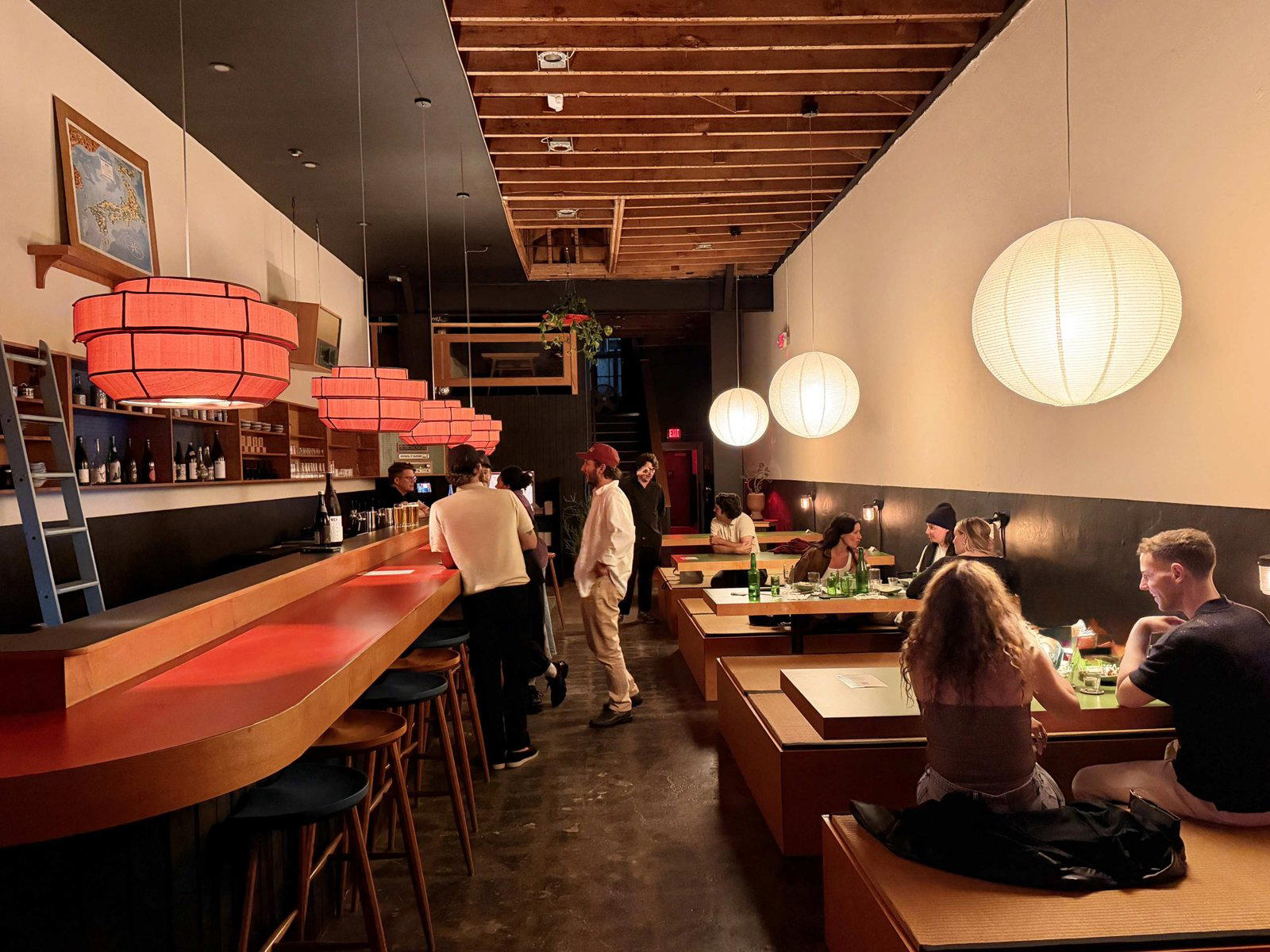
Los Angeles has developed a serious sake bar scene over the past decade, and Jōdo occupies a distinct position within it: a venue where the breadth of the sake list and the precision of its food pairings reflect the kind of cross-cultural fluency the city does well. The format rewards guests who arrive curious rather than certain, making it a useful reference point for anyone exploring fermented Japanese rice wine beyond the basics.

Pearl is the En Primeur Club membership app, where members save venues, book tables and use the concierge.
The menu
What to order
- Japanese fried chicken
Where Sake Culture Meets the Los Angeles Palate
Japan's brewers have been producing nihonshu for well over a millennium, but the global conversation around sake as a serious beverage category is comparatively recent. Los Angeles sits at a useful intersection: a large Japanese-American population with deep roots in sake culture, a dining scene increasingly comfortable with fermented and low-intervention beverages, and a sourcing network that connects local chefs to both domestic American producers and small-lot importers bringing regional Japanese labels to the West Coast. Jōdo Saké Bar draws from all three currents, positioning itself as a destination where the drink itself is the frame, not a footnote to the food menu.
The timing matters. Sake's profile in the United States has shifted considerably since the early 2000s, when most American diners encountered it as hot and undistinguished in Japanese-American restaurants that hadn't prioritized the category. The generation of sake bars and specialist programs that emerged from roughly 2010 onward, in cities including Los Angeles, New York, and San Francisco, changed the reference points. By the time Jōdo entered the market, a serious sake venue in a major American city was expected to distinguish between junmai, ginjo, and daiginjo designations, to stock nigori and aged koshu expressions, and to source from breweries outside the handful of names that dominate export channels. That context shapes what Jōdo is trying to do and, importantly, who it is talking to.
Technique Imported, Ingredients Local
The most instructive editorial angle for Jōdo is not simply that it serves sake, but how the venue positions the beverage in dialogue with the food traditions of Southern California. The editorial angle of imported method, local product runs through much of Los Angeles's most interesting contemporary dining. You see it at Kato, where Taiwanese culinary grammar meets California produce, and at Hayato, where kaiseki discipline is applied with an awareness of what grows and swims in this particular region. Sake bars, at their most considered, operate on the same logic: the beverage itself is the imported tradition, but the food program that sits alongside it is an opportunity to read the local larder through a Japanese-trained lens.
Southern California's produce calendar is long, which gives any kitchen operating in this format a structural advantage over counterparts in cities with compressed growing seasons. The late spring and early summer window, when stone fruit comes in from the Central Valley alongside early-season tomatoes and coastal shellfish, creates pairing opportunities that would be difficult to replicate in, say, Chicago or New York in the same months. That seasonality is not a marketing point; it is a structural condition that shapes what a sake pairing program in Los Angeles can actually do.
Sake as a Serious Beverage Category
For visitors arriving from cities with strong beverage programs, the comparison set is worth establishing. New York has developed several serious sake-focused operations in recent years, and the West Coast's longstanding Japanese-American community has supported specialist retailers and importers for decades. But Los Angeles's particular combination of climate, demographic breadth, and a restaurant industry that has grown increasingly sophisticated across multiple cuisines means that a sake bar here occupies a different position than it would in a city where Japanese dining culture is more narrowly defined.
Premium sake now prices in a range that overlaps with serious natural wine and rare spirits. Small-lot junmai daiginjo from Niigata or Yamagata prefectures, sourced through specialist importers, can reach price points that position them alongside Burgundy négociant bottles or aged Armagnac. Venues that take the category seriously stock across that range, offering accessible entry points alongside rarer expressions. The leading sake lists, like the leading wine lists, do the curatorial work rather than simply accumulating volume.
Within Los Angeles's broader premium dining circuit, Jōdo sits in a different register from the city's most-discussed multi-course tasting experiences, such as Somni or Providence. It is not competing with the formal progression of a tasting menu. The comparison is closer to a serious wine bar with food that justifies the visit independently, a format that has proven durable in cities ranging from San Francisco, where Lazy Bear demonstrated the appetite for non-traditional drinking formats, to New York, where Atomix has shown how Korean-rooted dining can anchor a high-seriousness beverage program.
Los Angeles's Evolving Beverage Identity
Los Angeles has long been underestimated as a beverage city. Its wine culture defaults to Napa and Sonoma references, its cocktail scene spent years in the shadow of New York and San Francisco, and its sake presence, while historically significant in Japanese-American communities, was slow to convert into the kind of visible, destination-grade bar format that generates editorial attention. That picture has shifted. The past several years have produced a cluster of venues with beverage programs as seriously considered as their food, a development that mirrors what has happened in cities like Atlanta, where Bacchanalia demonstrated decades ago that regional-identity dining could sustain a sophisticated beverage identity, or San Diego, where Addison has built a program matching the precision of its kitchen.
Within this context, Jōdo represents a specific thesis: that sake, properly framed and seriously stocked, can anchor a destination venue rather than serve as a supporting character in someone else's story. It is a thesis that depends on execution at the list level, on the food program's ability to create genuine pairing logic rather than nominal accompaniment, and on a service posture that can educate without condescending. Los Angeles, with its mixture of sake-literate regulars and curious newcomers, is a useful city in which to test that thesis.
For a broader view of where Jōdo fits within Los Angeles's dining and drinking fabric, the EP Club Los Angeles guide maps the full scene across categories and price points. Readers tracking how Japanese-influenced beverage culture has spread across American cities might also find useful comparison points at Le Bernardin in New York, where the wine and sake-adjacent pairing philosophy has been consistently rigorous, or at Single Thread Farm in Healdsburg, where Japanese aesthetic principles have been applied to a Northern California context with notable seriousness. Internationally, 8½ Otto e Mezzo Bombana in Hong Kong offers a useful case study in how a non-native beverage tradition can be installed at the centre of a premium dining program in a city with its own strong culinary identity.
Know Before You Go
Location: Los Angeles, California
Category: Sake bar with food program
Leading season: Late spring through early summer, when California's produce calendar aligns most productively with the kitchen's pairing options
Recommended for: Sake-curious visitors looking for a format that rewards engagement with the list; diners already familiar with Japanese beverage culture seeking a Los Angeles reference point
Nearby context: Cross-reference with Osteria Mozza and Hayato for a broader picture of the city's serious dining tier
Frequently asked questions
How does Jōdo Saké Bar compare to other sake bars in Los Angeles?
Los Angeles has a smaller cluster of dedicated sake venues than New York or San Francisco, which makes Jōdo part of a short list rather than a crowded field. Where many Japanese-leaning bars in the city default to whisky or cocktail programs with sake as a secondary offering, Jōdo positions nihonshu as the organizing principle of the entire experience. That editorial focus on sake as a primary beverage category, rather than a novelty or supporting player, is the distinguishing factor in the current LA scene.
What's the must-try dish at Jōdo Saké Bar?
The food program at Jōdo is designed to position sake as the lead element, meaning the kitchen's offerings are built around the beverage rather than the reverse. Because the menu rotates with an eye toward sake-friendly profiles, the most useful approach is to let the sake selection drive your food choices rather than arriving with a fixed dish in mind. Check current offerings directly with the venue for what's pouring on a given night in Los Angeles.
What's the best way to book Jōdo Saké Bar?
Booking details for Jōdo are best confirmed directly through the venue, as reservation policies for sake bars in Los Angeles vary significantly by size and format. Walk-in availability tends to be higher earlier in the week, while weekend seatings at comparable LA sake and beverage bars often fill within a few days. Contacting the bar directly will give you the most accurate picture of how far in advance you need to plan.
What makes Jōdo Saké Bar worth seeking out?
Los Angeles has historically been underserved by serious sake programming compared to New York, which developed its sake-forward bar culture earlier and more densely. Jōdo occupies a specific position in that gap, treating nihonshu with the category seriousness that wine lists receive at comparable beverage-led venues. For anyone tracking how the LA drinking scene is maturing beyond its Napa-by-default reflex, this is a useful data point.
Can Jōdo Saké Bar adjust for dietary needs?
Sake itself is gluten-free and vegan by production standard, which gives the beverage program at Jōdo inherent flexibility across a range of dietary requirements. For food-side accommodations, specifics will depend on the current menu, and the safest route is to flag dietary needs when booking or on arrival. The sake-led format means the drink list itself will be accessible to most guests regardless of restriction.
Nearby-ish Comparables
| Venue | Cuisine | Price | Awards | Notes |
|---|---|---|---|---|
| Jōdo Saké BarThis venue (the venue you are viewing) | Modern Japanese Sake Bar | $50–100 | Not listed | Not listed |
| Kato | Modern Taiwanese Fine Dining | $300–500 | 2 Michelin Stars · World's 50 Best #49 | New Taiwanese, Asian |
| Hayato | Traditional Japanese Kaiseki | $300–500 | 2 Michelin Stars · La Liste Top Restaurants | Japanese |
| Vespertine | Avant-Garde Tasting Menu | $200–300 | 2 Michelin Stars · La Liste Top Restaurants | Progressive, Contemporary |
| Camphor | Modern French with Southeast Asian influences | $150–200 | Michelin Plate · World Best Burgers World's 101 Best Burgers #15 | French-Asian, French |
| Gwen | Contemporary American Steakhouse | $50–100 | Michelin Plate · Wine Spectator Best of Award of Excellence | New American, Steakhouse |
Continue exploring
More in Los Angeles
Restaurants in Los Angeles
All restaurants in Los Angeles →
Bars in Los Angeles
All bars in Los Angeles →
Hotels in Los Angeles
All hotels in Los Angeles →

Wineries in Los Angeles
All wineries in Los Angeles →

Details
- Trendy
- Modern
- Intimate
- Date Night
- Casual Hangout
- Sake Program
- Small Plates
- Sake