Jerry's Cafe
Jerry's Cafe sits on West Coal Avenue in Gallup, New Mexico, a city that has long served as a crossroads between Anglo, Navajo, and Zuni food traditions. The cafe operates within a local dining culture shaped by proximity to reservation lands, trading post history, and the kind of ingredient geography that larger cities simulate but Gallup simply has. For travelers passing through on Route 66 or heading toward Canyon de Chelly, it represents a grounded, unfussy stop in a city with a distinct culinary identity.
Pearl is the En Primeur Club membership app — saves, bookings, and concierge access live there. Same editors, same standards.
- Address
- 406 W Coal Ave, Gallup, NM 87301
- Phone
- +1 505 722 6775
- Website
- jerrys-cafe.shop
 Saves & bookings on Pearl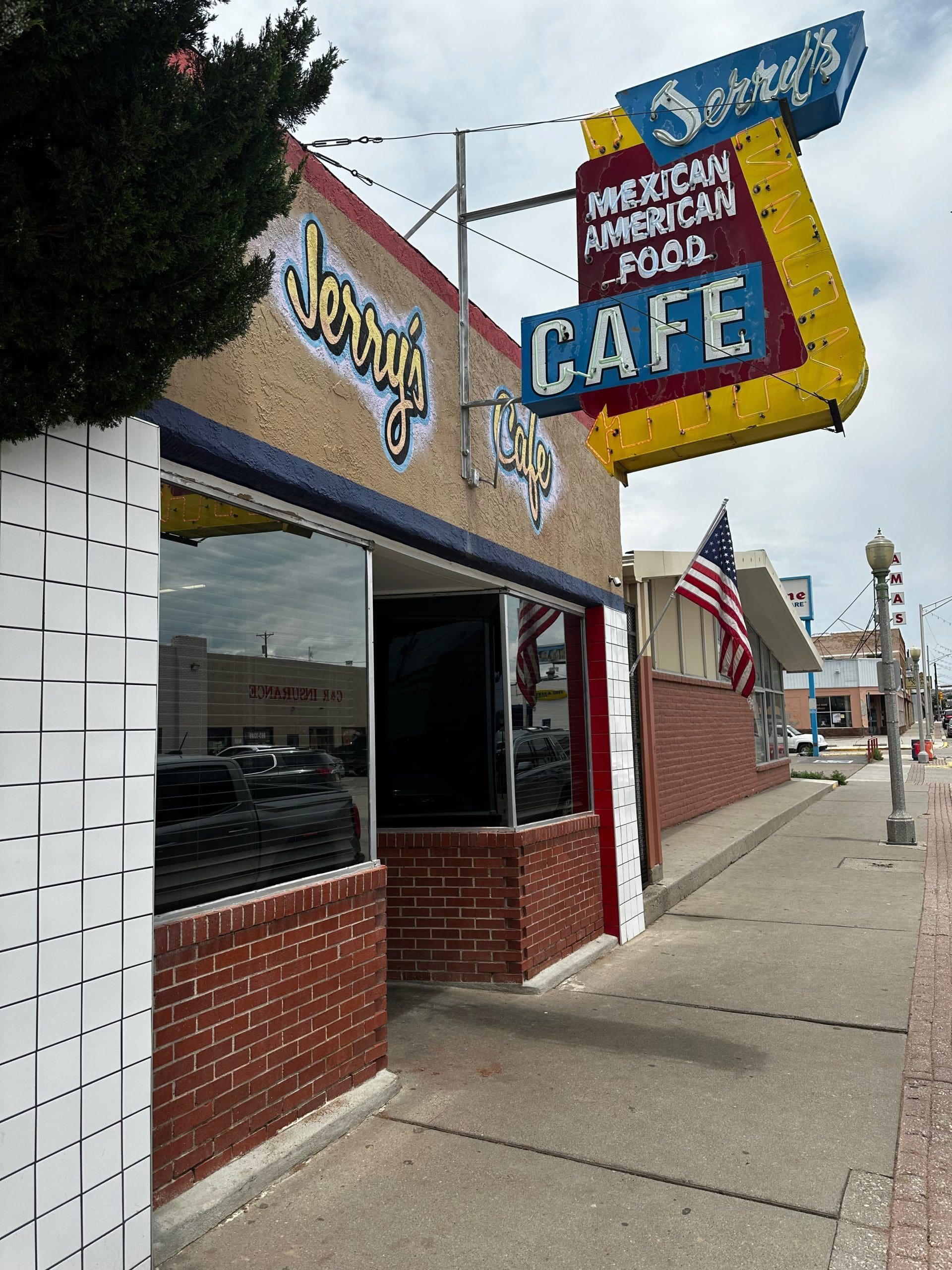
Where Route 66 Meets the High Desert Table
West Coal Avenue runs parallel to the old Route 66 corridor through Gallup, and the storefronts along it carry the accumulated character of a town that has spent a century functioning as a supply point, a trading hub, and a crossroads between sovereign Navajo and Zuni lands to the north and south. Jerry's Cafe is a New Mexican restaurant at 406 W Coal Ave, Gallup, NM 87301, and its casual, walk-in-friendly setup fits the city's cafe tradition. It sits inside that context. The physical environment of this stretch of Gallup is not designed to impress in the way that a restaurant district in Albuquerque or Santa Fe might be, the architecture is flat, the signage utilitarian, and the pace deliberate. That is, in fact, the point. Cafes like this one exist within a dining culture that has never needed to perform its identity because the identity is structural, embedded in geography and supply chains that have no equivalent in coastal cities.
The Ingredient Geography of Northwestern New Mexico
To understand what makes a cafe in Gallup distinct from a cafe in, say, Denver or Los Angeles, it helps to map the food geography of the region. Northwestern New Mexico sits at the intersection of several distinct agricultural and pastoral traditions. The Navajo Nation, which surrounds Gallup on three sides, has its own food economy built around mutton, fry bread, corn, and blue corn varieties that have been cultivated in this high desert for centuries. The Zuni Pueblo to the south maintains its own agricultural traditions, including heritage squash and chile cultivation. Gallup itself, as the county seat of McKinley County, has historically been the commercial center where these traditions intersect with Hispanic New Mexican cooking, the green and red chile sauces, the posole, the sopapillas, that define the state's broader culinary character.
This matters for how you read the menu at a local cafe in Gallup. The ingredients are not sourced from the same distribution networks that supply restaurants in larger metros. Proximity to reservation lands and to small-scale New Mexican producers means that mutton stew, chile-forward proteins, and corn-based preparations are not novelty items or heritage affectations, they are the natural outputs of the supply chain. Restaurants elsewhere that work to approximate this kind of regional specificity, from Blue Hill at Stone Barns in Tarrytown to Single Thread Farm in Healdsburg, do so through deliberate sourcing programs and considerable institutional effort. In Gallup, it is simply the default.
New Mexico's Cafe Tradition as a Format
The New Mexico cafe, as distinct from a diner, a fast-casual chain, or a sit-down restaurant, occupies a specific cultural and economic niche. It operates at a price point accessible to working families and long-haul drivers alike, serves food that reflects the state's tri-cultural heritage (Native, Hispanic, Anglo), and functions as a community anchor in towns where the restaurant scene is thin. This format is found across the state, from the Rio Grande valley up through the high desert, but it takes on particular character in Gallup, where the customer base is genuinely multicultural in a way that few American cities can claim. The cafe in this context is not a casual dining category, it is a civic institution.
That civic function distinguishes Gallup's local dining from the kind of experience you encounter at reservation-focused or heritage-cuisine restaurants in larger cities. Operations like Oyster Oyster in Washington, D.C. or Bacchanalia in Atlanta are built around a deliberate editorial perspective on ingredient sourcing and regional identity. The Gallup cafe operates the same values without the editorial framework, not because it lacks sophistication, but because the sourcing is ambient rather than curated.
Gallup's Position in the New Mexico Dining Conversation
New Mexico's dining reputation is centered on Santa Fe and, to a lesser extent, Albuquerque. Santa Fe carries the weight of the state's food identity nationally, with its farmer's markets, its James Beard-recognized restaurants, and its tourism infrastructure. Gallup operates outside that apparatus entirely. It does not appear on the lists that draw food travelers to the state, and its restaurants are not competing with the upper tiers of American dining, the kind of counters and tasting rooms covered in guides to Le Bernardin in New York City, The French Laundry in Napa, or Addison in San Diego.
That absence from the national conversation is worth examining rather than treating as a deficit. Gallup's dining scene reflects a city of roughly 22,000 people at 6,500 feet elevation, where the restaurant economics are shaped by local incomes and local appetites rather than by tourism premiums. The result is a set of cafes and diners that serve food with genuine regional specificity at prices that reflect the actual cost of the ingredients and labor, rather than the perceived value of a heritage narrative. For travelers who have spent time at Smyth in Chicago, Lazy Bear in San Francisco, or Providence in Los Angeles, the contrast is instructive. See our full Gallup restaurants guide for broader context on where Jerry's Cafe fits within the city's dining options.
Planning Your Visit
Gallup is accessible via I-40, which follows the Route 66 corridor, and sits roughly 140 miles west of Albuquerque. The city is a natural stopping point for travelers moving between New Mexico and Arizona, or for those heading north toward Monument Valley and Canyon de Chelly. West Coal Avenue is walkable from the downtown area and from several of the city's independent motels. As with most local cafes in small New Mexico cities, arriving during peak meal hours on weekdays tends to align leading with the kitchen's natural rhythm. Jerry's Cafe is open Monday through Saturday from 8 AM to 8 PM and is closed on Sunday.
At-a-Glance Comparison
Comparable venues nearby, for context on price, style, and recognition.
| Venue | Cuisine | Price | Awards | Notes |
|---|---|---|---|---|
| Jerry's CafeThis venue — the venue you are viewing | New Mexican | $$ | , | |
| Mary & Tito's Cafe | New Mexican | $$ | , | North Valley |
| La Choza Restaurant | Traditional New Mexican | $$ | , | Railyard |
| 229 Galisteo St | Classic New Mexican | $$ | , | Downtown |
| Chope's | Classic New Mexican | $$ | , | La Mesa |
| Little Anita's New Mexican Food | Authentic New Mexican | $$ | , | Menaul Development Area |
At a Glance
- Cozy
- Classic
- Rustic
- Iconic
- Casual Hangout
- Family
- Historic Building
Cozy classic diner with booths, local artwork on walls, and welcoming family atmosphere.