Jee Juan Coffee Cafe
A neighbourhood coffee cafe in Brunei operating within the country's deeply rooted kopitiam tradition, where local coffee culture intersects with everyday Bruneian dining. Jee Juan sits in a city where casual cafe formats serve as the social infrastructure of daily life, making it a reference point for understanding how Brunei eats and gathers outside its more formal dining rooms.
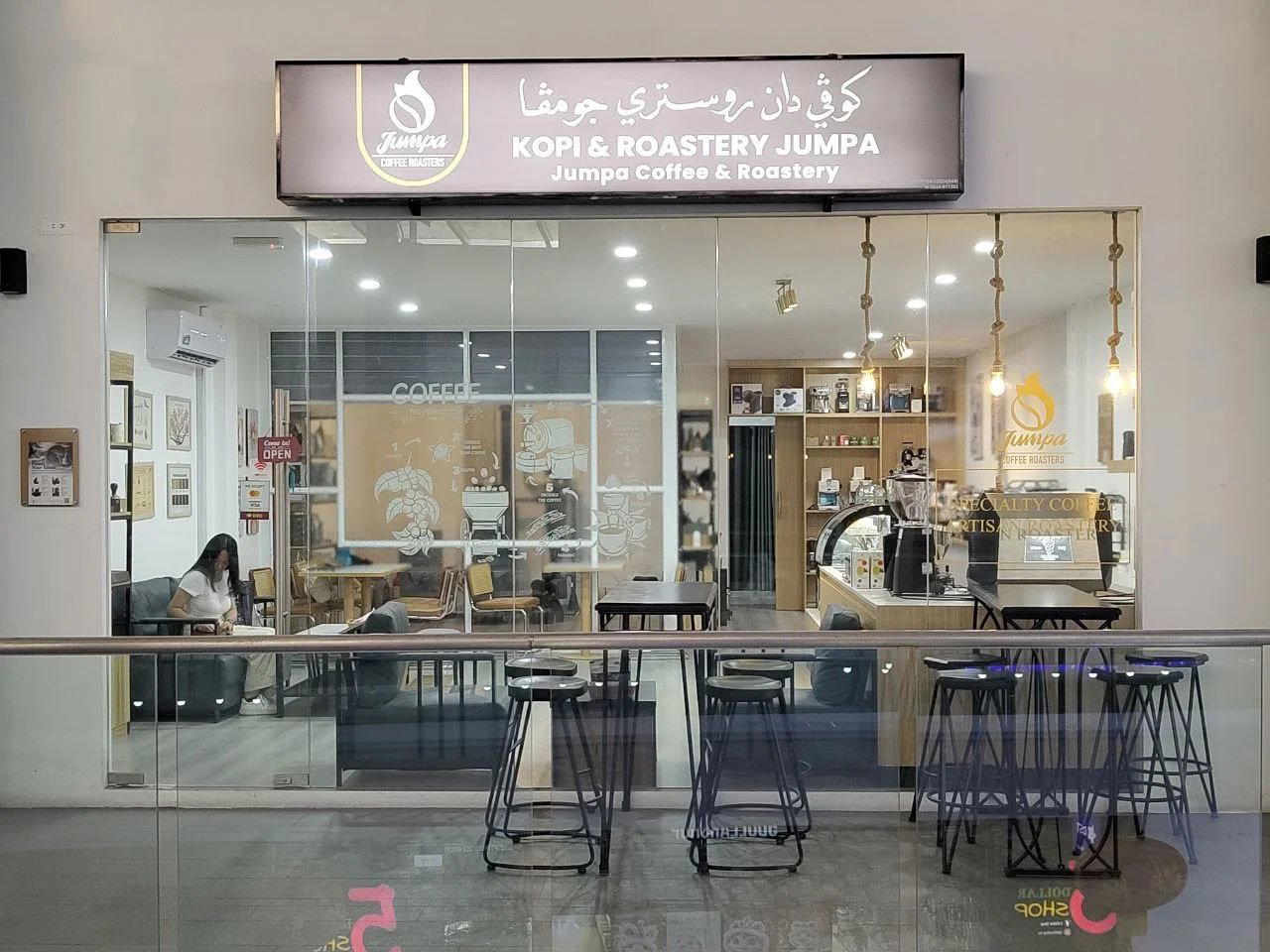
Coffee Culture as Infrastructure: Where Brunei's Daily Life Happens
Across Brunei Darussalam, the kopitiam, the Chinese-influenced coffee shop format inherited from generations of Southeast Asian trade migration, functions less as a restaurant category and more as a civic institution. These are the rooms where contracts get discussed over kopi-o, where school runs end with a bowl of something warm, and where the line between breakfast and lunch dissolves into an all-morning affair. Jee Juan Coffee Cafe operates within that tradition, in a country where the casual coffee shop carries social weight that formal dining rarely matches.
Brunei's food culture is shaped by a convergence of Malay, Chinese, and Indian influences, compressed into a small, oil-wealthy nation that has, unlike its neighbours, developed a dining scene less driven by tourism than by local habit. That insularity produces something useful for the visiting eater: authenticity of routine rather than performance. The coffee shops here are not curated for a camera, they exist because people come back every morning.
What Sourcing Looks Like in a Country This Size
Brunei's compact geography and relatively high per-capita income create an unusual sourcing situation for its food establishments. The country imports a significant proportion of its food supply, but the casual cafe format has historically leaned on regionally available staples: fresh kaya made from local eggs and coconut, bread from nearby bakeries, and the Hainanese coffee preparation that defines the kopitiam cup. The coffee itself, typically a robusta-forward blend roasted with butter or sugar, arrives through established Southeast Asian trading channels that have remained largely consistent across decades.
This ingredient story matters because it explains the menu logic of venues like Jee Juan. In a kopitiam framework, the sourcing is not a selling point plastered on a chalkboard, it is simply the accumulated practice of making the same things well, with the same suppliers, over time. The kaya toast arrives on bread from the same bakery it always did. The soft-boiled eggs are timed by feel, not timer. The coffee is pulled from blends the proprietor knows by name. That consistency, unglamorous as it sounds, is the actual product.
Compare this to the sourcing theatrics of higher-end dining in the region. Venues like Zen By Pantai in Kampong Jerudong operate at a different register entirely, where provenance is narrated and premium ingredients are the point of differentiation. The kopitiam sits at the other end of that spectrum: the sourcing is invisible precisely because it has been reliable long enough to stop being noticed.
Brunei's Cafe Tier and Where Jee Juan Sits
Brunei's dining scene is smaller and more concentrated than its regional neighbours in Malaysia or Indonesia. The country's Halal requirements shape the market significantly, pork-free menus are standard across most public dining rooms, and alcohol is not served legally in public venues. Within that framework, the Chinese coffee shop format occupies an interesting position: historically Chinese-operated and coffee-centred, these cafes have adapted into the broader Bruneian food culture over generations, serving a mixed clientele across ethnic and religious lines.
The cafe tier in Brunei splits broadly between air-conditioned modern formats and the older, open-fronted kopitiam style. For the visitor trying to read Brunei's food culture quickly, the coffee shop is the fastest education available, faster than any formal restaurant, because it is unrehearsed. You see what people actually order, how long they stay, and what the kitchen can do without a tasting menu to hide behind.
For broader orientation across Brunei's dining options, the EP Club Brunei restaurants guide maps the full range, from street-level stalls to more considered dining rooms. Within the casual end of that spectrum, The Curry Shop represents a different but adjacent tradition, the everyday spice-driven format that complements the coffee shop's carbohydrate-and-caffeine anchor. Further afield, Yung Peng Food Stall in Kuala Belait shows how the hawker and stall format operates outside the capital.
The Case for Paying Attention to Small Rooms
There is a habit among internationally mobile diners of reserving serious attention for venues with Michelin stars, 50 Best placements, or chef-driven narratives. It is worth periodically breaking that habit. The global dining conversation at any given moment includes Alinea in Chicago, Le Bernardin in New York City, and Arpège in Paris, venues where the sourcing story is the headline act and the editorial machinery amplifies every detail. The kopitiam operates in the negative space of that conversation, and that is precisely what makes it instructive.
What a coffee shop like Jee Juan offers is not a counterpoint to fine dining so much as a different unit of measurement. The question is not whether the coffee is award-winning, it is whether the coffee is the same as it was last Tuesday, and the Tuesday before that. That is a form of quality control that tasting-menu restaurants rarely face, because their menus change. The kopitiam's menu does not change. Its consistency is the claim.
For context on how the award-tier dining world operates in contrast, venues like Amber in Hong Kong, Atomix in New York City, and Arzak in San Sebastián sit at the other end of the sourcing and credentialling spectrum, useful reference points for understanding just how wide the gap is between formal dining infrastructure and the everyday cafe format Jee Juan represents.
Planning a Visit
Coffee shops in Brunei typically run from early morning through the midday hours, with some closing by early afternoon once the kitchen has turned over its supply. Treat it as a walk-in, morning-oriented visit, consistent with how most kopitiam-format venues across the region operate. The format is not one that rewards advance planning so much as proximity and timing: arrive before the late-morning rush, order the coffee and whatever the kitchen is visibly turning out, and give the room time to show you what it does.
How It Stacks Up
Comparable venues nearby, for context on price, style, and recognition.
| Venue | Cuisine | Price | Awards | Notes |
|---|---|---|---|---|
| Jee Juan Coffee CafeThis venue — the venue you are viewing | Bruneian Noodles & Bakery Cafe | $ | , | |
| The Curry Shop | Bruneian Curry House | $$ | , | Kg Lambak B |
| Li Gong Restaurant | Authentic Cantonese | $$$ | , | Jerudong |
| Yung Peng Food Stall | Asian Stir-Fry & Seafood Stall | $ | , | Kuala Belait |
| Zen By Pantai | Japanese Teppanyaki | $$$ | , | Kampong Jerudong |
Continue exploring
More in Brunei
Restaurants in Brunei
Browse all →
At a Glance
- Cozy
- Iconic
- Casual Hangout
Casual coffee cafe atmosphere focused on breakfast noodles, breads, and pastries.