Yung Peng Food Stall
A well-established food stall in Kuala Belait, Brunei, Yung Peng draws regulars from across the district with the kind of straightforward, ingredient-driven cooking that defines the everyday food culture of Borneo's north coast. With little marketing and no website, its reputation travels entirely by word of mouth — which in a small oil town like Kuala Belait, tends to travel fast.
Pearl is the En Primeur Club membership app — saves, bookings, and concierge access live there. Same editors, same standards.
- Address
- H5JV+X87, Kuala Belait, Brunei
- Phone
- +673 334 1931
- Directions
- Get directions
 Saves & bookings on Pearl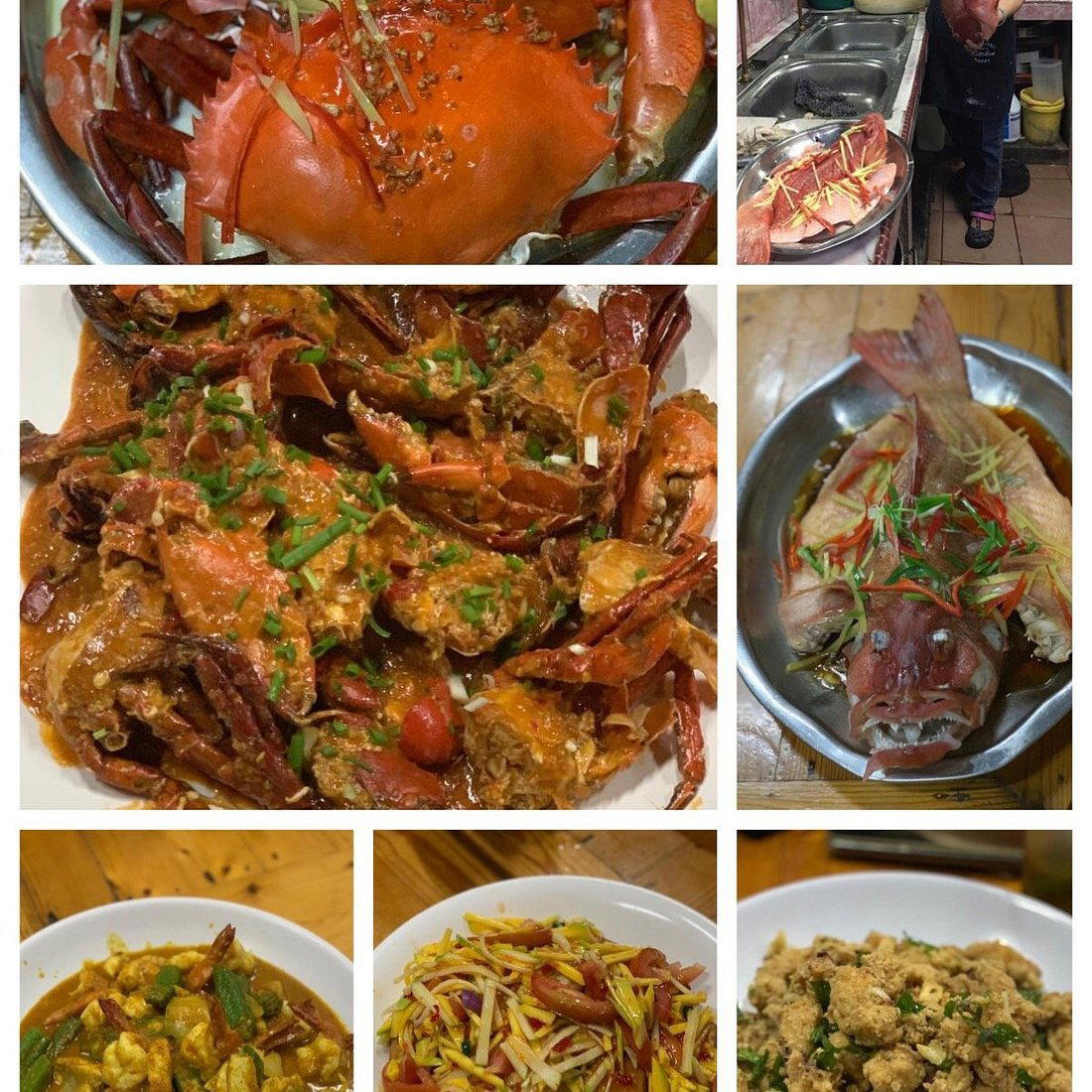
Where Kuala Belait Eats Without Ceremony
Kuala Belait sits at the southwestern edge of Brunei, a compact oil-industry town where the dining culture runs closer to Singapore's hawker-centre tradition than to the hotel restaurants of Bandar Seri Begawan. The food stall format — open-air or semi-covered, cash-driven, ordered at the counter — is the primary mode of everyday eating here, and it reflects a sourcing logic that formal restaurants in the region have spent years trying to replicate. Ingredients move short distances. Supply chains are local by default rather than by philosophy. That context matters when considering a stall like Yung Peng Food Stall, which operates within this tradition rather than as a novelty departure from it.
The address places it within the residential and commercial grid of Kuala Belait proper, reachable without a car if you are staying anywhere near the town centre. There is no booking system, no dress code, and no website, the kind of absence that, in a city like New York, might signal a deliberate anti-brand posture, but here simply reflects how most of the district's food has always worked. For reference on how different the formality spectrum can run, consider that Le Bernardin in New York City or Alléno Paris au Pavillon Ledoyen in Paris operate at the opposite end of the same global dining axis. Yung Peng's value is precisely that it does not operate on that axis at all.
The Sourcing Logic Behind Borneo's Stall Food
The ingredient story at a Kuala Belait food stall begins with geography. The South China Sea is close, and the fishing communities that supply the region have done so for generations. Freshwater fish from Brunei's river systems, coastal shellfish, locally grown herbs and aromatics, these are not premium marketing points in the way they might be framed at a destination restaurant. They are simply what is available, and what has shaped the flavour register of the food over decades. The editorial angle at venues like Aponiente in El Puerto de Santa María or Arpège in Paris, where ingredient provenance is a documented, communicated proposition, differs from Yung Peng's approach not in outcome but in articulation. Here, the sourcing is structural, not stated.
Brunei's food culture layers Malay, Chinese, and indigenous Bornean influences across its stall food, which means a given menu at a Kuala Belait stall can move between noodle soups with Chinese regional roots, grilled or braised proteins prepared with Malay spicing, and rice-based dishes that reflect the agricultural patterns of the interior. What distinguishes individual stalls within this format is typically the quality and freshness of their primary proteins, fish and seafood above all, and the depth of their saucing, which in the Malay-Chinese tradition of coastal Borneo can involve long-cooked stocks, fermented shrimp paste, and chilli bases built over time rather than assembled quickly.
Kuala Belait's Food Scene in Broader Context
Kuala Belait does not appear on international food media's radar in the way that Penang or Singapore do for hawker culture, or the way that Bandar Seri Begawan does even within Brunei. The town's food reputation is local and district-specific, sustained by repeat custom from a stable residential population rather than by tourism or awards recognition. That insularity is also its integrity: the stalls here cook for the people who live here, which tends to produce a consistency that tourist-facing venues sometimes sacrifice.
For travellers making the overland journey from Miri in Sarawak or crossing from the Limbang corridor, Kuala Belait is often the first substantive stop in Brunei, and its food stalls serve as an immediate introduction to the country's everyday culinary register. The contrast with Brunei's more formal hotel dining or the capital's waterfront restaurants is useful to understand before arriving. Our full Kuala Belait restaurants guide maps the town's options across format and price tier. For a comparison point within Brunei's slightly more formal café register, Jee Juan Coffee Cafe in Brunei occupies a mid-tier between the stall format and sit-down dining. Further afield, Zen By Pantai in Kampong Jerudong represents the more composed, ingredient-conscious end of Brunei's restaurant spectrum.
Internationally, the stall food format has earned serious critical attention in recent years, Michelin's Bib Gourmand and Street Food categories have been extended to Southeast Asian markets in Singapore, Thailand, and Malaysia, and the conversation around technique and sourcing at hawker-level cooking has matured considerably. The same scrutiny has not yet formally reached Brunei's stall circuit, but the underlying cooking logic is consistent with what those programs have recognised elsewhere.
Planning a Visit
Yung Peng Food Stall is located in Kuala Belait at the reference grid coordinate H5JV+X87, which resolves clearly in Google Maps and similar navigation tools, useful given the absence of a formal street address. No phone number or website is available in public records, so visiting without advance contact is the standard approach. Stall food in this part of Brunei typically operates across morning and midday hours, with some stalls also running an evening service; arriving before noon is the lower-risk strategy for full availability of whatever is on that day. Payment is expected to be cash-based, consistent with the format across the district. For travellers combining Yung Peng with a broader circuit, the stall is manageable on foot or by short taxi from Kuala Belait's town centre.
Continue exploring
More in Kuala Belait
Bars in Kuala Belait
Browse all →
At a Glance
- Lively
- Casual Hangout
- Open Kitchen
Current opening hours
- Monday
- 10:30 AM–8 PM
- Tuesday
- 10:30 AM–8 PM
- Wednesday
- 10:30 AM–8 PM
- Thursday
- 10:30 AM–8 PM
- Friday
- Closed
- Saturday
- 10:30 AM–8 PM
- Sunday
- 10:30 AM–8 PM
Hours can change for holidays and private events. Last verified .
Know Before You Go
- Getting there
- H5JV+X87, Kuala Belait, Brunei