Our verdict
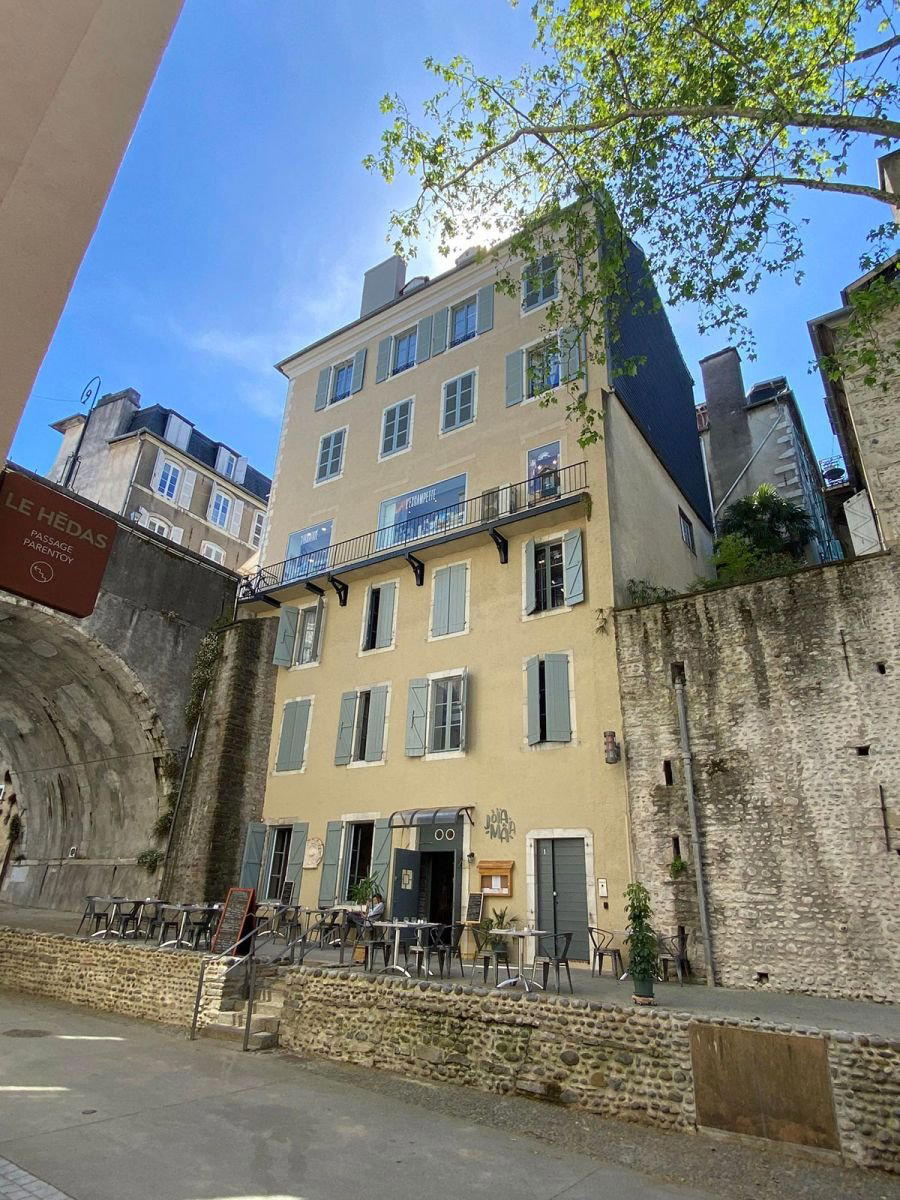
On a quiet street in central Pau, JÒÏA MÂA at 1 Rue du Hedas sits within a city whose food culture is shaped by proximity to the Pyrenees and the Basque borderlands. The name itself signals an identity rooted in place, and the address puts it within reach of Pau's tighter cluster of independent dining rooms. For visitors working through the city's restaurant options, it belongs on the shortlist alongside the area's more-established addresses.

Pearl is the En Primeur Club membership app, where members save venues, book tables and use the concierge.
Where Pau's Ingredient Geography Becomes the Menu
Pau occupies a particular position in southwestern French cooking that doesn't get enough credit outside the region. The city sits at the foot of the Pyrenees, with the Atlantic Basque Country to the west and Gascony spreading north and east. That geography translates directly into a larder that most French cities would struggle to match: aged sheep's milk cheeses from the Ossau valley, jambon de Bayonne cured in the mountain air, Basque peppers, river trout, foie gras from the Gers, and lamb from plateau farms where altitude determines flavor. Any serious restaurant in this city has a shorter supply chain than its Parisian equivalents and, if it chooses to, can build an entire menu from producers within an hour's drive.
JÒÏA MÂA, at 1 Rue du Hedas in central Pau, operates within that context. The name carries regional inflection, a deliberate signal of identity in a city where the most interesting dining rooms tend to anchor themselves to place rather than trend. The address puts it in one of Pau's older central streets, the kind of location where independent restaurants find long-term footing rather than seasonal turnover.
The Rue du Hedas Setting
Rue du Hedas is one of Pau's more characterful central streets, part of a compact grid of lanes that connect the area around the historic château to the city's main commercial arteries. Approaching on foot, the scale is immediately domestic, narrow facades, stone detail, the occasional iron balcony. It's the physical opposite of a purpose-built restaurant district, which is precisely why independent kitchens tend to cluster here rather than on the broader boulevards. A room on this street signals a certain self-confidence: the kitchen is the draw, not the footfall.
Pau's dining scene has historically been quieter than its Basque neighbors across the border, but in recent years a cluster of independent, ingredient-focused rooms has given the city a more defined food identity. L'Interprète works in the creative register, L'Ossau holds the traditional cuisine ground, and Jumo & Co occupies the modern end of the spectrum. Maison Ruffet at Villa Navarre operates at the upper end of the city's formal dining tier. JÒÏA MÂA sits within this emerging cohort of places that take Pau's ingredient geography seriously as a starting point for the plate.
Sourcing as Editorial Stance
In southwestern France, the question of sourcing isn't a marketing position, it's a structural fact. The region produces some of the most geographically specific ingredients in France, and the leading kitchens here treat proximity not as virtue signaling but as a practical advantage. Ossau-Iraty cheese, with its AOC status protecting both the breed and the mountain pasture, is a case in point: the terroir is the recipe. The same logic applies to the valley's trout, the local piperade tradition, and the foie gras that moves through Gers farms into Béarn kitchens with minimal intermediary steps.
Restaurants that choose to anchor menus to this supply chain are making a different argument than those that import luxury ingredients from distant regions. They are saying that the most interesting cooking in this corner of France is already sitting in the market at the bottom of the hill. That editorial stance, when executed well, produces food that reads as specific to its geography in a way that technique-led cooking from generic luxury ingredients rarely does. It's the same logic that animates the leading Pyrenean-foothills kitchens, and it connects restaurants in Pau to a broader tradition of French regional cooking where place legibility is the primary measure of quality.
This is the tradition that houses like Bras in Laguiole, a kitchen that built its entire reputation on Aubrac plateau sourcing, have proven can carry serious critical weight. The same argument, applied to Béarnaise and Basque ingredients, has room to produce something similarly specific in Pau. Mirazur in Menton made the Mediterranean garden the organizing principle of its menu; Flocons de Sel in Megève works through the Alpine pantry. Southwestern France has the raw material to support the same depth of argument.
Pau's Dining Tier and Where JÒÏA MÂA Fits
Pau's restaurant market is not stratified in the way that larger French cities are. There is no dominant haute cuisine corridor, no cluster of multi-Michelin tables setting the price ceiling. Instead, the city's more serious kitchens operate in a mid-to-upper-independent tier, where the differentiator tends to be sourcing clarity, menu discipline, and room character rather than formal service codes or lengthy tasting formats. Les Papilles Insolites represents the more casual end of Pau's independent dining, while Maynats, at the €€€ tier, anchors the creative upper bracket.
This market structure means that individual rooms carry more weight than they would in a city with a deeper dining bench. A well-executed, ingredient-rooted kitchen in Pau doesn't have to compete against dozens of equivalent alternatives; it occupies a distinct position and, if consistent, builds a loyal local following alongside traveling visitors who have worked out that the city's food geography is worth a dedicated trip. For broader context on France's top-tier kitchens, the comparison set ranges from Alléno Paris au Pavillon Ledoyen to AM par Alexandre Mazzia in Marseille, both of which demonstrate what happens when regional identity meets formal ambition. Closer in format to Pau's scale, Auberge de l'Ill in Illhaeusern and Au Crocodile in Strasbourg show how Alsatian kitchens have built durable identities through regional ingredient specificity over decades.
Planning a Visit
JÒÏA MÂA is located at 1 Rue du Hedas, 64000 Pau, in central walking distance of the château quarter and the main covered market. Pau's compact centre means that combining a morning market visit with an afternoon or evening table is direct from the same central base. Given the limited data currently available on booking methods, hours, and pricing, visitors are advised to contact the restaurant directly or check current listings before planning. Pau is served by its own airport with connections to Paris, and the TGV network links the city to Bordeaux in under two hours, making it a viable addition to a broader southwestern France itinerary. For a fuller picture of where JÒÏA MÂA sits alongside the city's other serious kitchens, the EP Club Pau restaurants guide covers the broader scene.
Frequently asked questions
Where do I go for JÒÏA MÂA?
JÒÏA MÂA is located at 1 Rue du Hedas, 64000 Pau, France, Pau.
Is JÒÏA MÂA a good choice for dinner near Pau's château?
JÒÏA MÂA at 1 Rue du Hedas sits within central walking distance of Pau's historic château quarter, making it one of the more convenient options in that part of the city for a considered sit-down meal. Pau's dining scene lacks the stratified haute cuisine tier you find in Bordeaux or Toulouse, which means mid-tier restaurants here carry more of the local cooking identity, and JÒÏA MÂA's ingredient focus aligns with that character.
What's the best thing to order at JÒÏA MÂA?
JÒÏA MÂA sits in Pau, a city whose surrounding region supplies some of southwestern France's most geographically specific produce, Pyrenean lamb, Béarn vegetables, Basque-inflected charcuterie. Dishes that draw directly on that local supply chain are the ones worth prioritising. Given the venue's position near Pau's central covered market, market-led daily specials are a strong indicator of what the kitchen is working with at its freshest.
Can I walk in to JÒÏA MÂA?
JÒÏA MÂA is located at 1 Rue du Hedas in central Pau, within easy walking distance of the château quarter. Walk-in availability is not confirmed publicly, and for a restaurant operating on Rue du Hedas, one of Pau's more characterful central lanes, demand on weekends and market days can be higher than the street's low profile suggests. Contacting the venue directly before visiting is the practical approach.
What's the signature at JÒÏA MÂA?
The defining characteristic at JÒÏA MÂA appears to be sourcing as a structural commitment rather than a decorative claim, using the produce geography of southwestern France, which stretches from the Pyrenean foothills into the Béarn and Basque hinterland, as the primary editorial force behind the menu. In a city like Pau, where the covered market anchors daily cooking culture, that orientation shapes what ends up on the plate more than any single dish or technique.
Do they accommodate allergies at JÒÏA MÂA?
Specific allergy policies for JÒÏA MÂA are not published online. The venue is at 1 Rue du Hedas, 64000 Pau, reaching out ahead of your visit is the only reliable way to confirm what the kitchen can accommodate, particularly for menus built around shifting seasonal produce from the surrounding region.
| Venue | Cuisine | Price | Awards |
|---|---|---|---|
| JÒÏA MÂAThis venue (the venue you are viewing) | Seasonal French Bistro | $20–30 | Not listed |
| Jumo & Co | Modern French Bistro | $30–50 | Michelin Bib Gourmand |
| Maynats | Modern French with Japanese Influences | $50–100 | Michelin Plate · Gault & Millau Remarkable Restaurant |
| Omnivore | Modern French Bistro | $30–50 | Michelin Bib Gourmand |
| L'Ossau | Classic French Bistro | $30–50 | Michelin Plate |
| Les Papilles Insolites | French Bistro with Natural Wines | $30–50 | Not listed |
Continue exploring
More in Pau
Restaurants in Pau
All restaurants in Pau →
Hotels in Pau
All hotels in Pau →

Details
- Quiet
- Cozy
- Modern
- Casual Hangout
- Date Night
- Standalone
- Extensive Wine List
- Local Sourcing
- A La Carte
- Vegetarian Friendly
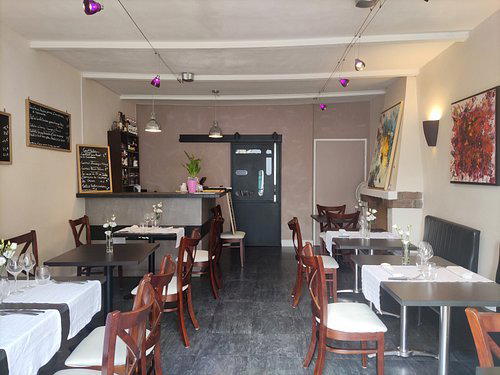
Friendly and relaxed, set on a quiet central street with a small dining-room feel.