
Michelin Guide Plate · Michelin Plate
Our verdict
On Tras Street in Tanjong Pagar, Ingleside positions itself within Singapore's tighter tier of owner-chef European restaurants, where in-house fermentation, charcoal work, and aged meats define the menu's direction. The room carries marble flooring, leather banquettes, and dark wood panelling, creating a setting that reads more Mayfair private dining than tropical Southeast Asia. Dishes like carabineros grilled over beef fat and truffle brioche with miso vinegar signal a kitchen that moves between European tradition and controlled Asian inflection.

Pearl is the En Primeur Club membership app, where members save venues, book tables and use the concierge.

The menu
What to order
- Wagyu Picanha
- Iberico Chuletero
- Hokkaido Scallops
Tras Street and the Case for Owner-Chef European Dining in Singapore
Singapore's European restaurant tier has split decisively over the past decade. On one side sit the grand tasting-menu rooms, the three-Michelin-star operations like Odette and Les Amis, where the ceremony is as considered as the cooking. On the other sits a quieter cohort of owner-chef rooms that operate with smaller footprints, less institutional formality, and a cooking vocabulary that folds Asian pantry instincts into a European backbone. Ingleside, at 49 Tras Street in Tanjong Pagar, belongs to the second group. The neighbourhood itself matters here: Tras Street runs through a cluster of shophouses that have accumulated some of the city's more interesting independent restaurants, a different energy from the hotel dining rooms and Orchard Road addresses that dominate European fine dining elsewhere in Singapore.
The Room: What You Read Before the Menu Arrives
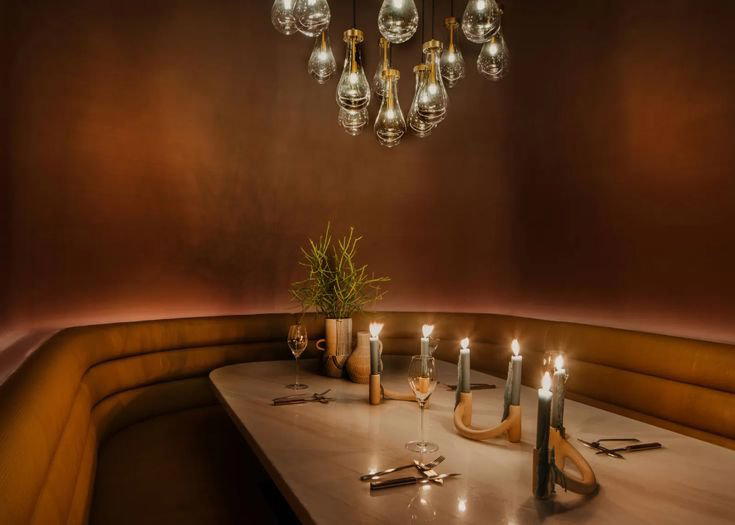
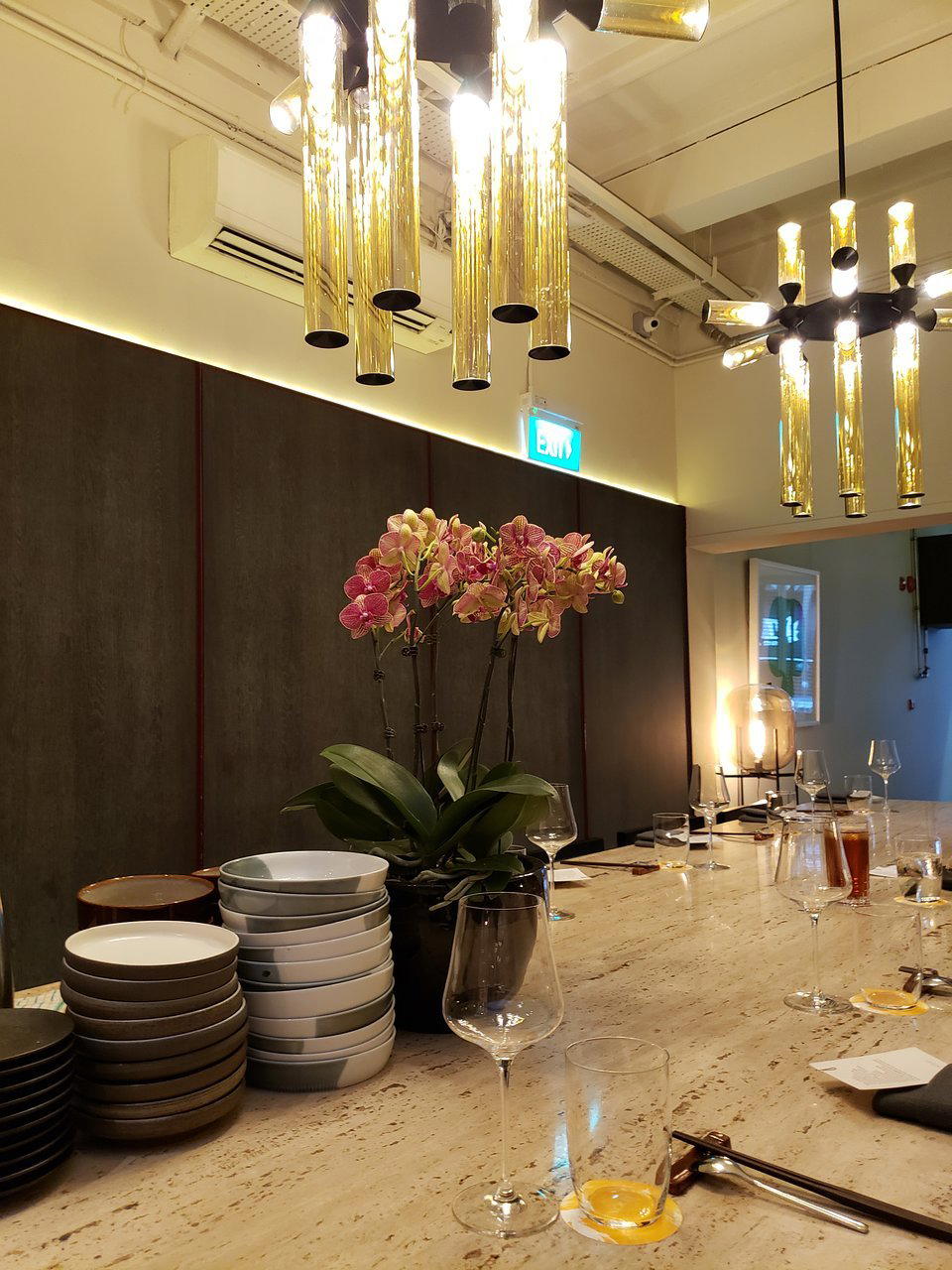
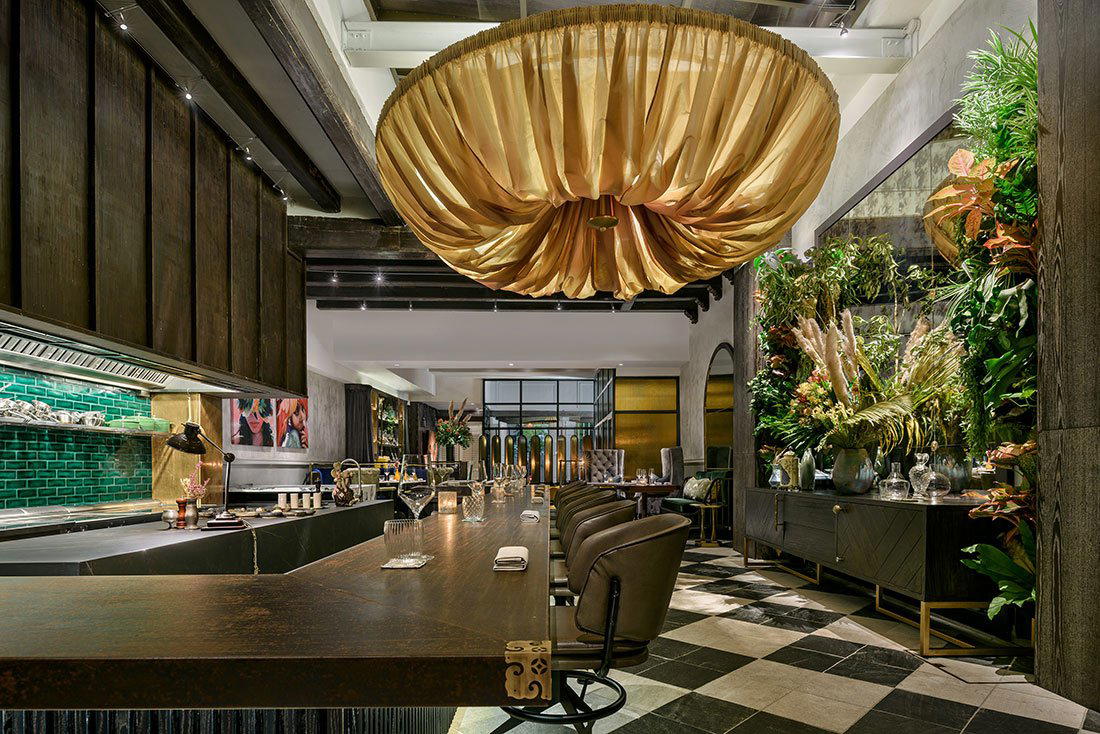
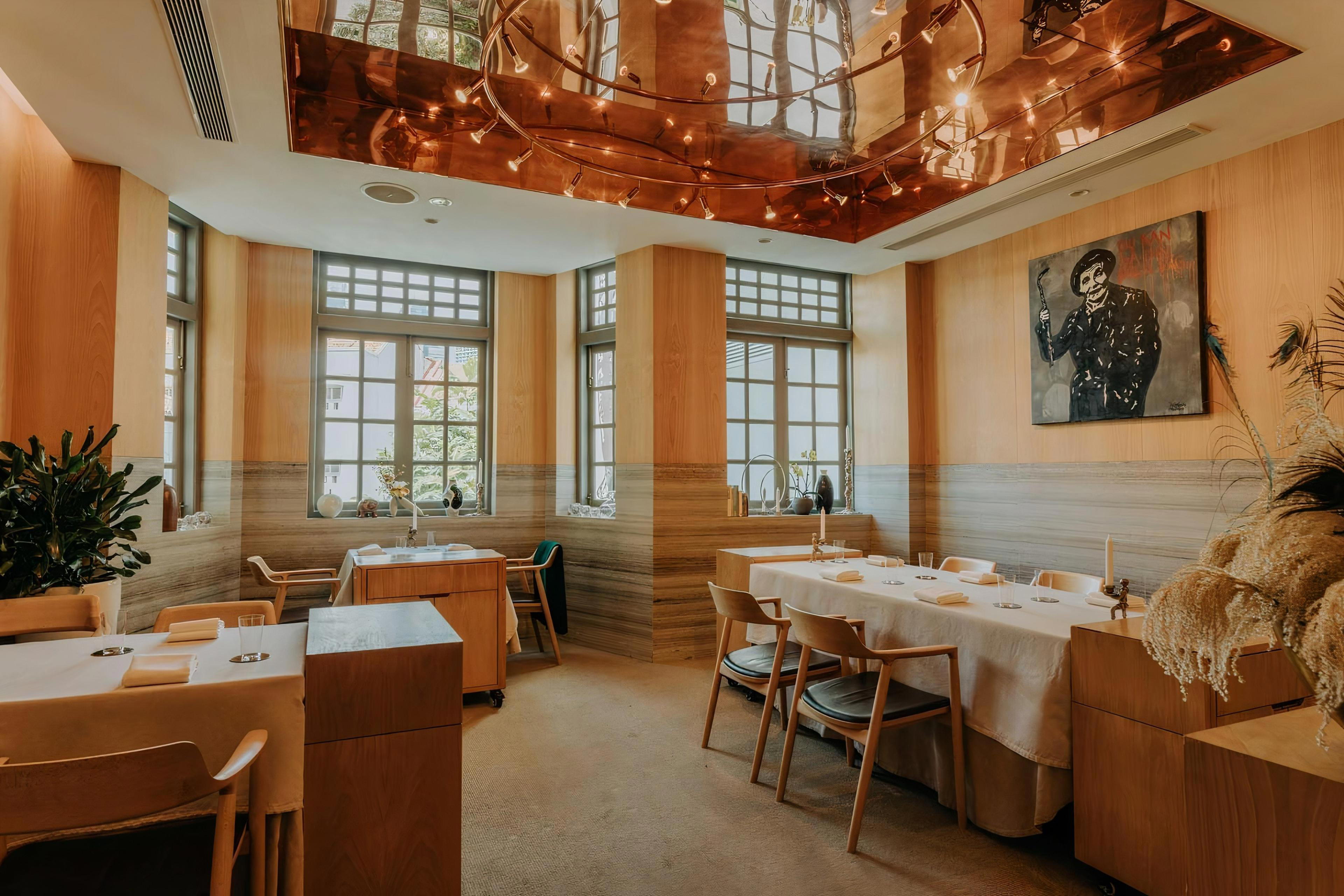
The interior at Ingleside communicates its intentions clearly. Marble flooring, leather banquettes, and dark wood panelling form a palette that errs toward classic European dining room rather than the pared-back Scandinavian minimalism that characterises Zén or the transparent modernism at Jaan by Kirk Westaway. The warmth the materials generate is deliberate: this is not a room trying to disappear behind its food. It has a considered visual weight that positions the experience squarely in the tradition of the European dining room rather than the exhibition kitchen. Whether you read that as a statement of confidence or conservatism probably depends on what you came for. What it does accomplish is a sense of occasion that doesn't require ceremony to sustain itself.
How the Kitchen Thinks: Fermentation, Char, and Controlled Richness
The menu's architecture at Ingleside reflects a specific set of technical preoccupations. Fermented ingredients appear with regularity, connecting the kitchen's output to a broader movement in European cooking that has taken fermentation from a niche interest to a structural tool. Charcoal and live-fire technique run through the grilled section, where the kitchen uses wood and fat as flavouring agents rather than simply heat sources. In-house meat ageing rounds out the technical program, placing the restaurant among a group of Singapore kitchens, alongside Meta, that treat primary ingredient transformation as a kitchen discipline rather than a supply-chain convenience.
Carabineros preparation is the most discussed evidence of how these techniques interact. When the large red prawns are charcoal-grilled, the kitchen introduces beef fat into the process to amplify the naturally rich tomalley in the prawn's head. The result is a dish built on layered fat and umami rather than brightness or acidity, a deliberate choice that puts richness over restraint. Equally revealing is the truffle brioche served with miso vinegar: the pairing of an overtly European luxury ingredient with fermented Japanese acidity is not fusion in any superficial sense. It is a considered technique decision, using vinegar's cutting quality and miso's depth to prevent the brioche from becoming cloying. Dishes like these appear at comparable European rooms in Hong Kong, such as 8½ Otto e Mezzo Bombana, and in Paris at places like Alléno Paris au Pavillon Ledoyen, where fermentation and extract techniques have reshaped classical French structure from within.
The Wine Dimension: What an Owner-Chef Room Can Do With a Cellar
Editorial angle for any serious European restaurant in Singapore eventually turns to wine, and owner-chef rooms have a structural advantage here that larger hotel operations rarely replicate. When the person cooking the food is also the person running the business, wine selection tends to be a personal act rather than a procurement exercise. At Ingleside, the interplay between the kitchen's flavour logic and a wine program has clear implications: a menu built around fermented acidity, charcoal richness, and aged meat creates specific demands on a cellar. The miso vinegar acidity in the brioche dish, for instance, calls for wines with textural weight and enough fruit concentration to hold their ground, the kind of argument for serious Burgundy or structured white Rhône that a sommelier-led room would frame in diplomatic language. An owner's room can simply put the bottle on the table. For context on how comparable European rooms in other cities think about cellar depth relative to kitchen ambition, the programs at Le Bernardin in New York and Louis XV in Monte Carlo represent the formal end of that continuum; Ingleside sits at an altogether more intimate scale, but the underlying logic of matching cellar selection to kitchen philosophy applies at every tier.
Where Ingleside Sits in the Singapore Dining Picture
Singapore's tasting-menu European tier is well mapped. The Michelin-starred rooms at the leading, a layer of chef-driven innovative rooms like Meta, and the newer wave of produce-led independent restaurants. Ingleside operates in the space between formal tasting menu and the more casual neighbourhood European bistro, a position it shares with a handful of Tanjong Pagar and Chinatown-fringe addresses that have accumulated local reputations without the awards scaffolding of their Michelin counterparts. That positioning has both advantages and costs. The advantage is flexibility: an owner-chef room without a starred reputation to protect can adjust a menu quickly, pursue ingredients on instinct, and price the experience for regulars rather than for the anniversary dining market. The cost is visibility, particularly for international visitors who tend to follow Michelin and World's 50 Best signals when building a Singapore itinerary. For those planning a broader stay, our full Singapore restaurants guide maps the whole tier, including hotels at our Singapore hotels guide, bars across the city at our Singapore bars guide, and complementary experiences at our Singapore experiences guide.
Planning Your Visit
Ingleside is located at 49 Tras Street, within walking distance of Tanjong Pagar MRT station. For a room operating in this tier, securing a reservation ahead of time is advisable: owner-chef rooms with a local reputation and limited covers fill through word-of-mouth before they fill through walk-in traffic. For those interested in a broader evening in the area, the Tanjong Pagar neighbourhood carries a density of bars and smaller dining rooms that makes it one of Singapore's more satisfying districts for an extended night out; our Singapore bars guide and Singapore wineries guide can extend the itinerary further. Comparable owner-chef European experiences in other cities, from Lazy Bear in San Francisco to Emeril's in New Orleans or Alinea in Chicago, reward the same advance planning logic: availability at this scale moves through reputation, not marketing.
Frequently asked questions
Where do I go for Ingleside?
Ingleside is located at 49 Tras Street, Singapore.
Is Ingleside Michelin-listed?
Ingleside has received recognition including: Outfitted with marble flooring, leather banquettes and dark wood panelling, this place exudes warmth and sleekness. The owner-chef imbues European fare with creative twists in a menu that features fermented foods, chargrilled dishes and an ….
What should I eat at Ingleside?
The two most discussed preparations are the charcoal-grilled carabineros finished with beef fat to amplify the tomalley's richness, and the truffle brioche paired with miso vinegar for earthy, fermented depth. Both dishes represent the kitchen's core method: applying a specific technique to redirect a familiar ingredient toward something less expected. Start there and let the fermented and charcoal-grilled sections of the menu guide the rest of the meal.
What's the best way to book Ingleside?
For an owner-chef room at 49 Tras Street with an established local following, arriving in person to enquire or asking your hotel concierge to make contact directly are the most reliable approaches. Tanjong Pagar rooms of this type often fill mid-week as well as weekends, so plan ahead rather than assuming walk-in availability.
What has Ingleside built its reputation on?
Ingleside's standing in Singapore's independent European dining scene rests on a specific combination: in-house meat ageing, a kitchen organised around fermentation, and charcoal technique applied with enough precision to treat carabineros and beef fat as complementary rather than competing elements. The room itself, fitted with marble floors, leather banquettes, and dark wood panelling, reinforces that this is a considered operation rather than a casual neighbourhood spot. It sits in the tier of chef-driven independent rooms that compete on technical identity rather than brand recognition.
How does Ingleside handle allergies?
Given the kitchen's reliance on fermented ingredients, aged meats, and preparations like miso vinegar, guests with specific dietary requirements should check the venue's official channels before booking. Owner-chef rooms at this level in Singapore typically handle requests case by case rather than through a fixed set menu alternative.
What makes the beef fat technique at Ingleside worth understanding before you order?
When the kitchen grills carabineros, the chef adds beef fat to the fire to intensify the tomalley, the prawn's hepatopancreas, through rendered richness rather than seasoning alone. This is a deliberate layering of animal fats across species, a technique more associated with open-fire cooking traditions than European fine dining in Singapore. Knowing this before you order explains why the dish reads differently from standard shellfish preparations at comparable Tanjong Pagar restaurants.
Price and Recognition
Comparable venues nearby, for context on price, style, and recognition.
| Venue | Cuisine | Price | Awards | Notes |
|---|---|---|---|---|
| InglesideThis venue (the venue you are viewing) | Modern European Grill | $100–150 | Michelin Guide Plate · Michelin Plate | Not listed |
| Mag's Wine Kitchen | Contemporary European with Japanese Fusion | $50–100 | Michelin Plate | CHINATOWN, Contemporary European with Japanese Fusion |
| Flutes Singapore | Modern European Fine Dining | $50–100 | World's Best Wine Lists Awards WBWL 2-Star | CITY HALL, Modern European Fine Dining |
| Osteria Mozza | Californian-Italian | $50–100 | Michelin Guide Plate · Michelin Plate | SOMERSET, Californian-Italian |
| Open Farm Community | Farm-to-Table Fusion | Not listed | Michelin Plate | RIDOUT, Farm-to-Table Fusion |
| Le Bon Funk | Modern European Small Plates | $50–100 | Not listed | CHINATOWN, Modern European Small Plates |
Recognition history
Dated appearances from independent guides and award organizations, with the underlying list record or original source where available.
Michelin Plate
Michelin · 2026 Michelin Plate
Michelin Guide Plate
Michelin Guide
Continue exploring
More in Singapore
Restaurants in Singapore
All restaurants in Singapore →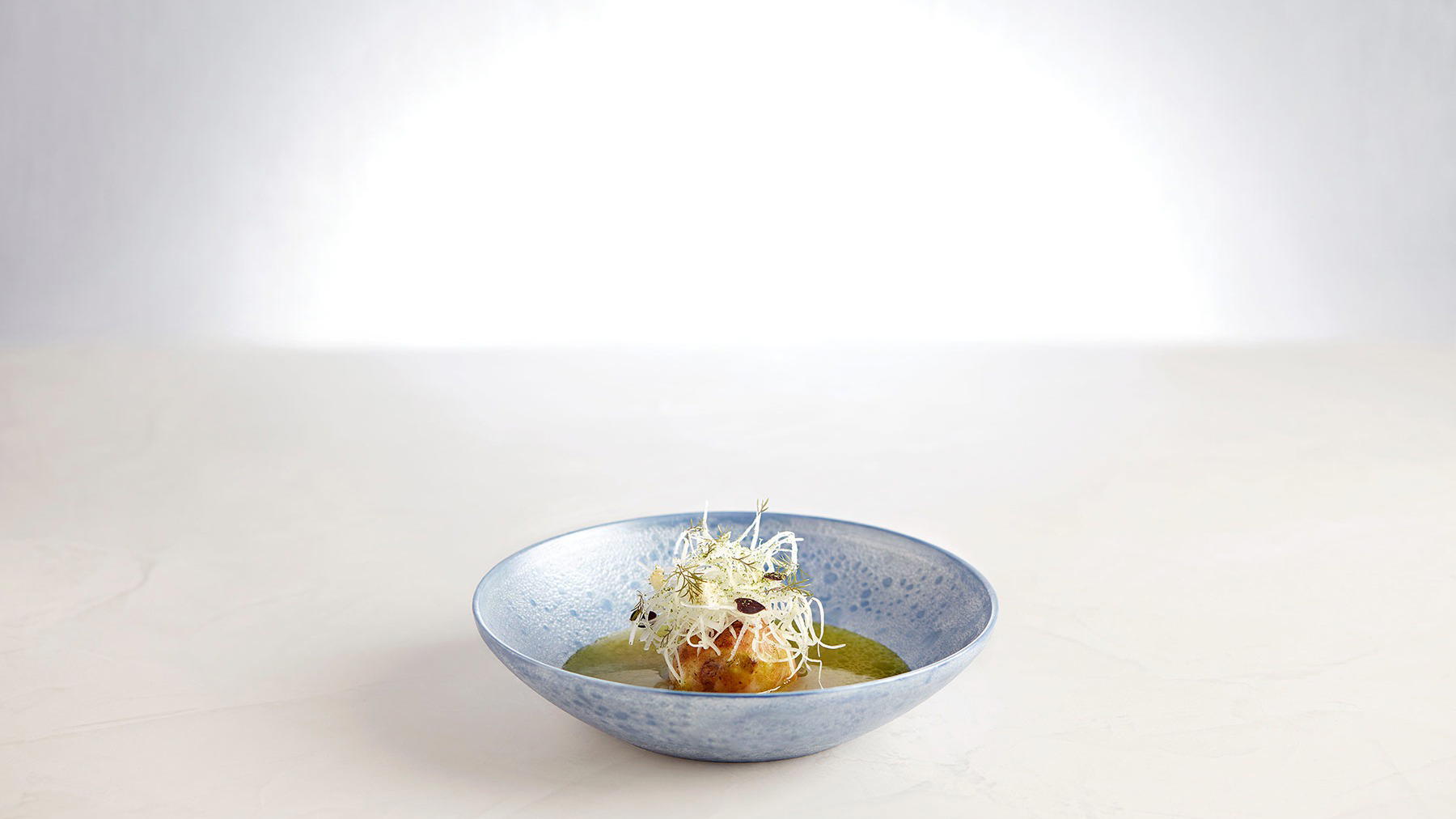
Bars in Singapore
All bars in Singapore →
Details
- Warm
- Elegant
- Cozy
- Modern
- Intimate
- Date Night
- Special Occasion
- Open Kitchen
- Local Sourcing
- A La Carte
- Set Menu
Current opening hours
- Monday
- Closed
- Tuesday
- 6–11 PM
- Wednesday
- 12–3 PM, 6–11 PM
- Thursday
- 12–3 PM, 6–11 PM
- Friday
- 12–3 PM, 6–11 PM
- Saturday
- 6–11 PM
- Sunday
- Closed
Hours can change for holidays and private events. Hours as of .
Warm and inviting atmosphere with modern interior featuring marble flooring, leather banquettes, dark wood panelling, and an open kitchen wood-fired grill.