Husk

The Good Food Guide GFG Very Good
Our verdict
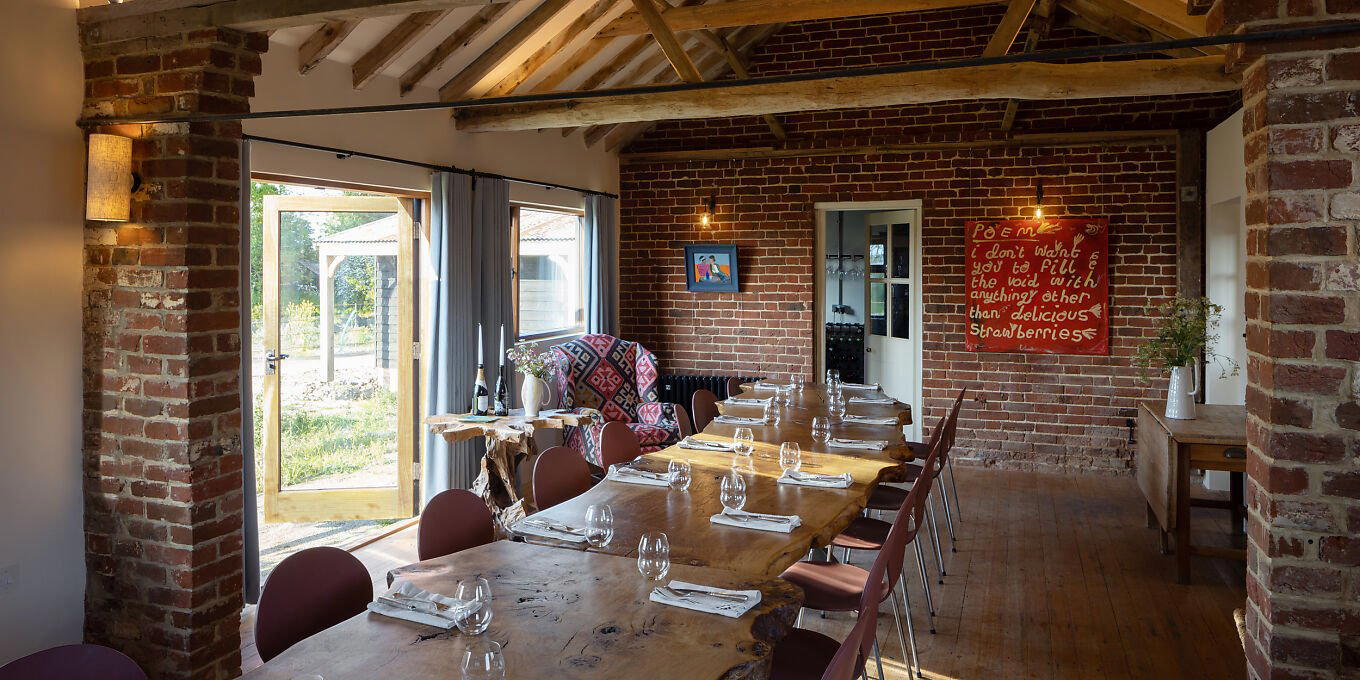
A 16-seat Friday-and-Saturday supper club in a renovated east Suffolk barn, Husk draws directly from its own homestead and local producers including Orford-based Pinney's for a menu that shifts with the seasons. Chefs Joey O'Hare and Katy Taylor cook contemporary British food with a strong regional identity, from Suffolk-reared pork to foraged flowers and low-intervention wines.

Pearl is the En Primeur Club membership app — saves, bookings, and concierge access live there. Same editors, same standards.
- Address
- Walnut Tree Farm, Thorington, Halesworth IP17 3QP, United Kingdom
- Phone
- +44 7961 570949
- Website
- huskthorington.co.uk
- Directions
- Get directions
The menu
What to order
- Sutton Hoo chicken and quinoa with marrow relish
- Brown butter cakes
- Cheesy choux pastry bites
- Bramley sorbet with apple brandy
A Lane in East Suffolk, a Barn, and a 16-Seat Supper Club
The approach sets the tone before you've tasted anything. A farmland-hugging lane through east Suffolk deposits you, if you've booked ahead, at Walnut Tree Farm in Thorington: a renovated barn running 16 covers across two evenings a week. This is not a restaurant in any conventional commercial sense. It belongs to a format that has grown steadily across rural Britain over the past decade, where small-scale supper clubs operate with the discipline and sourcing rigour of serious fine dining but without the overheads or the theatre of a full-service restaurant. The trade-off, from the diner's side, is a more fixed proposition: you eat what's on, you eat with whoever else has booked, and you plan ahead.
That format has produced some of the more interesting cooking in rural England. See also hide and fox in Saltwood or the producer-focused ambition of Moor Hall in Aughton for different expressions of the same underlying instinct: small kitchens, named suppliers, and menus that reflect a specific place rather than a generic idea of British food. For the broader regional picture, our full Thorington restaurants guide maps the area's dining options in more detail.
Where the Ingredients Come From
Suffolk's food provenance is the editorial spine of every plate at Husk. The sourcing here is not decorative: it is structural. Eggs come from the home flock. Pancetta is cured in-house. Bread is baked on site, a hybrid the kitchen calls 'sour-da', part sourdough, part soda bread, served oven-warm with butter from Bungay. The smoked cod's roe on the opening snacks and the smoked mackerel that drives the signature pork dish both come from Pinney's of Orford, a smokehouse whose fish products carry a strong regional identity along the Suffolk coast.
That Pinney's mackerel appears in what is arguably the most telling dish on the menu: a Suffolk-inflected take on vitello tonnato, where Blythburgh pork tenderloin replaces veal and smoked mackerel steps in for the traditional tuna sauce. The plate is sharpened with pink gooseberries and brine-fermented plum olives for acidity, and finished with peppery nasturtium. It is a dish that could only come from this particular patch of England, assembled from ingredients that are either grown on site, foraged locally, or sourced from producers within a short radius. The result reads as clever and precise without performing effort.
In summer, the sourcing extends to the kitchen garden and beyond: borage, nasturtium, and marigold add colour to a Suffolk-framed take on salade lyonnaise alongside eggs from the home flock. In cooler months, game from the surrounding area takes over, with wild venison and line-caught sea bass appearing as seasons shift. The menu is not written seasonally as a marketing gesture; it is constrained by availability, which is a meaningfully different thing.
The Format and the Flow
Husk runs on Friday and Saturday evenings only. Cocktails at 7pm are the entry point, typically seasonal sours: damson in winter, apple and elderflower in summer, egg white-topped in both cases. Snacks arrive alongside them, including a pissaladière tart and the seedy crackers with Pinney's smoked cod's roe that signal the kitchen's sourcing approach before the formal menu begins.
The progression through the meal follows a conventional structure, from lighter starters through a main and into dessert, but the references are eclectic. The vitello tonnato riff sits alongside summer fool topped with gooseberry sherbet and lavender shortbread, or a whey caramel custard tart with plum ice cream in autumn and winter. A blood-orange cake served with St Jude's ice cream, the latter a soft cheese from the local White Wood Dairy, pulls together two Suffolk producers in a single dessert course. The cooking is contemporary in technique but not provocative in intention; it operates in the register of assured craft rather than avant-garde gesture.
For the wine, Katy Taylor works from a short list of low-intervention and often organic bottles, matched loosely to the month's menu. A 2022 'Skyphos' Assyrtiko from the Artisans Vignerons de Naoussa cooperative in northern Greece has appeared on recent menus, the kind of selection that reflects genuine engagement with the natural wine world rather than a reflexive list of the same familiar labels.
Where Husk Sits in the Wider Conversation
The rural fine dining format in Britain now spans a considerable range. At one end sit destination restaurants with significant investment and international recognition: L'Enclume in Cartmel, Gidleigh Park in Chagford, or Le Manoir aux Quat' Saisons in Great Milton, each requiring overnight stays and weeks of forward planning. At the other end sit pub dining rooms and village gastropubs, of which Hand and Flowers in Marlow remains the most cited benchmark. Husk occupies a narrower band between those poles: a domestic-scale operation with the sourcing discipline of a serious kitchen, running a fixed menu for a tiny room.
That format has specific implications for the diner. There is no à la carte fallback. Dietary requirements need to be communicated at booking. The experience is closer to a private dinner than a restaurant service, which is part of its appeal and also its limitation. Anyone expecting the service architecture of The Ledbury in London or the tasting-menu formality of Midsummer House in Cambridge will find Husk occupies different territory entirely. That is not a criticism. It is an accurate description of the category.
Planning a Visit
Husk sits at Walnut Tree Farm, Thorington, near Halesworth in east Suffolk, IP17 3QP. It runs on Friday and Saturday evenings, with cocktails from 7pm. The room holds 16 people, which means bookings move quickly and forward planning is not optional. Given the rural location, arriving by car is the practical default; east Suffolk is not well served by public transport in the evenings. For those combining the visit with a wider trip to the area, accommodation options are mapped in our full Thorington hotels guide, and the surrounding area's bars and wineries are covered in our Thorington bars guide, wineries guide, and experiences guide.
Frequently asked questions
Is Husk a family-friendly restaurant?
Husk operates as a 16-seat supper club running Friday and Saturday evenings only, with a set format beginning at 7pm. The intimate barn setting and adult-led tasting progression make it better suited to adults than young children. Families with older children who are comfortable with a long, multi-course dinner format may find it manageable, but it is not structured as a family dining venue.
How would you describe the vibe at Husk?
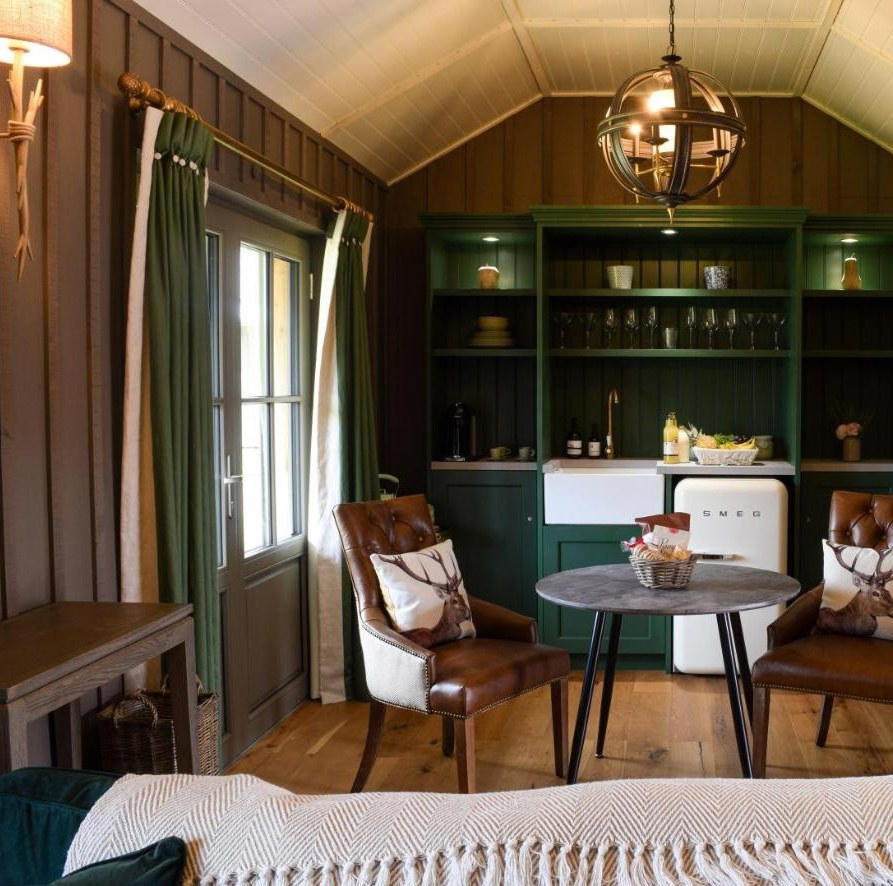
Think farmhouse dinner party rather than formal restaurant: cocktails at 7pm in a renovated barn at Walnut Tree Farm, Thorington, with just 16 seats and the two chefs, Joey O'Hare and Katy Taylor, cooking the meal themselves. The tone is relaxed and personal without being casual about the food. The sourcing is conspicuously local — eggs from the home flock, smoked fish from Pinney's in Orford — which gives the evening a grounded, specific sense of place.
Has Husk won any awards?
Husk has received recognition including: Sooner or later, the farmland-hugging lane you’re following at a rural pace through east Suffolk will drop you (if you've booked ahead) at an 16-seat supper club run by chefs Joey O’Hare and Katy Taylor. It happens every Friday and Saturday….
What should I eat at Husk?
The menu changes with the season and isn't published in advance, so the honest answer is: whatever O'Hare and Taylor are serving that evening. In summer, look for the Suffolk riff on salade lyonnaise with home-flock eggs and borage, and the pork tenderloin with smoked mackerel sauce and fermented plum olives. The house sourdough-soda bread hybrid, baked to order and served with Bungay butter, is a consistent fixture worth noting.
Where do I go for Husk?
Husk is located at Walnut Tree Farm, Thorington, Halesworth IP17 3QP, United Kingdom, Thorington.
What's the best way to book Husk?
Husk runs on Friday and Saturday evenings only, and given just 16 seats, advance booking is necessary rather than optional. Plan well ahead, particularly for summer dates.
What has Husk built its reputation on?
Husk's reputation rests on two things: tight provenance and quiet technical confidence. Ingredients are drawn from the home farm and a short radius of suppliers — Pinney's smoked fish from Orford, Blythburgh pork, Bungay butter — and the cooking treats those ingredients as the point rather than the backdrop. The 16-seat barn format at Walnut Tree Farm, Thorington keeps the operation small enough that nothing feels delegated, which is the supper club's most consistent credential.
Quick Comparison
Comparable venues nearby, for context on price, style, and recognition.
| Venue | Cuisine | Price | Awards | Notes |
|---|---|---|---|---|
| HuskThis venue — the venue you are viewing | Modern British Farm-to-Table | $150–200 | The Good Food Guide GFG Very Good | Not listed |
| The Old Fire Engine House | Traditional English | $50–100 | The Good Food Guide GFG Good | near Cathedral |
| The Great House | Modern British Fine Dining | $50–100 | Not listed | Lavenham, Babergh District, Suffolk |
| Claridge's Bakery | Modern British bakery & café | Not listed | Not listed | Mayfair |
| Daffodil Mulligan | Modern Irish Fusion | $50–100 | The Good Food Guide GFG Good | St Luke's |
| The Fig Tree | Modern British Fine Dining | Not listed | The Good Food Guide GFG Good | Hurstpierpoint |
Recognition history
Dated appearances from independent guides and award organizations, with the underlying list record or original source where available.
The Good Food Guide GFG Very Good
The Good Food Guide
Continue exploring
More in Thorington
Restaurants in Thorington
Browse all →
Bars in Thorington
Browse all →
Hotels in Thorington
Browse all →
Details
- Romantic
- Quiet
- Rustic
- Cozy
- Elegant
- Date Night
- Special Occasion
- Celebration
- Group Dining
- Private Dining
- Garden
- Standalone
- Design Destination
- Craft Cocktails
- Farm To Table
- Organic
- Local Sourcing
- Garden
- Set Menu
- Family Style
- House Made Cordials
- Local Ales
- Organic Wines
- Vegetarian Friendly
- Organic Focus
- Allergy Accommodating
Intimate and relaxed with gentle lighting, tea lights on the table, log burner in the dining room, and a curated playlist of singer-songwriter classics creating a cozy, hygge-inspired atmosphere.