Holy Carrot


A former pop-up turned permanent Portobello Road fixture, Holy Carrot holds a Michelin Plate (2025) and earns it through open-fire technique and fermentation-forward vegan cooking. The polished-concrete dining room stays calm even when the market outside does not. Chips at lunch, coal-roasted leeks and crispy mushroom wings at dinner — this is plant-based cooking that does not ask for credit.
Pearl is the En Primeur Club membership app — saves, bookings, and concierge access live there. Same editors, same standards.
- Address
- 156 Portobello Rd, London W11 2EB, United Kingdom
- Phone
- +44 20 4580 1425
- Website
- holycarrot.co.uk
- Directions
- Get directions
 Saves & bookings on Pearl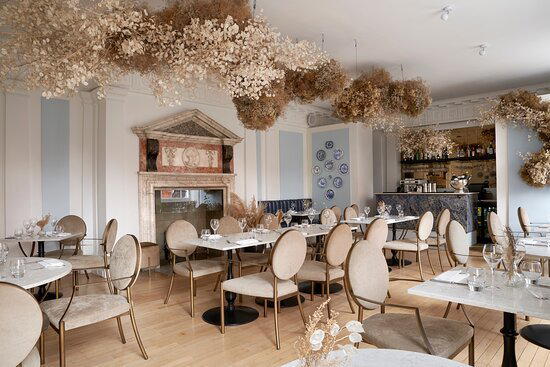
Portobello Road, Seasonality, and the Case for Fire Over Fuss
London's vegan restaurant tier has matured considerably over the past decade. What began as a category defined by substitution — swapping animal proteins for analogues and hoping diners wouldn't notice — has given way to a smaller cohort of kitchens that treat plant-based cooking as a discipline in its own right, structured around technique, seasonality, and restraint rather than novelty. Holy Carrot, on Portobello Road in Notting Hill, belongs to that second generation. It arrived first as a pop-up and supper club before taking a permanent address at 156 Portobello Road, and it now holds a Michelin Plate for 2024 and 2025, recognition that places it inside a credentialled tier of London plant-based dining, even if it operates at a significantly lower price point than the city's ££££ table.
The address matters as context. Portobello Road is, depending on the hour, a Saturday-morning scrum of market stalls and tourists or a quieter residential strip where Notting Hill's money and aesthetic taste become legible in shopfronts and interiors. Holy Carrot occupies the latter register. The corner room is bare and cool: polished concrete, adobe-like white walls, large windows, and a geometric light sculpture above the bar. It reads as expensive minimalism, which in Notting Hill is less a design statement than a neighbourhood default. The frantic energy of the market does not penetrate. On a warm afternoon, the room stays genuinely calm, a point worth noting if you are choosing between a restaurant with outdoor market access and one that offers respite from it.
What Drives the Menu: Fire, Ferment, and the Calendar
The two organising principles of the cooking here are open-fire technique and fermentation, and both reward seasonal produce rather than working against it. Cooking over coals suits vegetables that can hold their structure and develop char: leeks, beetroot, courgettes, artichokes. Fermentation adds the acidity and umami depth that would otherwise be missing without animal fat or stock. Together, they mean the menu changes in character as produce cycles through the year rather than staying fixed around a set of signature preparations.
In practice, this shows up in dishes like coal-roasted leeks with aji romesco, a sauce built on charred peppers and nuts, where the fire does more than heat the vegetable, it transforms its texture and concentrates its sweetness. Beetroot with blueberry and pine nuts reads as a summer-to-autumn combination, the fruit providing acidity when the root vegetable is at its densest. Trombetta courgettes with miso beans and fenugreek is a late-summer plate: the courgette variety holds up to heat better than standard marrows, and the miso brings the fermented depth that ties the dish together. Spicing sits alongside these techniques as a third register: crispy mushroom wings arrive with a buffalo hot sauce built on aji heat, and the kitchen uses fermented chilli preparations that carry more complexity than a straight hot sauce.
This is worth understanding before you visit, because the menu reads differently once you recognise that the flavour architecture is built on technique rather than protein substitution. A plate of barbecued carrot is not a workaround for meat; it is a specific argument about what heat does to a root vegetable over time. The kitchen is making that argument clearly enough that Michelin's inspectors noticed, which for a £ to ££ vegan restaurant on a market street is a meaningful signal about how the cooking is regarded within London's critical establishment. For broader context on what Michelin recognition means across the city's full range of cuisines, our full London restaurants guide covers the city's decorated tables from CORE by Clare Smyth and Restaurant Gordon Ramsay through to the Plate-level addresses like this one.
The Format: Small Plates, Shared Logic
The menu divides into small and large plates, and the intent is clearly towards sharing. This is not an accidental format choice, it suits the range of techniques and produce on offer, and it means a table of two can cover both the char-heavy preparations and the more delicate fermented dishes without committing to a single register. The chef responsible for the cooking is Daniel Watkins, whose name appears in editorial coverage of the restaurant alongside consistent references to low-waste practice and sustainability. The sustainability commitment is present but handled with discretion: it informs sourcing and waste approach without becoming the dining room's dominant message, which is the right call. When sustainability becomes the story, the food often stops being the story.
At lunch, the kitchen also produces what has been described in critical coverage as some of London's better chips. This is a specific and useful data point: a vegan restaurant confident enough in its fundamentals to put a fried potato at the centre of a midday menu is not hedging. The chips are a low-waste argument in themselves, a demonstration that good sourcing and fat temperature matter more than the complexity of the preparation.
Desserts follow the same low-intervention logic. Free-from-refined-sugar options include a chocolate tahini crémeux and a cashew and almond soft serve with koi honey and fennel pollen. These are not afterthoughts, the tahini preparation borrows from the same fermentation-adjacent flavour register as the savoury courses, and the fennel pollen on the soft serve is a detail that signals kitchen attention rather than menu padding.
Drinks and the Bar Collaboration
Above the bar, a geometric light sculpture signals the restaurant's connection to A Bar with Shapes for a Name, the London cocktail programme that has drawn consistent editorial attention for its technically precise, clarified-drink format. The collaboration places Holy Carrot inside a specific moment in London's drinks culture: the shift away from speakeasy theatrics towards transparent technique. Whether the cocktail programme extends across the full menu or represents a more selective collaboration is not confirmed in available records, but the affiliation is a trust signal about the drinks tier the restaurant is operating in. For those whose London visit centres on the drinks scene, our full London bars guide maps the broader bar programme across the city.
Holy Carrot in the Wider Vegan Dining Scene
London's plant-based restaurant tier now spans a wide range of price points and formats, from fast-casual to the kind of produce-driven, technique-heavy cooking that Holy Carrot represents. Within that range, the Michelin Plate places it in a credentialled but accessible bracket, comparable in ambition to addresses like Plates London or Naïfs, and operating at a price tier well below the £££-to-££££ tables where London's decorated kitchens tend to cluster.
Internationally, the ambition to cook plant-based food at this technical level is not limited to London. KLE in Zurich and Légume in Seoul represent the same trajectory in their respective cities: vegan kitchens that position themselves through technique and seasonal produce rather than dietary category. Holy Carrot is London's version of that argument.
For those planning a broader UK trip that extends beyond London, the country's most celebrated rooms, The Fat Duck in Bray, L'Enclume in Cartmel, Moor Hall in Aughton, Gidleigh Park in Chagford, Hand and Flowers in Marlow, and Le Manoir aux Quat' Saisons in Great Milton, operate in a different price tier and format but map a useful picture of the country's restaurant priorities. London's hotel guide, wineries guide, and experiences guide round out the city picture for those building a full itinerary.
Planning Your Visit
Holy Carrot is at 156 Portobello Road, London W11 2EB. The ££ price range puts it at a reasonable midweek or weekend spend for Notting Hill. Lunch is the entry point if you want to test the kitchen at lower commitment, the chips alone have justified the trip for more than one critic. The small-and-large-plates format rewards two or more diners sharing widely rather than ordering individually. The Michelin Plate recognition for both 2024 and 2025 means it has passed the test of consistency, not just an opening-season moment. Booking ahead is advisable, particularly for weekend evenings when Portobello Road foot traffic converts into restaurant demand.
Quick reference:
What Should I Order at Holy Carrot?
The coal-roasted and open-fire preparations are the kitchen's clearest argument: coal-roasted leeks with aji romesco, beetroot with blueberry and pine nuts, and trombetta courgettes with miso beans and fenugreek each show the technique at its most direct. Crispy mushroom wings with buffalo hot sauce represent the fermentation and spice register. At lunch, the chips have drawn specific editorial attention and are worth ordering on their own terms. For dessert, the chocolate tahini crémeux and cashew almond soft serve with koi honey and fennel pollen follow the same low-intervention, high-attention logic as the savoury courses. Sharing across both small and large plates gives the leading picture of the cooking range.
Comparable Options
| Venue | Cuisine | Price |
|---|---|---|
| Holy CarrotThis venue — the venue you are viewing | Vegan | ££ |
| The Ledbury | Modern European, Modern Cuisine | ££££ |
| Sketch, The Lecture Room and Library | Modern French | ££££ |
| CORE by Clare Smyth | Modern British | ££££ |
| Restaurant Gordon Ramsay | Contemporary European, French | ££££ |
| Dinner by Heston Blumenthal | Modern British, Traditional British | ££££ |
Recognition history
Dated appearances from independent guides and award organizations, with the underlying list record or original source where available.
Michelin Plate
Michelin
Michelin Plate
Michelin
The Good Food Guide GFG Good
The Good Food Guide
Michelin Plate
Michelin
Continue exploring
More in London
Restaurants in London
Browse all →
Bars in London
Browse all →
Hotels in London
Browse all →

At a Glance
- Modern
- Trendy
- Elegant
- Sophisticated
- Date Night
- Casual Hangout
- Special Occasion
- Open Kitchen
- Craft Cocktails
- Farm To Table
- Local Sourcing
- Organic
Current opening hours
- Monday
- 12–11 PM
- Tuesday
- 12–11 PM
- Wednesday
- 12–11 PM
- Thursday
- 12–11 PM
- Friday
- 12–11 PM
- Saturday
- 10:30 AM–11 PM
- Sunday
- 10:30 AM–10 PM
Hours can change for holidays and private events. Last verified .
Chic and sophisticated with modern, elegant, earthy interiors featuring polished concrete and light Mediterranean colours, providing a soothing and stylish backdrop.
Know Before You Go
- Getting there
- 156 Portobello Rd, London W11 2EB, United Kingdom