Gus's BBQ
Gus's BBQ sits on Rinaldi Street in Porter Ranch, on the northwestern edge of Los Angeles, serving slow-cooked barbecue to a suburb that has historically been underserved by independent smoke-forward dining. The format suits families and casual groups equally, placing it in a different tier from the high-concept downtown rooms but filling a distinct gap in the city's broader dining map.
Pearl is the En Primeur Club membership app — saves, bookings, and concierge access live there. Same editors, same standards.
- Address
- 20179 Rinaldi St Suite 150, Porter Ranch, CA 91326
- Phone
- (818) 341-3000
- Website
- gussbbq.com
- Directions
- Get directions
 Saves & bookings on Pearl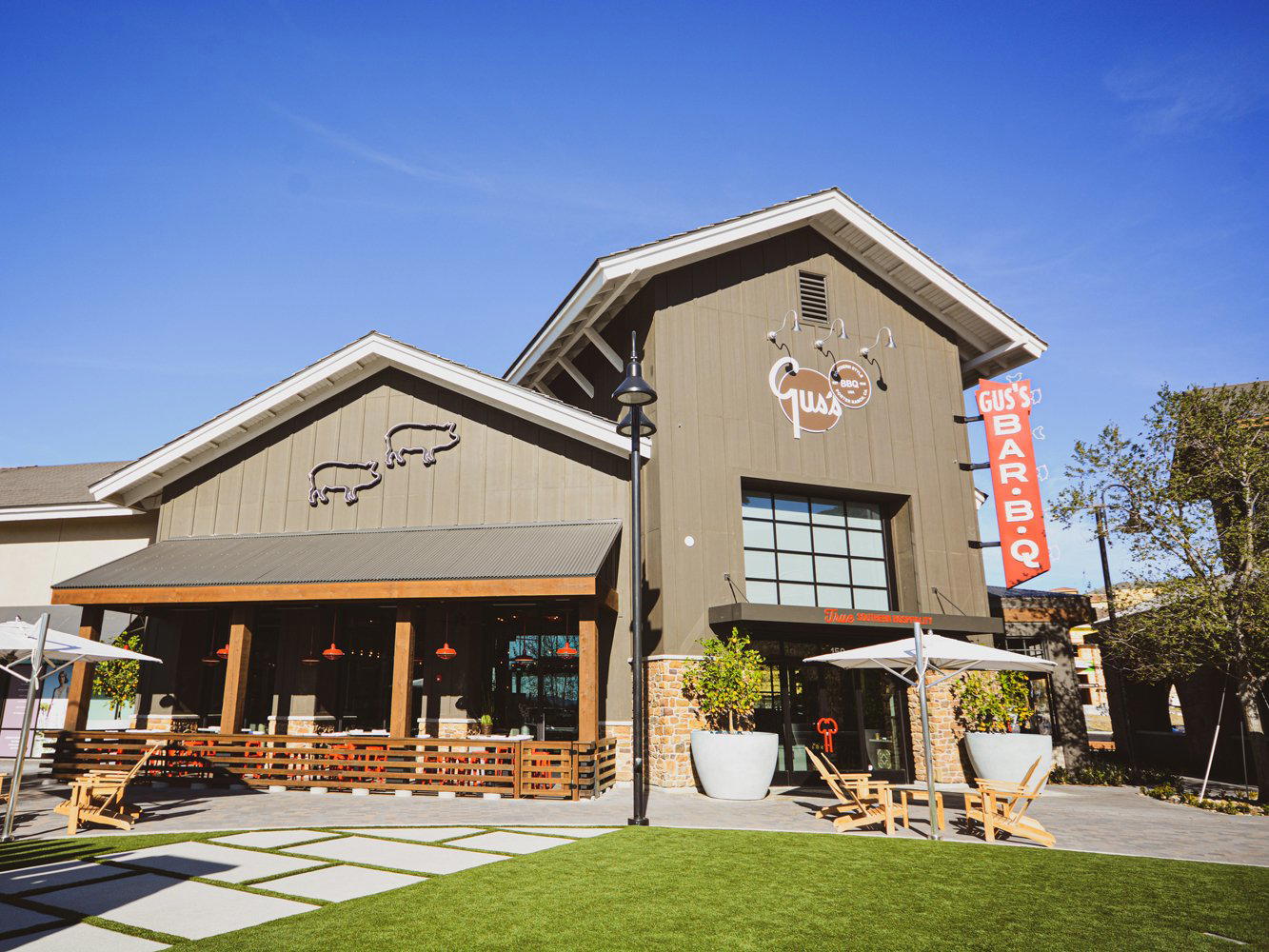
Smoke on the Suburban Fringe: BBQ in the Wider Los Angeles Context
Los Angeles has never been a canonical American barbecue city. The tradition here arrived in fragments, transplanted pitmasters, regional hybrids, and the occasional Texas-trained operator settling into strip-mall units far from the city's editorial center of gravity. Gus's BBQ is a Southern BBQ restaurant in Porter Ranch, Los Angeles, with. That pattern is precisely the one Gus's BBQ on Rinaldi Street in Porter Ranch fits. The address, a suite inside a suburban retail complex in the far northwest of the San Fernando Valley, is not where food press typically looks, but it reflects how working barbecue actually functions in sprawling car-dependent metros: close to residential density, oriented toward takeout and family dining, and priced for repeat visits rather than occasion spending.
Porter Ranch sits at the edge of Los Angeles County, a planned community that grew significantly through the 2000s and 2010s. The dining scene there is composed largely of chain restaurants and anchored retail-adjacent operators. An independent barbecue unit in that context serves a function that is genuinely local: it supplies slow-cooked protein to a neighborhood that would otherwise drive 20-plus minutes to reach comparable independent options. That geographic role is worth holding in mind when assessing where Gus's BBQ belongs in the city's wider food story.
Where American BBQ Sits in the LA Spectrum
To understand what Gus's BBQ is, it helps to be clear about what it is not. Los Angeles's most-discussed restaurants in 2024 and 2025 cluster around Michelin recognition and tasting-menu formats. Providence anchors contemporary seafood on Melrose. Kato holds a Michelin star for its New Taiwanese format in West LA. Hayato operates at the two-star level with Japanese kaiseki precision. Somni and Osteria Mozza each occupy different registers of the city's serious dining bracket. None of that is the competitive set for a neighborhood barbecue operator in Porter Ranch. The comparison is more usefully drawn against the city's independent smoke-and-sides tradition: operations that live or die on the quality of the meat, the hold time, and the consistency of service across lunch and dinner rushes.
Across the United States, cities like Memphis, Kansas City, and Austin have codified regional barbecue identities with specific rub profiles, wood choices, and sauce philosophies that carry genuine tradition. Los Angeles has no equivalent defining style. That absence creates both freedom and risk for independent operators: freedom to draw from multiple regional traditions, and risk that the result becomes generic rather than specific. How any LA barbecue operator resolves that tension, whether by committing to a single regional tradition, hybridizing explicitly, or building around a sourcing identity, is the question that defines the category here more than it does anywhere with a settled local canon.
Sourcing and Sustainability in the Barbecue Format
Across the country, the operators gaining critical attention are those who have made sourcing decisions visible and defensible. Places like Single Thread Farm in Healdsburg and Lazy Bear in San Francisco have built entire identities around farm-to-table traceability, albeit in different formats. Even at the mass-casual end of the spectrum, consumer awareness of where meat comes from, the feed practices, the welfare standards, the carbon footprint of long-haul protein logistics, has shifted what independent operators are expected to communicate.
Barbecue presents a specific version of this challenge. The format is almost entirely meat-driven, which means the sourcing decisions are load-bearing in a way they might not be for a cuisine that leans more heavily on vegetables or grains. Operators who can specify breed, ranch, or regional provenance for their brisket, ribs, and pulled protein have a differentiation tool that goes beyond taste. Those who treat commodity protein as a cost input and compete on price alone are increasingly exposed as the conversation in American dining shifts toward ethical sourcing as a baseline expectation rather than a premium add-on.
For a suburban operator like Gus's BBQ, the practical constraints around premium sourcing are real. Margins in the barbecue format are already compressed by fuel, labor, and long cook times. Higher-welfare or regionally-specific meat inputs push cost per pound significantly. The operators who have threaded that needle most successfully tend to do so by reducing menu scope, fewer proteins, better provenance, rather than by attempting a full menu at commodity pricing with premium sourcing claims. Whether that model applies here is not stated in the record.
The Suburban Strip-Mall Dining Model
Strip-mall dining in Los Angeles has a longer and more serious culinary history than its physical format might suggest. Some of the city's most-respected Korean, Vietnamese, Chinese, and Japanese operators have worked out of retail-adjacent suites for decades. The format suppresses rent, allows parking, and serves populations that do not travel to restaurant rows for weeknight meals. For a barbecue operation specifically, the strip-mall unit also solves a ventilation problem: smoke management in a dense urban building is a significant buildout challenge, whereas a ground-floor retail unit with exterior access is far more workable.
That context means the Porter Ranch address is functionally sensible rather than a concession. The clientele drawn to Rinaldi Street for barbecue is local, largely residential, and repeat-oriented. That dynamic rewards consistency over novelty, a kitchen that hits the same smoke level and rest time on a Tuesday as it does on a Saturday holds its audience in a way that a more experimental format might not. The demand pattern for suburban barbecue is predictable enough that operators can build production rhythms around it, which is both an operational advantage and a constraint on innovation.
How Gus's BBQ Fits the Broader LA Dining Map
The restaurant belongs to a category that sits outside the Michelin-tracked, reservation-required tier. It is neighborhood dining in a neighborhood that does not have many independent alternatives. That positioning is not a qualification, it describes a real and useful function. Not every meal in Los Angeles needs to be benchmarked against Le Bernardin or Alinea. Some of the city's most honest food happens in exactly this format: a specific protein cooked carefully, served without ceremony, in a room that expects families and tolerates noise.
For context on the broader LA scene beyond dining, comparable casual-to-serious American dining profiles are available for Emeril's in New Orleans and Atomix in New York City, among others. The range reflects how EP Club maps dining across formats, not just at the tasting-menu tier.
Recognition Snapshot
Comparable venues nearby, for context on price, style, and recognition.
| Venue | Cuisine | Price | Notes |
|---|---|---|---|
| Gus's BBQThis venue — the venue you are viewing | Southern BBQ | $$ | Not listed |
| Garden Cafe (of Sherman Oaks) | American Cafe | $$ | Sherman Oaks |
| Nature's Brew by Bacari | American Breakfast Cafe | $$ | University Park |
| Early World Restaurant | Natural Foods | Not listed | Brentwood |
| Coral Tree Cafe | Healthy American Cafe | $$ | Brentwood |
| John O'Groats | Classic American Breakfast & Comfort Food | $$ | West L.A. |
Continue exploring
More in Los Angeles
Restaurants in Los Angeles
Browse all →
Bars in Los Angeles
Browse all →

Hotels in Los Angeles
Browse all →

Wineries in Los Angeles
Browse all →
At a Glance
- Rustic
- Cozy
- Classic
- Casual Hangout
- Group Dining
- Family
- Open Kitchen
- Craft Cocktails
- Beer Program
Current opening hours
- Monday
- 11 AM–10 PM
- Tuesday
- 11 AM–10 PM
- Wednesday
- 11 AM–10 PM
- Thursday
- 11 AM–10 PM
- Friday
- 11 AM–11 PM
- Saturday
- 9 AM–11 PM
- Sunday
- 9 AM–10 PM
Hours can change for holidays and private events. Last verified .
Cozy and comfortable dining room with Southern decor, big booths, full bar, and enough noise for a lively yet conversational atmosphere.