.png)
Fromażeria holds consecutive Michelin Bib Gourmand recognition for 2024 and 2025, making it one of Poznań's most consistently decorated restaurants at the mid-price tier. The kitchen works a Mediterranean register with herbs as its structural backbone, placing it in a different competitive lane from the city's Polish-modern contingent. At the €€ price point, the value-to-recognition ratio is hard to match in central Poznań.
 Discover on Pearl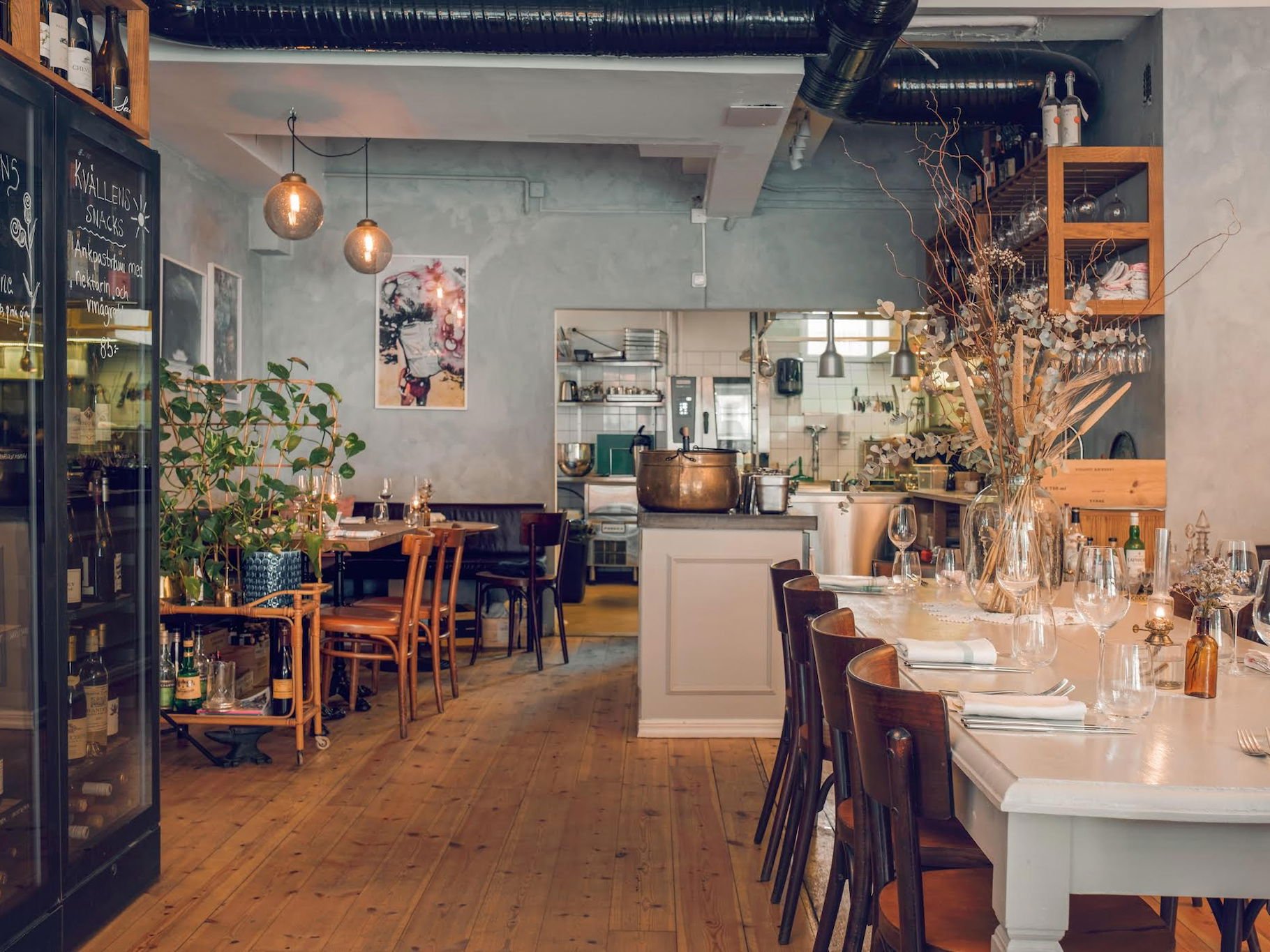
Where Mediterranean Herb Culture Lands in Central Poznań
Ratajczaka is one of those central Poznań streets that functions as a quiet connective tissue between the Old Town's tourist pull and the city's working commercial core. Walking the block toward number 27, the neighbourhood reads as mid-city practical rather than destination dining territory. That gap between setting and kitchen output is, in many ways, the whole point of the Michelin Bib Gourmand category: serious cooking at prices that don't require a special occasion. Fromażeria has held that designation in both 2024 and 2025, two consecutive years that eliminate any argument about a one-time fluke.
Mediterranean cooking in central European cities tends to split into two broad modes. The first leans on the visual shorthand of the region — olive oil poured tableside, stone-baked bread, terracotta aesthetics — without much interrogation of what makes the cuisine structurally coherent. The second mode treats the herb garden as the actual foundation: oregano, thyme, za'atar, and basil not as garnish but as the aromatic logic that determines how a dish is built from the start. Fromażeria operates in the second mode. The kitchen's orientation toward fresh and dried herbs as flavour infrastructure rather than decoration places it closer in sensibility to the eastern Mediterranean than to the softened, butter-adjacent versions of the cuisine that drift into Italian-Continental territory.
Chef Tzahi Anidjar brings Israeli and broader Levantine culinary reference points to a kitchen that otherwise occupies a mid-market price band, the €€ tier, where the temptation to simplify is constant. That the restaurant has sustained Bib Gourmand recognition across two consecutive award cycles at this price point is the clearest signal that the kitchen has not simplified. Consecutive recognition in the Michelin system is a different thing from a debut appearance; inspectors return, expectations are calibrated, and kitchens that hold the designation have demonstrated consistency rather than a single strong performance.
The Herb-Forward Register and What It Signals
Za'atar as a spice blend carries within it the entire eastern Mediterranean herb tradition: wild thyme, sumac, sesame, sometimes oregano or marjoram depending on the regional variant. When a kitchen uses it fluently rather than decoratively, the dish construction tends to follow a different logic from French-influenced European cooking. Acids are placed earlier, fat comes from olive oil rather than cream reductions, and the finish of a plate relies on dried herb intensity rather than sauce volume. This is the architectural difference that separates a genuinely Mediterranean kitchen from one that borrows Mediterranean ingredients for a European framework.
Fresh basil and thyme, when used as more than finishing herbs, require a different approach to heat and timing. Basil in particular degrades quickly under sustained cooking, which means kitchens that use it structurally tend to work with shorter cooking windows and more layered assembly. The result, when it works, is food that arrives at the table with herbaceous brightness intact rather than cooked off. This is harder to execute consistently than it looks, and consistency at volume is what Michelin's value-tier recognition specifically rewards.
Poznań's dining scene in the mid-price bracket has a reasonably strong roster. Cucina operates in Mediterranean territory at the same €€ tier, providing a direct stylistic comparison point. Papavero brings Italian emphasis to a similar price band. At the Traditional Cuisine end, Delicja represents the Polish-heritage track. What Fromażeria does that neither of these fully replicates is anchor the Mediterranean register in a Levantine herb logic rather than in Italian or generic southern European conventions. That specificity of culinary reference is what the Bib Gourmand recognition, repeated, implies about the kitchen's point of view.
The city's award-holding restaurants at higher price points, including Muga at the €€€€ tier with its Michelin star, operate in Modern Cuisine territory where the framework is explicitly contemporary Polish. A nóż widelec also works in Modern Cuisine. Fromażeria doesn't compete in that register and isn't trying to. Its competitive peer set is the group of mid-priced Mediterranean and southern European kitchens in Polish cities, a group that is growing as Polish dining audiences become more comfortable with non-Central-European flavour structures.
Positioning Within Polish Fine Dining Context
Poland's Michelin-recognized restaurant scene remains smaller than its Western European counterparts but has expanded meaningfully in the past five years. The cities with the most dense recognition are Warsaw and Kraków, with Bottiglieria 1881 Restaurant in Kraków representing the higher end of that city's recognized tier. Gdańsk has developed its own recognition cluster, anchored by venues like Arco by Paco Pérez in Gdańsk. Sopot contributes 1911 Restaurant to the coastal picture. Wrocław's Acquario sits in a comparable Mediterranean lane in its own market.
Within this national map, Poznań is the city that often gets underweighted by international visitors who route through Warsaw and Kraków without stopping. Fromażeria's dual Bib Gourmand citations contribute to the argument that Poznań's mid-market tier has genuine quality depth, not just one or two headline restaurants. For visitors already planning a Polish itinerary, the full picture of what the city offers is mapped in our full Poznań restaurants guide, alongside our full Poznań hotels guide, our full Poznań bars guide, our full Poznań wineries guide, and our full Poznań experiences guide.
For readers comparing Mediterranean restaurant quality across European cities, the reference points extend further. La Brezza in Ascona and Arnaud Donckele and Maxime Frédéric at Louis Vuitton in Saint-Tropez represent the Mediterranean register at its upper price ceiling. Fromażeria sits in a different tier by every metric, but the herb-forward culinary logic connects the traditions even across that price gap.
Planning a Visit
Fromażeria sits at Ratajczaka 27 in central Poznań, within walking distance of the main city centre. The €€ pricing means a full dinner for two with drinks lands well within what comparable award-holding restaurants in Warsaw or Kraków charge for a comparable experience, and the 4.8 rating across 1,046 Google reviews indicates that the kitchen's output translates consistently to the general dining public, not only to Michelin inspectors. Given the Bib Gourmand recognition and that volume of positive public review, booking ahead is the sensible approach rather than walking in and hoping for a table. Specific booking method and hours are leading confirmed directly with the restaurant, as those details can shift seasonally. For visitors also exploring further afield in Poland, Giewont in Kościelisko and hub.praga in Warsaw extend the itinerary in different culinary directions.
Frequently Asked Questions
The Quick Read
A compact peer set to orient you in the local landscape.
| Venue | Notes | Price |
|---|---|---|
| Fromażeria | This venue | €€ |
| Muga | Modern Cuisine, €€€€ | €€€€ |
| TU.REStAURANT | Modern Cuisine, €€ | €€ |
| Cucina | Mediterranean Cuisine, €€ | €€ |
| Delicja | Traditional Cuisine, €€ | €€ |
| Marino Bistrot | Italian, €€ | €€ |
Need a table?
Our members enjoy priority alerts and concierge-led booking support for the world's most difficult tables.
Get Exclusive Access