On Minsk's central Pobediteley Avenue, Fornello occupies a stretch of the city where Italian references meet Belarusian dining habits. The kitchen works within a tradition that prizes sourced ingredients and composed plates, placing it in the mid-to-upper tier of Minsk's European-leaning restaurant circuit. For visitors orienting themselves in the capital, it offers a legible entry point into the city's evolving sit-down dining scene.
Pearl is the En Primeur Club membership app — saves, bookings, and concierge access live there. Same editors, same standards.
- Address
- просп. Победителей, 20, Мінск
- Directions
- Get directions
 Saves & bookings on Pearl
Pobediteley Avenue and the European Restaurant Tier in Minsk
Minsk's central boulevard, Prospekt Pobediteley, carries a particular weight in the city's dining geography. Wide, state-scaled, and lined with institutions both civic and commercial, it draws the category of restaurant that wants visibility and footfall from a clientele that includes business travelers, government-adjacent professionals, and residents treating the avenue as a destination rather than a shortcut. Fornello sits at number 20 on that stretch, which places it squarely in the higher-traffic, higher-expectation tier of Minsk's sit-down dining circuit. The address alone signals intent.
European-inflected restaurants on this axis compete less on novelty and more on execution and consistency. The guest arriving here is not typically looking for fermentation experiments or tasting-menu theatre. They want composed plates, recognizable ingredients handled with care, and a room that functions at a pace suited to a two-hour dinner rather than a quick lunch rotation. That describes the operational logic of this segment of Minsk dining, and Fornello operates within it. For broader context on where this venue sits within the capital's full restaurant picture, see our full Мінск restaurants guide.
Where the Food Comes From, and Why That Matters Here
The ingredient-sourcing question is more pointed in Minsk than in many European capitals. Belarus operates under a distinct import environment: Western European produce, particularly fresh Italian or French staples, moves through a supply chain that is neither direct nor cheap. Restaurants claiming an Italian or broader European identity in this city make an implicit commitment with every dish about how far they are willing to go to source appropriately versus how far they will substitute with local or regional alternatives.
This tension is not unique to Minsk, but it is sharper here than in Warsaw or Vilnius, where EU logistics apply. The restaurants that resolve it well tend to do one of two things: they build menus around what arrives reliably and in good condition, which often means leaning into local dairy, freshwater fish, pork, and seasonal vegetables from Belarusian farms; or they absorb the import cost and price accordingly. The kitchens that try to split the difference, offering nominally Italian or Mediterranean menus at prices that cannot sustain genuine sourcing, tend to read as unconvincing on the plate.
The name Fornello, Italian for a cooking stove or small furnace, suggests a kitchen-forward identity. In the context of Minsk's European restaurant tier, that framing works well when the sourcing story is coherent, whether that means a genuine commitment to imported staples for key preparations, or a transparent pivot toward Belarusian producers for grounding the menu in what is actually available and excellent locally. The Belarusian dairy tradition, for instance, is substantive: domestic butter and fresh cheese have a quality floor that supports certain preparations far better than indifferent imports. Kitchens that recognize this tend to produce more convincing European food than those chasing imported labels for their own sake.
For reference on what ingredient-sourcing discipline looks like at the highest levels, venues such as Atelier Moessmer Norbert Niederkofler in Brunico and Reale in Castel di Sangro have built entire identities around hyper-regional sourcing as an editorial principle, not merely a marketing claim. Closer to the coastal Italian tradition that Fornello's name evokes, Quattro Passi in Marina del Cantone and Dal Pescatore in Runate represent the kind of long-established Italian cooking where provenance is structural rather than decorative.
The Room and the Register
On a boulevard defined by scale, the restaurants that work leading are those that manage to create a sense of enclosure and focus without feeling sealed off from the energy of the street. The Pobediteley corridor draws a mixed-use crowd across the day, which means a dinner-only identity requires the room to do some atmospheric heavy lifting once the business lunch traffic clears. How Fornello handles that transition, from daytime functionality to evening atmosphere, is part of what defines its positioning within the avenue's competitive set.
Minsk's mid-upper dining tier has grown more defined in the past decade, with venues like Grand Café and RONIN establishing different points on the style-to-substance axis. Pan-Asian formats such as Бамбук and more locally-rooted operations like Кухмiстр occupy adjacent but distinct competitive positions. An Italian-inflected restaurant on the main boulevard is competing for the same dinner occasion as several of these, which means the room, the service register, and the plate presentation all carry comparative weight.
The European dining tradition that Fornello references, specifically the Italian trattoria-to-ristorante spectrum, has a particular relationship to informality that travels differently in Minsk than it does in Milan. In Italy, a relaxed room is read as confidence. In Minsk, where dining out at this price level still carries a degree of occasion-marking, a relaxed room risks being read as inattentiveness. The restaurants that calibrate this correctly tend to score on service consistency rather than formal theatrics.
How Fornello Sits Within the Broader Circuit
Belarus's restaurant scene beyond the capital offers useful comparison points. Mozzarella in Brest works the Italian reference in a smaller city context, where the competitive set is thinner but so is the supply chain. Kofeynya Pravda in Babruysk represents the café-restaurant hybrid that defines mid-tier dining in Belarus's secondary cities. Dön Kebab in Брэст and HookahPlace by Smokkin in Hrodna anchor the more casual end of the regional dining circuit. Placed against all of this, a sit-down European restaurant on Pobediteley Avenue is operating at the more formal and expensive end of what Belarus's dining infrastructure currently supports.
For readers who want to understand where Italian cooking as a global reference sits at its most ambitious, Le Bernardin in New York City and Atomix in New York City illustrate the tasting-menu precision end of the spectrum, while Lazy Bear in San Francisco and Emeril's in New Orleans show what established regional identity looks like when a restaurant has had decades to build a cuisine around a place. HAJIME in Osaka pushes further still into the territory where ingredient sourcing becomes a philosophical position. None of these are direct comparators for Fornello, but they illustrate the range of seriousness available within the European and globally-influenced restaurant world that Minsk's better restaurants are, at varying distances, in conversation with.
Planning a Visit
Fornello is located at Prospekt Pobediteley 20 in Minsk, on the capital's main central boulevard, which is well-served by metro (the Prospekt Pobeditelei area connects to the Frunzenskaya and Nemiga lines) and accessible by taxi from most central hotels. Current phone, hours, and booking data are not confirmed in our records, so contacting the venue directly via its address or through local booking platforms before visiting is advisable. The avenue location means walk-in traffic is plausible during quieter service periods, but for weekend evenings or group bookings, advance confirmation is the safer approach.
Comparison Snapshot
Comparable venues nearby, for context on price, style, and recognition.
| Venue | Cuisine | Price | Notes |
|---|---|---|---|
| Fornello | Mediterranean Trattoria | $$$ | Центральный |
| Grand Café | European Bistro Classics | $$$ | Center |
| Кухмiстр | Belarusian & Litvinian Heritage Cuisine | $$$ | Center |
| RONIN | Japanese Sushi & Pan-Asian | $$ | Площадь Якуба Коласа |
| Бамбук | Chinese | $$ | Центральный |
| Dön Kebab | Turkish Kebab | $ | Leninskiy Rayon |

At a Glance
- Cozy
- Classic
- Elegant
- Business Dinner
- Brunch
- Family
- Open Kitchen
- Terrace
- Hotel Restaurant
- Waterfront
- Garden
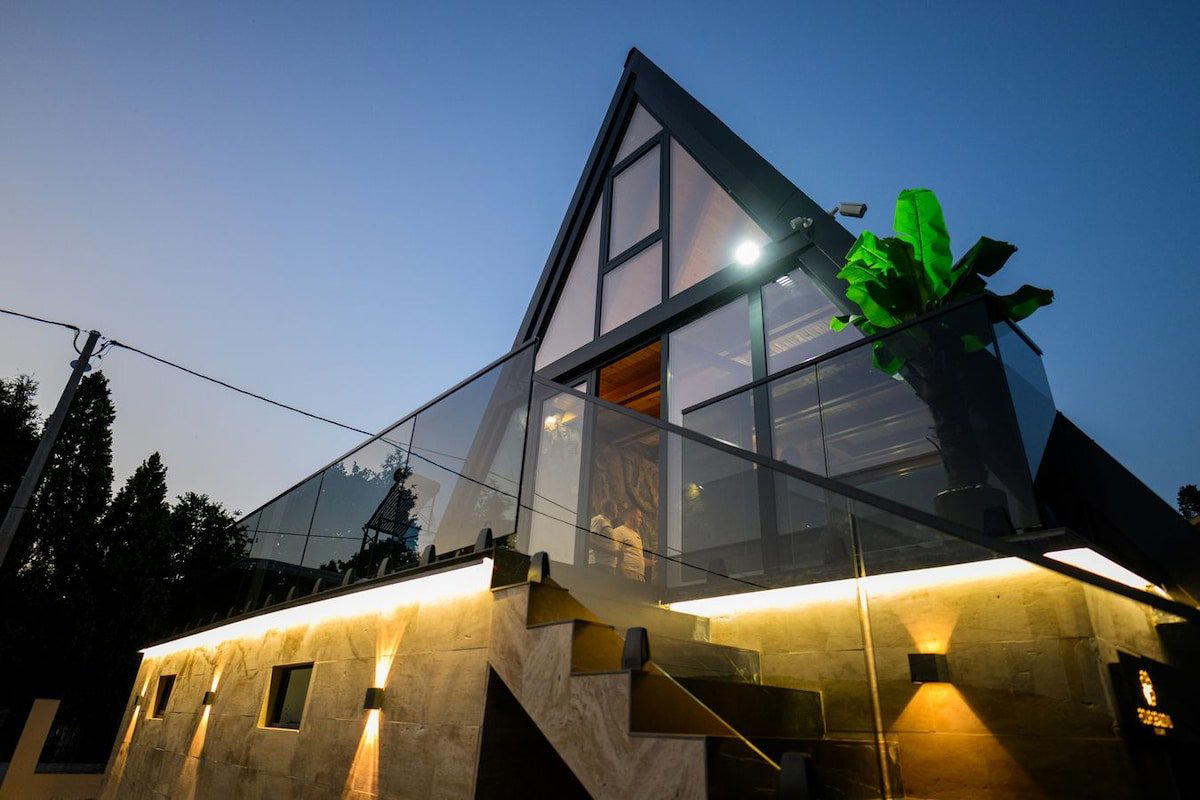
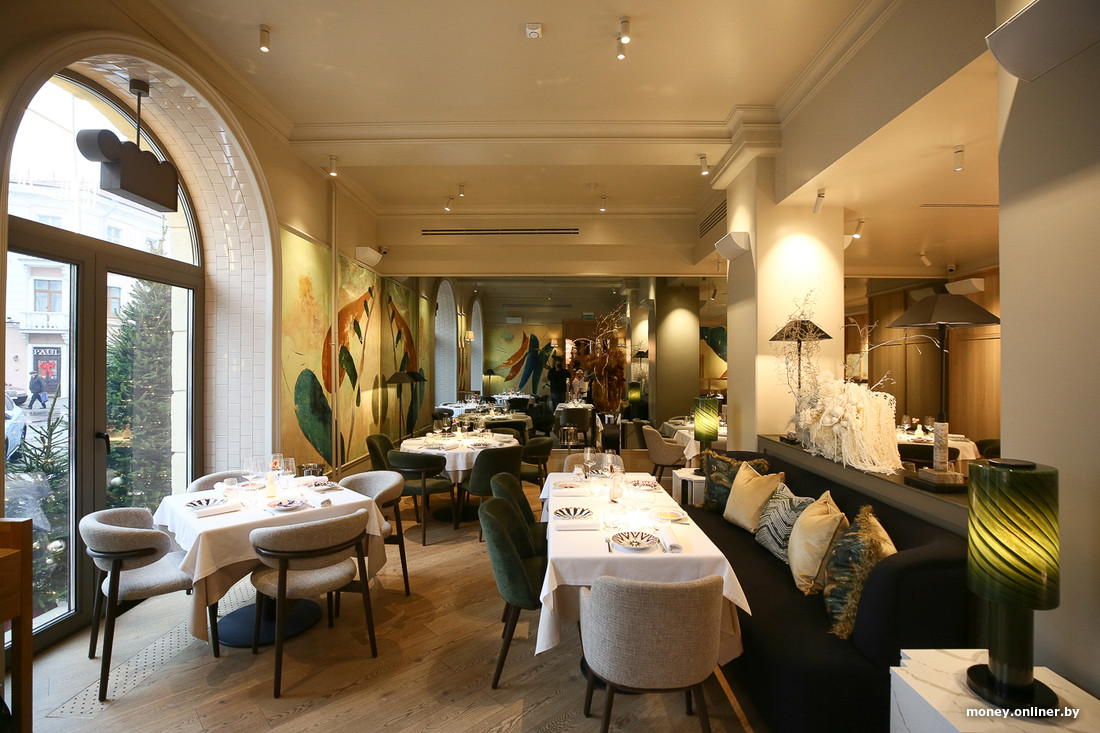
Light, cozy space styled as a classic Italian trattoria with wooden furniture, open kitchen, and serene views through panoramic windows.
Know Before You Go
- Getting there
- просп. Победителей, 20, Мінск