
Guía Repsol 1 Sol
Our verdict
Flama brings Guía Repsol 1 Sol recognition to Aldaia, just outside central València, in a dining scene often defined by rice houses, market cooking, and sharp contemporary Mediterranean rooms. Its value lies in how it broadens the city’s restaurant map beyond the usual old-town and seafront circuits, placing serious regional cooking in a suburb more often treated as a logistical edge than a dining address.

Pearl is the En Primeur Club membership app, where members save venues, book tables and use the concierge.
The menu
What to order
- Grilled fish
- Meats over embers
- Vegetables over embers
Approaching Flama in València, the city’s restaurant grammar starts to change. The polished hotel dining rooms, central addresses, and seafront dining rooms give way to a more workaday urban fabric, where cafés open early, lunch matters, and the line between everyday routine and serious cooking is thinner than visitors expect. Flama belongs to that second València: less postcard, more daily rhythm, with the kind of recognition that asks diners to look beyond the usual centre-of-town circuit.
That matters in a city where food culture is shaped as much by daily habits as by destination meals. Contemporary dining in València is not simply about familiar visitor shorthand or tasting-menu theatre. It is also about how strong restaurants operate in smaller, sharper formats outside the expected zones. A Guía Repsol 1 Sol in 2026 places Flama within that conversation, not as a tourist shorthand, but as a signal that the metropolitan food map is widening.
València puts recognized dining outside the obvious circuit
València’s dining identity is often compressed into two images: the central restaurant and the coastal table. Both matter, but they do not explain the whole city. Less obvious parts of València sit inside the daily economic life of the metro area, and that context changes the meal. The room is not competing with grand hotel formality or beachside ceremony; it is working within a local cadence where breakfast, lunch, and weekday service shape demand.
Within the city proper, other València dining rooms show how broad the city’s contemporary and traditional registers have become. The point is not that one format replaces another. It is that València now rewards several kinds of seriousness: refined cooking, neighbourhood tradition, hotel polish, and carefully observed restaurants outside the centre.
The comparison set around València reinforces that spread. La Barra de Kaymus, Rausell, Tavella, Eladio, and Farigola & Menta broaden the picture further, each helping show that the city’s dining identity is not confined to a single format or address type. Against that field, Flama’s Repsol recognition reads as a marker of address-shift: diners following the city’s stronger kitchens should not assume the old centre holds the full answer.
Recognition without the theatre of a grand dining room
Guía Repsol’s Soles have particular relevance in Spain because they often reward regional intelligence as much as international spectacle. A 1 Sol designation does not need to imply luxury ceremony; it can indicate a kitchen with a clear point of view, consistency, and a relationship to its local dining culture. In València, where dining carries deep local weight, that kind of recognition is useful because it separates serious work from generic destination branding.
Flama’s appeal sits in that distinction. The available public profile does not need to be read as a chef-personality restaurant built around biography, and that restraint is editorially useful. Too much contemporary dining coverage turns every address into a founder story. Here, the stronger reading is civic: València gains a recognized dining address within its wider orbit, and the broader scene becomes less dependent on the usual neighbourhood hierarchy.
For travellers, the decision is less about chasing a trophy meal and more about appetite for a different version of the city. Central València offers density, ease, and a richer hotel-and-bar circuit, covered in our full València restaurants guide, our full València hotels guide, and our full València bars guide. Flama asks for a more intentional detour, but it also gives a clearer look at how recognized dining functions when it is tied to metropolitan routine rather than visitor choreography.
How to read Flama within a Spain-wide dining itinerary
Spain’s restaurant map is increasingly polycentric. Madrid, Barcelona, Ibiza, the Basque Country, and smaller Andalusian towns all sustain different versions of serious dining, from tavern formats to tasting rooms and coastal seafood houses. Seen beside that national spread, Flama is part of a quieter but important category: regional restaurants whose relevance comes from place, timing, and local dining culture rather than international spectacle.
That distinction helps set expectations. This is not the address to frame as a grand night out in central València, nor should it be judged only against capital-city dining rooms. Its stronger use is as a focused meal for travellers already interested in the city’s food culture, especially those who understand that València extends past the most familiar visitor routes. The award signal gives permission to make the detour; the cultural logic explains why it matters.
Planning around València should also account for the city’s broader pleasures. Wine-focused travellers can use our full València wineries guide, while those building time around tours, tastings, and local programming can use our full València experiences guide. For international contrast, other cities show how focused culinary traditions can become concise dining formats. València’s version is local, daily, and closely tied to regional identity.
Frequently asked questions
Is Flama suitable for children?
Flama can suit a family meal depending on the occasion, timing, and the child’s comfort with a serious dining setting in València.
What kind of setting is Flama?
Flama is a restaurant in València. Its 1 Sol from Guía Repsol 2026 places it in a serious dining category rather than a casual café setting.
What time does Flama open and close?
Check Flama’s current channels before visiting, as opening days and service times can change.
What is Flama known for?
Flama is known for being awarded 1 Sol in the Guía Repsol Soles 2026 in València.
Price Lens
Comparable venues by cuisine and price in the same metro.
| Venue | Cuisine | Price | Awards | Notes |
|---|---|---|---|---|
| FlamaThis venue (the venue you are viewing) | Spanish Grill | $50–100 | Guía Repsol 1 Sol | Not listed |
| La Barra de Kaymus | Modern Mediterranean | $50–100 | Michelin Bib Gourmand · Guía Repsol 1 Sol | Traditional Cuisine |
| Tavella | Traditional Valencian Grill & Mediterranean | $50–100 | Star Wine List · Macarfi 8.1 Food Rating | Not listed |
| Eladio | Traditional Galician Seafood | $50–100 | Not listed | Not listed |
| Rausell | Traditional Valencian Seafood & Tapas | $30–50 | Star Wine List · Guía Repsol 1 Sol | Spanish |
Recognition history
Dated appearances from independent guides and award organizations, with the underlying list record or original source where available.
Guía Repsol 1 Sol
Guía Repsol
Continue exploring
More in València
Restaurants in València
All restaurants in València →
Bars in València
All bars in València →
Hotels in València
All hotels in València →
Wineries in València
All wineries in València →
Details
- Modern
- Intimate
- Sophisticated
- Cozy
- Date Night
- Special Occasion
- Business Dinner
- Open Kitchen
- Design Destination
- Standalone
- Local Sourcing
- Street Scene
- A La Carte
- Wine
- Vegetarian Friendly
- Pescatarian Friendly
Current opening hours
- Monday
- 7 AM–5 PM
- Tuesday
- 7 AM–5 PM
- Wednesday
- 7 AM–5 PM
- Thursday
- 7 AM–5 PM
- Friday
- 7 AM–5 PM
- Saturday
- Closed
- Sunday
- Closed
Hours can change for holidays and private events. Hours as of .
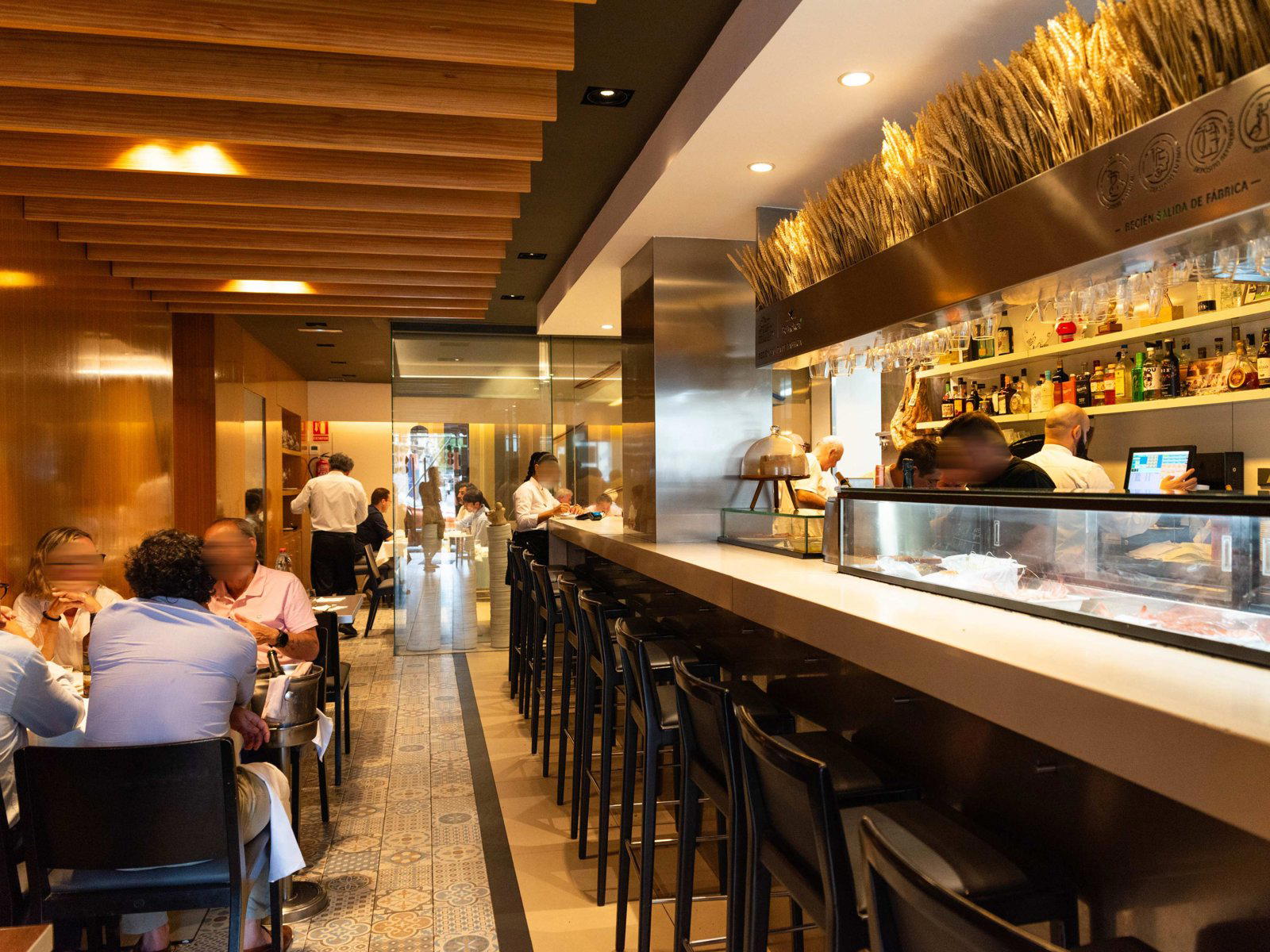
Contemporary and intimate, with a stage-like open kitchen, polished, modern design cues, and the sensory atmosphere of smoke, embers, and live wood-fired cooking.