Fishbar
Our verdict
Fishbar sits on East Lake Drive in Montauk, where the East End's seafood tradition is as much about proximity to the water as what ends up on the plate. The address places it within the working fishing community that has defined Montauk's character long before the Hamptons crowd arrived. For straightforward, location-rooted seafood in a town that increasingly trades on its catch, Fishbar earns its place in the conversation.
- Address
- 467 E Lake Dr, Montauk, NY 11954
- Phone
- (631) 668-6600
- Directions
- Get directions
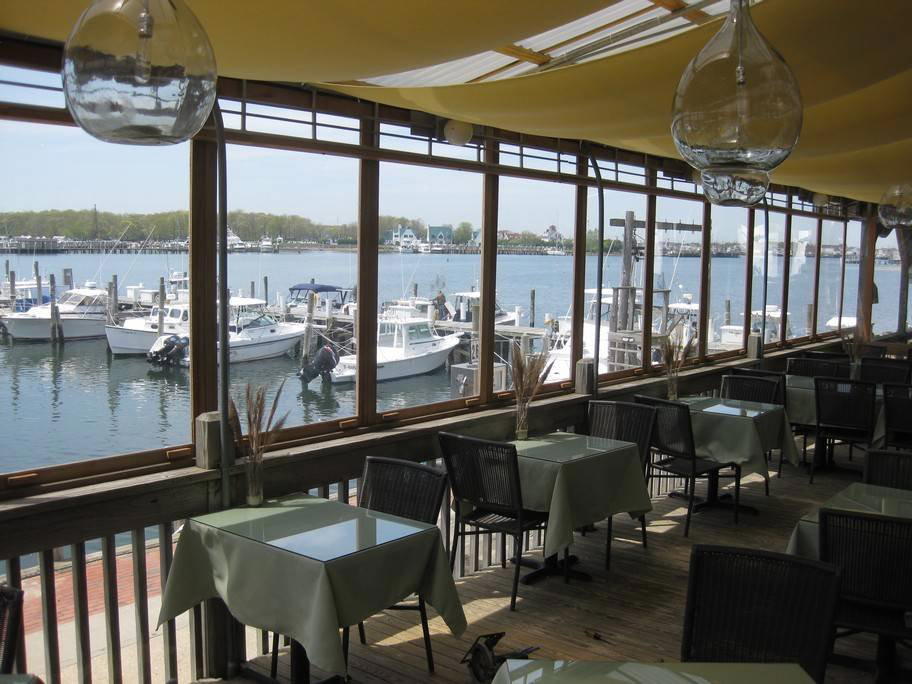
The menu
What to order
- Lobster Curry
- King Salmon Sashimi with Grapefruit and Banana Vinegar
- Cherrystone Clam and Dinosaur Kale Soup
- Plancha Grilled Local Sea Scallops
Where the Water Does the Work
Montauk's reputation as a serious fishing port is not incidental to its dining scene — it is the dining scene. The town sits at the eastern tip of Long Island, where the Atlantic and Block Island Sound converge, producing some of the most productive commercial fishing grounds on the East Coast. Striped bass, fluke, swordfish, tuna, and lobster move through Montauk's docks in volumes that most American coastal towns cannot match. The result is a restaurant category that exists almost nowhere else in the Northeast: casual seafood spots with genuine access to day-boat catch, operating within sight of the boats that supplied them.
Fishbar, at 467 East Lake Drive, occupies that category directly. The address is significant. East Lake Drive runs along Fort Pond Bay, away from the commercial strip of downtown Montauk and the beach-club sprawl of the South Side, placing Fishbar within the quieter, more working end of town. The approach is low-key: docks and water on one side, a building that reads as a place built for use rather than appearance. That physical context is part of what the restaurant offers.
The Sourcing Logic of a Fishing Town
The argument for ingredient-led seafood dining is made most clearly not in urban fine-dining rooms but in places like Montauk, where the distance between ocean and plate is genuinely short. At restaurants operating in the deep-pocketed tier, such as Le Bernardin in New York City or Providence in Los Angeles, the sourcing story is carefully curated and deliberately communicated. The fish arrives on ice from trusted suppliers, often flown in. The quality is high, but the chain is long. In Montauk, the chain is short by default.
That proximity matters for texture and flavor in ways that are difficult to replicate through supply-chain management alone. Striped bass pulled from the Sound and served within hours behaves differently on the plate than the same fish after two days in transit. The same applies to the local clams and oysters that define East End seafood at its most honest. Spots like Fishbar operate within that logic not as a marketing position but as a practical reality of where they are located.
Across Montauk's seafood roster, the proximity advantage is shared unevenly. Waterfront venues with scenery to sell — including Navy Beach and Harvest on Fort Pond, occupy a different tier, where the setting commands a premium and the menu ranges accordingly. The Inlet Seafood Restaurant sits closer to Fishbar's register: working-waterfront positioning, seafood as the central subject rather than one option among many. The competition in this segment is less about ambiance and more about whether the fish justifies the trip.
What Ingredient-First Means in Practice
Across the American restaurant scene, ingredient sourcing has become a rhetorical convention, listed on menus, announced in press releases, and deployed as positioning without always reflecting what actually arrives in the kitchen. The farm-to-table framing that Blue Hill at Stone Barns in Tarrytown and Single Thread Farm in Healdsburg built entire identities around requires significant infrastructure: owned farms, long-term supplier relationships, and menus that change with harvest cycles. That level of commitment is not the operating model of a casual Montauk fish spot.
What Fishbar's location does provide is something structurally different: passive proximity. The ingredient story here is geographic, not programmatic. Montauk's commercial fleet is one of the most active on the East Coast, and a restaurant sitting on Fort Pond Bay, a few minutes from the docks, has access to a supply chain that most inland or suburban seafood restaurants cannot replicate regardless of sourcing policy. Whether that advantage is consistently captured depends on the kitchen, but the infrastructure for it exists in a way it simply does not for restaurants hundreds of miles from working water.
This is the distinction that separates Montauk's leading casual seafood from counterparts in cities that rely on distribution networks. Venues like Smyth in Chicago, Lazy Bear in San Francisco, or Addison in San Diego operate at a different price point and with different ambitions, but even they must negotiate supply chains that Montauk's waterfront spots bypass. At Fishbar's level, the sourcing advantage is the amenity, the equivalent of what a view or a tasting menu format offers at the higher end.
Montauk's Seafood Tier and Where Fishbar Fits
Montauk has always operated as a two-speed destination. The summer season compresses demand into a short window, roughly Memorial Day through Labor Day, when the town's population multiplies and prices across restaurants reflect it. Outside that window, Montauk shifts back toward a working-town pace, and the restaurants that remain open tend to be those with local regulars rather than tourist-dependent revenue. East Lake Drive, away from the beachfront and the Ditch Plains surf crowd, skews toward the latter.
For travelers approaching Montauk as a dining destination rather than a beach stopover, the seafood tier that Fishbar inhabits is worth understanding. It sits below the scenery-premium waterfront spots and above fast-casual clam shacks, a middle register where the food is the primary justification. In that register, the relevant comparison is not to tasting-menu programs like The French Laundry in Napa or The Inn at Little Washington, but to the honest question of whether the catch is fresh, the preparation is competent, and the experience matches the setting.
For a fuller picture of where Fishbar sits relative to the rest of the East End's dining options, our full Montauk restaurants guide maps the competitive set across price tiers, formats, and neighborhoods. The guide also covers how the season affects availability across venues, which matters considerably when planning a trip to a town with Montauk's compressed dining calendar.
Restaurants operating in Montauk's ingredient-forward seafood category share something with regionally committed programs elsewhere in the country, places like Frasca Food and Wine in Boulder, The Wolf's Tailor in Denver, or Emeril's in New Orleans, where regional identity shapes what the kitchen reaches for first. In Montauk, that regional identity is the Atlantic fishery, and East Lake Drive sits closer to it than most of the town's more visible restaurant addresses.
Planning a Visit
Fishbar's address at 467 East Lake Drive puts it outside the walkable core of downtown Montauk, so arriving by car is the practical approach for most visitors. The East Lake Drive corridor is quieter and less trafficked than the Montauk Highway strip, which makes the approach more low-key but means planning ahead rather than wandering in. Summer weekends in Montauk carry demand spikes across all price points, and the working-waterfront category is no exception. Visitors who time a trip to shoulder season, late September through October, when the fall bluefin run brings serious fishing activity and the crowds have thinned, often find both easier access and a more local register across town.
Frequently asked questions
Is Fishbar good for families?
Fishbar's position on East Lake Drive and its informal Montauk format make it a practical choice for mixed-age groups. Montauk's seafood-forward spots in this part of town run relaxed rather than ceremonial, which tends to work well when dining with children. The casual structure means no dress code pressure and no expectation of a drawn-out tasting format.
Is Fishbar formal or casual?
Fishbar reads as casual. Montauk's dining culture sits firmly at the informal end of the spectrum, and the East Lake Drive address places it away from any fine-dining concentration on the East End. Expect a setting built around the food itself rather than tableside formality.
Is Fishbar worth visiting outside the peak Montauk summer season?
Montauk compresses most of its dining activity between Memorial Day and Labor Day, and a significant share of venues reduce hours or close entirely after Columbus Day. Confirming Fishbar's current operating calendar before visiting in the shoulder months — spring or late fall — is advisable, particularly for the East Lake Drive location, which sits outside the walkable downtown core where year-round foot traffic is thinner.
Quick Comparison
| Venue | Cuisine | Price |
|---|---|---|
| FishbarThis venue — the venue you are viewing | Modern Sustainable Seafood | Not listed |
| Harvest on Fort Pond | Montauk Italian Seafood | $50–100 |
| Navy Beach | Casual Coastal Seafood | $50–100 |
| The Inlet Seafood Restaurant | Fresh Local Seafood & Sushi | $30–50 |
Continue exploring
More in Montauk
Restaurants in Montauk
Browse all →
Bars in Montauk
Browse all →
Hotels in Montauk
Browse all →

Wineries in Montauk
Browse all →
Details
- Scenic
- Elegant
- Sophisticated
- Date Night
- Special Occasion
- Group Dining
- Waterfront
- Open Kitchen
- Craft Cocktails
- Sustainable Seafood
- Local Sourcing
- Waterfront
- A La Carte
- Small Plates
- Craft Cocktails
- Bourbon
- Pescatarian Friendly
Lakeside coastal setting with a premium, refined atmosphere emphasizing fresh seafood and creative culinary presentation.