Fernery



The Fernery sits inside Grove of Narberth, a whitewashed Pembrokeshire country house where an eight-course tasting menu pairs local Welsh produce with global technique. Awarded a Michelin Plate in 2025, the candlelit dining room draws on kitchen gardens, a sommelier-led wine list spanning Welsh bottles to Billecart-Salmon Champagne, and a format that places it firmly at the top of rural Welsh fine dining.
Pearl is the En Primeur Club membership app — saves, bookings, and concierge access live there. Same editors, same standards.
- Address
- Fernery Restaurant / Grove of, Molleston, Narberth SA67 8BX, United Kingdom
- Phone
- +44 1834 860915
- Website
- ferneryrestaurant.co.uk
- Directions
- Get directions
 Saves & bookings on Pearl
Where the Pembrokeshire Countryside Meets the Dining Room
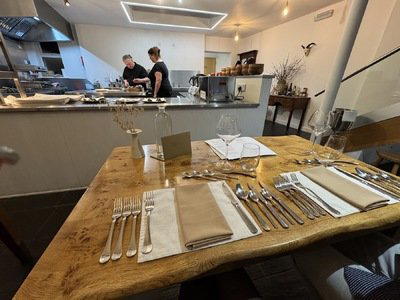
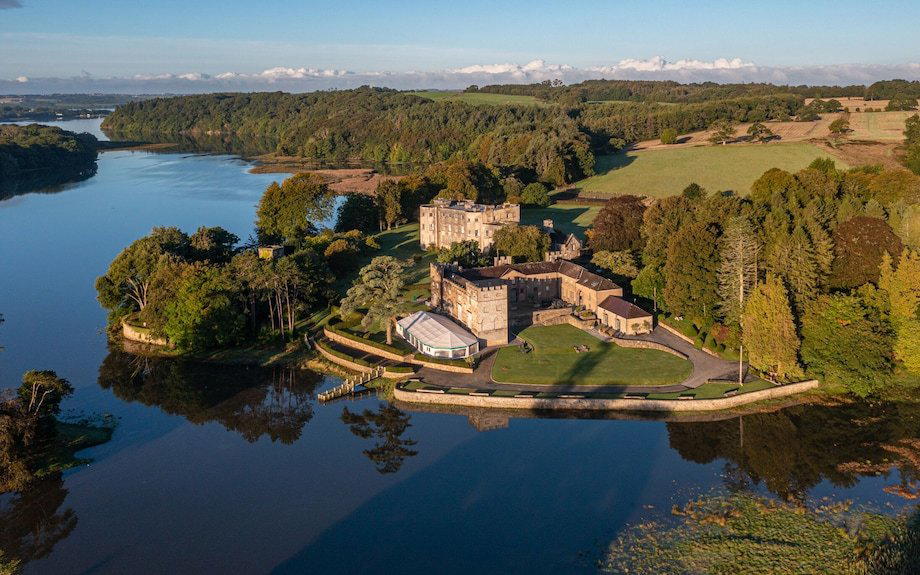
There is a particular grammar to the British country house restaurant: whitewashed stone, candlelight after dusk, a wine list curated by someone who knows what they are doing, and a kitchen that treats proximity to farms and gardens as a competitive advantage rather than a marketing footnote. The Fernery, inside the Grove of Narberth, follows that grammar closely — and in doing so, represents what the format looks like when executed with discipline. The surrounding gardens shift through seasons with ancient oaks and rolling Pembrokeshire fields on all sides; by the time a guest reaches the white-tableclothed dining room, the setting has already done considerable work. This is one of the more carefully composed country house dining environments in Wales, and the Michelin Plate recognition it earned in 2025 signals that the kitchen is operating at a level consistent with that physical promise.
For wider context on dining in this corner of west Wales, see our full Narberth restaurants guide. Narberth itself has developed a small but considered food scene that punches beyond what its size might suggest.
The Tasting Menu Format and What It Borrows From
The eight-course tasting menu format has become the standard delivery mechanism for serious British country house cooking over the past two decades. What distinguishes the better examples from the formulaic ones is how they balance the international vocabulary of fine dining technique with genuine rootedness in local produce. Fermentation, umami-forward components, and cross-cultural ingredient pairings have become default tools across this tier — from L'Enclume in Cartmel to Moor Hall in Aughton, and the Fernery's menu draws from the same lexicon.
Smoked potato arrives alongside dashi, asparagus, and bottarga: a combination that reaches across the North Sea and the Mediterranean without losing its grounding in the kitchen garden a few hundred metres away. Beef is paired with fermented shiitake, alliums, and potato, an arrangement that applies Japanese preservation logic to a fundamentally British protein-and-root combination. Squab pigeon comes with celeriac, cherry, and nasturtium, a plate that belongs to the contemporary British fine dining canon while the native Black Bomber Cheddar course, matched with apple, carrot, and coriander, reanchors the menu in Welsh specificity. These combinations are evidence of a kitchen thinking in cultural references rather than simply sourcing locally and hoping the story tells itself.
The use of herbs throughout the menu is a consistent thread. A dessert that brings macadamia nuts together with rhubarb, mascarpone, and sweet marjoram is the kind of move that rewards attention: marjoram pushes the dessert into unusual aromatic territory, the type of decision that separates technically competent menus from genuinely considered ones. Much of the produce comes from the hotel's own kitchen gardens, which gives the kitchen a degree of control over ingredient quality and timing that off-site sourcing rarely matches.
The Cultural Coordinates of This Style of Cooking
The style practised at the Fernery sits within a broader movement in British fine dining that emerged from the early 2000s onwards: kitchens absorbing Japanese technique, Nordic fermentation logic, and ingredient-first philosophy while remaining anchored to the British landscape and its seasonal rhythms. The reference points are legible across the country house tier. Le Manoir aux Quat' Saisons in Great Milton established the kitchen garden as central to the country house dining proposition; Gidleigh Park in Chagford and Restaurant Andrew Fairlie in Auchterarder have each demonstrated how rural settings can sustain serious culinary ambition across decades. The Fernery operates in that tradition, with the added dimension of Welsh terroir: a food culture that has historically been underrepresented in fine dining but is increasingly asserting its own identity.
Dashi-and-bottarga pairing is worth considering as a cultural document. Dashi, the Japanese kombu and bonito stock that underpins much of that cuisine's umami architecture, and bottarga, the cured mullet roe from the Mediterranean, are both concentrated expressions of coastal preservation tradition. Placing them alongside smoked potato and Welsh asparagus is a way of showing that Pembrokeshire, with its own coastal identity, belongs in a conversation with those older seafood cultures. It is the kind of programming decision that elevates a menu from locally sourced to globally conversant.
The Wine List
British country house wine lists divide broadly into two types: the legacy list, deep in Bordeaux and Burgundy verticals, and the contemporary list, which builds in natural, organic, and regional alternatives without abandoning the classics. The Fernery's list appears to operate in both registers. Billecart-Salmon Champagnes feature, which signals a commitment to producer-level quality in sparkling wine rather than generic house pours. Welsh wines appear alongside old and new world selections, which is a meaningful inclusion given that Wales has a small but growing number of producers working in challenging conditions. Sustainable and organic options are available, many by the glass, which widens access points without compromising the list's ambition. The sommelier function is explicitly part of the service proposition, expert guidance is offered rather than assumed unnecessary, which is the correct approach for a menu this compositionally layered.
For visitors wanting to explore Welsh wine more broadly, our full Narberth wineries guide covers the regional context.
Among British Michelin Plate restaurants occupying hotel dining rooms in rural settings, the Fernery competes on atmosphere, produce access, and menu sophistication. The country house hotel dining format tends to attract a specific guest: one who has booked an overnight stay and is treating dinner as the centrepiece of the trip rather than an add-on. That dynamic shapes the service register, polished but not performative, attentive without the compression of a purely urban ticking cover-count operation.
Within Wales specifically, the Fernery operates in a thin peer group at this price point. At ££££ and with Michelin recognition, it is positioned above the pub-and-bistro tier that characterises most of Pembrokeshire's dining scene. ANNWN in Narberth represents the local comparison point for serious dining in the immediate area. Nationally, the Fernery belongs to a cohort that includes hide and fox in Saltwood and Midsummer House in Cambridge, tasting menu restaurants with Michelin recognition that operate outside London's gravitational pull and rely on destination dining logic rather than footfall.
For comparison at the outer end of British fine dining ambition, The Fat Duck in Bray, The Ledbury in London, and Hand and Flowers in Marlow each represent different versions of what the tasting menu or premium format can achieve in a non-urban setting.
Planning Your Visit
The Fernery is a dining room within Grove of Narberth, a country house hotel in Molleston, just outside the market town of Narberth in Pembrokeshire. The address is Grove of Narberth, Molleston, Narberth SA67 8BX. The ££££ pricing reflects the eight-course tasting menu format and positions this firmly as a special occasion destination rather than a casual dinner. Given the hotel setting and the evening's candlelit atmosphere, booking in advance is the practical assumption, as with most destination tasting menu restaurants operating at this recognition level, walk-ins are not the recommended approach. Narberth itself offers further accommodation and drinking options covered in our full Narberth hotels guide and our full Narberth bars guide. For those extending a trip into activities and cultural visits, our full Narberth experiences guide covers the area's broader offer.
Price and Positioning
| Venue | Cuisine | Price | Awards |
|---|---|---|---|
| FerneryThis venue — the venue you are viewing | Modern Cuisine | ££££ | Not listed |
| The Ledbury | Modern European, Modern Cuisine | ££££ | Michelin 3 Star |
| Sketch, The Lecture Room and Library | Modern French | ££££ | Michelin 3 Star |
| CORE by Clare Smyth | Modern British | ££££ | Michelin 3 Star |
| Restaurant Gordon Ramsay | Contemporary European, French | ££££ | Michelin 3 Star |
| Dinner by Heston Blumenthal | Modern British, Traditional British | ££££ | Michelin 2 Star |
Recognition history
Dated appearances from independent guides and award organizations, with the underlying list record or original source where available.
AA Rosettes 4 Rosettes
AA Rosettes
Michelin Plate
Michelin
Michelin Plate
Michelin
The Good Food Guide GFG Very Good
The Good Food Guide
Continue exploring
More in Narberth
Restaurants in Narberth
Browse all →
Bars in Narberth
Browse all →
Hotels in Narberth
Browse all →
At a Glance
- Intimate
- Elegant
- Cozy
- Sophisticated
- Date Night
- Special Occasion
- Celebration
- Hotel Restaurant
- Garden
- Extensive Wine List
- Sommelier Led
- Farm To Table
- Local Sourcing
- Garden
Current opening hours
- Monday
- Closed
- Tuesday
- Closed
- Wednesday
- 6:30–9 PM
- Thursday
- 6:30–9 PM
- Friday
- 6:30–9 PM
- Saturday
- 12:30–3 PM, 6:30–9 PM
- Sunday
- Closed
Hours can change for holidays and private events. Last verified .
Intimate, serene surroundings with fern-themed interiors that bring the outside in, creating a relaxing and elegant atmosphere.
Know Before You Go
- Getting there
- Fernery Restaurant / Grove of, Molleston, Narberth SA67 8BX, United Kingdom