Our verdict
In Murakami, Niigata, a city defined by its centuries-old salmon culture and snow-country rice traditions, æäº è½ç»æ° occupies a quiet address in Iino. The restaurant draws on one of Japan's most ingredient-specific regional larders, where local rivers, paddy fields, and cold-water coastline shape what reaches the table. For visitors exploring Niigata's dining scene beyond the prefectural capital, it represents a grounded entry point into the area's food culture.

Pearl is the En Primeur Club membership app, where members save venues, book tables and use the concierge.
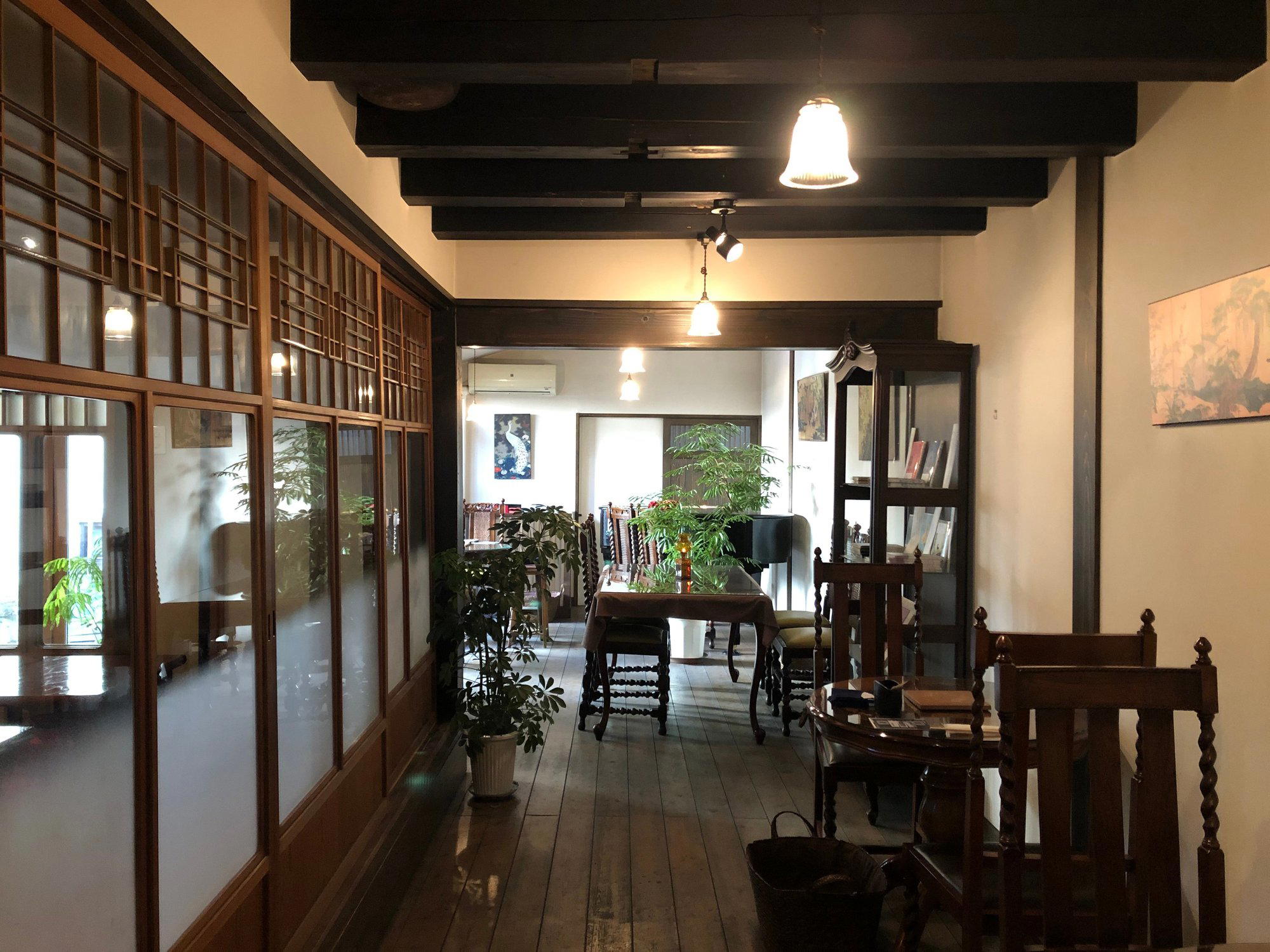
Where Niigata's Larder Meets the Table
Murakami sits at the northern edge of Niigata Prefecture, where the Miomote River meets the Sea of Japan and the surrounding cedar forests shade some of the oldest salmon-fishing traditions in the country. The city has managed its wild salmon stocks continuously since the Edo period, a claim very few Japanese municipalities can make, and that history runs through local food culture at every level. Restaurants in Murakami don't treat salmon as a menu option; it functions more like a civic institution, appearing in preserved, dried, smoked, and fresh forms that reflect centuries of accumulated technique rather than contemporary trend-chasing. æäº è½ç»æ°, located at 2 Chome-1-9 Iino in central Murakami, operates inside that tradition.
The Ingredient Geography of Northern Niigata
Understanding what makes Murakami's dining scene coherent requires a working knowledge of its geography. The prefecture is already Japan's most celebrated rice-producing region, with Koshihikari paddies concentrated along the coastal plain between the mountains and the sea. But northern Niigata, and Murakami in particular, adds a second axis: cold, fast rivers fed by Asahi mountain snowmelt, which sustain a distinct salmon run that historically differed in timing and character from Hokkaido's better-known catches. The result is a local larder with unusual depth for a city of Murakami's size, wild river fish, high-quality short-grain rice, fermented and preserved salmon products with recognised regional identity, and mountain vegetables from the interior valleys.
Restaurants in this part of Niigata tend to sit closer to their ingredient sources than their counterparts in Osaka or Tokyo. The supply chain is shorter, the seasonal constraints are harder, and the cooking traditions that developed here are specifically calibrated to what the land and water produce, not to what a centralised wholesale market happens to carry on a given morning. For diners coming from urban dining contexts, where ingredient provenance is often narrated as a marketing layer on top of otherwise generic sourcing, that distinction is worth noting. In Murakami, local sourcing isn't a positioning statement; it's a structural feature of how the kitchen operates. Places like affetto akita in Akita and Ajidocoro in Yubari District operate under similar constraints in other northern Japanese cities, where the local larder sets the terms of the menu rather than the other way around.
Niigata's fine dining scene is small but coherent. The prefecture's culinary identity is built around rice, sake, and seafood, a triad that defines both casual and more considered restaurants across the region. What Murakami adds to that equation is the salmon dimension, which gives local kitchens a preserved-food vocabulary that's largely absent in more southerly prefectures. Miso-marinated salmon, sake-lees preparations, and air-dried cuts (known locally as shio-biki salmon) represent techniques developed over generations that function as flavour infrastructure in Murakami's cooking rather than as occasional special features.
Compared to the densely competitive environments of Osaka or Tokyo, where restaurants like HAJIME in Osaka or Harutaka in Tokyo operate within tightly tiered Michelin ecosystems, Murakami's restaurant scene functions on different terms. There are no multi-star counters here. The competitive reference points are other ingredient-led regional restaurants in northern Honshu, the quality of the local produce itself, and a dining culture shaped more by tradition than by award cycles. That context matters for setting expectations: this is not a city where you come for the style of kaiseki associated with Gion Sasaki in Kyoto, or for the French-inflected creativity of akordu in Nara. The frame of reference is narrower, and the cooking is more directly tethered to place.
For a broader survey of where æäº è½ç»æ° sits within Murakami's dining options, the full Murakami restaurants guide provides useful orientation. Nearby Iino addresses and the surrounding neighbourhood are also covered by å²ç¹ æ°å¤ä¹, another local reference point worth cross-referencing when planning a visit.
Arriving and Planning
Murakami is accessible by shinkansen from Tokyo via Niigata, with a change to the local Uetsu Main Line at Niigata Station; the journey from Tokyo runs roughly two and a half to three hours depending on connections. The city is compact, and the Iino address places æäº è½ç»æ° within walking distance of the central station area. Timing a visit around Murakami's salmon season, which traditionally peaks in autumn, when the river runs begin, aligns well with the local kitchen calendar, though the region's preserved salmon preparations mean the ingredient remains present year-round in different forms. Spring mountain vegetables from the surrounding valleys represent a second seasonal window worth considering.
Murakami's restaurant culture skews toward early evening sittings and can operate on reservation-forward systems, a common pattern in smaller Japanese cities where walk-in capacity is limited.
Where This Fits in the Broader Picture
Japan's regional dining scene has gained serious attention over the past decade, partly as a corrective to the Tokyo-centrism that dominated international food coverage for years. Restaurants in smaller cities and rural prefectures, from Goh in Fukuoka to aki nagao in Sapporo, have built reputations on the strength of their local ingredient access rather than on metropolitan density. Murakami sits in that broader shift: a city where the local larder is genuinely differentiated, where the salmon tradition is documented and historically specific, and where a restaurant operating in that context has access to ingredients that simply aren't replicable elsewhere.
That logic applies to other parts of Japan too. Aji Arai in Oita, Akakichi in Imabari, and Amaki in Aichi each operate in regional contexts where the ingredient story is the primary editorial frame. International comparisons hold too: the produce-first approach that defines this category of regional Japanese dining has structural parallels with what places like Lazy Bear in San Francisco have built in the American context, though the cultural mechanisms differ significantly. Even Le Bernardin in New York City, operating at the opposite end of the scale and formality spectrum, is ultimately making the same argument: that sourcing precision is the foundation on which everything else rests.
In Murakami, that argument is made not through tasting menu theatrics but through the quieter insistence of a city that has been doing the same things with the same ingredients for centuries. æäº è½ç»æ° operates inside that logic, on an address in Iino where the surrounding food culture does most of the contextualising work.
Frequently asked questions
Is 笑亭 落語亭 good for families?
Located at 2 Chome-1-9 Iino in central Murakami, the restaurant sits within a compact city centre that is easy to reach on foot from the station.
How would you describe the vibe at 笑亭 落語亭?
Murakami is a quiet castle town at the northern edge of Niigata Prefecture, and restaurants here tend to reflect that tempo, unhurried, locally rooted, and without the performance of Tokyo fine dining. 笑亭 落語亭's address on Iino places it within the historic commercial core of the city, suggesting a setting shaped more by neighbourhood character than by design ambition.
Is 笑亭 落語亭 connected to Murakami's salmon culture?
Murakami's identity as a city is inseparable from its centuries-old salmon-curing tradition, and the restaurant sits in the Iino district close to the historic merchants' quarter where that culture is most concentrated.
Side-by-Side Snapshot
| Venue | Cuisine | Price | Awards | Notes |
|---|---|---|---|---|
| æäº è½ç»æ°This venue (the venue you are viewing) | Japanese Restaurant | Not listed | Not listed | Not listed |
| HAJIME | Avant-Garde Japanese Fine Dining | $300–500 | 3 Michelin Stars · World's 50 Best #83 | French, Innovative |
| Harutaka | Edo-Style Omakase Sushi | $200–300 | 3 Michelin Stars · World's 50 Best #76 | Sushi |
| L'Effervescence | Modern French with Japanese Influences | $200–300 | 3 Michelin Stars · World's 50 Best #69 | French |
| RyuGin | Modern Kaiseki | $500+ | 3 Michelin Stars · World's 50 Best #41 | Kaiseki, Japanese |
| Crony | Modern French with Japanese Influences | $150–200 | 2 Michelin Stars · World's 50 Best #34 | Innovative, French |
Continue exploring
More in Murakami
Details
- Casual Hangout
- A La Carte