
Far i Hatten occupies a weathered house inside Malmö's Folkets Park, operating as an open-air terrace destination in summer and a close-set indoor refuge in winter. Few addresses in the city shift character so completely between seasons. Its location inside a working public park places it in a different register from Malmö's restaurant-strip dining, making it a useful reference point for understanding how the city uses its public spaces.
 Discover on Pearl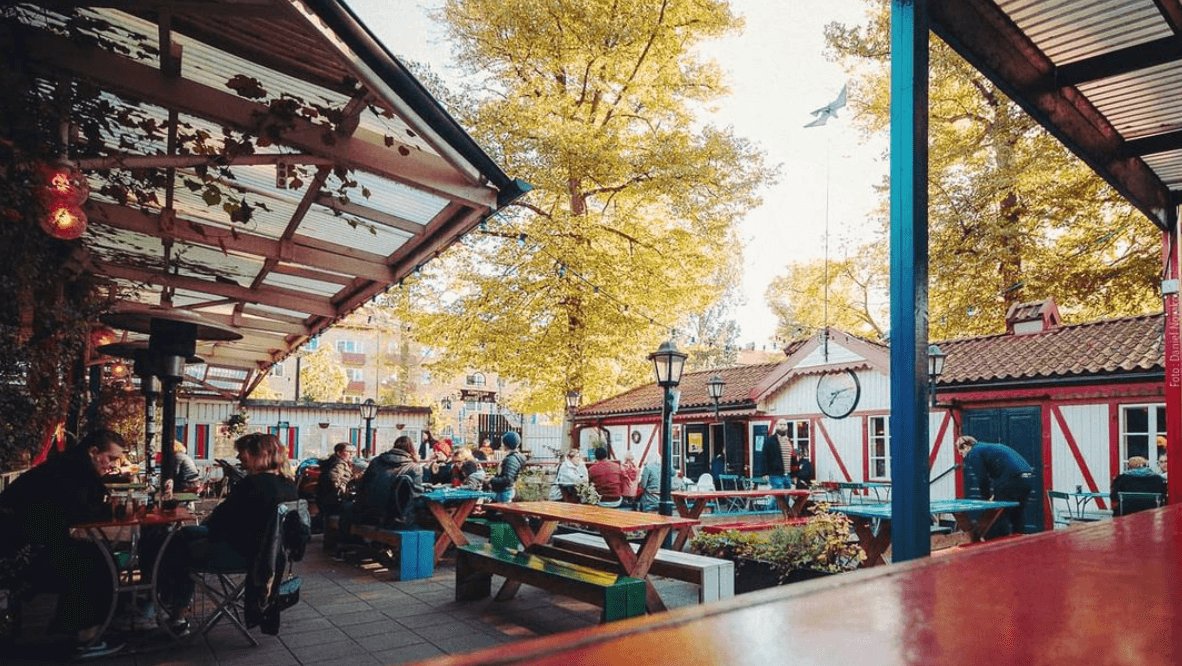
A Restaurant Shaped by Its Park
Folkets Park sits near the eastern edge of central Malmö, and it carries the particular weight of Swedish public-space tradition. Founded in the late nineteenth century as a people's park, a democratic counter to private pleasure gardens, it has hosted everything from open-air concerts to political rallies. Restaurants embedded in parks of this kind occupy a specific social contract: they are asked to serve the park as much as the plate, functioning as a reason to linger in a public space rather than simply as a dining destination. Far i Hatten operates precisely within that contract. The address is Folkets Park, not a street number in a restaurant quarter, and that distinction shapes everything about how the place reads.
In cities like Stockholm, where Frantzén sits in a polished residential pocket, or in smaller Skåne towns where places like VYN in Simrishamn and ÄNG in Tvååker are embedded in rural landscape, Swedish dining has long drawn meaning from its physical setting. Malmö's version of this is Folkets Park, a piece of civic infrastructure repurposed across generations. Far i Hatten is one of the addresses that keeps the park populated and purposeful.
The shortlist, unlocked.
Hard-to-book tables, cellar releases, and concierge-planned trips.
Get Exclusive Access →Summer and Winter, Two Different Venues
The clearest thing the available record tells us about Far i Hatten is its seasonal duality. In summer, a large outdoor terrace draws crowds in the way that park-adjacent hospitality has always worked in Scandinavia: long evenings, the particular quality of northern light that makes outdoor dining feel urgent and limited, tables that fill early. In winter, the operation contracts. The entrance retreats into an old house on the park grounds, described as requiring some searching out, its presence signalled more by knowledge than by obvious signage. That shift from visible terrace operation to discreet indoor house is not incidental to the experience; it is the experience. Venues that maintain two genuinely distinct seasonal identities rather than simply moving furniture inside occupy a more interesting position in a city's dining map than those that operate the same format year-round.
This pattern of dramatically different seasonal modes is worth noting in the context of Malmö's wider dining scene. The city's higher-end options, including Vollmers at the New Nordic end and the more accessible contemporary format at aster, operate from fixed premises with consistent presentation across seasons. Far i Hatten's model is structurally different: the venue reconfigures itself around the park's seasonal logic rather than imposing a consistent restaurant identity on leading of it.
What the Park Address Actually Means
Dining inside a working public park creates specific practical conditions. Access is on foot through the park itself rather than along a commercial street, which filters the clientele somewhat: guests arrive having already committed to the space rather than wandering past. The setting also means that the immediate surroundings are not other restaurants but park infrastructure: paths, green space, performance venues, the texture of a living civic amenity. This is a meaningfully different arrival experience from Malmö's denser restaurant areas.
For reference, Bloom in the Park also takes its cue from a park setting, positioning itself in the creative tier of Malmö's dining. Far i Hatten and Bloom in the Park together represent a strand of Malmö dining that draws its character explicitly from public green space, rather than from a neighbourhood street or hotel address. These are not the same type of venue, but their shared premise, that the park context is part of the offering, places them in a useful comparative position within our full Malmö restaurants guide.
Other addresses in the Malmö dining map work within more conventional hospitality frameworks. BISe and Bouchon each draw on specific culinary traditions within standard restaurant premises. The park-embedded model that Far i Hatten represents is a different kind of proposition, and one with fewer direct competitors in the city.
Malmö in a Broader Swedish Context
Skåne, Sweden's southernmost region, has developed a dining identity that sits apart from Stockholm's more internationally scrutinised scene. The proximity to Denmark and the density of agricultural producers in the surrounding countryside have shaped a regional approach to sourcing and hospitality that is less about metropolitan prestige and more about connection to the specific landscape. Venues like Signum in Mölnlycke, Knystaforsen in Rydöbruk, and PM & Vänner in Växjö reflect different expressions of southern Swedish hospitality across the region. Far i Hatten fits within this broader picture as a Malmö address whose identity is rooted in a specific piece of the city's civic history rather than in culinary positioning alone.
That grounding in civic space, rather than in culinary category, is what makes Far i Hatten a useful point of orientation when reading the city. It is not a fine-dining room competing with Vollmers, nor is it a mid-range contemporary restaurant like aster. It occupies a different function in the city's dining ecology, one closer to how European cities have historically used park restaurants: as social infrastructure with food and drink attached, rather than dining destinations that happen to have a view.
Planning Your Visit
Because Far i Hatten's character shifts substantially between seasons, timing matters. A summer visit means the terrace, the park crowds, and the particular energy of Folkets Park in warm weather, with tables visible and accessible from the park paths. A winter visit means finding the house entrance, stepping into a closed interior that reads differently from the open terrace format. Both are valid approaches, but they are genuinely different experiences at the same address, and a visitor who arrives in January expecting the summer terrace will find something closer to a wood-interior refuge tucked into the park's quieter off-season. Booking specifics, hours, and current pricing are not confirmed in our record at time of writing, so checking directly before visiting is advisable.
For context on where to stay in the city, our full Malmö hotels guide covers the current accommodation options. The broader food and drink picture, including bars and emerging venues, is mapped in our full Malmö bars guide, our full Malmö wineries guide, and our full Malmö experiences guide.
Frequently Asked Questions
- What should I order at Far i Hatten?
- Specific menu details are not confirmed in our record at time of writing, so we cannot direct you to particular dishes. What the venue's format does suggest is that the terrace-in-summer, house-in-winter structure shapes the kind of eating that makes sense here: the food serves the social context of the park setting rather than anchoring a tasting-menu format. For verified current menu information, checking the venue directly before your visit is the right approach.
- How far ahead should I plan for Far i Hatten?
- Without current booking data, we cannot quote lead times with confidence. What the venue's seasonal pattern does suggest is that summer terrace visits, particularly during Malmö's peak warm-weather period, are likely to require more advance planning than a quiet winter evening in the indoor house. If you are visiting during the Swedish summer, when outdoor dining in the north carries particular weight and tables at park venues fill early in the long evening light, planning several weeks ahead is a sensible precaution. Winter visits, given the lower-profile access through the park, may allow for shorter lead times, though again confirming with the venue is the only reliable way to know.
The Essentials
Comparable venues for orientation, based on our database fields.
| Venue | Notes | Price |
|---|---|---|
| Far i Hatten | This venue | |
| Vollmers | New Nordic, Contemporary, €€€€ | €€€€ |
| aster | Contemporary, €€ | €€ |
| Namu | Korean, €€ | €€ |
| Västergatan | Swedish, €€ | €€ |
| Bloom in the Park | Creative, €€ | €€ |
Need a table?
Our members enjoy priority alerts and concierge-led booking support for the world's most difficult tables.
Get Exclusive AccessThe shortlist, unlocked.
Hard-to-book tables, cellar releases, and concierge-planned trips.
Get Exclusive Access →