


Michelin Plate · Macarfi 8.1 Food Rating · Guía Repsol 1 Sol
Our verdict
Perched beside a 19th-century church on the clifftops of Ruiloba, El Remedio holds a Michelin Plate for traditional Cantabrian cooking that changes daily based on what the market offers. Chef Samuel Fernández presents the menu verbally rather than on paper, anchoring each service in the freshest available produce. At the €€ price point, it is among the more accessible Michelin-recognised addresses in northern Spain.

Pearl is the En Primeur Club membership app, where members save venues, book tables and use the concierge.
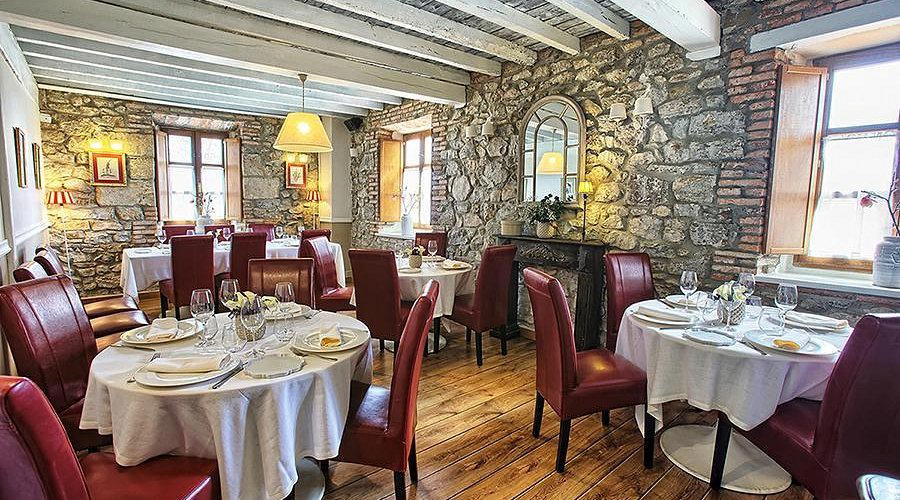
Where the Cliff Meets the Kitchen
Approach El Remedio from the lane that winds through Barrio Liandres and the setting resolves itself before you reach the door: a 19th-century church in pale stone, the Atlantic coastline pressing close, green Cantabrian hills folding away behind. The physical environment is not incidental here. It shapes the logic of the kitchen. A restaurant positioned metres from the cliff edge, in a village where the sea is a constant presence, lives or dies by its relationship with what the surrounding land and water produce. At El Remedio, that relationship is the whole proposition.
Ruiloba sits on the western stretch of the Costa Verde, a coastline that runs from the Basque Country toward Asturias and that has built a credible regional dining identity largely independent of the high-production creative cooking that defines Spain's most decorated addresses. Places like Arzak in San Sebastián, Mugaritz in Errenteria, or DiverXO in Madrid operate at a different register entirely: multi-course tasting formats, large creative teams, prices that reflect years of investment in technique and spectacle. El Remedio belongs to a contrasting tradition, one rooted in daily produce availability and the kind of cooking that does not ask to be theorised. For readers building a broader picture of recognised Spanish dining, our guides to Azurmendi in Larrabetzu, El Celler de Can Roca in Girona, and Martin Berasategui in Lasarte-Oria cover the €€€€ tier in depth.
The Case for Sourcing Over Scripting
The most telling operational detail at El Remedio is also the simplest: there is no printed menu. Chef Samuel Fernández presents the day's options verbally, explaining what is available based on what arrived that morning. This format is not a performance of rusticity. It is a structural commitment to ingredient-first cooking, where the menu cannot be set in advance because the sourcing has not been decided in advance.
In practical terms, it means the kitchen is accountable to availability rather than to a document. If the fish that was expected did not arrive, the fish course changes. If a local producer has something in surplus, it appears. The oral menu is, in effect, a live record of that morning's decisions. It places considerable trust in the diner to accept what the day offers rather than selecting from a fixed range of options. Most diners at this type of address understand and expect exactly that.
The sourcing reach is local in a meaningful sense. The Michelin recognition specifically references a dish built from Villada morcilla (black pudding), Tiernin cheese from the Tresgallo cheese company, and piquillo peppers, a combination that draws from identifiable Cantabrian and broader northern Spanish producers rather than from anonymous supply chains. Tresgallo is a named cheesemaker. Villada morcilla references a specific production tradition. These are ingredients with addresses, which is a different thing from ingredients with descriptions.
Auga in Gijón works along similar lines on the Asturian coast, grounding its kitchen in regional catch and local producers. Further along the Atlantic arc, Aponiente in El Puerto de Santa María and Quique Dacosta in Dénia each approach coastal sourcing with considerably more technical intervention, but the underlying argument about coastal ingredient identity is shared across that range. The comparison worth drawing at El Remedio's price point is perhaps Auberge Grand'Maison in Mûr-de-Bretagne, a French address working in a similar register of traditional cuisine shaped by its immediate geography.
What the Michelin Plate Signals
El Remedio has held a Michelin Plate in both 2024 and 2025. The Plate designation, introduced to the Michelin system to recognise restaurants serving food of good quality that do not yet meet Star criteria, is a useful signal at this price tier. It indicates that Michelin's inspectors found the cooking consistently competent and the produce handled with care, without placing the restaurant in competition with the Star-holding addresses in Cantabria or the Basque Country to the east.
At the €€ price point, a Michelin Plate is an efficient trust signal for the reader deciding whether a detour to a village on the Cantabrian cliffs is warranted. It answers the basic quality question without inflating expectations. Guests who arrive expecting the technical complexity of Cocina Hermanos Torres in Barcelona or Ricard Camarena in València are misreading the register. Guests who arrive expecting rigorously sourced, traditionally framed Cantabrian cooking served in a setting that is difficult to replicate anywhere else in northern Spain are reading it correctly.
The distinction matters because the €€ tier in rural Cantabria is not competing on the same terms as the destination-restaurant circuit. It is offering something structurally different: depth of place, immediacy of produce, and a format scaled to the region rather than to a national or international dining audience.
Planning a Visit
El Remedio is located at Barrio Liandres, s/n, in Ruiloba, Cantabria, a village that sits between Comillas and Suances on the Cantabrian coast. The address is rural, and the surrounding area rewards slower travel: Comillas, with its Gaudí caprice and Modernista architecture, is minutes away by car. Ruiloba itself has limited public transport connections, making a car the practical choice for most visitors coming from Santander or the Basque Country. For those combining the meal with a stay in the area, our full Ruiloba hotels guide covers nearby accommodation options, and our full Ruiloba restaurants guide maps the wider dining context in the village. The bars guide, wineries guide, and experiences guide for Ruiloba complete the picture for longer stays. Booking in advance is advisable, particularly through summer and on weekends when coastal Cantabria draws significant visitor traffic from the rest of Spain.
Frequently asked questions
Is El Remedio okay with children?
El Remedio's setting beside a 19th-century church in Barrio Liandres, Ruiloba, and its focus on healthy, ingredient-led traditional cuisine make it a relaxed rather than formal environment. The daily menu is explained verbally, which suits families comfortable with a fluid, market-dependent meal. There is no database-confirmed children's menu, so it is worth contacting the restaurant directly to confirm current arrangements before visiting with young children.
What should I expect atmosphere-wise at El Remedio?
The setting is the defining factor here: a clifftop position in Barrio Liandres with a 19th-century church immediately adjacent and green Cantabrian countryside on all sides. Michelin's own 2024 and 2025 Plate citations describe it as a near picture-postcard environment. Inside, the tone follows the cooking, grounded and unfussy, shaped by the fact that the day's menu is recited verbally rather than handed over on paper.
What kind of recognition has El Remedio received?
El Remedio has received recognition including: A restaurant that has definitely left his mark. Surrounded by green spaces, El Remedio stands out for its almost picture-postcard setting next to a 19C church and just a few metres from the cliff. The priority of chef Samuel Fernández is to….
What should I order at El Remedio?
Because Chef Samuel Fernández builds the menu around daily availability, there is no fixed list to plan against in advance. Michelin's assessors specifically highlighted the flan made with Villada morcilla, Tiernin cheese from Tresgallo, and piquillo peppers as a dish that made an impression. Beyond that, the principle is to arrive open to whatever the seasonal sourcing has produced that morning.
Fast Comparison
| Venue | Cuisine | Price | Awards | Notes |
|---|---|---|---|---|
| El RemedioThis venue (the venue you are viewing) | Traditional Spanish Farm-to-Table | $50–100 | Michelin Plate · Macarfi 8.1 Food Rating | Not listed |
| Aponiente | Avant-Garde Marine Seafood | $200–300 | 3 Michelin Stars · World's 50 Best #84 | Progressive - Seafood, Creative |
| Arzak | Contemporary Basque Fine Dining | $300–500 | 3 Michelin Stars · World's 50 Best #31 | Modern Basque, Creative |
| DiverXO | Avant-Garde Spanish Tasting Menu | $300–500 | 3 Michelin Stars · World's 50 Best #4 | Progressive - Asian, Creative |
| El Celler de Can Roca | Creative Catalan Fine Dining | $300–500 | 3 Michelin Stars · World's 50 Best #2 | Progressive Spanish, Creative |
| Quique Dacosta | Avant-Garde Spanish Fine Dining | $300–500 | 3 Michelin Stars · World's 50 Best #65 | Creative |
Recognition history
Dated appearances from independent guides and award organizations, with the underlying list record or original source where available.
Michelin Plate
Michelin
Guía Repsol 1 Sol
Guía Repsol
Macarfi 8.1 Food Rating
Macarfi
Full recognition history (5 entries)
Michelin Plate
Michelin
Michelin Plate
Michelin
Continue exploring
More in Ruiloba
Details
- Scenic
- Rustic
- Cozy
- Elegant
- Date Night
- Special Occasion
- Open Kitchen
- Terrace
- Extensive Wine List
- Farm To Table
- Local Sourcing
- Mountain
- Street Scene
- A La Carte
- Vegetarian Friendly
- Vegan Options
- Gluten Free Options
Current opening hours
- Monday
- Closed
- Tuesday
- 1–3:30 PM
- Wednesday
- 1–3:30 PM
- Thursday
- 1–3:30 PM
- Friday
- 1–3:30 PM, 8–10:30 PM
- Saturday
- 1–3:30 PM, 8–10:30 PM
- Sunday
- 1–3:30 PM
Hours can change for holidays and private events. Hours as of .
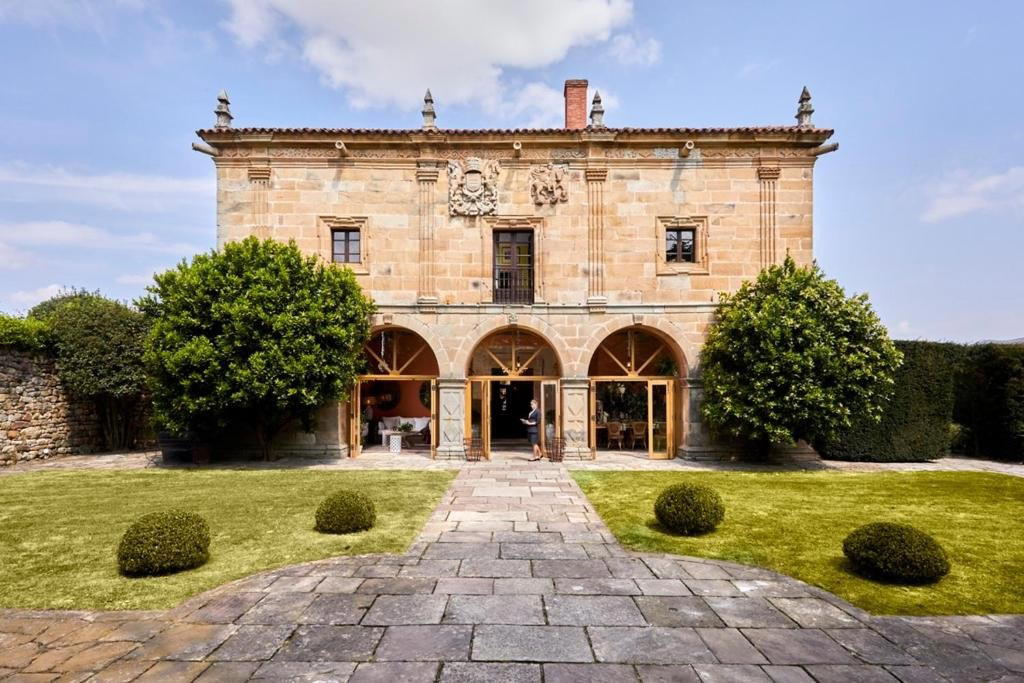
Discreetly distinguished house in a large garden, relaxed home-like atmosphere with open kitchen views and scenic surroundings.