Dishoom Edinburgh
Our verdict
Where Edinburgh's fine-dining circuit runs toward austere tasting menus and locally foraged produce, Dishoom plants its flag in a different tradition entirely: the Irani café culture of Bombay, translated into a St Andrew Square townhouse. The queues that form before opening are a reliable measure of demand, and the all-day format, rare in a city that tends toward formal dinner services, keeps the room in near-constant motion.

Pearl is the En Primeur Club membership app, where members save venues, book tables and use the concierge.
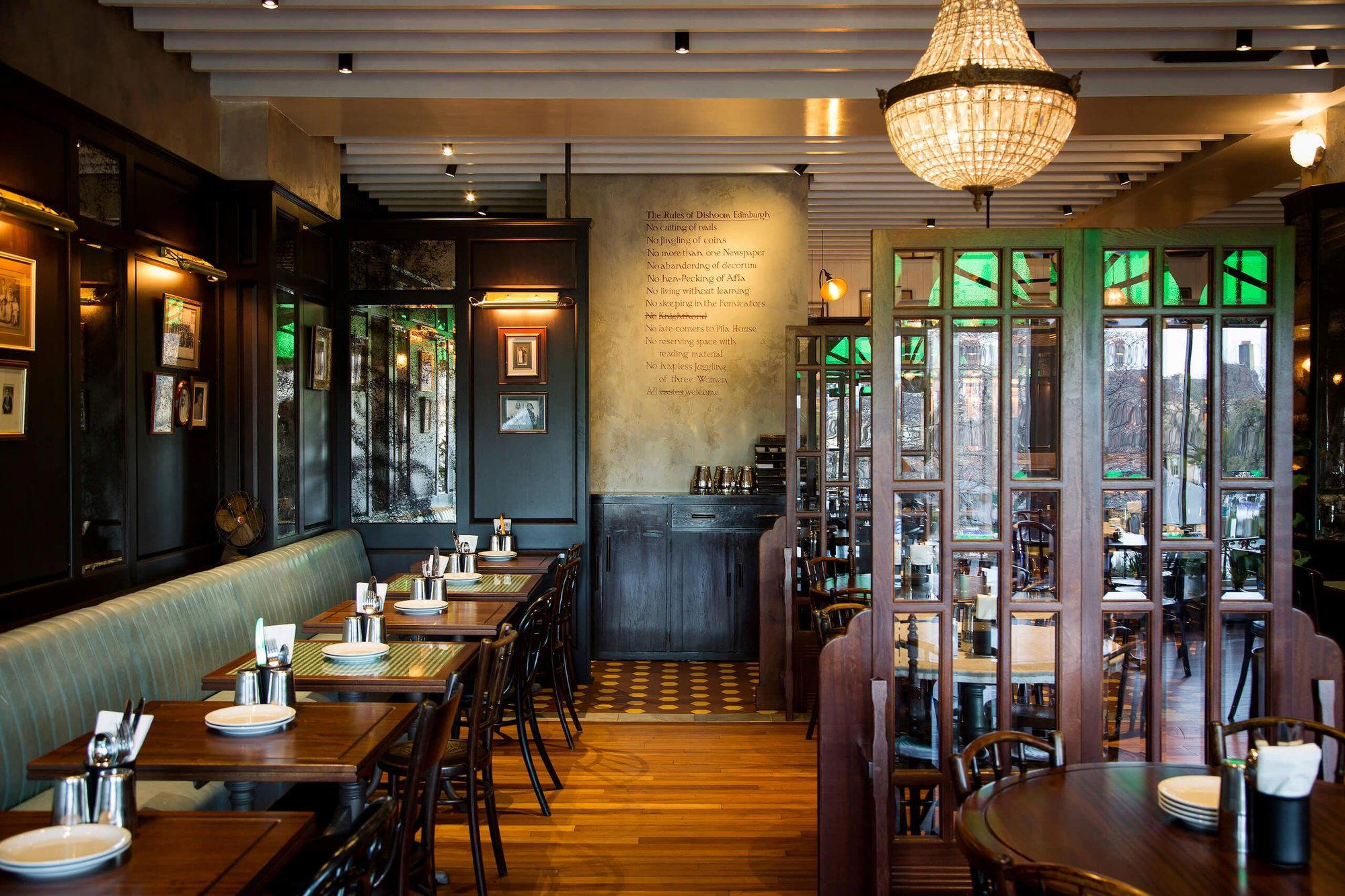
The menu
What to order
- Bacon Naan Roll
- House Black Daal
- Chicken Ruby
- Goan Monkfish Curry
Bombay's Irani Café Tradition, Landed in Edinburgh
Edinburgh's restaurant scene at the upper end is dominated by a particular idiom: tasting menus built around Scottish produce, Nordic-influenced restraint, and chefs with classical European training. The Kitchin, Martin Wishart, Timberyard, AVERY, and Condita all work within some version of that framework. Dishoom Edinburgh operates in a different register entirely. It draws on the Irani café tradition, the teahouses established in Bombay from the early twentieth century by Zoroastrian immigrants from Iran, and translates that format into a St Andrew Square address that would otherwise be the preserve of financial services firms and corporate hotels.
That context matters, because it shapes everything about how the food is sourced, prepared, and served. The Irani café was never about prestige ingredients or chef-driven tasting menus. It was about consistency, community, and the kind of cooking that held a neighbourhood together across decades. Dishoom's version of that tradition carries those priorities into a contemporary British setting, which means the sourcing decisions are weighted toward specificity and traceability rather than luxury provenance.
The Ingredient Logic Behind the Menu
Indian restaurant cooking in Britain has long been divided between two sourcing models: the cost-driven approach that prioritises margin and speed, and the precision-sourcing approach that treats spice blends, dairy, and proteins with the same rigour applied in any serious European kitchen. Dishoom belongs to the latter category. The chai, for instance, is made to a recipe that requires a specific ratio of Assam tea, whole spices, and full-fat milk, simmered to a texture that is closer to the Bombay original than the diluted versions served in most high-street Indian restaurants. The black dal that has become the dish most associated with the brand cooks for a minimum of twenty-four hours, a process that demands both a specific quality of lentil and a kitchen discipline that operates independently of the à la carte rush.
This sourcing philosophy puts Dishoom in an interesting comparative position. Against the Michelin-starred rooms that define Edinburgh's fine-dining identity, where a single dish might cite its farm, its forager, and its county of origin, Dishoom is working at a different price point and for a different kind of audience. But the underlying commitment to ingredient integrity is not dissimilar from what you find at, say, Moor Hall in Aughton or hide and fox in Saltwood, where the argument for quality starts in the supply chain rather than on the plate. The difference is format: Dishoom delivers that argument through a printed menu of recognisable dishes rather than a multi-course narrative.
What the Room Tells You
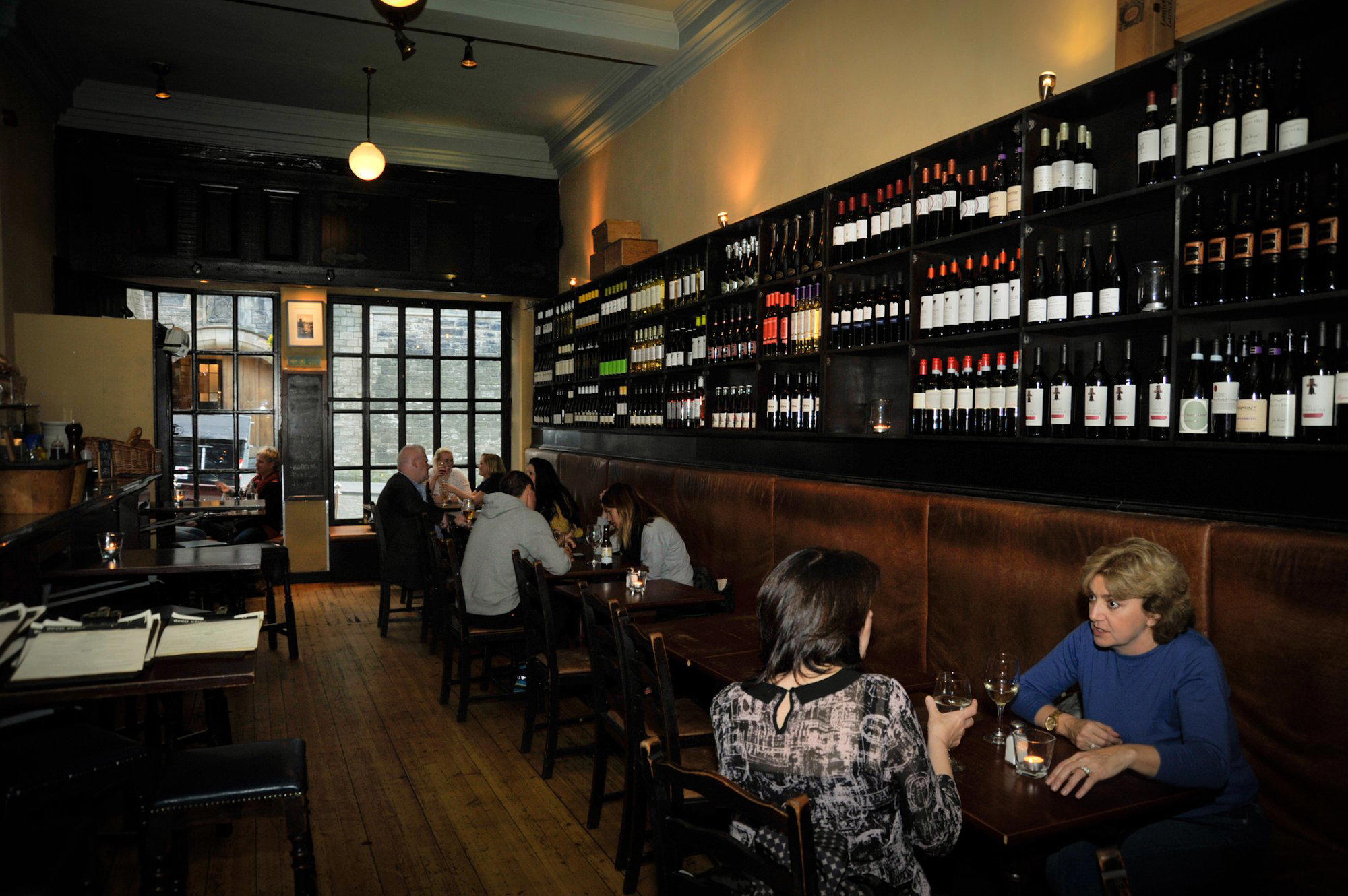
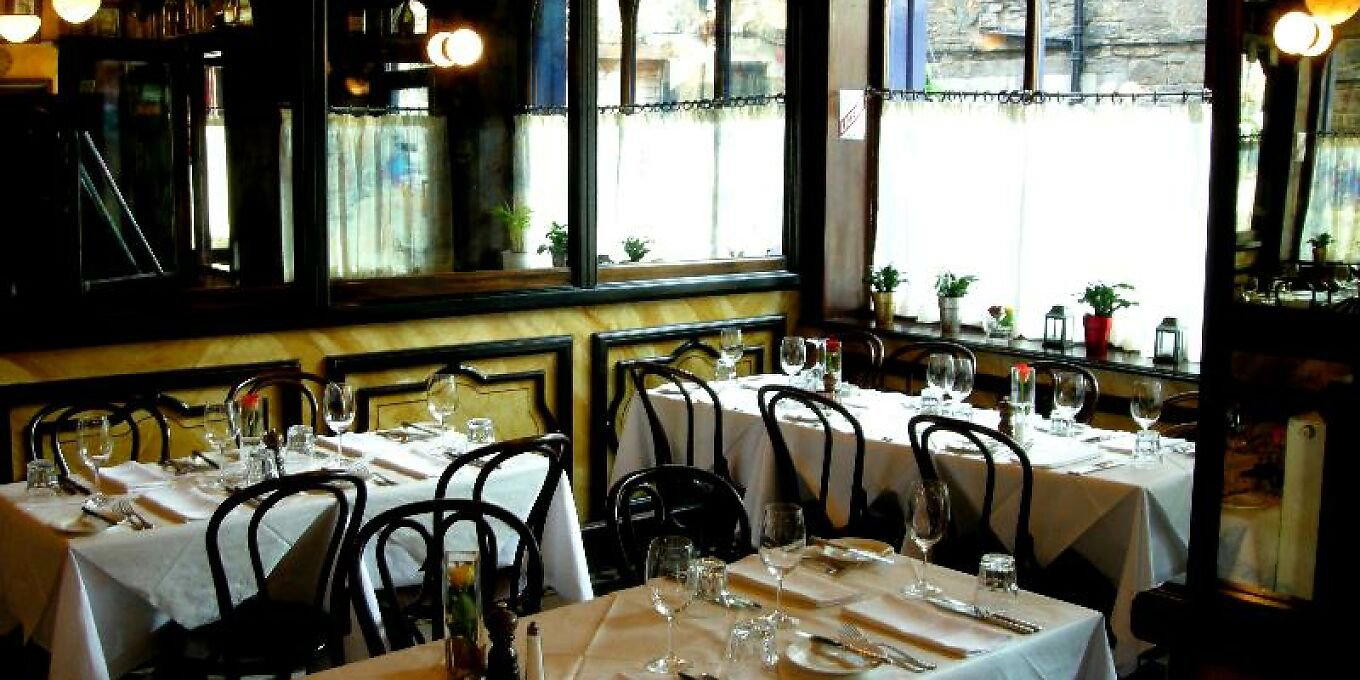
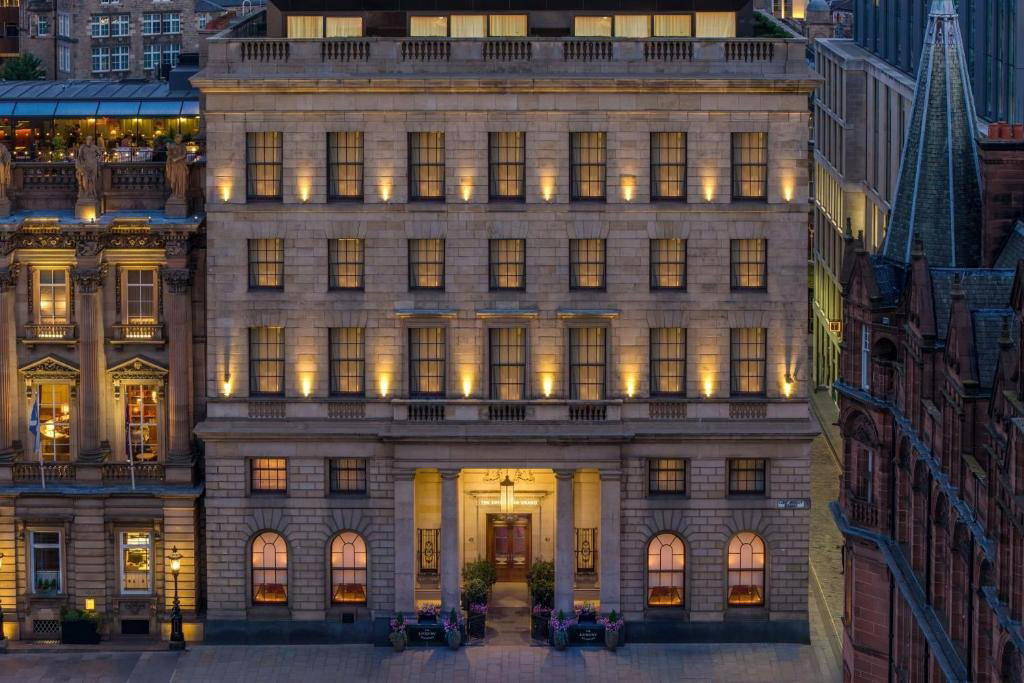
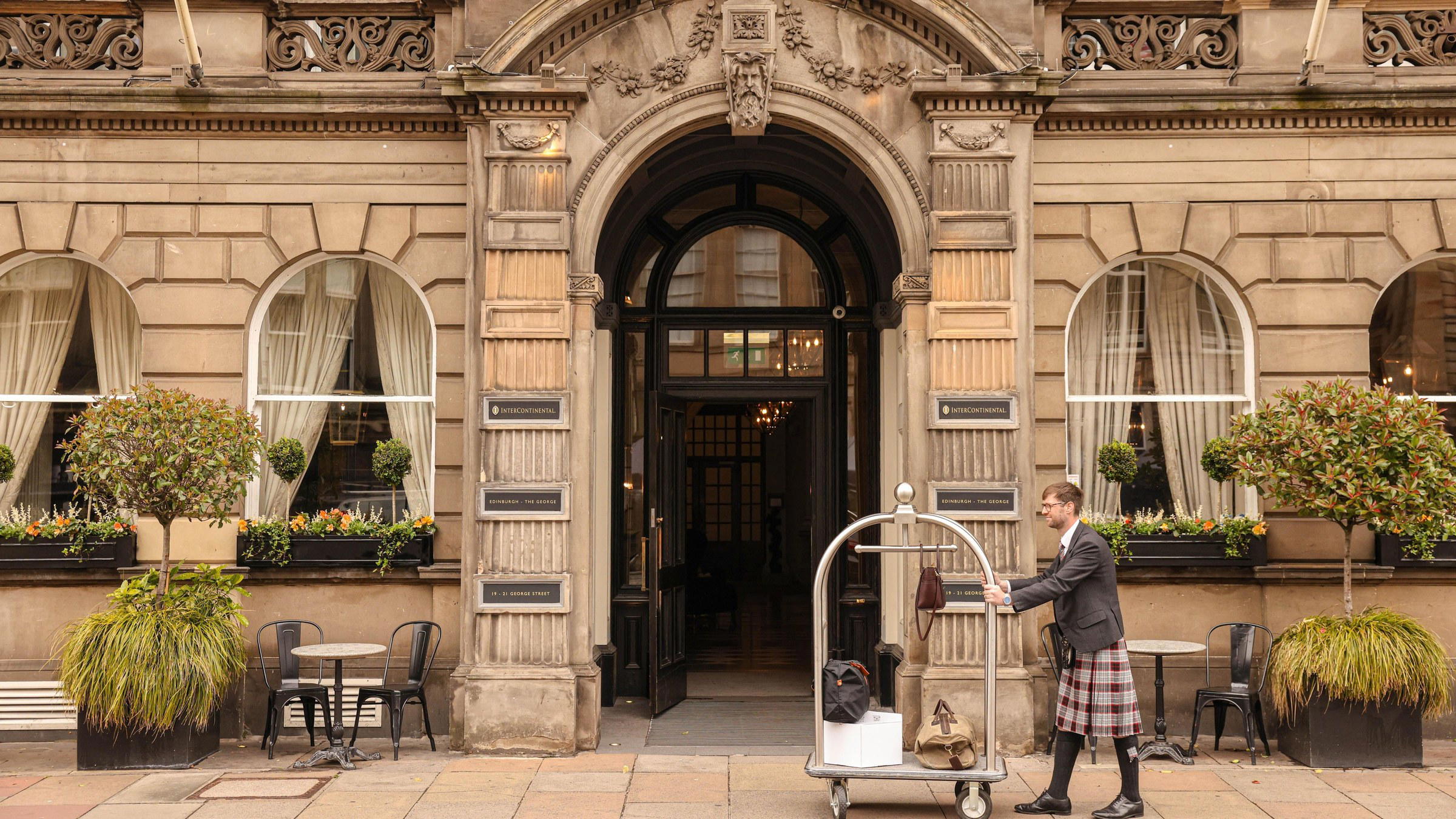
The Edinburgh branch occupies a Georgian townhouse on St Andrew Square, a location that places it within a few minutes' walk of the main shopping thoroughfares and the financial district. The interior follows the Dishoom house style: ceiling fans, teak fittings, vintage photography, and the general atmosphere of a Bombay café circa 1960. The approach is specific enough to read as research rather than decoration, though readers who have spent time in the original Irani cafés of Mumbai's Colaba or Fort districts will notice that the Edinburgh room is considerably more comfortable than any surviving original.
The all-day format is worth noting in the Edinburgh context, where most comparable restaurants operate dinner services only. Breakfast and brunch at Dishoom have become a distinct category of visit in every city the brand occupies, drawing a different audience from the evening dinner crowd. The queuing system, which operates for walk-ins rather than reservations at most services, has become part of the social texture of visiting. Regulars time their arrivals to the opening of service; first-time visitors often underestimate the wait.
How It Sits Against the Edinburgh Dining Field
Comparison set for Dishoom Edinburgh is not straightforwardly local. Within Edinburgh's own dining field, there is no direct peer: the city does not have another restaurant working in this format, at this scale, with this level of brand infrastructure behind it. The more instructive comparisons run sideways, to what serious Indian cooking looks like at fine-dining price points elsewhere in Britain. Opheem in Birmingham represents one answer to that question: a Michelin-starred Indian restaurant where the sourcing argument is made explicitly, dish by dish, with the formal trappings of the tasting-menu format. Dishoom's answer is structurally different but not philosophically opposed, the same emphasis on ingredient quality, delivered without the ceremony.
For visitors whose Edinburgh trip also takes in a wider tour of British fine dining, the capital's Michelin landscape provides useful reference points. Waterside Inn in Bray, CORE by Clare Smyth in London, and L'Enclume in Cartmel all operate in a register where provenance is the primary editorial subject of the menu. Dishoom makes a similar argument about food origin, but packages it inside a cultural framework, the Irani café, that most British diners encounter nowhere else. That specificity of reference is what separates it from the generic pan-Indian restaurant and gives it a coherent identity across its multiple UK locations.
Internationally, the closest structural analogy might be found in American restaurants that treat a specific cultural dining format with archival seriousness. Lazy Bear in San Francisco applies that logic to American supper-club cooking; Le Bernardin in New York City does it for the French seafood restaurant. In each case, the format is treated as content rather than backdrop. Dishoom's version of that approach is the Irani café, and Edinburgh is the city where it sits furthest from its source material, which makes the fidelity of the execution more notable, not less.
Know Before You Go
- Address: 3a St Andrew Square, Edinburgh EH2 2BD
- Location context: St Andrew Square, central Edinburgh, walking distance from Princes Street and Waverley Station
- Format: All-day dining, breakfast through dinner
- Booking: Walk-ins accepted; queuing is standard at peak services. Check the Dishoom website for reservation availability, which varies by service
- Leading timing: Arriving at or just before the start of service reduces wait times significantly at peak periods
- Peer context: Operates at a different price point from Edinburgh's Michelin-starred dinner rooms; suited to a different kind of visit than Condita or Timberyard, but not a lesser one
- Further reading: See our full Edinburgh restaurants guide for how Dishoom sits within the wider dining field
Frequently asked questions
Where exactly is Dishoom Edinburgh?
Dishoom Edinburgh is located at 3a St Andrew Sq, Edinburgh EH2 2BD, United Kingdom, Edinburgh.
Is Dishoom Edinburgh suitable for visitors who want to understand Indian regional food traditions?
Dishoom is grounded in a specific sub-tradition, the Irani café culture of Bombay, historically shaped by Zoroastrian Persian migrants who opened tea houses and cafés across the city from the late nineteenth century onward. The Edinburgh menu reflects that focused tradition rather than the broader geography of Indian regional cooking, so visitors seeking Chettinad, Keralan, or North Indian home-style cooking will need to look elsewhere in the city.
What do people recommend at Dishoom Edinburgh?
The black dal is the dish most consistently cited across all Dishoom locations, including the Edinburgh branch on St Andrew Square. It cooks for twenty-four hours and arrives dense, dark, and deeply spiced, a preparation that takes it far outside the register of standard dal makhani. The bacon naan roll at breakfast draws comparable attention, and the Irani chai is the logical way to close either meal.
How far ahead should I plan for Dishoom Edinburgh?
Dishoom Edinburgh operates a hybrid model: reservations are available for certain sittings, but a portion of covers are held for walk-ins, which typically means a queue forming outside the St Andrew Square premises before service begins. For weekend brunch in particular, arriving thirty to forty minutes before opening is a practical approach. Weekday lunches tend to move faster.
A compact comparison to help you place this venue among nearby peers.
| Venue | Cuisine | Price | Awards | Notes |
|---|---|---|---|---|
| Dishoom EdinburghThis venue (the venue you are viewing) | Bombay Comfort Food | $20–30 | Not listed | Not listed |
| Martin Wishart | Modern French with Scottish Ingredients | $200–300 | 1 Michelin Star · La Liste Top Restaurants | Modern European, Modern Cuisine |
| The Kitchin | Modern Scottish Fine Dining | $150–200 | 1 Michelin Star · La Liste Top Restaurants | Modern British, Modern Cuisine |
| Timberyard | Modern British Fine Dining | $100–150 | 1 Michelin Star · Star Wine List | Modern British - Nordic, Modern British |
| AVERY | Modern Californian-Scottish Fusion | $150–200 | 1 Michelin Star | Creative |
| Condita | Modern Scottish Seasonal Tasting Menu | $150–200 | 1 Michelin Star · The Good Food Guide GFG Very Good | Modern Cuisine |
Continue exploring
More in Edinburgh
Restaurants in Edinburgh
All restaurants in Edinburgh →
Bars in Edinburgh
All bars in Edinburgh →


Details
- Lively
- Trendy
- Well Known
- Brunch
- Group Dining
- Casual Hangout
- Historic Building
- Craft Cocktails
- Local Sourcing
- Street Scene
- Small Plates
- A La Carte
- Craft Cocktails
- Vegetarian Friendly
- Vegan Options
Current opening hours
- Monday
- 8 AM–11 PM
- Tuesday
- 8 AM–11 PM
- Wednesday
- 8 AM–11 PM
- Thursday
- 8 AM–12 AM
- Friday
- 8 AM–12 AM
- Saturday
- 8 AM–12 AM
- Sunday
- 8 AM–11 PM
Hours can change for holidays and private events. Hours as of .
Stylish décor with a relaxed, atmospheric vibe reminiscent of Bombay cafés in a handsome multi-floor setting.