Din Tai Fung Dumpling House
Our verdict
Din Tai Fung's Arcadia location on South Baldwin Avenue sits at the heart of the San Gabriel Valley's Taiwanese dining corridor, drawing regulars and first-timers alike for its precisely folded xiao long bao and methodical kitchen craft. The format is approachable but the standards are serious, with a dining ritual built around shared plates, deliberate pacing, and the quiet theatre of steaming bamboo baskets arriving tableside.

Pearl is the En Primeur Club membership app, where members save venues, book tables and use the concierge.
The menu
What to order
- Kurobuta Pork Xiao Long Bao
- Chicken Dumplings
- Chicken Wonton Soup
The Queue, the Room, and the Order of Operations
Arrive at 921 S Baldwin Ave on a weekend morning and the scene is already in motion before you reach the door. Lines form early at Din Tai Fung's Arcadia outpost, part of a chain that originated in Taiwan in 1972 and has since built a global footprint anchored by a consistent, almost surgical kitchen standard. This is not a neighbourhood secret. It is a deliberate institution, and the crowd outside reflects that status. The San Gabriel Valley, particularly the stretch of Arcadia and nearby Monterey Park, holds one of the densest concentrations of Taiwanese and Chinese dining in the United States, and Din Tai Fung competes directly within that field. Understanding what it does and how it does it requires sitting with the ritual of the meal itself, not just the food on the plate.
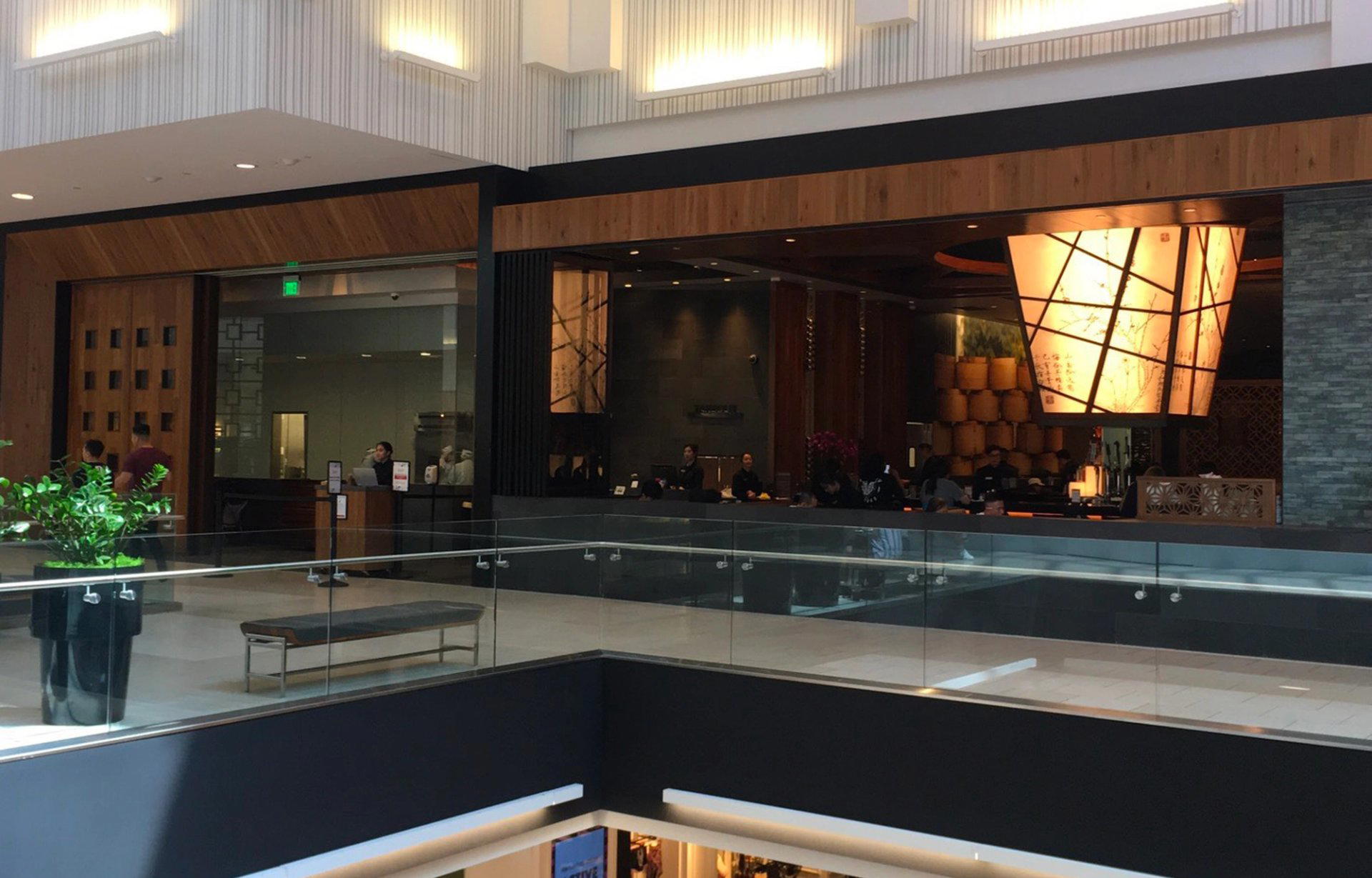
The interior follows the brand's familiar logic: clean lines, open kitchen visibility, and a floor plan organised for throughput. Watching the kitchen from the dining room is part of the format. Dumpling folders work in plain sight, and the precision of the fold, Din Tai Fung's quality control reportedly requires each xiao long bao to have exactly 18 pleats, is the kind of detail that has attracted scrutiny from food press and curious diners for decades. For the our full Arcadia restaurants guide, the Arcadia location represents the chain's deepest foothold in California's most competitive Chinese-food corridor.
How the Meal Moves
The dining ritual at Din Tai Fung follows a recognisable Taiwanese tea-house logic, even if the format has been refined for Western table service. You do not order everything at once and wait. The better approach is to stage the meal: soup dumplings first, while the steam still holds; cold appetisers alongside; noodle dishes toward the end. The kitchen is designed to deliver in waves, and working with that pacing rather than against it determines whether the meal coheres or fragments.
Xiao long bao arrive in bamboo steamers, each dumpling taut with broth. The correct approach, well-documented in the dining culture around the dish, is to place the dumpling on a spoon, puncture gently with chopsticks, let the soup escape into the spoon, add ginger if you choose, then consume in one or two bites. It is a small choreography, and first-timers often skip a step or move too quickly. The ritual matters because the dish is engineered for it: the skin thickness, the fill ratio, and the broth volume are calculated against that sequence of actions.
Beyond the xiao long bao, the menu spans a range common to Taiwanese restaurant chains of this tier: pork chop rice, shrimp fried rice, wontons in chili oil, and various steamed buns. The format sits between casual and polished, shared plates, no dress code, no extended beverage program. It prices accordingly, placing it at the accessible end of the San Gabriel Valley's mid-range Chinese dining tier, well below the per-head spend at a place like Chef Tony, which operates in a more formal Cantonese register, or the premium Japanese counter at Smyth in Chicago for what that kind of format discipline looks like at higher price points.
Where Din Tai Fung Sits in Arcadia's Dining Field
Arcadia's dining identity is shaped by its demographics and its geography. The city sits in the western San Gabriel Valley, a region that has functioned since the 1980s as a landing point for Taiwanese, Cantonese, and Sichuan communities, each of which has built a corresponding dining infrastructure. The result is a competitive field that includes Sichuan specialists like Chengdu Impression, seafood-focused Cantonese like Chef Tony, and broader Chinese dining at places like Chang's Garden and Blue Magpie. Hot pot anchored by Haidilao Hot Pot Arcadia fills a different ritual slot altogether, built around communal cooking rather than individual plating.
Din Tai Fung operates in that field as a Taiwanese chain with global recognition rather than a local independent. Its brand consistency is both its competitive advantage and its most debated quality among San Gabriel Valley regulars, many of whom compare it against older, more idiosyncratic dumplings houses in the surrounding corridors. That comparison is partly beside the point. The chain offers something the independents often do not: reliable replication of a specific, tightly controlled dish at volume, within a room that functions without the friction of smaller operations. That is a trade-off, not a failing.
For context on how Taiwanese dumpling culture operates at the highest tier globally, the brand's Taipei flagship earned a Michelin star in 2010, one of the rare instances of a chain-format restaurant receiving that recognition. The Arcadia location does not carry that accolade, but it benefits from the kitchen standards the parent brand has established and enforced across its international network.
Planning the Visit
Walk-in is the standard approach, though waits on weekend afternoons can run 45 minutes or longer. Arriving at opening, or on a weekday lunch, significantly reduces that window. The address at 921 S Baldwin Ave sits in a commercial stretch with accessible parking, and the surrounding blocks include several complementary food stops if you are building a longer San Gabriel Valley day. The experience sits at a different register from the tasting-menu formats you find at places like Providence in Los Angeles or The French Laundry in Napa, but the attention to technique and consistency within its own category is no less deliberate. It is a restaurant that rewards approaching with the right expectations and the right sequence.
For readers building a broader picture of serious American dining across regions, the contrast is instructive. The precise, ritual-driven format of a well-run dumpling house shares more DNA with the discipline at Atomix in New York City or Le Bernardin in New York City than the comparison might initially suggest. Each operates within a defined format, enforces consistency across every cover, and asks the diner to engage with a specific sequence. The scale differs. The underlying commitment to replicable craft does not.
Frequently asked questions
Where exactly is Din Tai Fung Dumpling House?
Din Tai Fung Dumpling House is located at 921 S Baldwin Ave, Arcadia, CA 91007, Arcadia.
How does Din Tai Fung Arcadia fit into the broader San Gabriel Valley dining scene?
Arcadia sits in the western San Gabriel Valley, a region that functions as one of the most concentrated corridors of Chinese and Taiwanese dining in the United States. Din Tai Fung at 921 S Baldwin Ave operates alongside a deep field of regional Chinese specialists, meaning diners in this part of Los Angeles County have direct comparisons available within a short radius. The chain's standardised quality and recognisable format give it a distinct position among both newcomers to the cuisine and regulars familiar with the surrounding options.
What should I eat at Din Tai Fung Dumpling House?
The xiao long bao, or pork soup dumplings, are the core of any visit to the Arcadia location. Din Tai Fung's global reputation was built on this dish, and ordering it here follows the same format that made the original Taipei branch a reference point for the style. Supplement with the house fried rice and shrimp and pork wontons if the table allows.
Is Din Tai Fung Dumpling House reservation-only?
The Arcadia location at 921 S Baldwin Ave operates on a walk-in basis. Weekend afternoon waits can run 45 minutes or longer, so arriving at opening or timing a weekday lunch visit will reduce the wait considerably.
What's the signature at Din Tai Fung Dumpling House?
The xiao long bao defines Din Tai Fung's identity globally and the Arcadia location is no different. Each dumpling is made to a standardised fold count and weight, a production method the chain has maintained across all its locations. That consistency is the point: the Arcadia version holds to the same benchmark as counterparts in Taipei or Tokyo.
Cuisine and Credentials
Comparable venues nearby, for context on price, style, and recognition.
| Venue | Cuisine | Price | Awards | Notes |
|---|---|---|---|---|
| Din Tai Fung Dumpling HouseThis venue (the venue you are viewing) | Taiwanese Soup Dumplings & Noodles | $20–30 | Not listed | Not listed |
| Chef Tony | Modern Dim Sum | $20–30 | Michelin Plate | Arcadia |
| Zelo | Cornmeal Crust Deep-Dish Pizza | $20–30 | Not listed | Arcadia |
| Side Chick | Hainan Chicken Rice | Not listed | Not listed | Santa Anita Mall |
| LaoXi Noodle House | Shanxi-Style Handmade Noodles | $10–20 | Michelin Bib Gourmand | Arcadia |
| Chang's Garden | Shanghainese Chinese | $20–30 | Not listed | Arcadia |
Continue exploring
More in Arcadia
Restaurants in Arcadia
All restaurants in Arcadia →
Bars in Arcadia
Browse all →
Hotels in Arcadia
Browse all →

Wineries in Arcadia
Browse all →
Details
- Well Known
- Lively
- Casual Hangout
- Group Dining
- Family
- Open Kitchen
- A La Carte
- Family Style
- Vegetarian Friendly
- Vegan Options
- Gluten Free Options
- Allergy Accommodating
Current opening hours
- Monday
- 11 AM–3 PM, 5–9 PM
- Tuesday
- 11 AM–3 PM, 5–9 PM
- Wednesday
- 11 AM–3 PM, 5–9 PM
- Thursday
- 11 AM–3 PM, 5–9 PM
- Friday
- 11 AM–3 PM, 5–9 PM
- Saturday
- 11 AM–9 PM
- Sunday
- 11 AM–9 PM
Hours can change for holidays and private events. Hours as of .
Casual, bustling atmosphere with open kitchen visible through glass, allowing diners to watch skilled dumpling makers at work; popular enough to warrant long lines, especially on weekends.