
Milan's Cantonese address on Via Nino Bixio serves the small-plate traditions of Guangzhou and southern China in a room layered with decorative detail. The kitchen works a partially open format, producing dishes that hold to classic dim sum technique while incorporating a measured contemporary register.
Pearl is the En Primeur Club membership app — saves, bookings, and concierge access live there. Same editors, same standards.
- Address
- Via Nino Bixio, 29, 20129 Milano MI, Italy
- Phone
- +39 02 2952 2821
- Website
- dimsummilano.com
- Directions
- Get directions
 Saves & bookings on Pearl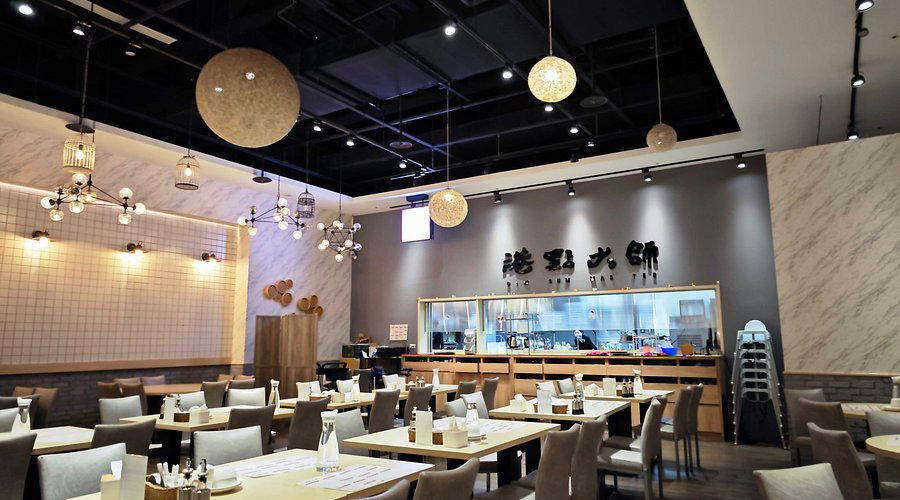
Cantonese Small Plates in a City That Rarely Gets Them Right
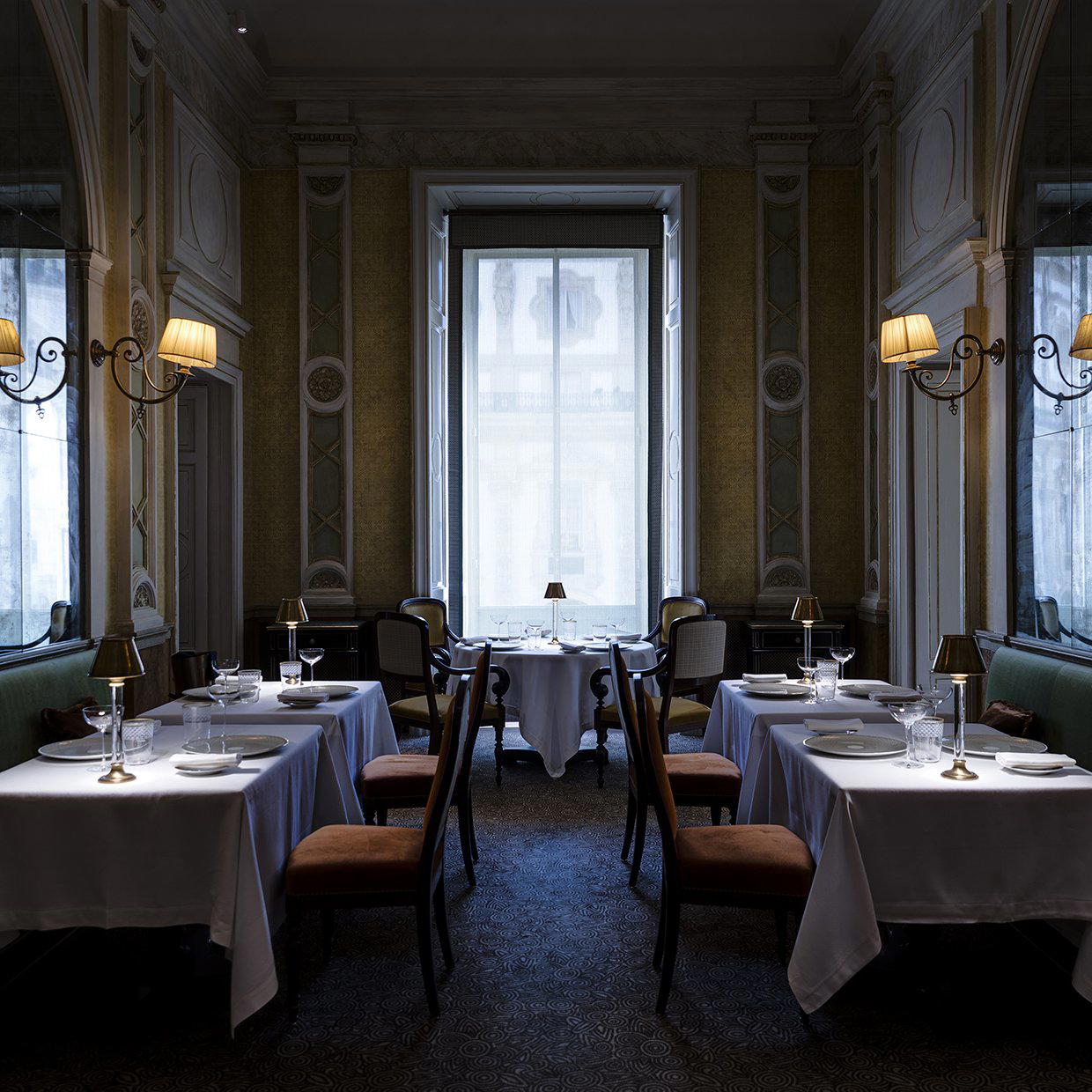
Walk into the dining room on Via Nino Bixio and the first thing you register is the decorative density: layered surfaces, considered objects, the kind of interior detailing that signals a kitchen with something to prove beyond the food alone. Milan's Chinese dining scene has historically defaulted to pan-Asian generalism, so a room this committed to Cantonese specificity already places Dim Sum in a narrow category. The partially open kitchen reinforces the point, putting the production of small dishes into partial view and framing the meal as process, not just product.
For context on where this sits in Milan's wider fine-dining picture: the city's prestige restaurant tier is dominated by Italian and Modern European addresses. Enrico Bartolini operates at the three-star level, while Andrea Aprea and Seta hold two stars each. Cracco in Galleria anchors the one-star Modern Cuisine bracket. Against that backdrop, a Cantonese specialist at the €€€ price tier occupies a genuinely different slot. It isn't competing with Verso Capitaneo or the city's creative Italian operators. It is filling a gap that those addresses leave entirely open.
The Guangzhou Tradition and What Contemporary Means Here
Dim sum as a culinary category carries a specific weight. The tradition originates in the teahouse culture of Guangdong province, where yum cha — the practice of drinking tea alongside small plates — organised communal eating into a distinct social form. The dishes themselves, har gow, siu mai, cheung fun, turnip cake, glutinous rice parcels, are technically demanding in ways that don't announce themselves to the casual diner: the translucency of a har gow wrapper depends on starch ratios and steaming precision that vary by fractions; a siu mai's open crown has to hold structural integrity while remaining supple. Done correctly, the small dishes of Guangzhou are less a snacking format than a demonstration of kitchen control expressed in miniature.
The kitchen here works within that tradition while applying what the Michelin description characterises as a contemporary refinement: small adjustments in flavour profile or presentation that acknowledge a European dining context without abandoning the source material. This is a more disciplined approach than the fusion drift that has diluted Cantonese cooking in many Western cities, where adaptations accumulate until the original form is barely traceable. The restraint matters because it determines whether the contemporary notes read as considered editorial decisions or as concessions to an assumed local palate.
For comparison, consider how this approach plays out in the Cantonese specialist tier across Asia. 102 House in Shanghai and Chef Tam's Seasons in Macau both sit in the upper bracket of Cantonese reinterpretation, where technique is baseline and the question is what selective modernity adds to classical form. Milan's Dim Sum operates at a different scale and in a radically different dining context, but the underlying editorial question is the same: how much contemporary adjustment serves the cuisine versus how much dissolves it.
Where It Sits in the Room and on the Table
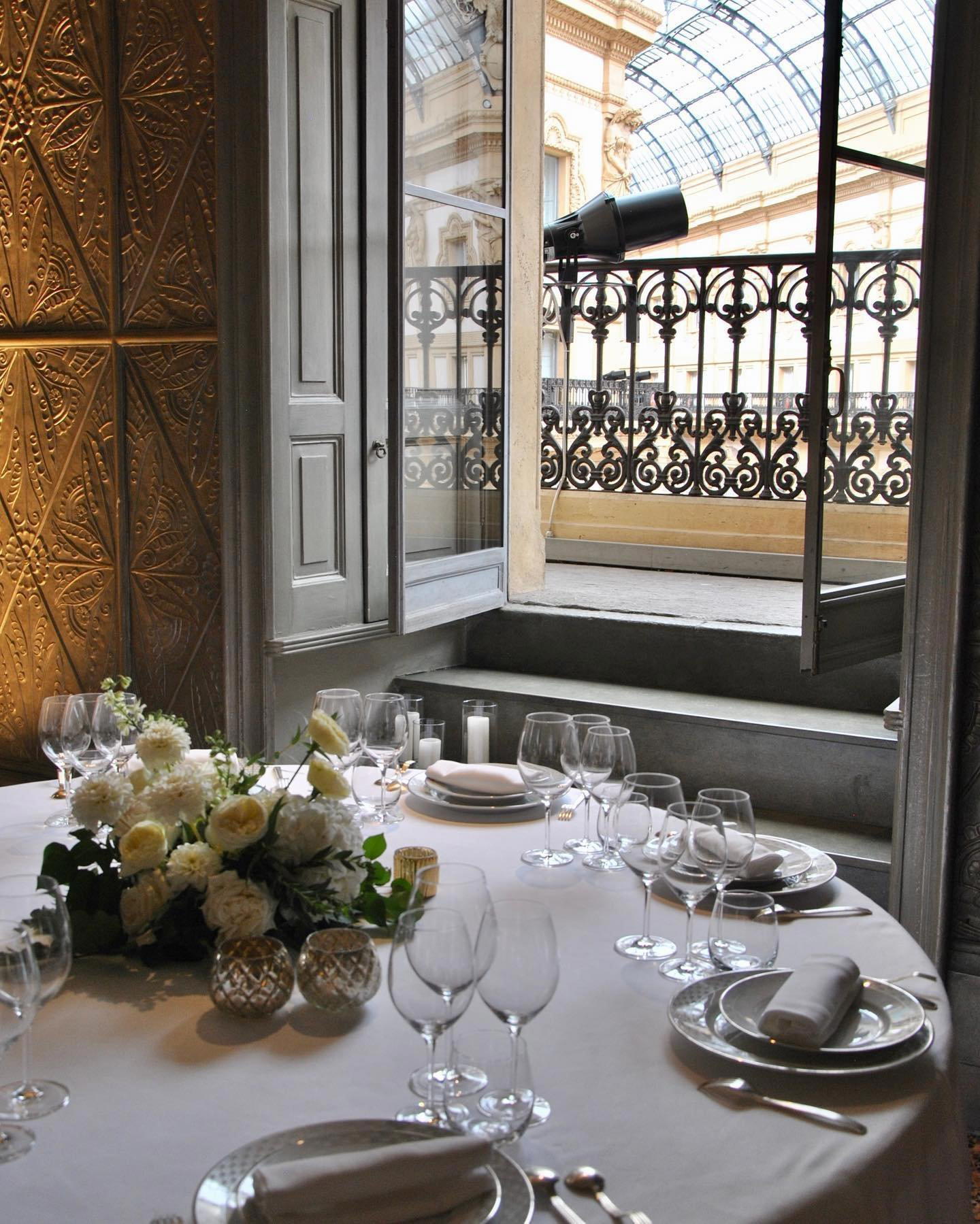
The interior at Via Nino Bixio, 29 works around decorative detail in a way that separates it from the minimalist Euro-Chinese aesthetic common in Western cities. The rooms feel constructed rather than stripped, which suits a cuisine whose visual register has always been part of the experience: bamboo steamers stacked in towers, the gloss on char siu, the geometry of folded dumplings arriving in multiples. A meal structured around small plates reads differently in a room with visual texture than in a bare dining room, and the design here supports the format.
The price tier at €€€ positions Dim Sum above casual Chinese dining in Milan while sitting below the full premium tier occupied by the city's starred Italian operators. That bracket implies a considered meal rather than a quick lunch, and the small-plate format accommodates both extended sharing dinners and more focused solo eating. The partially open kitchen functions as a transparency signal in both directions: diners can see the work, and the kitchen is accountable to what they see.
For a specialist Chinese address in a city where the category is underserved and where non-Italian cuisine often struggles to build audience, that volume of engagement points to a stable, returning customer base rather than a curiosity draw. The score itself is solid without being an outlier, which is consistent with a venue that does something specific and does it with enough consistency to hold a defined crowd.
Planning a Visit
Dim Sum is at Via Nino Bixio, 29 in the Porta Venezia district, east of the city centre and accessible from the Porta Venezia metro stop on Line 1. The €€€ pricing suggests budgeting in the mid-to-upper range for a shared meal with drinks; the small-plate format tends to extend the bill when the table orders broadly, which is also how the cuisine reads leading. For the wider picture of what Milan has to offer across restaurants, bars, hotels, and experiences, see our full Milan restaurants guide, our full Milan bars guide, our full Milan hotels guide, our full Milan wineries guide, and our full Milan experiences guide.
Italy's broader fine-dining geography, anchored by addresses like Osteria Francescana in Modena, Enoteca Pinchiorri in Florence, Le Calandre in Rubano, Piazza Duomo in Alba, Dal Pescatore in Runate, and Atelier Moessmer Norbert Niederkofler in Brunico, is almost entirely Italian in register. A Cantonese specialist in Milan doesn't compete with that tradition. It operates in the space those kitchens leave vacant, and for a certain kind of diner in the city, that absence is exactly the point.
Category Peers
| Venue | Cuisine | Price | Awards |
|---|---|---|---|
| Dim SumThis venue — the venue you are viewing | Cantonese | €€€ | Not listed |
| Enrico Bartolini | Creative | €€€€ | Michelin 3 Star |
| Cracco in Galleria | Modern Cuisine | €€€€ | Michelin 1 Star |
| Andrea Aprea | Modern Italian, Italian Contemporary | €€€€ | Michelin 2 Star |
| Seta | Modern Italian | €€€€ | Michelin 2 Star |
| Contraste | Progressive Italian, Modern Cuisine | €€€€ | Michelin 1 Star |
Recognition history
Dated appearances from independent guides and award organizations, with the underlying list record or original source where available.
Michelin Plate
Michelin
Michelin Plate
Michelin
Continue exploring
More in Milan
Restaurants in Milan
Browse all →
Bars in Milan
Browse all →
Hotels in Milan
Browse all →

At a Glance
- Elegant
- Sophisticated
- Modern
- Date Night
- Business Dinner
- Celebration
- Open Kitchen
- Extensive Wine List
Current opening hours
- Monday
- Closed
- Tuesday
- 12–2:30 PM, 7–11:30 PM
- Wednesday
- 12–2:30 PM, 7–11:30 PM
- Thursday
- 12–2:30 PM, 7–11:30 PM
- Friday
- 12–2:30 PM, 7–11:30 PM
- Saturday
- 12–2:30 PM, 7–11:30 PM
- Sunday
- 12–2:30 PM, 7–11:30 PM
Hours can change for holidays and private events. Last verified .
Elegant and sophisticated with modern decor, white tablecloths, pleasant lighting, and open kitchen views.