Our verdict
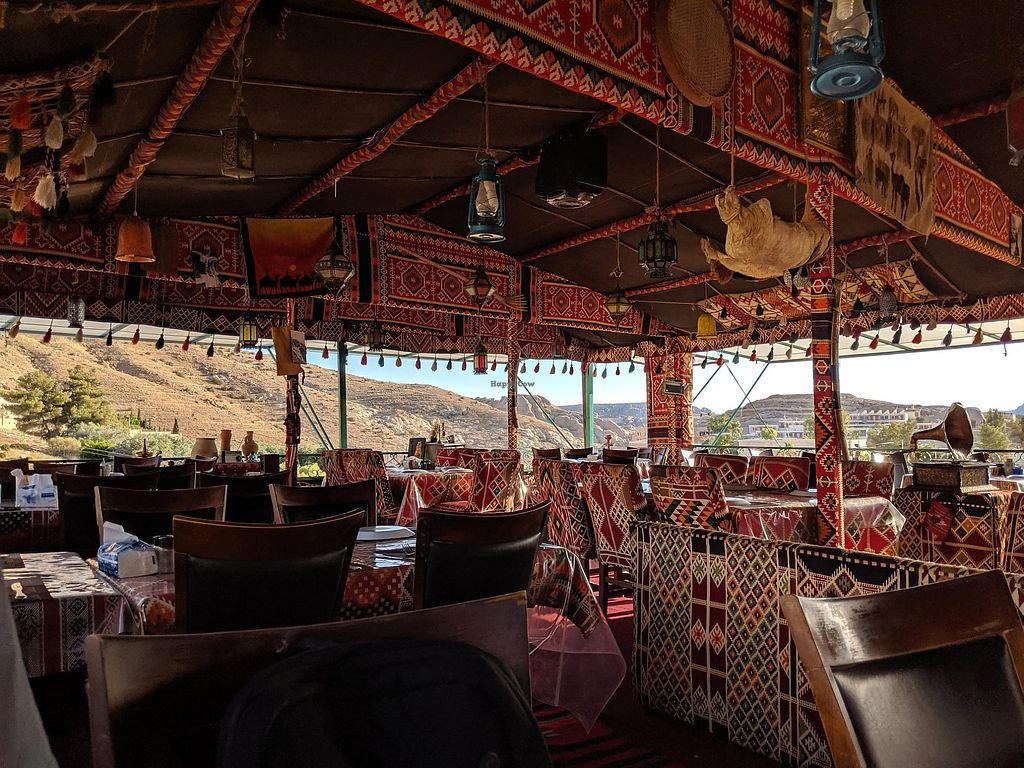
Deretna My Mom Recipe serves Jordanian Traditional cooking in Petra, with mansaf, mixed grill, and moussaka, plus mountain or street-scene views.

Pearl is the En Primeur Club membership app, where members save venues, book tables and use the concierge.
The menu
What to order
- Mansaf
- Mixed grill
- Moussaka
Where Jordan's Home Kitchen Meets the Rose City
Petra draws visitors for its sandstone facades and ancient Nabataean engineering, but the city's dining scene has quietly built its own argument for attention. Among the restaurants operating in and around the Wadi Musa gateway to the archaeological site, a category exists that the glossy hotel restaurants tend to overlook: the home-recipe format, where the sourcing logic runs not through a chef's formal training but through generational kitchen memory. Deretna My Mom Recipe sits in that category, and in a region where maternal cooking traditions carry genuine weight, that positioning is neither nostalgic marketing nor accident.
The Sourcing Logic Behind Jordanian Home Cooking
To understand what a restaurant like Deretna My Mom Recipe represents, it helps to understand how southern Jordanian home kitchens have historically sourced their ingredients. The Wadi Musa and Wadi Araba corridor connects highlands where wild herbs, dried yogurt (jameed), and locally milled grains have been staples for centuries. The ma'ansef tradition, Jordan's ceremonially significant lamb dish, relies on jameed produced from the milk of Bedouin-tended goats, a product that changes character depending on which herd and which season it comes from. At this latitude, ingredients are not abstracted through long supply chains the way they might be at a metropolitan restaurant. The sourcing is short, often personal, and directly tied to what grows or grazes within the surrounding region.
This matters for the dining experience in a concrete way. Restaurants operating from home-recipe frameworks in Jordan's southern provinces tend to source from family contacts, local souks, and seasonal availability rather than wholesale distributors. The menu reflects what the land and the season allow, which is a different constraint than what a hotel kitchen operates under. For visitors arriving from cities where restaurants like Arpège in Paris or Atelier Crenn in San Francisco have made farm-to-table sourcing a high-ticket proposition, Petra's home-kitchen restaurants offer something different in kind, not just in price: sourcing that predates the concept as a trend.
Reading Deretna in Its Petra Context
Petra's restaurant options divide roughly into three tiers. Hotel dining rooms at the larger properties offer international menus with Jordanian gestures. Mid-range sit-down restaurants along Wadi Musa's main strip serve a tourist-facing version of mezze and grilled meats. And then there is a smaller cohort of places working from inherited recipes and local sourcing, where the food is closer to what a Petra family actually eats at home. Deretna My Mom Recipe operates in that third tier, and within it the name functions as a declaration of method: the recipe authority is the mother, not a culinary school syllabus.
For context on what this means across Jordan's dining spectrum, Amman's upper tier includes formalized Levantine restaurants that have drawn wider regional recognition, and operations like 13C Bar in the Back in Amman represent the capital's more contemporary hospitality direction. Southern destinations like Alibaba Restaurant in Aqaba occupy their own coastal register. Deretna fits none of those comparisons. It belongs to a more specific tradition: the home-style restaurant as cultural document, common across the Levant but particularly resonant in areas with strong Bedouin and Nabataean heritage like Petra.
What the Ingredient Story Tells You
Southern Jordan's pantry is distinct even within the Levantine kitchen. Freekeh, the fire-roasted green wheat used in soups and grain dishes, comes primarily from the northern highlands but moves south through local trade. Dried figs, pomegranates, and the specific aromatics of wild thyme (za'atar) harvested from Jordan's hillsides carry flavor profiles that differ from the cultivated versions exported to urban markets. A kitchen that sources these ingredients locally is working with a different raw material than one buying through Amman's wholesale networks.
The significance for the visitor is practical as much as philosophical. A plate that arrives at the table in a home-recipe restaurant in Petra has a traceable regional logic behind it. The spicing reflects what grows nearby. The protein, typically lamb in this part of Jordan, comes from herds raised in conditions suited to the terrain. That chain of provenance is shorter and more legible than what operates behind the scenes at, say, Le Bernardin in New York City or 8½ Otto e Mezzo Bombana in Hong Kong, where global supply logistics are part of the operational infrastructure. The home-kitchen format in Petra operates at a scale where the sourcing story is essentially the menu story.
Visiting Deretna: What to Know Before You Go
Specific operational details for Deretna My Mom Recipe, including current hours, contact information, and booking arrangements, are not published through standard channels at the time of writing, which is itself characteristic of this restaurant tier in Wadi Musa. Many smaller Petra-area restaurants operate on local word-of-mouth and informal systems rather than reservation platforms. For travelers building an itinerary around Petra's dining scene, our full Petra restaurants guide provides current logistical detail. The general planning advice for this category of restaurant: arrive early in the evening, be flexible about what is available on a given day, and understand that seasonal and sourcing constraints mean the menu may not match any printed version.
Dress code in Wadi Musa restaurants of this type is casual and culturally conservative by regional norms, meaning covered shoulders and knees is appropriate, particularly for women. The setting in Petra's gateway town is low-key rather than atmospheric in the formal sense; this is not a canyon-view dining room with theatrical lighting. The experience is closer to eating in a well-run family home than to a curated restaurant environment, and that comparison should be taken as descriptive rather than deprecating. Travelers who have made the journey to compare notes on Jordan's home-kitchen tradition, or who want a meal that reflects local eating habits rather than tourist-facing interpretations, will find this format more instructive than many hotel dining rooms. For a broader sense of how Jordan's village-kitchen tradition translates into a more formal restaurant context elsewhere in the country, أكلة وفتلة in Ajloun offers a useful reference point from the northern highlands.
Frequently asked questions
Is Deretna My Mom Recipe okay with children?
The premise of the restaurant, Jordanian home cooking modelled on family recipes, translates naturally to a setting that accommodates children. Southern Jordanian dishes like grain soups and slow-cooked meat are familiar formats for younger diners. Petra itself is a family-oriented destination, and restaurants in this tier of the city's dining scene typically reflect that. Confirm current arrangements directly with the venue before visiting.
Is Deretna My Mom Recipe formal or casual?
The name and concept signal casual dining: this is a restaurant built around home-kitchen traditions, not tableside ceremony. In Petra's dining hierarchy, Deretna sits outside the hotel dining room tier, which means the atmosphere follows the food, approachable and grounded in southern Jordanian domestic cooking culture. There is no published dress code.
How does Deretna My Mom Recipe differ from other places to eat in Petra?
Petra's dining options split broadly between hotel restaurants serving international menus with Jordanian gestures and a smaller number of locally run spots working from actual regional tradition. Deretna My Mom Recipe sits in the latter category, with a concept grounded in southern Jordanian home recipes rather than adapted tourist cuisine. For a traveller who has already seen Petra's sandstone facades, eating here offers a separate, food-based argument for the city.
What's the signature dish at Deretna My Mom Recipe?
Specific menu items are not formally published for Deretna My Mom Recipe. The restaurant's identity is rooted in southern Jordanian home-kitchen traditions, a pantry that draws on ingredients like freekeh, dried yoghurt, and slow-cooked lamb that define the region's cooking. Dishes vary with what southern Jordan's seasonal larder supports. Ask on arrival what the kitchen is cooking that day.
In Context: Similar Options
| Venue | Cuisine | Price | Awards |
|---|---|---|---|
| Deretna My Mom RecipeThis venue (the venue you are viewing) | Jordanian Traditional | $20–30 | Not listed |
| Fakhreldin | Traditional Levantine | Not listed | World's 50 Best #11 · The Best Chef One Knife |
| Dara Dining by Sara Aqel | Mediterranean with Italian Focus | $50–100 | World's 50 Best #30 · Wine Spectator Best of Award of Excellence |
| Sufra | Traditional Jordanian | $20–30 | World's 50 Best #20 · The Best Chef One Knife |
| 13C Bar in the Back | Mediterranean Izakaya Fusion | $50–100 | World's 50 Best #36 |
| Shams El Balad | Modern Levantine | $20–30 | World's 50 Best #26 |
Continue exploring
More in Petra
Hotels in Petra
Browse all →
Details
- Rustic
- Cozy
- Scenic
- Family
- Casual Hangout
- Group Dining
- Live Music
- Terrace
- Rooftop
- Mountain
- Street Scene
- A La Carte
- Buffet
- Vegetarian Friendly
- Vegan Options
- Gluten Free Options
- Halal
Cozy and warm with traditional decorations, colorful interiors, and a welcoming atmosphere enhanced by live music and mountain views.